• Welcome to Photrio!
    Registration is fast and free. Join today to unlock search, see fewer ads, and access all forum features.
    Click here to sign up

FP4+ Mushy Grain

Flooded woodland

Flooded woodland

  • 14
  • 0
  • 84
Babylon

D
Babylon

  • 3
  • 1
  • 77

Recent Classifieds

Forum statistics

Threads
202,840
Messages
2,846,302
Members
101,559
Latest member
gnafin61
Recent bookmarks
1
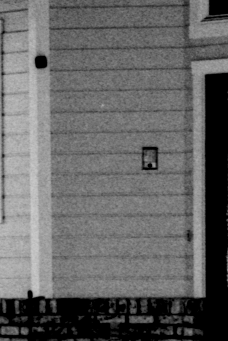
Here's a screenshot of an image from this roll of 35mm FP4+ developed in HC-110 dil. B. Most of the image is of blue siding on a house. The siding is smooth without any noticable texture.

Looks grainy to me, and this isn't a huge blow-up of the image either.

Screenshot-2023-09-14-160335.png
 
Don't better lenses mostly mean you get the sharpness you might get only in the centre or stopped further down from a lesser lens into the corners and wider open?
It all depends what purpose you're designing a lens for. Point out any weaknesses in the MF lenses mentioned please.
 
Here's a screenshot of an image from this roll of 35mm FP4+ developed in HC-110 dil. B. Most of the image is of blue siding on a house. The siding is smooth without any noticable texture.

Looks grainy to me, and this isn't a huge blow-up of the image either.

Screenshot-2023-09-14-160335.png

HC-110, DK-50, D-23, D-76 are just the wrong developer to use with 35mm. Learn to handle and use PMK Pyro or Pyrocat-HD and you'll never look back.
 
@SodaAnt Your question then is about the Epson, not the film or your developer. You need a much higher resolution equipment to be able to evaluate grain. This is a complex technical topic, but TLDR of it is that grain gets digitally boosted and distorted differently at different scanning resolution levels. You are not looking at FP4+ grain. You are looking at an algorithmic output. Tinkering with chemistry is going to be a guessing game.

As your scanning resolution goes up, grain gets finer. I do not have any FP4+ in 35mm, but I shoot Fomapan 100 in that format.
Here's what the full frame looks like:

seawood.jpg


I did not know what enlargement ratio your image above is, but you said "this is not a huge blowup", so I took the liberty to crop a piece which I would describe as "not a huge blowup":

seawood-crop.jpg


Scanned at ~5,000dpi. This is Foma in Rodinal and as you can see, the grain is finer. Your bottleneck is not film or the chemistry. It's the Epson. My advice is to bump your scanning resolution.
 
@SodaAnt Your question then is about the Epson, not the film or your developer. You need a much higher resolution equipment to be able to evaluate grain. This is a complex technical topic, but TLDR of it is that grain gets digitally boosted and distorted differently at different scanning resolution levels. You are not looking at FP4+ grain. You are looking at an algorithmic output. Tinkering with chemistry is going to be a guessing game.

As your scanning resolution goes up, grain gets finer. I do not have any FP4+ in 35mm, but I shoot Fomapan 100 in that format.
Here's what the full frame looks like:

View attachment 349046

I did not know what enlargement ratio your image above is, but you said "this is not a huge blowup", so I took the liberty to crop a piece which I would describe as "not a huge blowup":

View attachment 349045

Scanned at ~5,000dpi. This is Foma in Rodinal and as you can see, the grain is finer. Your bottleneck is not film or the chemistry. It's the Epson. My advice is to bump your scanning resolution.

I scanned that negative at 6400dpi on the Epson. Should I be scanning at a lower res?
 
I scanned that negative at 6400dpi on the Epson. Should I be scanning at a lower res?

I would test the various resolutions and compare them with each other by upsizing and downsizing. You should find out the point of diminishing returns pretty quickly. I’d also test how to remove any scanner sharpening. It usually isn’t very good and may be what’s making the grain appear so harsh.

On my Epson 4870 it never gets better than about 2200dpi so I scan at 2400dpi at the most. And even then it’s nowhere as good as my drum scanner or camera scanning at the same resolution.

Another possibility is you are overexposing the film. That can accentuate the appearance of grain.
 
Last edited:
The smaller the film, the smaller the sampling size. So the better the scan you need. 35mm film on an amateur flatbed scanner is hardly a diagnostic approach. We end up comparing accidental artifacts instead of anything of substance regarding the film itself.
 
Someone mentioned a microscope earlier in the thread. I have several Zeiss and Leitz research microscopes that I'll use to take a look at the negatives.

I tried scanning at 3600dpi and 2400dpi and the grain still looks like the screenshot I posted in post #51.
 
I agree with your comment about harsh contrast. That's what I see in my negatives also.

SA, Until you consider lighting conditions, & how you meter, as well as the development time/adjustments for those.....it's hard to pass summary judgements on any film.
 
Last edited:
Soda Ant - I'll be happy to look at them for you in exchange for one of those microscopes. I sure miss the Leitz and Zeiss ones I used in my college years - amazing build quality. But if you do try examining grain using one of those you might want to fiddle with the phase contrast or else the depth of field might actually be too small under high power. Try blue light too. Lots of fun things you can do; but again, any conclusions drawn might not translated into how a particular printing paper will see it instead. You'd need a film engineer as an interpreter.
 
I’ve never thought of examining grain under a microscope. I’ll try bright and dark field, phase contrast, and DIC and see if I can make any sense of the grain.
 
I scanned that negative at 6400dpi on the Epson. Should I be scanning at a lower res?

You Epson cannot scan at 6400 dpi. Their marketing overstated the specs by a landslide. The true maximum optical resolution of your scanner is somewhere between 2,200 and 2,400dpi, and even that is achievable only after you find the optimal focus distance for the film holder. Moving that DPI slider doesn't do anything useful: it gives you a bigger and blurrier file without any additional detail. When I said "bump your scanning resolution" I meant getting a film scanner suitable for 35mm film, or building a scanning rig based on a digital camera with a good macro lens with a flat focus field.

It is easy to spend a lot of money chasing maximum scanning resolution. I think it's healthy to define what is good enough for your needs. You already dicovered that 2,200 dpi for 35mm is too low for you. But keep in mind that scanning equipment gets progressively more expensive as you go up in resolution and supported formats.
 
I have found that scanning really accentuates the grain, so not a great way of evaluating the film. The scan process seems to add grain that isn't really there if printed optically.
 
I have found that scanning really accentuates the grain, so not a great way of evaluating the film. The scan process seems to add grain that isn't really there if printed optically.

That is only true when scan is done at low resolution. As you increase scanning resolution, grain appearance begins to approach a wet print, eventually becoming indistinguishable from it depending on magnification. There is, of course, the ever looming variable of scanning skills of an operator, but let's leave this out for scope. But I will say that digital tools, including scanning software, often have the overly aggressive sharpening setting by default, for example.
 
Soda - It might be fun to compare a semi-thick emulsion grain structure with more depth to it, against a more flat tabular grain structure like TMX. Darkfield is wonderful fun, but not as good when it comes to distinguishing precise edges. But to appreciate grain clustering, you want somewhat lower magnification anyway.
 
If you’ve got harsh contrast, you have over-developed, and that will make the grain larger and more apparent. No need to blame the film.

I don’t think so. I developed the roll in HC-110 dilution B for 9 minutes at 20C per the Ilford datasheet, agitating per the instructions.
 
I don’t think so. I developed the roll in HC-110 dilution B for 9 minutes at 20C per the Ilford datasheet, agitating per the instructions.

It’s still possible it’s over developed. Try the old test of seeing if you can read a newspaper through the film. You could also send the negative out to be read with a densitometer, have it looked at by someone with experience, or printed in a real darkroom where the could tell you the grade it needed.
 
I scanned that negative at 6400dpi on the Epson. Should I be scanning at a lower res?

I tried scanning at 3600dpi and 2400dpi and the grain still looks like the screenshot I posted in post #51.

The V850 has a maximum actual resolution of about 2300 which is insufficient to resolve the grain. To achieve the 2300 resolution, you'll need to scan at 4800. If you scan at a lower rate, you will not achieve 2300. If you scan at a higher rate, you will not achieve more than 2300. I initially scanned my 35mm negatives using a V700, which has the same resolution as the V850, and was not happy with prints at even 6x (6"x9"). They looked like mush. I got a dedicated film scanner. It has an actual resolution of 4100 and resolves the grain.
 
Last edited:
Film-niko "in medium format we unfortunately haven't seen new, improved lenses for film cameras in the last 20 years)."
What is the need for better MF lenses.

Better overall performance, like
- improved flare resistance by improved, modern coating technologies
- better contrast and resolution at max. aperture and 1 / 2 stops stopped down
- more even performance over the whole image = better performance towards the edges
- less distortion
- less coma
- less chromatic aberrations
- better color rendition
- improved bokeh
- better separation of the in-focus detail in relation to the out-of-focus areas ("3D-pop")
- more robust construction: sealings against water and dust.

All these above listed significant advantages you get with with modern 35mm format lenses from Sigma, Zeiss, Leica, Voigtländer, partly also Canon, Nikon, Pentax, Irix, Tamron, Tokina compared to the older designs like Canon FD, Nikkor AI / AI-S, Minolta MD, Pentax K.
I have done quite a lot of comparisons myself, and we are doing such comparisons regularly with our photograpy friends group, having access to really many new and older lenses.
There has been a lot of progress in lens construction in the last years.
And I often miss these advantages when using medium format gear.

Fuji 6x9, Hasselblad Zeiss, Mamiya 6 & 7, & Pentax lenses are superb....& many of us still like old Tessars on Rolleiflex.

Yes, there are very good lenses. Nevertheless there is much room for improvements. As you mention the Tessar on Rolleiflex T: We did test that in comparison to a Sigma Art 1.4/50: We got 50% (!) higher resolution with the Sigma on TMX. And then consider that the Sigma has its best performance already at f4, and the Tessar at f8, and the huge difference in max. aperture: So you can often use an ISO 100 film with the Sigma, when with the Rolleiflex T an ISO 400 film is needed. And then the medium format advantage is mostly gone.

Making sharper lenses will only make images look like over-processed digital HD images.

Nope.
1) As listed above, there are much more advantages with modern lens design than only sharpness!
2) Digital sensors and film are completely different mediums, with very different looking results. The look you describe is the result of the sensor, its MTF and the used software algorhythms.
The modern lenses I have, and my friends have, are all working excellently on film.

 
I have found that scanning really accentuates the grain, so not a great way of evaluating the film. The scan process seems to add grain that isn't really there if printed optically.

That's my experience, too.
 
Better overall performance, like
- improved flare resistance by improved, modern coating technologies
- better contrast and resolution at max. aperture and 1 / 2 stops stopped down
- more even performance over the whole image = better performance towards the edges
- less distortion
- less coma
- less chromatic aberrations
- better color rendition
- improved bokeh
- better separation of the in-focus detail in relation to the out-of-focus areas ("3D-pop")
- more robust construction: sealings against water and dust.

All these above listed significant advantages you get with with modern 35mm format lenses from Sigma, Zeiss, Leica, Voigtländer, partly also Canon, Nikon, Pentax, Irix, Tamron, Tokina compared to the older designs like Canon FD, Nikkor AI / AI-S, Minolta MD, Pentax K.
I have done quite a lot of comparisons myself, and we are doing such comparisons regularly with our photograpy friends group, having access to really many new and older lenses.
There has been a lot of progress in lens construction in the last years.
And I often miss these advantages when using medium format gear.


Yes, there are very good lenses. Nevertheless there is much room for improvements. As you mention the Tessar on Rolleiflex T: We did test that in comparison to a Sigma Art 1.4/50: We got 50% (!) higher resolution with the Sigma on TMX. And then consider that the Sigma has its best performance already at f4, and the Tessar at f8, and the huge difference in max. aperture: So you can often use an ISO 100 film with the Sigma, when with the Rolleiflex T an ISO 400 film is needed. And then the medium format advantage is mostly gone.


Nope.
1) As listed above, there are much more advantages with modern lens design than only sharpness!
2) Digital sensors and film are completely different mediums, with very different looking results. The look you describe is the result of the sensor, its MTF and the used software algorhythms.
The modern lenses I have, and my friends have, are all working excellently on film.

It is IMO an matter of taste and choice. I photograph likely 75% with MF and LF 25% with 35mm. There are those of us who prefer the character of classic lenses. I long ago traded off my Apo-Sironars for Dagors and Commercial Ektars. Yes there are new lenses, & I have several 35mm lenses from Voigtlander and they are good but I prefer the character of older Summarons and Summicrons. It is not my goal to make big enlargements from 35mm film, so the new advancements are not something that interest me very much.
 
Yes, there are very good lenses. Nevertheless there is much room for improvements. As you mention the Tessar on Rolleiflex T: We did test that in comparison to a Sigma Art 1.4/50: We got 50% (!) higher resolution with the Sigma on TMX. And then consider that the Sigma has its best performance already at f4, and the Tessar at f8, and the huge difference in max. aperture: So you can often use an ISO 100 film with the Sigma, when with the Rolleiflex T an ISO 400 film is needed. And then the medium format advantage is mostly gone.

Have you and your friends abandoned your medium format cameras in favor of 35mm cameras with contemporary lenses?
 
Photrio.com contains affiliate links to products. We may receive a commission for purchases made through these links.
To read our full affiliate disclosure statement please click Here.

PHOTRIO PARTNERS EQUALLY FUNDING OUR COMMUNITY:


Ilford ADOX Freestyle Photographic Stearman Press Weldon Color Lab Blue Moon Camera & Machine
Top Bottom