• Welcome to Photrio!
    Registration is fast and free. Join today to unlock search, see fewer ads, and access all forum features.
    Click here to sign up

What Is Your Home Made Darkroom Item?

Cemetery Chapel

H
Cemetery Chapel

  • 2
  • 0
  • 30
2 bath test

A
2 bath test

  • 3
  • 0
  • 54

Recent Classifieds

Forum statistics

Threads
202,771
Messages
2,845,338
Members
101,515
Latest member
Floflo
Recent bookmarks
0
I made my own darkroom sink out of plywood and marine varnish, enlarger bench, an LED light box for alt process and converted an 11x14 frame into a contact printer. Does using red xmas LED lights for a safelight count?
 
I want to explore the possibility of how far people will go to hand made the item they use in the darkroom?

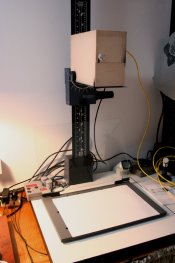
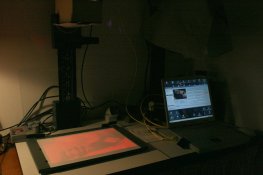
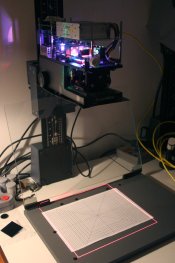
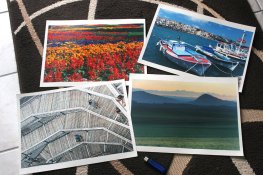
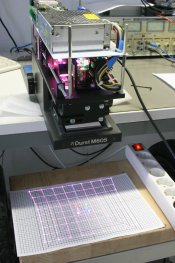
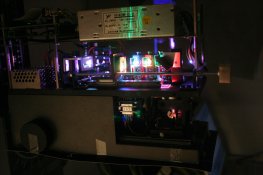
Home made "Lambda" printer.
Not for enlarging film negatives, but also (my) darkroom eqipment.
The developing process of RA-4 in the darkroom is the same like with optical enlarging.


IMG_4695_web.jpg IMG_4708_Montage_web.jpg IMG_4687_web.jpg IMG_4714_web.jpg Geometrical_Setup.jpg IMG_4691_web.jpg
 
Home made "Lambda" printer.
Not for enlarging film negatives, but also (my) darkroom eqipment.
The developing process of RA-4 in the darkroom is the same like with optical enlarging.


View attachment 151557 View attachment 151558 View attachment 151555 View attachment 151559 View attachment 151554 View attachment 151556
So you ended up going with an enlarger head set up?

I don't see a theta lens but it looks like you modified the input to compensate?

Mine has been put on hold while sourcing some parts!

Now to commercialise it :D
 
Over the years, I've built quite a few things in my darkroom. I call them my particle board masterpieces . . .

>> A stand for my 4' "The Sink". Includes shelf space for trays, etc., and a neat drying rack.

>> An enlarger stand that, in addition to anchoring the enlarger at it's base, has 2x6's that extend up the sides to anchor the top of the enlarger. The easel table top sits on a 1' extension that can be removed for greater magnification.

>> A custom sized film drying cabinet. I couldn't find one the right size, so I built my own out of poplar. (None the less a masterpiece, but not a particle board masterpiece.)

>> A sheet of about 3'x5' plywood that contains all my plumbing and electrical equipment. It connects by a power cable and hot and cold water and rests on two vertical 2x2's that have been fastened to the wall. When we sell this house, I'll easily be able to take it and re-install it at another location.

>> A water bath tray for my developer tray.

 
I've made negative carriers for weird format films I have tons of like 616 and 2 1/4 x 3 1/4. I haven't been able to track down an actual 2 1/4 x 3 1/4 carrier for my Beseler 45MXT, but my cardboard one works so well I don't think I'd buy one if I found it. Also, I had one of my fabricators make me a few lensboards for the Beseler as well, as I have a bunch of lenses and I wanted to be able to swap lenses without having to keep unscrewing lenses from lensboards.
 
Film washer from PVC pipe, film dryer from an old locker, negative masks and film carriers for Focomat IIB enlarger, I made a cold light head out of an old IC lamp housing so I can swop between IIb and Ic.
 
Post 38 in this link shows one of the negative carriers I have made for my Zone VI enlarger. The same concept could be used for most other enlargers.

http://www.largeformatphotography.i...r-any-advice-for-new-user&p=967492#post967492
Keith, I'm trying to get my head around what I'm looking at. There is clear glass on the bottom as support for negative and mask? Do you insert the negative above or below the mask? Is the bottom glass anti-Newton ring? Thanks.
 
Wow! The vacuum cleaner is clever design. Wouldn't it be loud when turn it on? I'm also interested in the paper safe design, curious how it looks like. I think you can patent it.

Hi,
The vacuum cleaner would be loud - that's why it's in the loft out of earshot and connected by a piece of pipe about ten feet long. The paper safe is constructed from the finest piece of plywood I could find lying around in my garage, painted matt black! I'll try to arrange a photo.
best wishes,
Steve
 
Just finished light-proofing a window AC unit for my new darkroom. The chief problem is the internal fan baffle that is made of white polystyrene and is translucent, the daylight from the exterior of the unit causes the whole styrene molding to glow brightly and light reaches the front of the unit in the darkroom. Rather than put baffles over the front I opened it up and used black paint on the outside of the styrene molding to block the light, I also painted the inside of the same thing so that there are two black layers blocking the light. The paint I used was regular latex from the hardware store $12 for a pint. Some black paper tape fixed some minor leaks around the frame and the unit is now back in the window and fully light tight :smile:
 
There are some impressive projects and complete darkrooms shown in this thread. I have also built my own darkroom, but nothing very impressive: a long bench for the wet side and storage plus a very solid enlarger bench for two Durst L1200s, removable light block with vent holes in front of the window and switchable white light/darkroom light in the ceiling. No water installations, but I have a bathroom next to the darkroom, so I don't feel a pressing need for water installations inside the darkroom.

My upcoming projects are a print washer for fiberbased prints and a paper safe or two.

My latest home-made darkroom item is a filter drawer for a Durst L1200 condenser head. I got one L1200 with three heads (CLS 450, BWL 450 and L1200 Condenser head) and all necessary mixing boxes and condensers extremely cheap, but there was no filter drawer in the condenser head. I have tried to find one, but to no avail. The original is made out of metal and takes 12x12 cm filter. I'm no great metal-worker, so I made a new filter drawer out of 2 mm 5-ply plywood. I had to trim 2 mm off the Multigrade filters to make them fit, but otherwise it works great.
Dead Link Removed

Not a major feat, but just what I needed :smile:
 
Keith, I'm trying to get my head around what I'm looking at. There is clear glass on the bottom as support for negative and mask? Do you insert the negative above or below the mask? Is the bottom glass anti-Newton ring? Thanks.


AN glass would go on the top if you used/needed it; no AN glass here. I've never had Newton ring issues with this carrier. The negative sits on top of the mask.
 
AN glass would go on the top if you used/needed it; no AN glass here. I've never had Newton ring issues with this carrier. The negative sits on top of the mask.
Thank you for the clarification. I wonder if the frosted glass mitigates the Newton Ring problem.
 
I cut up a black film canister to use as a spacer for fitting my Yankee tank's 110/16mm capable reel in my AP tank light free. I need to process some color 110 and the big hole in the Yankee tank pretty much means it was useless for anything needing inversion agitation.
 
I made my own water temp control setup. Put it all on a board, a couple of valves for temp control, feed a thermometer in a housing which feeds a valve for flow control. Takes a few minutes to dial in then is stable enough for print or film washing. I can adjust the flow without changing the temperature. All manual but works fine.
 
I made my own water temp control setup. Put it all on a board, a couple of valves for temp control, feed a thermometer in a housing which feeds a valve for flow control. Takes a few minutes to dial in then is stable enough for print or film washing. I can adjust the flow without changing the temperature. All manual but works fine.

Sounds like mine. Its better at flow control than temperature control but it has worked for me for years.
 
I rebuilt a automated Durst Mulitgraph 6x9 enlarger after a short circuit destroyed it:
- LED unit for B&W printing consisting of blue, green and red LEDs
- the control unit for the LEDs on the basis of an Arduino controlling paper grade and timing in f-stops, and with functions for f-stop teststrips and burning and dodging facility. The control unit can also hold the settings for different papers.
 
Most of my darkroom I built myself including the enlarger which goes up to 8 x 10. Also did the testing on the prototypes Zone VI timers I have in the darkroom.
 
Great ideas here!

As I student with low budget I also had to invent some stuff!

As of this moment I made 2 MDF panels to cover my bathroom windows, a contact printing frame, a test strip printer with K-Line and LED safelights. Now I need a print washer and figure out a way to fit the 30x40cm trays on my bathroom.. It's always a work in progress, but I love it.
 
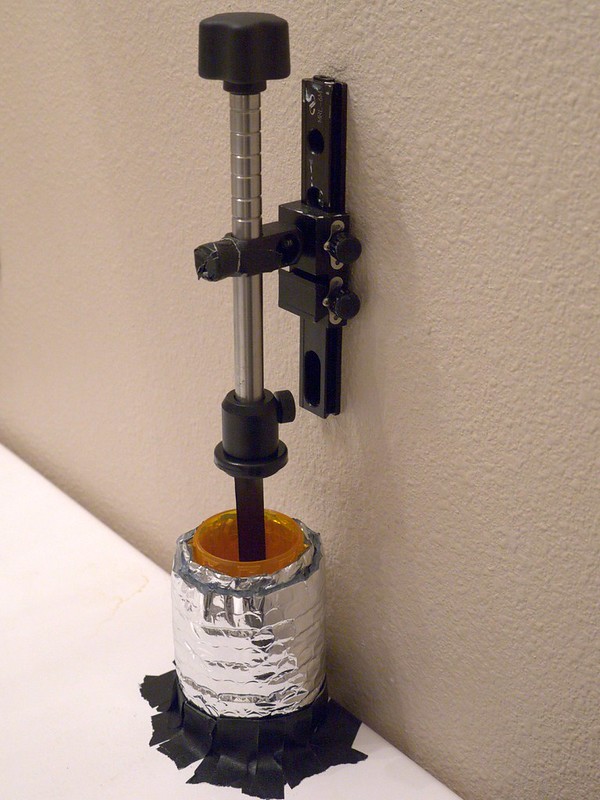
Here is an apparatus I built for conducting clip tests of unknown or found film:
25196311272_40483a4c94_c.jpg


The goal was to provide a means of lowering a strip of film into the developer in a sequence of controlled steps, while in the dark. In the picture you can see the strip of film attached to the lower end of the rod assembly, just starting to contact the developer.

To provide some feel in the dark for how far the film was being lowered at each step, I cut a series of evenly spaced grooves in the rod which act as detents for the ball-tipped thumbscrew which holds the rod in place. The spacing I chose provides a total of 7 steps for a strip the width of 120 film. By mounting the assembly on the dovetail rail attached to the wall I get a great deal of vertical adjustment range, which is convenient for accommodating different depths of developer or different lengths of film. Using the knob at the top I can even rotate the rod to provide agitation during development.

As you can see in the picture, my development "tank" for this contraption is really just a small plastic pill bottle! I figured that since my test strips were so small I might as well keep the tank small too and minimize the volume of developer required. The tank is wrapped in insulating material to help maintain temperature when performing cold developments, and sits in a crude masking tape "cup" which I added to help keep the tank centered in its place below the rod.
 
Last edited:
Lots of small things (slosher tray, f-stop timer, etc). Big one was my 8 x 10 enlarger made from a Kodak 2D 8 x 10 camera.
 
Photrio.com contains affiliate links to products. We may receive a commission for purchases made through these links.
To read our full affiliate disclosure statement please click Here.

PHOTRIO PARTNERS EQUALLY FUNDING OUR COMMUNITY:


Ilford ADOX Freestyle Photographic Stearman Press Weldon Color Lab Blue Moon Camera & Machine
Top Bottom