• Welcome to Photrio!
    Registration is fast and free. Join today to unlock search, see fewer ads, and access all forum features.
    Click here to sign up

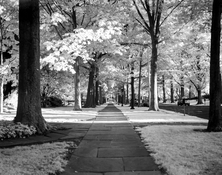
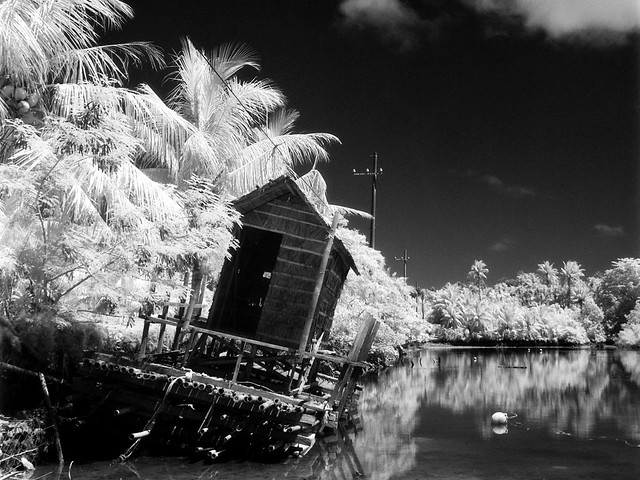
Post your Infrared Photographs here

Two Waves.jpg

A
Two Waves.jpg

  • 4
  • 2
  • 73

Recent Classifieds

Forum statistics

Threads
202,682
Messages
2,844,114
Members
101,466
Latest member
Plomo
Recent bookmarks
1
Using box speed, taking a light reading and adjusting for the filter factor is more accurate that arbitrarily setting an effective ISO. Filter factors are supplied by the manufacturer, who actually know what they are doing, not like the random number pulled out of the air, guessing, without any knowledge.
R23 filter factor 2
R25 filter factor 3
R29 filter factor 4
720 aka 72R filter factor 5​

filter factor =5 (25 A = 8 filter factor) or 5 stops = 32 filter factor? What I used is effectively to 6 or 7. I am not finding R72 filter factors on Hoya or any websites. I found one unofficial listing of filter factor=20 to 40 .

I did not make this up, but checked to see what worked with other photographers on Photrio and Flickr, and back calculated filter factors as a check. It made sense that the filter factor for R72 should be higher than 25A, I think. I just found it easier to use effective ISO around 6-16 with the filter on. You end up in a very similar place.

Look at my post: R25 [25A] has a factor of 3 [23 = 8 times the exposure time], 720 [72R] has a factor of 5 [25 = 32 times the exposure time]. Mathematics shows that 5 is greater than 3. I have found the filter factor for the 720 listed as 6 but that was a little too high sometimes from my work with it.

https://en.wikipedia.org/wiki/Wratten_number
 
Last edited:
Look at my post: R25 [25A] has a factor of 3 [23 = 8 times the exposure time], 720 [72R] has a factor of 5 [25 = 32 times the exposure time]. Mathematics shows that 5 is greater than 3. I have found the filter factor for the 720 listed as 6 but that was a little too high sometimes from my work with it.

https://en.wikipedia.org/wiki/Wratten_number

25A has a filter factor of 8, 3 stops: 2^3-stops=2x2x2=8 filter factor (8x exposure increase). Your link also says 3 stops, not filter factor of 3.

R72 appears to have a 5-7 stop increase needed: 2^5=32; 2^6=64; 2^7=128. I think the time of day I was shooting and the conditions when I metered, I was a bit less than 6 stops. So maybe 2/3 stops more exposure than your recommendation.
 
Last edited:
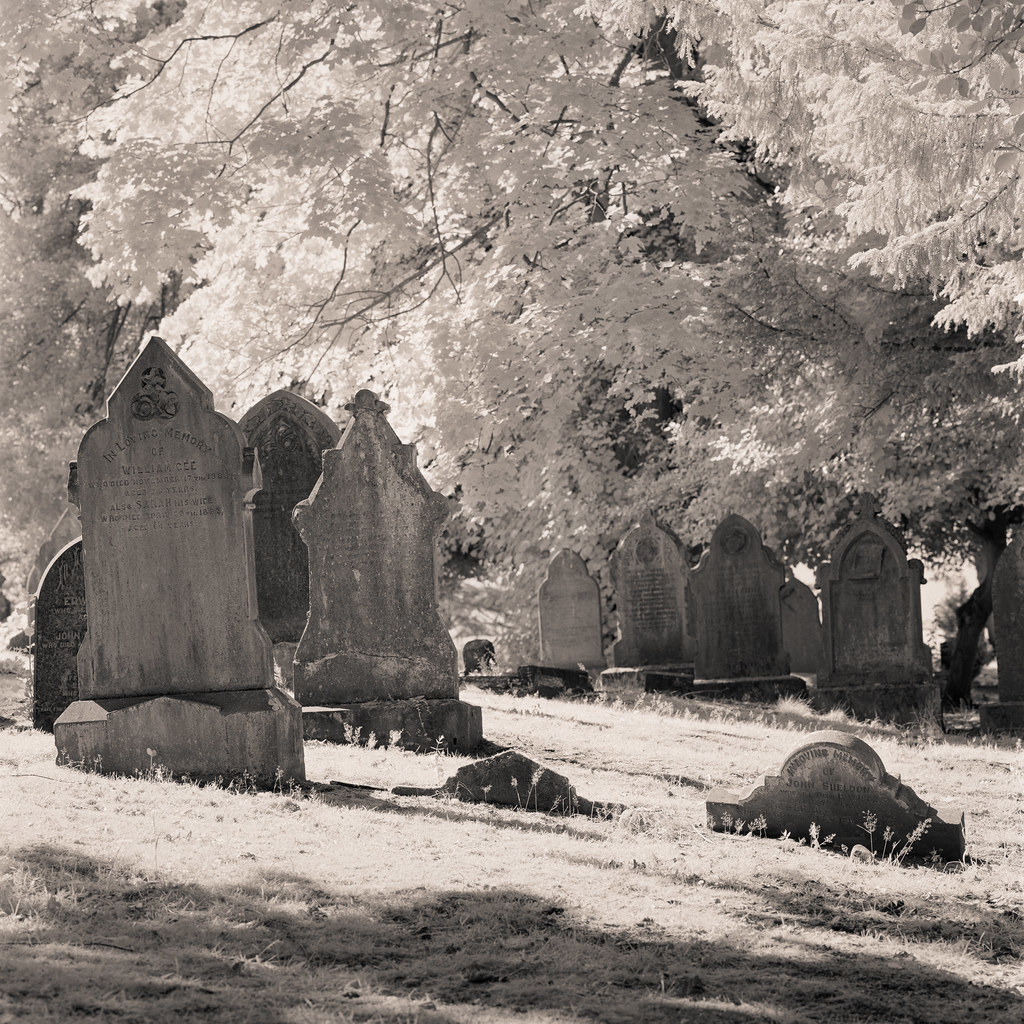
8x10 Efke IR. Wratten 87C.

St Marys.jpg
 
I am not finding R72 filter factors on Hoya or any websites. I found one unofficial listing of filter factor=20 to 40 .

The R72 blocks far enough down in to the red/IR that the filter factor will be very heavily dependent on the IR sensitivity curve of the specific film in use. A film that cuts off at 720 nm will need a much larger filter factor than one that "sees" down to 820 nm.

This is true even with visible red filters, to a lesser extent -- some panchro films have more red sensitivity than others, even when you're well within the visible.
 
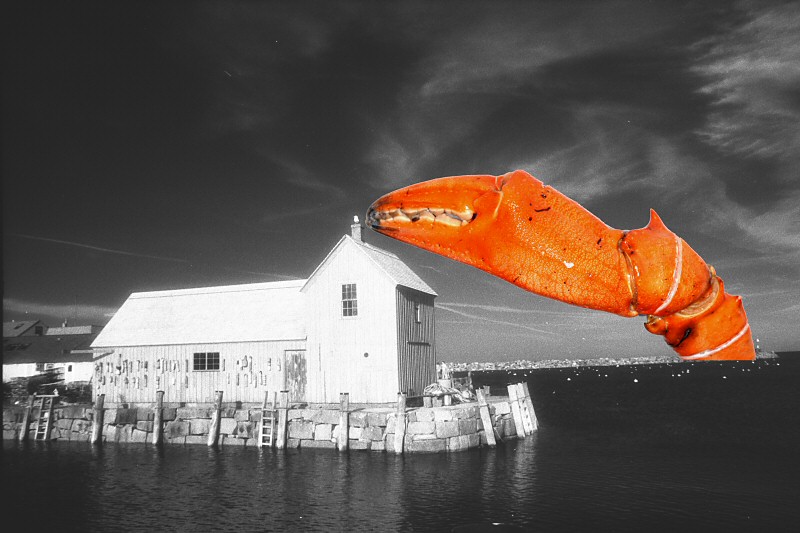
Mixed shot for comic purpose:

71244144.CwirMSNk.03MikeBenveniste.jpg


Nikon FA, Tokina 28-70mm lens @ 35mm, f/8, 1/125th, Kodak HIE film rated at ISO 200, Bogen 3021/3030, #25 Filter.
Nikon D200, Tokina 90mm f/2.5, f/11, 1/250th, ISO 100
 
I loved HIE, but after it disappeared I tried several other Infrared films. I like the Rollei IR 400 the best and I use the R25, R29 and 720 filters the best with it. The R23 is a little too weak for IR film, but it darkens the sky without turning it black that the R25 for panchromatic films and is stronger than the Orange filters.

A very nice series!
 
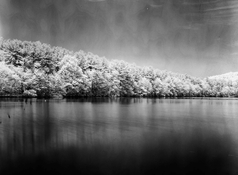
An image from my second time shooting IR. Bronica RF645, 65mm @ f22 on Rollei Infrared 400.
 

Attachments

  • Reservoir-IR.jpg
    Reservoir-IR.jpg
    661.1 KB · Views: 206
Indeed, but what is going on to the sky?

Some what darkened by the filter, but there is a lot of moisture closer to the surface and that is what causes the lighter tones near the trees.
 
Uncertain, I think my film lab may have done something wrong in the development process. Other shots had random black spots scattered about.

I agree. The moisture of the scene cannot be the reason in my opinion. Have you asked the lab already?
 
I agree. The moisture of the scene cannot be the reason in my opinion. Have you asked the lab already?

Unfortunately, I didn't. I do know that they do not handle much IR film. I tend not to ask the owner questions. Next time I have some Rollei 400, I'll bring it to a more experienced shop.
 
  • 250swb
  • Deleted
  • Reason: wrong size image
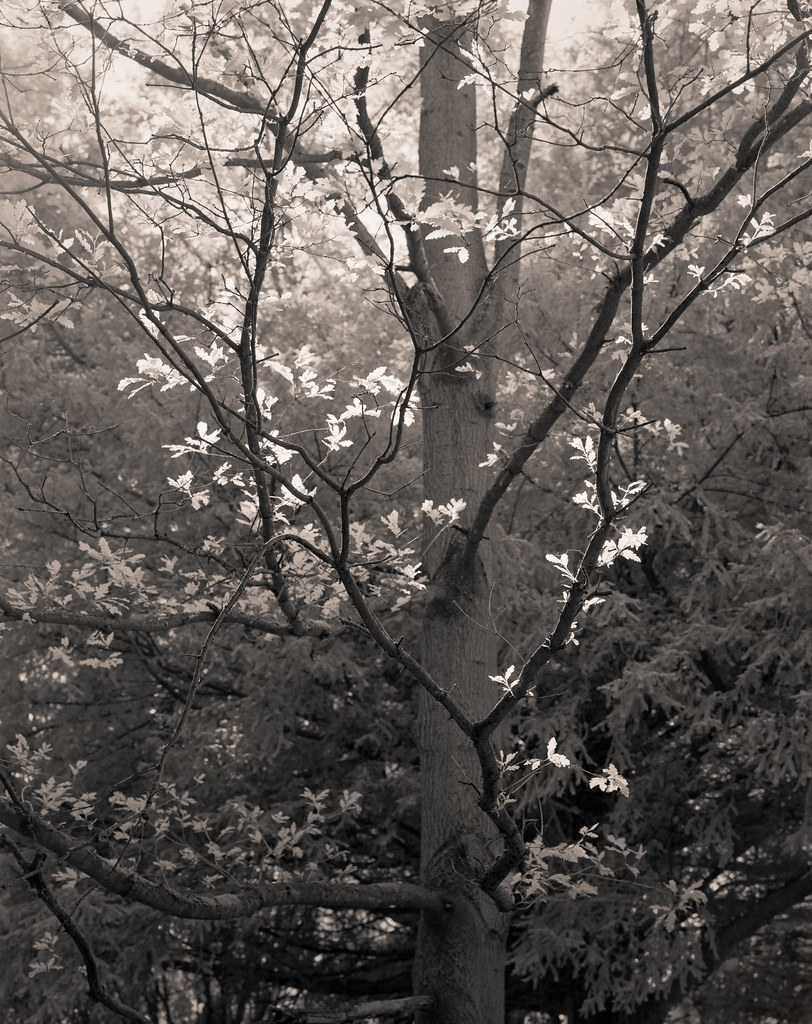
Recently picked up a Chroma Snapshot 4x5. Decided to test it with a sheet of Rollei IR 400.
 

Attachments

  • Rollei_IR_4x5.jpg
    Rollei_IR_4x5.jpg
    407.4 KB · Views: 172
Recently picked up a Chroma Snapshot 4x5. Decided to test it with a sheet of Rollei IR 400.

I'm going through old posts to learn more about IR film, and I find this photo of the street I work on. What are the odds?

Edit: Now I'm starting to doubt myself, but it looks identical. If so, the person on the right is going the wrong way down a one-way street.
 
Last edited:
Photrio.com contains affiliate links to products. We may receive a commission for purchases made through these links.
To read our full affiliate disclosure statement please click Here.

PHOTRIO PARTNERS EQUALLY FUNDING OUR COMMUNITY:


Ilford ADOX Freestyle Photographic Stearman Press Weldon Color Lab Blue Moon Camera & Machine
Top Bottom