• Welcome to Photrio!
    Registration is fast and free. Join today to unlock search, see fewer ads, and access all forum features.
    Click here to sign up

How to meter for landscape, architecture etc.

Ecstatic Roundabout

A
Ecstatic Roundabout

  • 0
  • 0
  • 24
MIT. 25:35

MIT. 25:35

  • 1
  • 0
  • 69

Recent Classifieds

Forum statistics

Threads
202,955
Messages
2,848,107
Members
101,553
Latest member
JasonGoh
Recent bookmarks
0
For a while I used a Nikkormat FS to practice guessing light since it doesn't have a meter. Most MF cameras don't have a meter either, but bulk rolled 35mm was a lot cheaper per frame. There are still times where a meter is necessary like very limited dynamic range (reversal film), very expensive shots (8x10), or shots you can't easily recreate tomorrow (solar eclipse). Nonetheless, I feel it was useful to go through that process because it also makes me more confident in what my meter says,
 
Most MF cameras don't have a meter either

True, but the the Pentax 67 cameras do (or not, if you have a different finder), with a rudimentary 5-stop range of their TTL meter, while independent multispot metering can leverage 9+ stops. There is much to be said for thinking "outside the box" (the camera!) and supplementing your kit with a meter (and the skills and knowledge to use it effectively), than rely on half-baked, non-averaging "cell phone meters".
 
Most MF cameras don't have a meter either

Let’s see, my Plaubel Makina 67 has a meter, so does my Rolleiflex 3.5E (and it is still working and accurate!) as well as my Rolleiflex 6008i and the Hy6 has probably the most sophisticated and accurate meter of any medium format camera. I’m sure there are plenty more.
 
True, but the the Pentax 67 cameras do (or not, if you have a different finder), with a rudimentary 5-stop range of their TTL meter, while independent multispot metering can leverage 9+ stops. There is much to be said for thinking "outside the box" (the camera!) and supplementing your kit with a meter (and the skills and knowledge to use it effectively), than rely on half-baked, non-averaging "cell phone meters".

I never said I dont meter. I just said that I like to train my eyes and not put blind faith in a device. I have Pentax, Minolta, and Sekonic 1° spot meters that I use regularly.
 
I never said I dont meter. I just said that I like to train my eyes and not put blind faith in a device. I have Pentax, Minolta, and Sekonic 1° spot meters that I use regularly.

This is a good point and the most vital part of knowing how to use a meter. Knowing how to use a meter and make scene-based and film-based adjustments makes the type/brand of meter being used less important than smartly using whatever meter one chooses to use.
 
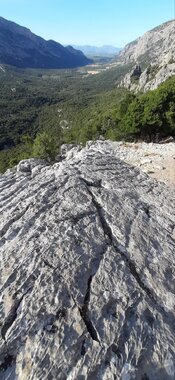
Sunny 16 is fine when you have an evenly lit scene or where averaging it out is ok. It falls down rapidly when you need to expose mostly for shadows on mountain rocks etc.


Anyway, I'll likely buy the spot meter from Reveni. Thanks all.

This is where knowing the overexposure/underexposure latitude of your film is important. Something that light meters do not typically account for. My default for hybrid process is to add +2 stops exposure on negative film when the shadow detail is a big and important part of the composition. On nearly all negative film, there are few cases where this will ever ruin your highlights, and often you can go further if you really need to.

When we think of Sunny 16, we know that an average shadow in those conditions is Shady 4. So our +2 puts us in the average of Compromise 8.
 
This is a good point and the most vital part of knowing how to use a meter. Knowing how to use a meter and make scene-based and film-based adjustments makes the type/brand of meter being used less important than smartly using whatever meter one chooses to use.

Sometime I screw up the metering process and get an exposure that doesn't fit with what I expect it should be. It is rarely the hardware's fault, more likely mine. (Like forgetting to adjust the film speed in the meter for the new sheet of film! I can't count how many times I have done that, so being able to ballpark the exposure in my brain has saved me sheets more than once.)
 
Sometime I screw up ...

We all do; these things happen to all of us occassionally! More than just human errors, it is important to not screw up based on the characteristics of the meter. Already discussed has been the use of incident meters by finding similar light, and adjusting the exposre recommendation of necessary. Not mentioned, nless I missed it, was the use of hte time-honored general coverage reflective meter. That is just as good of an alternative as any other meter and it's just as quick as incident. The challenge is knowing the metering pattern so extremes in the scene don't provide misleading guidnace. Oft mentioned, as one example, is pointing a general-coverage reflective meter down a bit to avoid excessive measurement of the sky. One meter that had me a bit baffled was the Weston, until I found documentation of the metering pattern and actually read the "how to use" instructions. That meter has a pattern that is specifically desinged for the meter to be held in one orientation otherwise the measurement can be wonky. My contention and experience is that a decent negative can be obtained using virtually any meter type so long as one really knows how to use it. Knowing how to ballpark light/exposure in one's head is excellent verification!!

 
This is where knowing the overexposure/underexposure latitude of your film is important. Something that light meters do not typically account for. My default for hybrid process is to add +2 stops exposure on negative film when the shadow detail is a big and important part of the composition. On nearly all negative film, there are few cases where this will ever ruin your highlights, and often you can go further if you really need to.

When we think of Sunny 16, we know that an average shadow in those conditions is Shady 4. So our +2 puts us in the average of Compromise 8.

Thank you! I was thinking to do exactly that. I haven't shot film for decades but in looking into it again I understand more light is better than less, when film is concerned. I had in mind to add a couple of stops if I shoot anything interesting before I can get a spot meter.
 
There are two methods that I use:
1) Meter the subject without the sky in the meter field of view.

2) Modified Zone System, I meter for Zone 2, 3 or 4 and that adjust for the zone difference.

1) That seems OK for BW film, but not for chrome color. You'd blow out the sky in many cases.
 
We all do; these things happen to all of us occassionally! More than just human errors, it is important to not screw up based on the characteristics of the meter. Already discussed has been the use of incident meters by finding similar light, and adjusting the exposre recommendation of necessary. Not mentioned, nless I missed it, was the use of hte time-honored general coverage reflective meter. That is just as good of an alternative as any other meter and it's just as quick as incident. The challenge is knowing the metering pattern so extremes in the scene don't provide misleading guidnace. Oft mentioned, as one example, is pointing a general-coverage reflective meter down a bit to avoid excessive measurement of the sky. One meter that had me a bit baffled was the Weston, until I found documentation of the metering pattern and actually read the "how to use" instructions. That meter has a pattern that is specifically desinged for the meter to be held in one orientation otherwise the measurement can be wonky. My contention and experience is that a decent negative can be obtained using virtually any meter type so long as one really knows how to use it. Knowing how to ballpark light/exposure in one's head is excellent verification!!

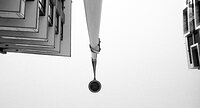
Brian, I've used old Nikon SLR film cameras with a built-in meter for years before digital. I used Center Weighted most of the time. I found matrix metering didn;t seem to work as well for me. I'd put in a little sky and more light and dark ground portions in the meter's selection area on the camera's viewfinder and work with that exposure. Pretty much as you described.

Today, while I have a Minolta Autometer with a 10-degree spot, I've been using my Olympus digital micro 4/3 camera as a director's viewfinder and exposure meter. It's as small as the dedicated Minolta meter, well, almost. Since I shoot chromes mainly, the Olympus is pretty close. Plus, I can see in the LED back screen if the picture looks normal in exposure. Plus, I have the additional advantages of a histogram and blinkies for when shadow and light areas clip. Whites tend to clip on the blinkies about two stops above average, about the same as chrome film. Of course, dedicated exposure meters don't have histograms or blinkies. Frankly, I'm surprised no one makes one that does. It has been around on digital cameras for decades. Why not on meters?
 
This is where knowing the overexposure/underexposure latitude of your film is important. Something that light meters do not typically account for.

But they can account for it.

There are a few 1°/5° spot meters that have an adjustable dynamic range (or [known] latitude) indicator, either the default values or those values you have set up for a particular film and specific circumstances encountered based on experience (not guesswork). There is no extant rule that dictates must stay within that dynamic range, so long as you are aware of what the result will potentially look like.

The existence of this feature does not preclude the user from making a blind judgement of the scene presenting (or what parts to meter, or not), which also implies you should not automatically exclude the sky in every and all situations; you must still make an informed judgement on what and how to meter a scene with strongly contrasting light. Excluding the sky is not always gospel when it is carrying features that are complementary to (or essential to the message of) the overall scene, be they physical, meteorological or light.
 
I adjusted the L-758DR to fall on Zone I, Zone II, Zone V, Zone VIII and Zone IX

Because Zone System always was a set of clipping points.

IMG_4330.jpeg
 
Photrio.com contains affiliate links to products. We may receive a commission for purchases made through these links.
To read our full affiliate disclosure statement please click Here.

PHOTRIO PARTNERS EQUALLY FUNDING OUR COMMUNITY:


Ilford ADOX Freestyle Photographic Stearman Press Weldon Color Lab Blue Moon Camera & Machine
Top Bottom