
• Welcome to Photrio!
    Registration is fast and free. Join today to unlock search, see fewer ads, and access all forum features.
    Click here to sign up

How to meter for landscape, architecture etc.

2 bath test

A
2 bath test

  • 1
  • 0
  • 0

Recent Classifieds

Forum statistics

Threads
202,764
Messages
2,845,267
Members
101,512
Latest member
FastFred
Recent bookmarks
0
The "sunny f-16 rule" doesn't just apply to sunny situations, and it isn't a rule either. It's basically remembering the simple guide included in a box of film. It's only f16 when it's sunny with distinct shadows and you're not on the beach or in the snow, or similar situations. In that case, you increase the shutter speed one step.

If it's hazy sunlight -- thin clouds or haze -- but there are still some shadow, then you open up to f11.

If it's bright but there are no distinct shadows, open up another stop.

It's goes on as the light gets dimmer, and it's pretty accurate -- and easy to remember.

And if your memory isn't what it used to be, just keep the sheet in your pocket or wallet.

And it's not against the law to bracket -- at least not yet.
 
Sunny 16 is fine when you have an evenly lit scene or where averaging it out is ok. It falls down rapidly when you need to expose mostly for shadows on mountain rocks etc.
Well, not really, it's still the same light source. It becomes an issue of how light or dark you want to render it, and how much dynamic range your film has and what you are willing to adjust if the highlights are going too bright. Do you adjust your expectation of rendering highlights? Do you adjust film development time, pull it? Is this an option with your workflow? Developing for individual sheets is nice, but things get tricky on a roll of 120.

Well, metering and film development and printing is a long topic.

One very serious suggestion: take a small notebook along and take notes of settings, thinking, etc. Then after the film is developed, go through the frames and compare your notes to the film itself. Do this for 5-10 rolls and you'll be in a great position for future shooting. Those of us who may appear sanguine about metering have probably shot and developed enough film, and have 'recorded' in writing or memory enough situations and seen how this or that shot works from exposure to negative to print, that it's hard to remember the struggle to get there.
 
There was another tiny 1 degree that was made a decade or so ago, and it has a lot of adherents, but is impossible to find (I can’t remember the name offhand.)

I had heard the Reveni was ~1.5 degree, is it that bad with off axis light? I was considering one but the early battery issues turned me off.

I think you're talking about the Metered Light Pocket Spot. Never owned one myself, but I know a couple of photographers who swear by 'em.

I have no way of measuring the actual angle of influence with the Reveni spot meter, but I'd guess it's more in the range of 3 - 5 degrees. I was actually quite surprised how much bright areas just outside the center circle affect the reading; way more than my Pentax Digital Spot.
 
Hi Guys,

I'm a bit lost as to how to meter for landscape and architecture or anything that is too far away from the camera for me to meter with an incident light meter.

Tips on how you're doing this would be appreciated!

What cameras, formats, and lenses are you using? Is there an eBay in central Europe, or something similar? For view cameras and sheet films, used Pentax spot meters are around $100 for the ones with the needles in the scope. Then you can play zone system if you like but can take time to learn. For roll films and telephoto, this will not work as well. There are hand held exposure meters you can buy used that will also work fairly well. I use on old Gossen Luna Pro with the 7.5/15 degree accessory which cover 200mm/100mm on 35mm and wider without the adapter when you learn how to point the meter for various subjects. There are many other used meters out there in the used market that can work very well. Spot meter are not required, but good if you have the time and patience and use or plan on using sheet film in cameras with wide angle to medium telephoto lenses.
 
Just showed my wife the new meter I want to get: Sekonic L-398A Studio Deluxe 70th Anniversary Edition Light Meter
 
LV Light Value Chart.png
 
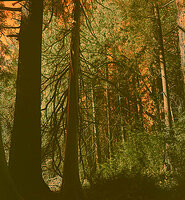
The most common time I feel the need for a light meter is the deep shadow of a forest.
 
Just showed my wife the new meter I want to get: Sekonic L-398A Studio Deluxe 70th Anniversary Edition Light Meter

Unfortunately it's discontinued, but you can buy a new L-398A for about $200 less. I've been happy with my L-398A - very reliable and never needs batteries.
 
Photrio.com contains affiliate links to products. We may receive a commission for purchases made through these links.
To read our full affiliate disclosure statement please click Here.

PHOTRIO PARTNERS EQUALLY FUNDING OUR COMMUNITY:


Ilford ADOX Freestyle Photographic Stearman Press Weldon Color Lab Blue Moon Camera & Machine
Top Bottom
