
• Welcome to Photrio!
    Registration is fast and free. Join today to unlock search, see fewer ads, and access all forum features.
    Click here to sign up

How to meter for landscape, architecture etc.

Rainy Day Trees

A
Rainy Day Trees

  • 6
  • 1
  • 92
One Way

A
One Way

  • 3
  • 1
  • 91

Recent Classifieds

Forum statistics

Threads
203,157
Messages
2,850,717
Members
101,704
Latest member
yppnq
Recent bookmarks
0
The "sunny f-16 rule" doesn't just apply to sunny situations, and it isn't a rule either. It's basically remembering the simple guide included in a box of film. It's only f16 when it's sunny with distinct shadows and you're not on the beach or in the snow, or similar situations. In that case, you increase the shutter speed one step.

If it's hazy sunlight -- thin clouds or haze -- but there are still some shadow, then you open up to f11.

If it's bright but there are no distinct shadows, open up another stop.

It's goes on as the light gets dimmer, and it's pretty accurate -- and easy to remember.

And if your memory isn't what it used to be, just keep the sheet in your pocket or wallet.

And it's not against the law to bracket -- at least not yet.
 
Sunny 16 is fine when you have an evenly lit scene or where averaging it out is ok. It falls down rapidly when you need to expose mostly for shadows on mountain rocks etc.
Well, not really, it's still the same light source. It becomes an issue of how light or dark you want to render it, and how much dynamic range your film has and what you are willing to adjust if the highlights are going too bright. Do you adjust your expectation of rendering highlights? Do you adjust film development time, pull it? Is this an option with your workflow? Developing for individual sheets is nice, but things get tricky on a roll of 120.

Well, metering and film development and printing is a long topic.

One very serious suggestion: take a small notebook along and take notes of settings, thinking, etc. Then after the film is developed, go through the frames and compare your notes to the film itself. Do this for 5-10 rolls and you'll be in a great position for future shooting. Those of us who may appear sanguine about metering have probably shot and developed enough film, and have 'recorded' in writing or memory enough situations and seen how this or that shot works from exposure to negative to print, that it's hard to remember the struggle to get there.
 
There was another tiny 1 degree that was made a decade or so ago, and it has a lot of adherents, but is impossible to find (I can’t remember the name offhand.)

I had heard the Reveni was ~1.5 degree, is it that bad with off axis light? I was considering one but the early battery issues turned me off.

I think you're talking about the Metered Light Pocket Spot. Never owned one myself, but I know a couple of photographers who swear by 'em.

I have no way of measuring the actual angle of influence with the Reveni spot meter, but I'd guess it's more in the range of 3 - 5 degrees. I was actually quite surprised how much bright areas just outside the center circle affect the reading; way more than my Pentax Digital Spot.
 
Hi Guys,

I'm a bit lost as to how to meter for landscape and architecture or anything that is too far away from the camera for me to meter with an incident light meter.

Tips on how you're doing this would be appreciated!

What cameras, formats, and lenses are you using? Is there an eBay in central Europe, or something similar? For view cameras and sheet films, used Pentax spot meters are around $100 for the ones with the needles in the scope. Then you can play zone system if you like but can take time to learn. For roll films and telephoto, this will not work as well. There are hand held exposure meters you can buy used that will also work fairly well. I use on old Gossen Luna Pro with the 7.5/15 degree accessory which cover 200mm/100mm on 35mm and wider without the adapter when you learn how to point the meter for various subjects. There are many other used meters out there in the used market that can work very well. Spot meter are not required, but good if you have the time and patience and use or plan on using sheet film in cameras with wide angle to medium telephoto lenses.
 
Just showed my wife the new meter I want to get: Sekonic L-398A Studio Deluxe 70th Anniversary Edition Light Meter
 
LV Light Value Chart.png
 
The most common time I feel the need for a light meter is the deep shadow of a forest.
 
Just showed my wife the new meter I want to get: Sekonic L-398A Studio Deluxe 70th Anniversary Edition Light Meter

Unfortunately it's discontinued, but you can buy a new L-398A for about $200 less. I've been happy with my L-398A - very reliable and never needs batteries.
 
Unfortunately it's discontinued, but you can buy a new L-398A for about $200 less. I've been happy with my L-398A - very reliable and never needs batteries.

Sekonic discontinued pretty much all of its professional exposure meters some years ago. Updates are still available for a few, but these updates are from 2016. I am not a fan of the touch-screen models touted as the better replacement for the older style meters. Aggravating experience with touch screens on high-end bike computers in the rain shows just what happens, often in the most inconveniencing moments.
 
And it's not against the law to bracket -- at least not yet.

Never was, never will be.
Bracketing is standard professional practice (even for sheet film), certainly nothing to palm off as trivial or wasteful.

Plenty is written about the Sunny 16, but less ventured of the Loony 11...
 
I think you're talking about the Metered Light Pocket Spot. Never owned one myself, but I know a couple of photographers who swear by 'em.

Thats the one. I've looked for a while, because I'd love to try one, but I've never seen one for sale. (or in person for that matter.) I have an older Pentax and a Minolta, but they are just so d*mn big that I use my Sekonic L-508 when I want 1° and the Sekonc L-408 when I can settle for 5°. I'll probably try the HEDECO when it comes out since its fairly small.

I have no way of measuring the actual angle of influence with the Reveni spot meter, but I'd guess it's more in the range of 3 - 5 degrees. I was actually quite surprised how much bright areas just outside the center circle affect the reading; way more than my Pentax Digital Spot.

Interesting. Doesn't make it useless, but I'd really want to experement a bit to better understand how well it actually works. I'm also curious about the super-imposition your brain does since there are no optics on the Reveni. I wonder if its actually accurate or if its easy to accidentally hold the meter in a way that the circle doesn't relect where its pointing.
 
Sunny 16 is fine when you have an evenly lit scene or where averaging it out is ok. It falls down rapidly when you need to expose mostly for shadows on mountain rocks etc.


Anyway, I'll likely buy the spot meter from Reveni. Thanks all.

No issue with a meter, I use my meters 98% of the time. But let's say your are shooting ISO 400 film, overall bright day, the mountains have deep shadows. Using Sunny 16 1/500 at F 16 is the basic rule, like an averaging meter you can assume that you will get shadows relative to the overall scene. But you think the shadows will be too dark, so you use Sunny 16 rule for open shadows so 1/125 at F 16. Then reduce your development time by 20% so as not to blow out the highlights. It is tricky with roll film as you need to develop all the negatives at the same time, meaning that on one roll you will have highlights that could be dull and listless or blown out.
 
That was old school when I was in college as a photography major in the 1960’s!

In 1974 when I was in school at Indiana University studying photography (before I transferred to R.I.T. to study photo science) I had been studying Dunn and Wakefields great book "Exposure Manual". They invented the S.E. I. photometer. I asked my photo prof (Reginald Heron) if he had ever seen or had one. The next day he came in and handed me 3 of them and just gave all three to me. I was floored. I held on to them for many years but felt guilty that he had given me such a great present so I returned them too him. I kicked myself ever since. Recently I ran across and ad on eBay for one. The seller didn't know anything about them so I offered him $ 50 as the meter on top did not operate. I took it home and took it apart and cleaned it up and low and behold it works great. It's a museum piece but it's still one of my favorite photo possessions.
 
What cameras, formats, and lenses are you using? Is there an eBay in central Europe, or something similar? For view cameras and sheet films, used Pentax spot meters are around $100 for the ones with the needles in the scope. Then you can play zone system if you like but can take time to learn. For roll films and telephoto, this will not work as well. There are hand held exposure meters you can buy used that will also work fairly well. I use on old Gossen Luna Pro with the 7.5/15 degree accessory which cover 200mm/100mm on 35mm and wider without the adapter when you learn how to point the meter for various subjects. There are many other used meters out there in the used market that can work very well. Spot meter are not required, but good if you have the time and patience and use or plan on using sheet film in cameras with wide angle to medium telephoto lenses.

This question I had was about TLRs (as I think I mentioned above). It's been a long time since I had a film camera without a meter, and in those days I was doing mostly portraits. I got a bit spoiled with the metering available with newer digital cameras lately and had some landscape and architectual projects in mind and didn't know how to approach them with these.

The TLRs I have all the the "standard" 75-80mm lenses.

There is ebay here and I used to use it quite often, but the national post failed several years ago and now almost nothing from outside the country (even inside EUrop) gets here unless sent by courier service, and many of the sellers seems to want to use EMS/national post since it's cheap and works in most other countries.


Thank you! That's a nice chart.

The most common time I feel the need for a light meter is the deep shadow of a forest.

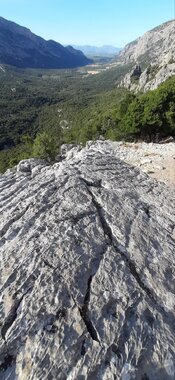
Yes, with a lot of contrasty light or rocks or the smallish mountains we have here, it's difficult for me to imagine what to do.

But I'll get a spot meter when I can and that should be enough for what I want to do.
 
I’m still learning medium format, and this is something I’ve been thinking about as well.

I find it quite challenging when the light is very different from where I stand.
 
Learning how to expose for landscape per the OP could be a Master's degree and then some.

OR

Realizing that 98% of your shots are going to be the same five aperture and speeds forever and ever so it's not that hard to figure out by looking where the sun is and what the clouds are doing.
 
Learning how to expose for landscape per the OP could be a Master's degree and then some.

OR

Realizing that 98% of your shots are going to be the same five aperture and speeds forever and ever so it's not that hard to figure out by looking where the sun is and what the clouds are doing.

That may work during the day. The problem comes about when you;re shooting after sunrise or before sunset during magic hour and the light changes rapidly. Its hard to determine what aperture or shutter time you need. Even with a meter, I'll bracket especially with color which is more sensitive and has less stops than BW.
 
That may work during the day. The problem comes about when you;re shooting after sunrise or before sunset during magic hour and the light changes rapidly. Its hard to determine what aperture or shutter time you need. Even with a meter, I'll bracket especially with color which is more sensitive and has less stops than BW.

Bracket and crossing your fingers helps. 😉
 
There are two methods that I use:
1) Meter the subject without the sky in the meter field of view.

2) Modified Zone System, I meter for Zone 2, 3 or 4 and that adjust for the zone difference.
 
If you’re carrying a phone in your pocket anyway you might as well use it as a meter. One less thing to lug around.

Most of the apps to do so are free.

You’d have to be some esoteric kind of backwards luddite, like some retrofuturistic amish person or something to be cool with the technology involved in shooting a camera and using a meter but not be willing to do any of that with your phone. Especially if you already have a phone.
 
Well, not really, it's still the same light source. It becomes an issue of how light or dark you want to render it, and how much dynamic range your film has and what you are willing to adjust if the highlights are going too bright. Do you adjust your expectation of rendering highlights? Do you adjust film development time, pull it? Is this an option with your workflow? Developing for individual sheets is nice, but things get tricky on a roll of 120.

Well, metering and film development and printing is a long topic.

One very serious suggestion: take a small notebook along and take notes of settings, thinking, etc. Then after the film is developed, go through the frames and compare your notes to the film itself. Do this for 5-10 rolls and you'll be in a great position for future shooting. Those of us who may appear sanguine about metering have probably shot and developed enough film, and have 'recorded' in writing or memory enough situations and seen how this or that shot works from exposure to negative to print, that it's hard to remember the struggle to get there.

Nicely articulated Dan!
 
If you’re carrying a phone in your pocket anyway you might as well use it as a meter. One less thing to lug around.

Most of the apps to do so are free.

You’d have to be some esoteric kind of backwards luddite, like some retrofuturistic amish person or something to be cool with the technology involved in shooting a camera and using a meter but not be willing to do any of that with your phone. Especially if you already have a phone.

🤣🤣🤣🤣
 
Photrio.com contains affiliate links to products. We may receive a commission for purchases made through these links.
To read our full affiliate disclosure statement please click Here.

PHOTRIO PARTNERS EQUALLY FUNDING OUR COMMUNITY:


Ilford ADOX Freestyle Photographic Stearman Press Weldon Color Lab Blue Moon Camera & Machine
Top Bottom
