• Welcome to Photrio!
    Registration is fast and free. Join today to unlock search, see fewer ads, and access all forum features.
    Click here to sign up

Harman Kentmere 200 officially released 2025/05/08

Recent Classifieds

Forum statistics

Threads
202,854
Messages
2,846,608
Members
101,570
Latest member
Justgregor
Recent bookmarks
0
I think this look really good!

Can I ask a quick question, how does the base colour/density compare to Delta 100?

I would say it's very slightly denser and exactly the same color. I don't have a side by side photo with Delta 100 at hand, but here is the Kentmere next to Delta 400 -- please ignore the wild exposures, but you can see the film base at least. Both developed in DD-X 1+4, but not together.

sidebyside.jpg
 
But I did find that tonal separation in the mid-to-high end was lacking compared to FP4 or Delta 400, so perhaps this mediocre tonal separation is what people are perceiving as a lackluster of contrast

I find no tonal issues whatsoever with Kentmere 400.

When you don't titillate its highlights to expose its mild halation, it's basically indistinguishable from HP5+ in most situations based on what I can see.

Do consult the D/E curves made available by the Naked Photographer and linked above. They're a good starting point. The curve is impressively linear in D76 1+1.

Perhaps the issue lies with your workflow.

How do you expose it, develop it and scan it?
 
I would say it's very slightly denser and exactly the same color. I don't have a side by side photo with Delta 100 at hand, but here is the Kentmere next to Delta 400 -- please ignore the wild exposures, but you can see the film base at least. Both developed in DD-X 1+4, but not together.

View attachment 398273

Great, thanks. Kentmere 400 and 100 have IME a much darker base.
 
I find no tonal issues whatsoever with Kentmere 400.

When you don't titillate its highlights to expose its mild halation, it's basically indistinguishable from HP5+ in most situations based on what I can see.

Do consult the D/E curves made available by the Naked Photographer and linked above. They're a good starting point. The curve is impressively linear in D76 1+1.

Perhaps the issue lies with your workflow.

How do you expose it, develop it and scan it?

I didn't compare Kentmere 400 to HP5 because I dislike HP5s flatter tonal separation in the higher values. IME Kentmere 400 and HP5 both suffer from the same dull values in the high end. My expose & develop techniques are not the issue here. (I have 55 years darkroom experience: I know what I am doing)
 
I have 10 rolls of Kentmere 200 arriving on Monday. Using my standard method I'll probably get around to shooting it sometime in 2027. 😁
 
I didn't compare Kentmere 400 to HP5 because I dislike HP5s flatter tonal separation in the higher values. IME Kentmere 400 and HP5 both suffer from the same dull values in the high end. My expose & develop techniques are not the issue here. (I have 55 years darkroom experience: I know what I am doing)

Ok interesting. Well if you get the chance of testing the new 200 I'd be interested to know if you think these dull values you observe in 400 and HP5 are still there.
 
Ok interesting. Well if you get the chance of testing the new 200 I'd be interested to know if you think these dull values you observe in 400 and HP5 are still there.

I have no intention of trying the 200 Kentmere, given my experience with the other versions. I’m uninterested in what the Kentmere branded films have to offer.
 
And on this light note I just ordered my first 10 rolls of Kentmere 200 in 120.

Can't wait to test it in my own workflow.

As a lifelong student of film photography and someone on a (big) budget, I look forward to taming those pesky, misbehaved upper mids!

Kentmere 200 vs Foma 200 in D23 1:1 - the heat is on!
 
I bought four rolls of Kentmere 200 120 film from B&H. I just put one roll in my second Hasselblad back. It will likely take me a week to finish the roll. When I do I will develop it with Rodinal 1:50 for 12 minutes at 68ºF. That's just a guess for a starting point.

I am not using Rodinal because I think it might be the best developer for Kentmere 200 but because I use Rodinal for all my film stocks. While many here work at finding the best developer for a particular film I concentrate on finding good films for a particular developer - Rodinal in my case.
 
I bought four rolls of Kentmere 200 120 film from B&H. I just put one roll in my second Hasselblad back. It will likely take me a week to finish the roll. When I do I will develop it with Rodinal 1:50 for 12 minutes at 68ºF. That's just a guess for a starting point.

I am not using Rodinal because I think it might be the best developer for Kentmere 200 but because I use Rodinal for all my film stocks. While many here work at finding the best developer for a particular film I concentrate on finding good films for a particular developer - Rodinal in my case.

Rodinal is as good a choice as many. There is no inherent contrast problem with these films, or HP5 etc.
 
While many here work at finding the best developer for a particular film I concentrate on finding good films for a particular developer - Rodinal in my case.

Whatever floats your boat, as they used to say.
Keep us informed how it works out. I have 5 120 rolls on the way.
 
I think the people who are using labs may simply want the option of shooting at 200 in addition to 100 and 400.

Though I do see a lot of chatter about K400 being "flat". And I've seen scanned negatives which illustrate this. It wasn't "flat" when I used some a few years ago, and I've just bought 100 feet of K400 to use in the second half of this year.....but I develop myself and scan myself so I probably do tweak everything to my personal tastes. Labs will largely automate the process, unless the user pays for a "pro" or "premium" service.
 
I think the people who are using labs may simply want the option of shooting at 200 in addition to 100 and 400.

Though I do see a lot of chatter about K400 being "flat". And I've seen scanned negatives which illustrate this. It wasn't "flat" when I used some a few years ago, and I've just bought 100 feet of K400 to use in the second half of this year.....but I develop myself and scan myself so I probably do tweak everything to my personal tastes. Labs will largely automate the process, unless the user pays for a "pro" or "premium" service.

You can of course simply shoot the 400 film at 200. There wouldn’t be any reason to change the processing. Presumably the 200 film will be slightly finer grained but the point is there is no reason not to shoot the 400 film at 200 whether you develop yourself or not. It doesn’t change how the film should be developed.
 
Good to see it’s making its way into some cameras now. My local shop has it in stock, so I have two 35mm rolls to try out. Hoping to have a print or two in the next week.
 
It's a new emulsion. There's no reason to think you can make any previous Kentmere film look exactly like it.
 
I've had the opportunity to shoot a roll of Kentmere 200 (120) yesterday. I shot it at box speed and developed according to the published instructions in DD-X. I have not done any densitometry; I just wanted to see how it responded when used "normally." I'll probably play with it further. For what it's worth it doesn't seem like a 100 or 400 speed film "re-labeled" as 200 at all, not that I expected it to. Negatives quite dense with good shadow detail at 200 in DD-X, though of course everyone's meters, shutters, and workflow are different. Of course this says nothing about inherent properties of the film's contrast since the end result depends on my exposure, development, scanning, and the curve applied in lightroom.

I don't normally flit around from one film to another because I've standardized on Delta 100 for the most part, but I can see it being an alternative for variety.
kentmere 200 experiments by eric volpe, on Flickr

Perhaps the "flat as a pancake" brigade can tell us what magic you have performed with these Kentmere 200 pics. Unless of course they are, in their opinion, still flat in which case I need some education in what it is I am not seeing


pentaxuser
 
IMO when digitizing negatives, "flat" as a general term doesn't mean much. As long as they're digitized with sufficient dynamic range and haven't lost shadow detail or compressed highlights into nothing, I'm pretty happy.

Anyway, if you want more concrete samples, here you go. I've included a pair of more high-key, denser negatives too.

negs1.jpg
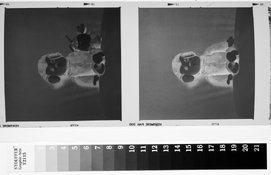
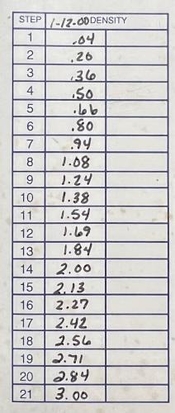
negs2.jpgstep.jpg
 
Naked Photographer youtube review, just posted:

 
You can of course simply shoot the 400 film at 200... there is no reason not to shoot the 400 film at 200 whether you develop yourself or not

In the lab use scenario there is a reason: cost. Labs can and do charge extra for Push and Pull. Like 60% more in some cases. In this case, true ISO 200 film has a place under the sun.
Oc course, one can shoot K100 @200 and ask for a standard development time targeting EI 100, and have a tad underexposed negatives for no additional cost.
 
Last edited:
It's sorta humorous, the obsession with 100 vs 200 vs 400. When you think of the billions of photos that were shot on humble Verichrome Pan, in 127 and 620 in very rudimentary cameras yet with a steady hand and the sun/shade/flashbulb in your favor, good prints could be had. Kodak Brownie cameras definitely had a when in doubt overexpose. Same was true with Instamatics and color negative film. Modern miracle Kodak color negative film has about 5-6 stops of latitude.

I suspect that this new Kentmere 200 will be a very popular choice.
 
Interestingly, the datasheet for it says this about the base:
KENTMERE PAN 200 film is coated on 0.125mm/5-mil acetate low density base and is available in 135 cassettes, 35mm bulk lengths of 30.5 metres (100ft) or 120 Roll film format.
i.e., both the 120 and the 135 films seem to be coated on the same 5 mil "low density" acetate base.
Compare that with FP4 Plus, for which the datasheet indicates:
FP4 Plus 35mm film is coated on 0.125mm/5-mil acetate base ... (while) FP4 Plus roll film is coated on 0.110mm/4-mil clear acetate base with an antihalation backing which clears during development
 
I ran a short clip test in my usual Xtol replenished. Obviously no data for that, but in such cases I usually take the listed time for ID11 (often similar to Xtol stock) and add about 50%. Only added 30-40% as several reviews I read said their negs were a little dense with given times for other developers, so 10 minutes at 20C.

Long story short, the results are very promising. I used my trusty Spotmatic SP (meter is known to be accurate) at 200 and just snapped a few shots.

Spoiler: My retinas were not assaulted by contrast. In fact, what I see is good shadow detail and negs that I know will print easily. If anything, development was a little short, I may bump it to 11 minutes, but that’ll be decided after printing a few frames.

Kentmere 200 looks like a winner so far.
 
One phenomena that I have observed to be common is that many relatively inexperienced film users tend to equate negatives that look attractive to the naked eye - nice, clear, visibly contrasty appearance - with "good" negatives.
As a result, there are a lot of people out there who are aiming for negatives that I would consider to be over developed and too contrasty.
A very clear base may help offset that problem a bit, because t will make a negative appear more contrasty to the naked eye, while not being so overly contrasty when it comes time to scan or print it.
 
Photrio.com contains affiliate links to products. We may receive a commission for purchases made through these links.
To read our full affiliate disclosure statement please click Here.

PHOTRIO PARTNERS EQUALLY FUNDING OUR COMMUNITY:


Ilford ADOX Freestyle Photographic Stearman Press Weldon Color Lab Blue Moon Camera & Machine
Top Bottom