
• Welcome to Photrio!
    Registration is fast and free. Join today to unlock search, see fewer ads, and access all forum features.
    Click here to sign up

Film Ferrania p30

Recent Classifieds

Forum statistics

Threads
202,830
Messages
2,846,115
Members
101,553
Latest member
SeattleMC
Recent bookmarks
0
Yes of course it must be some kind of dirt, but usually I have very clean negs. But what if the dirt was applied during production? E.g. I remember Efke having had massive probs with dirt on or in the emulsions.

And Scott, you have exactly the same problem with your own pictures! Look at the dark tree trunk in your image in full size:
https://www.flickr.com/photos/thekurgan/35185824411/sizes/k/

Many other pictures in the flickr group show the same, others don't. I also remove spots during edit in some of my pictures that shall be good pictures. But it's a work I would rather avoid.

Again, this is an alpha product and we shouldn't expect a perfect product at all. But possible problems need to be addressed.
 
Last edited:
I just finished scanning the second roll. I made some D-96 and processed in a Rondinax, 8 minutes continuous agitation, water stop, TF-4 fix 4 minutes, dry in a long, enclosed suit rack.

These are then scanned in a Pakon F135 to raw, converted to 16 bit tiff, inverted using colorperfect monochrome mode and a medium contrast curve is applied in photoshop. Lightroom for catalog, sharpening is 25/1.0/25/50. I didn't do anything like dust removal or excessive cropping. I lost a few shots because my F4 EL button got stuck in the on position while shooting and I didn't notice for a few shots.

All shots using Nikkor 50mm f/1.4 AI-S, 28mm f/2.8 AI-S, 105mm f/2.5 AI-S, 60mm Micro and Nikkor 80-200mm f/2.8D.

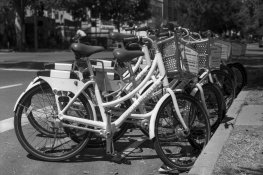
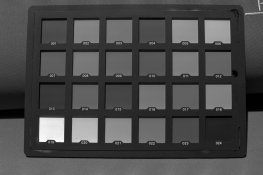
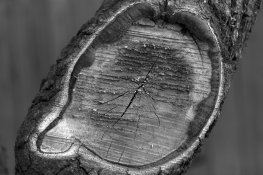
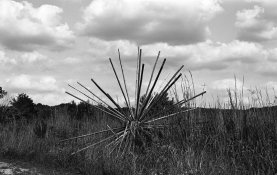
Here is a colorchart and one sample. I don't want to spam this feed, so I'll put the link to the flickr album for these.

https://www.flickr.com/photos/thekurgan/albums/72157683560148332

All-in-all, I like the way the negatives look, not thin, but not too dense. I do some macro photography and go to car shows so I got good practice with this film for those as well.

Feedback is always welcome and I can send the raw 16 bit tiff if anyone wants to play or get digital/creative with them.
 

Attachments

  • bikes.jpg
    bikes.jpg
    559.3 KB · Views: 299
  • colorchart.jpg
    colorchart.jpg
    368.8 KB · Views: 290
  • cut_branch.jpg
    cut_branch.jpg
    605 KB · Views: 255
Yes of course it must be some kind of dirt, but usually I have very clean negs. But what if the dirt was applied during production? E.g. I remember Efke having had massive probs with dirt on or in the emulsions.

And Scott, you have exactly the same problem with your own pictures! Look at the dark tree trunk in your image in full size:
https://www.flickr.com/photos/thekurgan/35185824411/sizes/k/

Many other pictures in the flickr group show the same, others don't. I also remove spots during edit in some of my pictures that shall be good pictures. But it's a work I would rather avoid.

Again, this is an alpha product and we shouldn't expect a perfect product at all. But possible problems need to be addressed.

IIRC they have already admitted to a production issue of this type, due to a faulty roller, before the alpha rolls were dispatched. They didn't catch it until much of the run was complete, but it has been corrected.
 
IIRC they have already admitted to a production issue of this type, due to a faulty roller, before the alpha rolls were dispatched. They didn't catch it until much of the run was complete, but it has been corrected.

I think that was scratches from a roller on one of their cutters? I haven't read anything about dust getting into the emulsion, but I suppose that could be possible. Not everyone systematically rescans or photoshops dust out of their scans.
 
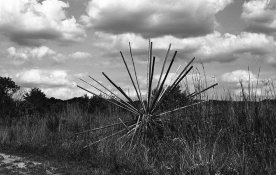
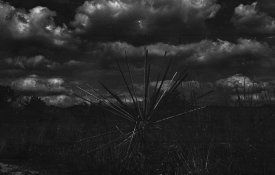
Did a little experimentation in the midst of a roll with deep-green and red filters. Not sure if the Red is a flawed exposure time or not, but will definitely try this experiment again on the next roll.

Pardon the dust on the last image scan - negative was very dim.
 

Attachments

  • P30nofilter.jpg
    P30nofilter.jpg
    90.7 KB · Views: 252
  • p30greenfilter.jpg
    p30greenfilter.jpg
    100.4 KB · Views: 257
  • p30redfilter.jpg
    p30redfilter.jpg
    49.2 KB · Views: 238
Did a little experimentation in the midst of a roll with deep-green and red filters. Not sure if the Red is a flawed exposure time or not, but will definitely try this experiment again on the next roll.

Pardon the dust on the last image scan - negative was very dim.

How were you metering these? It seems odd that your foliage would be darker with a green filter.
 
How were you metering these? It seems odd that your foliage would be darker with a green filter.

TTL Metering. That said, I'm also not sure the scanning didn't try to compensate. There was no post processing done after the scans.

On the next set, I'll be using an old Altix, so I'll have to compensate manually, and can see what differences might exist.
 
I sometimes find I need to increase exposure during scanning to compensate as well, especially with red and orange filters.
 
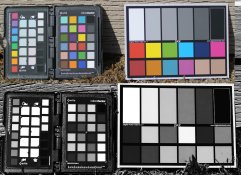
To add to the colour sensitivity debate, here are my shots of some colour charts. Definitely some lack of red sensitivity, and enhanced sensitivity to blue.
p30-color-charts.jpg
 
To add to the colour sensitivity debate, here are my shots of some colour charts. Definitely some lack of red sensitivity, and enhanced sensitivity to blue.
View attachment 183618
Very helpful! The blues really run the gamut on tonality it would appear.

I did a few more experiments yesterday with the Red 25 and Green PO 1 filters using filter factors to compensate, but haven't had the chance to develop them yet. I also have an 80B I need to try at some point for comparison's sake.
 
To add to the colour sensitivity debate, here are my shots of some colour charts. Definitely some lack of red sensitivity, and enhanced sensitivity to blue.
View attachment 183618

When it comes to densitometry discussion, I'm way out of my depth, but the grey response looks off.
 
I also agree with Chris. When my photos are examined by friends, family and other photographers, the first thing noticed is the lack of grain and the "big" look. The film has a very smooth tonal transition throughout its range, giving it more than 135 look and feel.

I have a feeling this film in 120 is going to be a game-changer.

Of course one would expect less grain since P30 is an ISO 80 film and there is nothing comparable at this speed. There is Ilford Pan F at ISO 50 and several medium speed films at ISO 100.
 
As far as spectral sensitivity is concerned many panchromatic films have a slightly reduced red sensitivity. It all has to do with the effectiveness of the red sensitizer(s) used. However this does not make the film any less a parchromatic film.
 
Of course one would expect less grain since P30 is an ISO 80 film and there is nothing comparable at this speed. There is Ilford Pan F at ISO 50 and several medium speed films at ISO 100.

I expected more grain because most of the developers used aren't of the fine grain type, which is why I went with D96 on this last roll and the results were even more impressive.
 
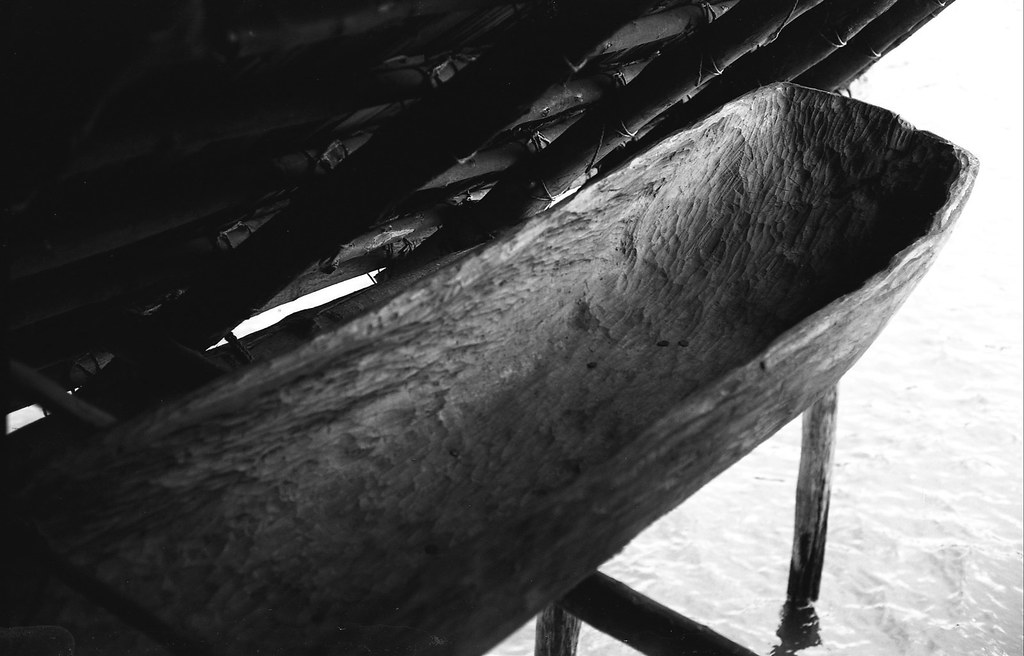
Just back from a road trip, Germany,Switzerland and Austria, as I'm down to my last two rolls of P30 I only shot one (23 others though) I have started developing and with the contrast and slow films used Beutler: 1:1:8 at 70F 7 mins. Leica M2/Sonnar ZM f1.5
They are from the Stilt Dwellings of Unteruhldingen one of the largest archaeological open-air museums in Europe and Unesco world Heritage;

35545854924_c75fbba253_c.jpg


35984786910_b7f86e2a0c_b.jpg
 
I had a chance to run the densitometer over my exposure step sequence. This film was developed by "The Darkroom" as I did not have time to do it myself. They were one of the recommended "test site" labs so I expected a reasonable development from them, however they significantly overdeveloped the film. So I will not publish the density plots as they are not useful. P30 as I expected from the pictures others have published has a long flat toe (hence all the discussion on film speed). My best estimate for speed based on 0.1 density above fb+f would be ISO 40/17 to 50/18, however the long toe means that speed is probably too slow from a visual (looking at photos) perspective.
 
My best estimate for speed based on 0.1 density above fb+f would be ISO 40/17 to 50/18, however the long toe means that speed is probably too slow from a visual (looking at photos) perspective.
I would extrapolate from this that if you are planning to have your film commercially developed, you should use a higher EI and expect high(er) contrast, whereas if you are planning to control the contrast with reduced development, you will need to increase exposure (use a lower EI).
FWIW, this tells me that the quoted ISO is probably correct, because the ISO standard is oriented toward print viewing and commercial development.
 
I would not make any assumptions about commercial development. "The Darkroom" made some sort of mistake. The contrast is very high. I doubt it would print even on grade 0 paper.
 
I would not make any assumptions about commercial development. "The Darkroom" made some sort of mistake. The contrast is very high. I doubt it would print even on grade 0 paper.
I wasn't really referring to your particular result, but rather your general observation about the long toe and the "visual (looking at photos) perspective".
 
It is not necessary to use D-96. This developer was designed for cine film which is to be printed on contrasty positive stock. Any developer will work with p30. For example I typically develop Eastman Double-X in HC-110 or Rodinal with great results.
 
Just back from a road trip, Germany,Switzerland and Austria, as I'm down to my last two rolls of P30 I only shot one (23 others though) I have started developing and with the contrast and slow films used Beutler: 1:1:8 at 70F 7 mins. Leica M2/Sonnar ZM f1.5
They are from the Stilt Dwellings of Unteruhldingen one of the largest archaeological open-air museums in Europe and Unesco world Heritage;

35545854924_c75fbba253_c.jpg


35984786910_b7f86e2a0c_b.jpg

These are great Chris, patrticularly the first one.
 
These are great Chris, patrticularly the first one.

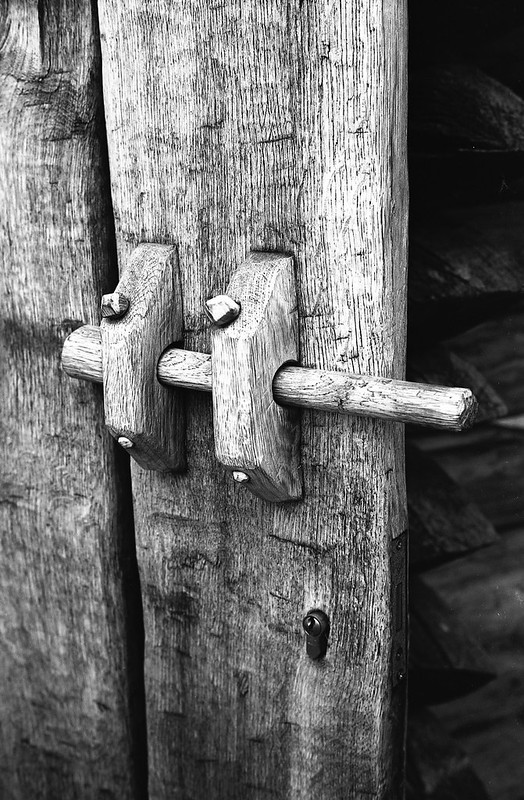
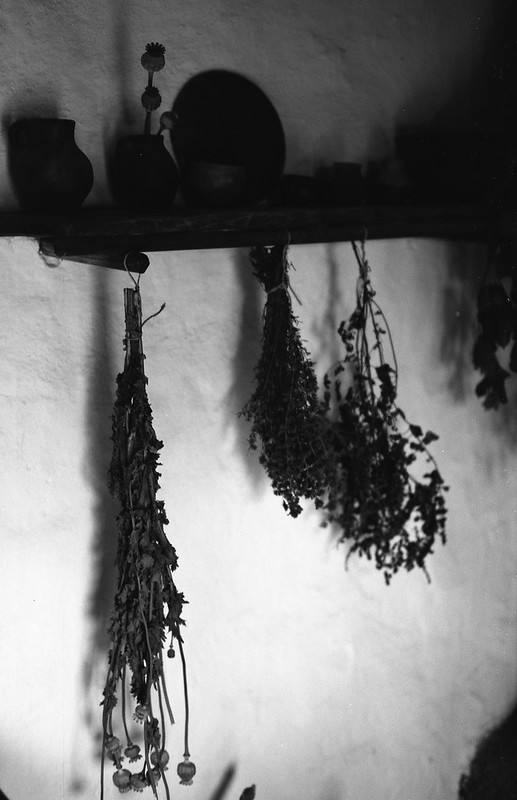
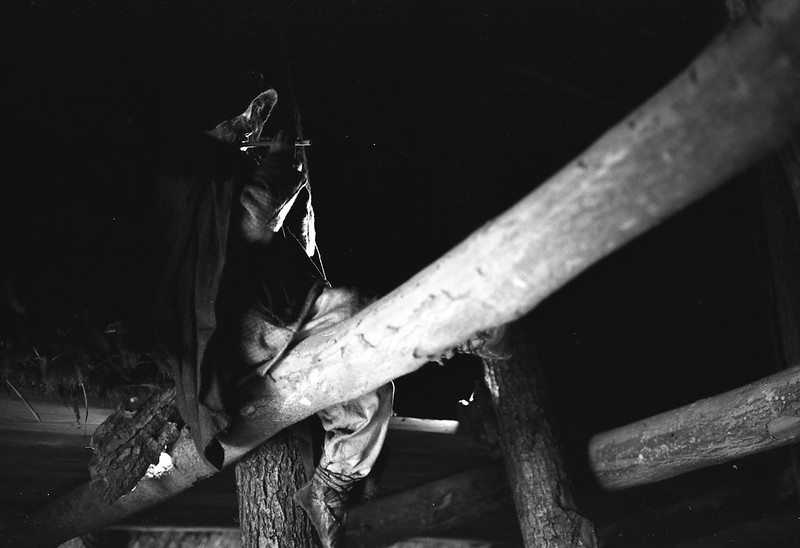
Thank you, at the risk of being tiresome here are a couple more because a point I would like to make is that the impression I have, and this is not criticism it is comment, is that shooters seem to want to "bend" P30 into a "normal" run of the mill film with a look just like Tri-X/FP4+ etc and not embrace the "look" of the film for creative purposes. Now I'm being pretentious attributing this work as creative I know but I knew what the film can do, I know I was in low light, very, and I got what I wanted. Full tonal range here would just not reflect the scenes as I saw them and wanted to show them, I had Acros and FP4+ available in the bag P30 was a creative choice based on its known properties.

Drying Herbs
35591227843_02233f9810_c.jpg


Child flute player model

35591246873_bfe5a85d0a_c.jpg


Both from the Stilt Village reconstruction museum at Unteruhldingen on M2/Sonnar 50mm Beutler
 
Photrio.com contains affiliate links to products. We may receive a commission for purchases made through these links.
To read our full affiliate disclosure statement please click Here.

PHOTRIO PARTNERS EQUALLY FUNDING OUR COMMUNITY:


Ilford ADOX Freestyle Photographic Stearman Press Weldon Color Lab Blue Moon Camera & Machine
Top Bottom