• Welcome to Photrio!
    Registration is fast and free. Join today to unlock search, see fewer ads, and access all forum features.
    Click here to sign up

Confirming Film Development Time using an 0.30 Neutral Density Filter

pared_amarilla.jpg

H
pared_amarilla.jpg

  • 0
  • 0
  • 22
December Path

H
December Path

  • 3
  • 0
  • 39

Recent Classifieds

Forum statistics

Threads
201,676
Messages
2,828,391
Members
100,882
Latest member
Photriо
Recent bookmarks
0

Mr Bill

Member
Allowing Ads
Joined
Aug 22, 2006
Messages
1,524
Format
Multi Format
While I don't disagree with this, given the prices for ND filters, of whatever type, you can probably find a decent, used, enlarging meter for less than a single ND filter -- and put it to other uses, to boot.

When I referred to some cheap ND filters I'm thinking of something like Rosco Cinegel. Unless I'm misreading online ads, looks like the cost of a 20x24 inch sheet is around $15 US, more or less. I would imagine that the quality would be perfectly suitable for visual estimates.
 

xkaes

Subscriber
Allowing Ads
Joined
Mar 25, 2006
Messages
5,118
Location
Colorado
Format
Multi Format
That’s absolutely true. The Ilford meter would lend itself admirably to the task. But you’d either want to use a diffuser, or photograph a subject a bit less coarsely textured than Bill’s pebbles. Matt’s towel suggestion, perhaps?

I've done similar, but more involved testing, with a Beseler Color Analyzer, and a gray card worked fine in my book.
 

xkaes

Subscriber
Allowing Ads
Joined
Mar 25, 2006
Messages
5,118
Location
Colorado
Format
Multi Format
When I referred to some cheap ND filters I'm thinking of something like Rosco Cinegel. Unless I'm misreading online ads, looks like the cost of a 20x24 inch sheet is around $15 US, more or less. I would imagine that the quality would be perfectly suitable for visual estimates.

I've seen lots of nice enlarger meters on EBAY -- Ilford, Beseler, Unicolor, etc. -- in the box, like new -- for less than that. And you get to use it in other ways. WIN-WIN.

It's your money, you decide.
 
OP
OP
Bill Burk

Bill Burk

Subscriber
Allowing Ads
Joined
Feb 9, 2010
Messages
9,461
Format
4x5 Format
I've adopted a Beseler PM2M and picked up a handful of modules. Maybe I'll write up how to use it in the darkroom.

I use it for black and white printing, where I arbitrarily decided to use Yellow for Highlight, Magenta for Shadow and White for Density.
Can't use Cyan on my Omega D2 with Aristo Grid lamp (with teal light color) because it reads as if there's no light.

Mostly use it to dial in about a rough 30 seconds base exposure time.

Hoping to come up with something that can be free.
 

xkaes

Subscriber
Allowing Ads
Joined
Mar 25, 2006
Messages
5,118
Location
Colorado
Format
Multi Format
I use it for black and white printing, where I arbitrarily decided to use Yellow for Highlight, Magenta for Shadow and White for Density.

I have a PM2L, and this sounds like a sound approach.
 
OP
OP
Bill Burk

Bill Burk

Subscriber
Allowing Ads
Joined
Feb 9, 2010
Messages
9,461
Format
4x5 Format
Still thinking of easier way to explain.

We all understand the best contrast for a black and white negative is half the contrast of reality.

Well, it's closer to 5/8 but easier to imagine half. We want a relatively low contrast negative to print on relatively high contrast paper.

That's the gist of it.

Going back to half. If you develop to half contrast of reality, then giving four times the exposure gives two times the density.

Now the pictures we take tend to have a good portion of their image detail in the straight-line portion of the film's "characteristic curve".

A picture taken with four times the exposure will have all the same relationships between light and dark, they will just be further up the straight line.

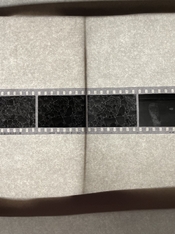
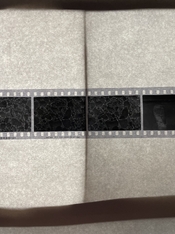
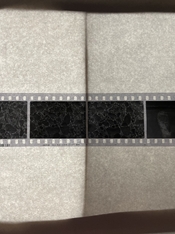
If we look at the negatives on a light table and block half the light from under the negative that received proper exposure, it should match a negative next to it that had four times the exposure on the same light table with all the light from the light table coming through.

That's where the 0.30 Neutral Density filter comes in. It blocks half the light.

0.40 Neutral Density filter, we've concluded with a little discussion, blocks the amount of light that would make the two negatives look the same at a higher contrast closer to ASA parameters.

Sound easier to grasp?
 
OP
OP
Bill Burk

Bill Burk

Subscriber
Allowing Ads
Joined
Feb 9, 2010
Messages
9,461
Format
4x5 Format
As was requested in post 2, can you explain how to tell from the phone pic if the film was over/under developed?

PhotoShop a piece from one picture over the other. Kind of like a rangefinder patch. The difference should stand out. Or there’s no difference if you hit the contrast you were aiming for exactly.

If the difference is subtle you can increase contrast. Looking to see which is lighter or darker.
 
OP
OP
Bill Burk

Bill Burk

Subscriber
Allowing Ads
Joined
Feb 9, 2010
Messages
9,461
Format
4x5 Format
Take the case where the +2 stops negative looks darker, what does that signify?

It means contrast got away and run off with you. So develop less next time.

If it’s super dark then everyone will be able to tell but if it’s subtle then it’s a sign to just tweak your time.
 

boring old man

Member
Allowing Ads
Joined
May 28, 2025
Messages
30
Location
Plato
Format
Multi Format
Bill, how does base+fogg effect this, it would seem the further from zone one, the less effect you will have?
 
OP
OP
Bill Burk

Bill Burk

Subscriber
Allowing Ads
Joined
Feb 9, 2010
Messages
9,461
Format
4x5 Format
Thanks Bill, I hope to use this test.
Have you given it a name?

Hadn’t thought about it!

How about, I don’t know if it’s sticky enough, but…

2EZS as in Too Easy System and a mnemonic that you give additional two stops exposure to an occasional test shot.

Or maybe just 2EZ
 
Last edited:
OP
OP
Bill Burk

Bill Burk

Subscriber
Allowing Ads
Joined
Feb 9, 2010
Messages
9,461
Format
4x5 Format
Yes, of course, never mind, senior moment.

Believe me, it’s my senior moment that brought us here. I stupidly thought two normal negs would equal one that’s got two stops greater exposure but forgot the base plus fog and also neglected that we aren't starting at zero.

All this is just backpedaling
 
OP
OP
Bill Burk

Bill Burk

Subscriber
Allowing Ads
Joined
Feb 9, 2010
Messages
9,461
Format
4x5 Format
Banana for scale.

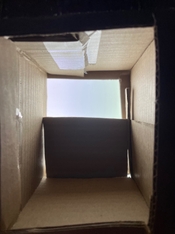
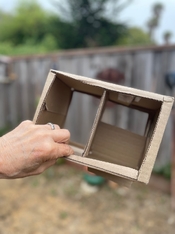
To interpret results, make a box open on top and bottom (cardboard will do) and put in a divider.

On one side create a slide that can close and open to adjust brightness.

Put the box on a light table with a piece of frosted glass on top. Paper will do.

Position the test pair on top and adjust until they seem to match.

When they do, see how much light you blocked with the slider.

IMG_2841.jpeg
 

Attachments

  • IMG_2835.jpeg
    IMG_2835.jpeg
    351.7 KB · Views: 52
  • IMG_2836.jpeg
    IMG_2836.jpeg
    364.8 KB · Views: 41
  • IMG_2837.jpeg
    IMG_2837.jpeg
    321.2 KB · Views: 49
  • IMG_2838.jpeg
    IMG_2838.jpeg
    207 KB · Views: 55
  • IMG_2840.jpeg
    IMG_2840.jpeg
    224.4 KB · Views: 54
OP
OP
Bill Burk

Bill Burk

Subscriber
Allowing Ads
Joined
Feb 9, 2010
Messages
9,461
Format
4x5 Format
If the slide blocks half the light or a little more when the two test shots are balanced, you’re good to go
 
OP
OP
Bill Burk

Bill Burk

Subscriber
Allowing Ads
Joined
Feb 9, 2010
Messages
9,461
Format
4x5 Format
Talked this through last night and my wife agrees, not everyone is like Salvador Dali with a pair of scissors and a cardboard box.

I am coming up with something easier to make.

I’ll design a page that’s half blank and half checkerboard with 50% black squares.

Print that out and put it on a light box.

Then cut a shoebox open both sides. Put a partition in the middle and put that on the paper with half checkerboard.

Piece of paper on that to diffuse the light.

The put the two shot test negatives on that.
 

snusmumriken

Subscriber
Allowing Ads
Joined
Jul 22, 2021
Messages
2,761
Location
Salisbury, UK
Format
35mm
There used to be a laboratory gadget called a comparator, for judging the similarity (or otherwise) of two samples of coloured liquids. It was simply a plastic block with through-holes to look through, eyes width apart. The sample tubes dropped from the top into intersecting holes, so that each eye was looking through a sample towards the same light source. It was amazingly sensitive to small differences. Surely one could contrive something similar using the negatives in place of tubes of liquid?
 

snusmumriken

Subscriber
Allowing Ads
Joined
Jul 22, 2021
Messages
2,761
Location
Salisbury, UK
Format
35mm

That’s certainly an interesting gadget (and it has a red dot!), but a good deal more complicated that what I was trying to describe. The comparator was essentially the same as Bill’s cardboard box, but being compact it focussed attention on the two samples being compared.
 

villagephotog

Subscriber
Allowing Ads
Joined
Jun 1, 2019
Messages
106
Location
USA
Format
Medium Format
Kindly check my understanding of this method:

The underlying principle is that if you shoot two frames of the same subject, with the second frame at +2 stops exposure, the subsequently developed +2 negative will have one stop greater density (one stop darker) than the first frame, if you develop the film to a CI of .5. And about 1.3 stops greater density if you develop the film to a CI of ~.6.

I believe I understand Bill's goal of defining a way to use this principle to let people do a simple test in the normal course of shooting (just one extra frame of a subject you're shooting anyway) and then judge it visually, without the need for any esoteric or expensive gadgets. Super cool. 👍🏻

I, as it happens and howsoever, have poor impulse control and the cabinet full of photography gadgets that inevitably follows. One such is a very sensitive spotmeter. So, if I'm understanding this principle correctly, I could shoot the 0 and the +2 frames (probably pointed at a wall or gray card), put the developed negatives on my nicely uniform light panel, and measure the difference with my spot meter? If the +2 negative measures 1 stop darker, my CI was .5. Sound right?

And people who own cameras with built-in spot meters could use their cameras to do the same thing, if I'm not wrong? Maybe even a metering app in their phone?

 
Last edited:
Photrio.com contains affiliate links to products. We may receive a commission for purchases made through these links.
To read our full affiliate disclosure statement please click Here.

PHOTRIO PARTNERS EQUALLY FUNDING OUR COMMUNITY:


Ilford ADOX Freestyle Photographic Stearman Press Weldon Color Lab Blue Moon Camera & Machine
Top Bottom