
• Welcome to Photrio!
    Registration is fast and free. Join today to unlock search, see fewer ads, and access all forum features.
    Click here to sign up

Choosing between Epson V550 and Canon 9000F

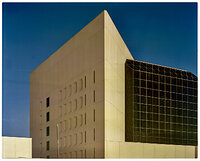
Angular building 6

A
Angular building 6

  • 3
  • 0
  • 22
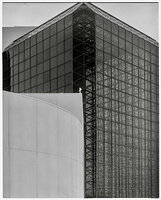
Angular building 5

A
Angular building 5

  • 0
  • 0
  • 14

Recent Classifieds

Forum statistics

Threads
202,552
Messages
2,842,242
Members
101,379
Latest member
deckeda
Recent bookmarks
0
Well, there's 14,735,982 hairs on this side of the animal's face and another 20,000,000 in the mane. Not Bad.
Dust and scratch removal only works with color and chromogenic B&W films, with silver based films it will produce strange artifacts.
Elements 11 is a version of photoshop although the photoshop is dropped from the name.
You're off to a good start.
Twain: https://en.wikipedia.org/wiki/TWAIN
 
Well, there's 14,735,982 hairs on this side of the animal's face and another 20,000,000 in the mane. Not Bad.
Dust and scratch removal only works with color and chromogenic B&W films, with silver based films it will produce strange artifacts.
Elements 11 is a version of photoshop although the photoshop is dropped from the name.
You're off to a good start.
Twain: https://en.wikipedia.org/wiki/TWAIN
ICE also doesn't work with Kodachrome slide film due to the triple layer design.
 
Cheers, gentlemen. I've appreciated all your comments from the start of this thread.

For my second scan I thought I would try something with real contrast. Same roll of film as the previous image, so XP2 through a Hexar, 35mm. This time I set the b&w points on the histogram, and chose not to opt for dust and scratch removal. All I added in Lightroom was a little Clarity, and reduced the highlights a tiny bit. In Elements I removed the dust and scratches "by hand", but after uploading to Flickr, I see I missed some. Comments welcome. I know the portrait format does nothing for the image, but lets just concentrate on the scan :smile:

 
Last edited:
Your pictures look pretty, which is good.
It is a challenge though to evaluate them through the "lens" that is Photrio. Once the file is resized down to 800 or so pixels on a side, it just isn't the same.
How do the files look to you when you look at them 1:1?
 
Well, what I am pleased to say is that the 1:1 images are much better than those on the CD of scans I got from the lab, even though they doubtless had a better scanner. I don't know why that should be, but there is more dynamic and tonal range. So far so good, as far as I'm concerned. It will save me money, and I get to have more control over the process. I will try medium format next, then colour. "Pretty"? LOL.
 
even though they doubtless had a better scanner
Depends on your definition of "better".
Labs need throughput to make money. Flatbed scanners are slooooow (in commercial terms).
 
Rob, nice start. I have a V600, LR and Elements 12, with a Windows 10 desktop. I scan flat using Epsonscan. LR has a pretty good spot removal that I use for dust. Not sure which is better - Clone or Heal? Maybe others can comment on this.
.

For small dust and spots and hair I use the healing brush tool in Photoshop 6, its quick and easy, I'm sure the Elements tool must be the same.
 
May I ask how you are sharpening your images? Your scans look good, but I see a bit of grain clumping... Do you use the sharpen function or unsharp mask tool?
 
May I ask how you are sharpening your images? Your scans look good, but I see a bit of grain clumping... Do you use the sharpen function or unsharp mask tool?
The V550 does not have sufficient resolution to resolve the grain, so you are not seeing grain clumping. Even the V850 can't resolve the grain.
 
Be it interference patterns around the grains of the image or grain clumping, there is a pattern noise that can probably be attenuated somewhat by changing the way the image is sharpened.

You might want to experiment with the settings to see if the pattern can be minimized IF the upload is a good representation of your scan...
 
Hahahahahaha....my first colour scan, and for some reason it inverted. Now, what did I do wrong? Mind you, I quite like it :smile: This is a medium-format shot from years ago. I don't have a record of the film or camera.

 
The V550 does not have sufficient resolution to resolve the grain, so you are not seeing grain clumping. Even the V850 can't resolve the grain.
I agree and would add that none of these devices have the capability to "resolve" the grain, but they can all "detect" the grain and present it in the scan. As an example the device used by Kodak to measure grain has an aperture about 10x bigger than the developed "grains" of silver. The USM algorithm offered by epson scan is crude. You may find the controls in lightroom better for this purpose, in particular adjusting the thresholds, or a true de-bluring algorithm, such as the Richard and Lucy deconvolution algorithm (used by Hubble telescope...).
 
Ron Nice scans. One thing about scanning without color corrections. You can have everything unchecked on the front page but still auto correct. If you notice the button on the bottom of the scan page, there's a button called Configuration. When you hit it, you'll go to another page called Configuration and will have to check No Color Correction to eliminate color corrections. You can still set white and black points however.
 
Here is a sample of a difficult to scan image. Kodachrome 200, Nikon F4, 35-135 f3.5-4.5 zoom, about 1 to 1/2 stops under exposed.
demo001 copy.jpg
raw0001 copy.jpg
demo001 copy2.jpg

epsonscan no color correction/enhancements in post; vuescan raw no post enhancements. epsonscan levels, saturation +45, lightness -9 in PS7.
Both Epson V500 at 6400dpi reduced in PS7 as Elements 11 would not do what I wanted.
How well does the 9000f handle similar?
 
Here is a sample of a difficult to scan image. Kodachrome 200, Nikon F4, 35-135 f3.5-4.5 zoom, about 1 to 1/2 stops under exposed.
View attachment 202024 View attachment 202025 View attachment 202026
epsonscan no color correction/enhancements in post; vuescan raw no post enhancements. epsonscan levels, saturation +45, lightness -9 in PS7.
Both Epson V500 at 6400dpi reduced in PS7 as Elements 11 would not do what I wanted.
How well does the 9000f handle similar?

No problem using my 9000F II with Silverfast in HDR mode, which involves multiple passes and increases the scanned dynamic range. I've rescued ISO 400 shots two stops under-exposed using this set-up, which is a scenario I'm not likely to need in future after I recognised how hot my meter was running.
 
demo002 copy.jpg

Nikon F4, 35-135 zoom, Kodachrome 200, hand held 1/10 -1/15 second, epsonscan 6400dpi, V500, no corrections, levels adjusted in PS7.
Silverfast offered me an upgrade to SE Plus for the V700, at a fraction of its normal cost, which will do multi pass HDR but I passed as it still outputs only 8 bit images.
 
I think I'll make this the last of my Show And Tell for this thread. Edinburgh, where I live. The cottage on the bottom right was the studio of Hill and Adamson, early Scottish photography pioneers. Unfortunately it's not a museum...
Mamiya C330S 80mm Blue Dot lens. Can't remember the film.

 
I think I'll make this the last of my Show And Tell for this thread. Edinburgh, where I live. The cottage on the bottom right was the studio of Hill and Adamson, early Scottish photography pioneers. Unfortunately it's not a museum...
Mamiya C330S 80mm Blue Dot lens. Can't remember the film.

A nice shot, has a period feel to it and my money is on Tri-X.
 
Photrio.com contains affiliate links to products. We may receive a commission for purchases made through these links.
To read our full affiliate disclosure statement please click Here.

PHOTRIO PARTNERS EQUALLY FUNDING OUR COMMUNITY:


Ilford ADOX Freestyle Photographic Stearman Press Weldon Color Lab Blue Moon Camera & Machine
Top Bottom
