• Welcome to Photrio!
    Registration is fast and free. Join today to unlock search, see fewer ads, and access all forum features.
    Click here to sign up

Choosing between Epson V550 and Canon 9000F

Finis Lineae

H
Finis Lineae

  • 0
  • 0
  • 11
Angular building 6

A
Angular building 6

  • 3
  • 0
  • 37

Recent Classifieds

Forum statistics

Threads
202,555
Messages
2,842,261
Members
101,379
Latest member
deckeda
Recent bookmarks
0
Really? Okay, I'll make to scans of the same negative, on at 4800, the other at 2400, and compare. I'll bet you are right :smile:

4800 is a bit of a fake setting as the scanner uprezzes the file, it's not a genuine 4800 scan. I use 2400 and it's pretty good for larger prints up to a point, depending on negative size.
 
I have yet to see an image from a Canon 9000f on line that looked any better than a consumer snapshot quality. If you were to present your Cannon scan to a gallery/magazine editor would they even consider it? scanned on an Epson it likely they would.

There is a lot of "the true dpi of the scanner" going around on the web. Epson nor Cannon disclose their test technique. 3rd party reviewers use a 1951 USAF test target. ISO 1233 chart http://www.graphics.cornell.edu/~westin/misc/res-chart.html gives more accurate results than a 1951 USAF test target. The Epson V550 will resolve micro printing in paper currency so if you try to scan it you will get a notice that the currency cannot be scanned. Governments required this to be incorporated into the scan software as the scan resolution was high enough to reveal some anti counterfeiting measures.
Now with respect to film you are trying to get the most detail out of silver grains (B&W) or dye clouds (color). Beyond a point you only get a sharper edge of the silver grain or dye clump so the 1951 USAF target is adequate. It is reported that 4800 dpi provides the maximum image detail on the current Epson scanners. I strive for gallery quality in both my exposures and scans. Some post in this thread are satisfied with consumer snapshot quality. Go with what suits your needs, not theirs or mine.
 
Last edited:
I have yet to see an image from a Canon 9000f on line that looked any better than a consumer snapshot quality. If you were to present your Cannon scan to a gallery/magazine editor would they even consider it? scanned on an Epson it likely they would.

.
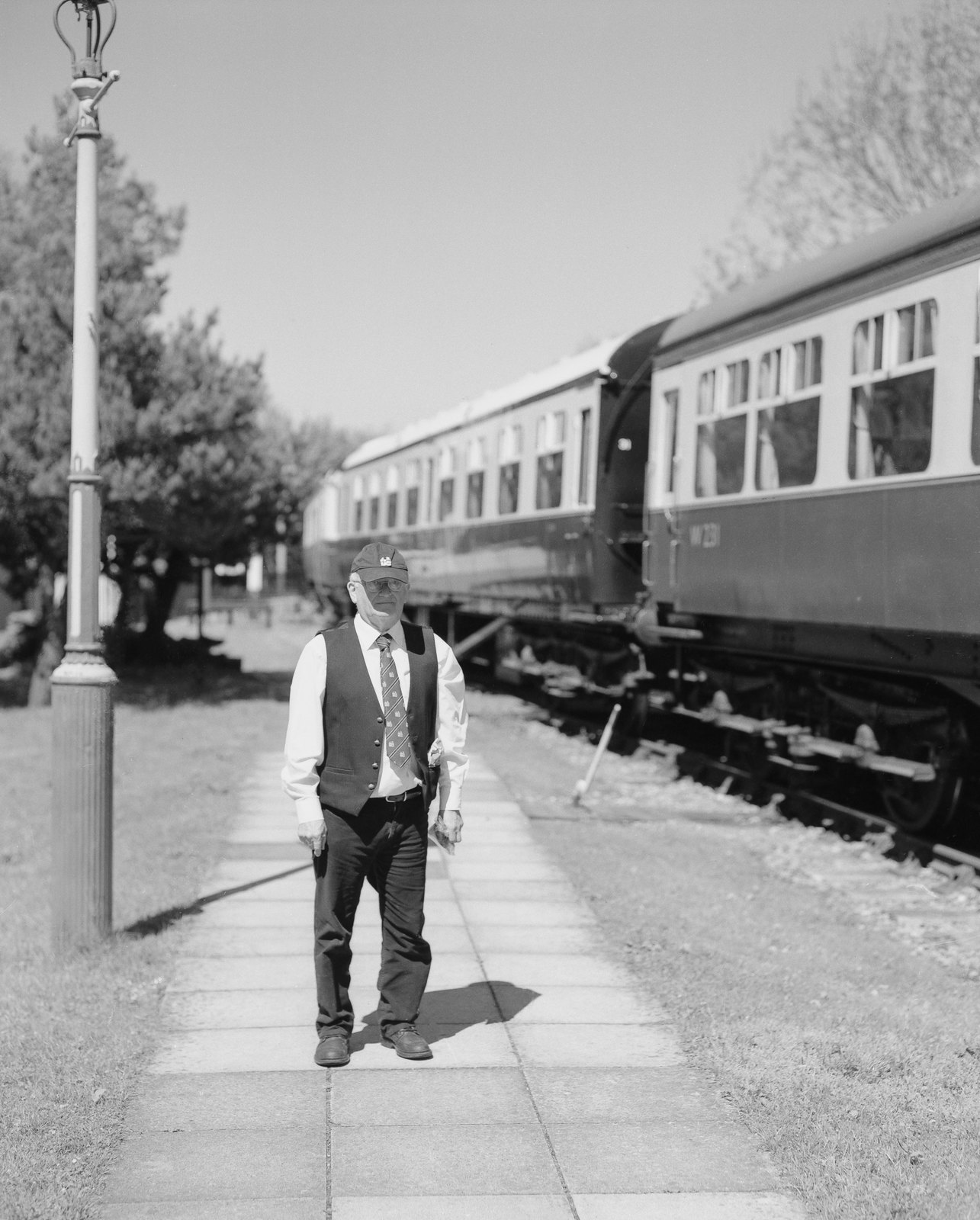
That's quite a ridiculous statement, I've seen bad scans from all models of scanners, plenty from Epson scanners, these are scans from my humble 9000F II, I don't see anything wrong with them at all. The last one is a 35mm shot taken with HP5 pushed to ISO 1600, so excuse me for not worrying about the quality I can get from this cheap scanner.

41238614954_1f963c2874_h.jpg


24472515617_66fa886e63_h.jpg


38257871195_a93fa97e23_h.jpg
 
Here is a scan from my Canon 9000F - using Vuescan in this case:

upload_2018-6-4_11-27-14.png


It is important to note that the re-sizing necessary for Photrio makes it difficult to compare scanning results.
 
Here is a scan from my Canon 9000F - using Vuescan in this case:

View attachment 201887

It is important to note that the re-sizing necessary for Photrio makes it difficult to compare scanning results.

You can see enough to see it's a decent scan though. I've seen some absolutely appalling scans from Epson scanners on Flickr, it doesn't mean they're bad scanners though, it's usually user inexperience or just plain laziness, especially when it comes to dust.
 
I play guitar, and many of these comments echoes what I hear in guitar fora, Gibson versus Fender. Each guitar does a different thing better, but neither of them do a thing without a player, and that's where the differences become apparent.
 
The only way to impress me is to present the same negative scanned its best on both scanners side by side. In the first photo the man's white shirt is blooming on his left sleeve, unknown if its exposure in the negative, processing, or the scan.
One way to test your scan is to open it in post such as Photoshop and see how far you can adjust it without blooming in the highlights or going total black in the shadows.
 
The only way to impress me is to present the same negative scanned its best on both scanners side by side. In the first photo the man's white shirt is blooming on his left sleeve, unknown if its exposure in the negative, processing, or the scan.
One way to test your scan is to open it in post such as Photoshop and see how far you can adjust it without blooming in the highlights or going total black in the shadows.

Thanks for the advice but my scanner completes HDR scans using Silverfast, so blown highlights are not a problem, that and the fact it was shot on HP4. It was a very bright day, I wanted it to be high key, I could make it look completely different no problem.
 
I play guitar, and many of these comments echoes what I hear in guitar fora, Gibson versus Fender. Each guitar does a different thing better, but neither of them do a thing without a player, and that's where the differences become apparent.

Indeed Rob, I make no claim that the Canon is any better than an Epson, I wouldn't know, just that it's a lot better than people on here would have you believe, and I'm happy with mine.
 
Indeed Rob, I make no claim that the Canon is any better than an Epson, I wouldn't know, just that it's a lot better than people on here would have you believe, and I'm happy with mine.
Same for me.
 
Rolleiflex Automat with 75mm f3.5 Zeiss Tessar from 1940 that I recently repaired and is available (to be listed in the near future). T Max 400 metered with a DW68 at box speed, processed in HC110 at 68°F for box time and 5 year out of date, desk drawer stored Protra 160 metered with a Gossen Ultra Spot at EI100, processed by Dwayne's Photo, develop only. Scanned on my V700 with Epsonscan, professional mode, 6400dpi,No Color Correction. This setting gives as close to a raw scan as is possible and milks the maximum detail as possible from the negative. The unedited versions:
test028 copy.jpg
test036 copy.jpg

My edits:

test028 copy 2.jpg
test036 copy 2.jpg

Scans were saved as tiff, 16 bit. Post reduced 6400>4800>2400>1200>600>300> 16 bit to 8 bit saved as jpeg. Feel free to download and play with in your post software, you'll find it hard to blow out the highlights or blacken the shadows.
A V500, V550, V600 will produce the same results with the same settings.
 
Last edited:
The Canon Support site indicates that the scanner drivers are currently Windows 10 and OS-X 10.6 compatible. Same for the MP Navigator.
As I said, my current results are a lot better than when I started with it.

The current Mac operating system is OS-X 10.13.
 
I've always used Canon scanners, but what the heck to I know? :D

The only reason to buy an Epson these days is if you want to scan your large format negs. I still use an old Canon 9950 for that. Scanners haven't improved much over the years aside from speed in spite of what people claim on the interwebs. The companies just spit shine the new model and claim it is better and people trade in their old one like a lemming. Lather, rinse repeat....

The real reason to use Canon in my opinion is better color straight out of the scanner. But again, what the heck do I know. :D

Besides, scanners are like hammers. Give a good carpenter any hammer and he will make it work. Give the worst carpenter the best hammer and he still won't hit the nail...
 
And the best test of any scanner is not how well it will handle correctly exposed negatives and slides but how well it handles 2 or 3 stops either side of correct.
Now, if I could only afford a drum scanner.:smile:

Would that be a framing hammer or a standard, smooth face claw hammer?:unsure:
 
And the best test of any scanner is not how well it will handle correctly exposed negatives and slides but how well it handles 2 or 3 stops either side of correct.
Now, if I could only afford a drum scanner.:smile:

Would that be a framing hammer or a standard, smooth face claw hammer?:unsure:

The meter on my Pentax 67 was two stops out on this shot, underexposing it, no problem on my Canon scanner using Silverfast. The shadows are a little muddy but it's not a problem darkening them.

40173910750_53cb23c244_h.jpg
 
Shutterfinger, that's one heck of a transformation in those flower shots. My scans from labs in the past have looked like your first image, so I'm hoping my own scans would be more carefully produced.
 
Tony, that a nice train station shot.
Rob, I use PS CS5 levels to set the black and white points with Auto tone on the color shot. I have Elements 11 on this computer and don't like it. I found Levels under Enhancements - Adjust lighting. Hue/Saturation is only available on an adjustment layer.
CS5 upgrade will install and run IF you have a valid CS2 through CS4 serial number. The program can be unregistered and sold so a new user can run it on a different computer. PS7 runs on Windows 10 but may occasionally have a glitch.

I learned to scan on a Microtek 8700 Pro and Silverfast Ai6. Silverfast Ai can pull out a lot.
Under exposed negatives scan better than over exposed; under exposed slides are difficult to scan also and I have a few that will tax a scanner's abilities with any software.
Want to bring a Canon over and give it a comparison workout?
 
Last edited:
I don't have PS in any iteration. I have Lightroom, Elements 11, and Nik Silver and Colour. That's more than enough, especially as I prefer to do as little intervention as possible.
 
I'm not quite sure why people dis the Canon scanner, I have the 9000F ii, it's a great scanner for the price, I get pretty decent results from 35mm up to 6x9, and it has decent negative carriers and no problems with focusing, which the Epsons do have. I run it with Silverfast and have no complaints about what it can do, it's not slow comparatively speaking either.
Just have to support this. Very happy with scans for 35mm negs and 6x6 negs. YouTube videos give great advice on how to use it as the instructions are not good.
 
A real problem with these discussions is that everyone is making declarations based on their (for the most part) unstated workflow.

Some like to scan to produce a file that is intended for further post-processing and others attempt to scan to a finished image.

As long as you don't define the workflow and intent, you are always going to have people arguing about working methods that may or may not apply to the person's workflow.
 
Well, the v550 has arrived, and I'm getting it installed on my mac. All was going well until I was asked the following: The scanner is assigned to ImageCapture. Do you want to use the scanner with TWAIN? What?! There is no help or definition of either of these. Any quick advice? Yay or Nay?
 
If you want to use EpsonScan instead of ImageCapture, you need to use it with TWAIN. I'll let the Mac owners out there opine on whether EpsonScan is the best choice for you.
 
Okay, here's my first scan, using EpsonScan. I made it a tiff at 4800, medium level of dust removal, then opened it in LR6 for tweaking, and finally in Elements 11 for a final review, where I removed a little bit of dust - not much - and reduced the overall size for posting here.
It's not a particularly good image, but was the closest to hand. Taken with a 35mm Konica Hexar, XP2 film. The scan compared favourably with the scan from the shop, though that was only a 1-hr print and scan place (Boots).

All in all it went very smoothly. For a first attempt, I'm quite satisfied, but hope to improve the whole process with each shot.

 
Rob, nice start. I have a V600, LR and Elements 12, with a Windows 10 desktop. I scan flat using Epsonscan. LR has a pretty good spot removal that I use for dust. Not sure which is better - Clone or Heal? Maybe others can comment on this.

I find that Epsonscan is very slow when I let it do things like auto adjust exposure, sharpen, spot remove, ICE, etc. PLus, if I don;t like the way the scan came out, I have to spend more time re-scanning. By scanning flat and leaving all adjustments to post, I only have to scan once. I use 2400, 48bits color (for color film) and file as TIFFS. The only adjustment I may do before the scan is to adjust the black and white points (levels) and bring them into the actual width of the histogram, slightly larger. Frankly, I don;t know if that matters if I just scan completely flat without any adjustments at all. Maybe someone can comment on this too.
 
Photrio.com contains affiliate links to products. We may receive a commission for purchases made through these links.
To read our full affiliate disclosure statement please click Here.

PHOTRIO PARTNERS EQUALLY FUNDING OUR COMMUNITY:


Ilford ADOX Freestyle Photographic Stearman Press Weldon Color Lab Blue Moon Camera & Machine
Top Bottom