

• Welcome to Photrio!
    Registration is fast and free. Join today to unlock search, see fewer ads, and access all forum features.
    Click here to sign up

A blended ferrocyanide print process

Man in market place

A
Man in market place

  • 0
  • 0
  • 5
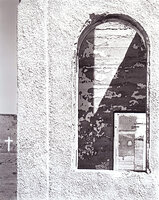
Abandoned Church

A
Abandoned Church

  • 2
  • 0
  • 30

Forum statistics

Threads
203,120
Messages
2,850,101
Members
101,680
Latest member
QGolden
Recent bookmarks
0
Sounds great! Let us know how it goes with the students.

What inkjet paper have you been using?

The stain issue is generally due to the buffer in the paper which needs to be neutralised before coating. Impure Copper Sulphate and high humidity could also be other causes as noted by Andrew.

I will probably be a few more weeks before I get the students involved, so I still have some time to get my own process worked out a little better. So far as I know, there are no buffers in the inkjet paper. I have a huge supply of cheap watercolor papers, and I know that they are buffered. I soaked some tonight in citric acid and the bubbled, so they probably have a pretty high alkaline load. I tried this paper last week and the emulsion had turned blue even before exposure; I'll see if the acidification helps. As for inkjet paper, I've used three. First, Kodak Professional glossy. I bought a ton of it because I had a profile for my printer. That printer died, Kodak stopped supporting the paper, and I'm too lazy to create my own profiles, so I've been using it for cyanotypes. Second, some Red River Metallic gloss. It's not great for every subject, but some landscapes look fantastic on this paper. Finally, there are a lot of half-printed photos at the lab in school, and I take those failed photos and cut off the unused paper. That stuff is Arista Pearl.
 
I have a huge supply of cheap watercolor papers, and I know that they are buffered. I soaked some tonight in citric acid and the bubbled, so they probably have a pretty high alkaline load. I tried this paper last week and the emulsion had turned blue even before exposure; I'll see if the acidification helps.

It should, even for the Cyanotype process.
 
I certainly understand the idea behind your "stick to one paper" suggestion. I'm still in the process of finding which paper I prefer. I have not tried ammonium chloride precoating. Can you point me to an explanation of the process? Thanks!

based on what Raghu said, and being easily to me to use Fabriano Bristol I picked that paper. I precoat it with a 1% solution of ammonium chloride. I noticed that I double precoat it I get deeper blacks. the precoating allows you to get clean white but for the deep black is vital to tone the processed print with the ammonia-copper-sulphide toner. to make it you need to add ammonia on a copper sulphide solution until it change it's colour to a vibrant deep blue. you will notice when it's done. you don't need to be precise with it's concentration, the only thing that change by changing it it's how long it will tone. just add some copper and than ammonia by drop.

let me know how it goes!
 
@AgY: good advice but you meant Copper Sulphate I am sure.

@jmoche: I recommend Ammonium Chloride pre-coating when a) the paper is buffered but it can't be acidified e.g. Bristol papers or b) you want more warmth in the tone. Otherwise, buffer neutralisation via acidification works fine for buffered papers and you don't need to buy one more chemical.

Copper-Ammonia toner gives you creative control for producing warmer tones after making the print. As AgY observed, it is also useful in pushing the blue tones towards black.
 
@AgY: good advice but you meant Copper Sulphate I am sure.

@jmoche: I recommend Ammonium Chloride pre-coating when a) the paper is buffered but it can't be acidified e.g. Bristol papers or b) you want more warmth in the tone. Otherwise, buffer neutralisation via acidification works fine for buffered papers and you don't need to buy one more chemical.

Copper-Ammonia toner gives you creative control for producing warmer tones after making the print. As AgY observed, it is also useful in pushing the blue tones towards black.

yeah, ofc. lost in translation
 
@AgY: good advice but you meant Copper Sulphate I am sure.

@jmoche: I recommend Ammonium Chloride pre-coating when a) the paper is buffered but it can't be acidified e.g. Bristol papers or b) you want more warmth in the tone. Otherwise, buffer neutralisation via acidification works fine for buffered papers and you don't need to buy one more chemical.

Copper-Ammonia toner gives you creative control for producing warmer tones after making the print. As AgY observed, it is also useful in pushing the blue tones towards black.

I also have to say, based on my experience, even If use papers with no alkaline buffer I can get warm and deep blacks. ammonium chloride always boost it in my experience
 
based on what Raghu said, and being easily to me to use Fabriano Bristol I picked that paper. I precoat it with a 1% solution of ammonium chloride. I noticed that I double precoat it I get deeper blacks. the precoating allows you to get clean white but for the deep black is vital to tone the processed print with the ammonia-copper-sulphide toner. to make it you need to add ammonia on a copper sulphide solution until it change it's colour to a vibrant deep blue. you will notice when it's done. you don't need to be precise with it's concentration, the only thing that change by changing it it's how long it will tone. just add some copper and than ammonia by drop.

let me know how it goes!

Thank you! My experimentation this week is pretty filled up, but I will try coating with a 1% solution of ammonium chloride before next week's lab session. I only get to do this once per week for a 9 hour session. Because of limited sink capacity, I can't work with anything larger than 5x7 at home, and we have insanely high water rates, so I try to stick to the lab at school.
 
Today @Andrew O'Neill kindly provided our Darkroom Group with a demonstration of the Ferroblend process.
His first such demonstration since he began to attend more of the group meetings.
Thanks Andy - it was great to see it happen in real life!
And in case anyone needs proof, some photos of his demonstration, and most of the group watching!
01-2026-03-14 163028.jpg

02-2026-03-14 163323.jpg

03-2026-03-14 163427.jpg
 
Cool!
@Andrew O'Neill how does it feel to be one of the youngsters for a change? LOL!

I'd point out that the photographer isn't in the group photo, except even if they were included in the mix, it wouldn't skew the average age significantly ....
 
Check out Raghu's Ferroblend process over at Alternative Photography...

Hello Andrew / Raghu,

well written and nice article. Good to follow and probably good guide to start. Just wondering about the copper sulfate, in the requirements it says 75gr but in the 100 ml developer is 2 gr and in the toner 500ml is 5 gr, am I missing something. Also was it not so that in the initial post Raghu was using less copper sulfate ?

I have been varrying and also have used it to selectively tone parts of the prints in different strength to create only a haze of the pink and or in full strength the deep brown / black when over dark blue.

well done Raghu !

cheers
Jan.
 
@Jan de Jong as a side note, I've not bothered with a stock solution of developer. Instead, I mix up as I need it. 0.2g Copper Sulphate + 0.8g Sodium Citrate + 10ml distilled water is enough for an 8x10 print. I get it, as well as the rinse bath (with a wee bit of Citric Acid) ready, while the print is in the exposure unit.
 
@Jan de Jong as a side note, I've not bothered with a stock solution of developer. Instead, I mix up as I need it. 0.2g Copper Sulphate + 0.8g Sodium Citrate + 10ml distilled water is enough for an 8x10 print. I get it, as well as the rinse bath (with a wee bit of Citric Acid) ready, while the print is in the exposure unit.

I can attest to the accuracy of this report :smile:.
 
Thanks @Andrew O'Neill for posting the link.
Hello Andrew / Raghu,

well written and nice article. Good to follow and probably good guide to start. Just wondering about the copper sulfate, in the requirements it says 75gr but in the 100 ml developer is 2 gr and in the toner 500ml is 5 gr, am I missing something. Also was it not so that in the initial post Raghu was using less copper sulfate ?

I have been varrying and also have used it to selectively tone parts of the prints in different strength to create only a haze of the pink and or in full strength the deep brown / black when over dark blue.

well done Raghu !

cheers
Jan.

Thanks @Jan de Jong. Regarding Copper Sulphate, the math works out fine. As I have mentioned in the article in section Chemicals Used in FerroBlend, 75 g is sufficient for processing approximately one hundred 8 × 10 inch prints. This includes both developer and toner. Now, it doesn't make great sense, at least to me, to use all 75 g at once to make developer and toner. So I've given the recipes for making just enough developer and toner for processing 20 8x10 prints which requires 2 g and toner for 10 8x10 prints which requires 5 g. Now, if you scale these numbers to 100 8x10 prints and keep a few grams extra for cases where you might need extra developer or toner, then you arrive at 75 g. :smile: Hope this is clear to you now.
 
Thanks @Andrew O'Neill for posting the link.


Thanks @Jan de Jong. Regarding Copper Sulphate, the math works out fine. As I have mentioned in the article in section Chemicals Used in FerroBlend, 75 g is sufficient for processing approximately one hundred 8 × 10 inch prints. This includes both developer and toner. Now, it doesn't make great sense, at least to me, to use all 75 g at once to make developer and toner. So I've given the recipes for making just enough developer and toner for processing 20 8x10 prints which requires 2 g and toner for 10 8x10 prints which requires 5 g. Now, if you scale these numbers to 100 8x10 prints and keep a few grams extra for cases where you might need extra developer or toner, then you arrive at 75 g. :smile: Hope this is clear to you now.

Ah all clear now, I did not think that far, was just looking at the stock solutions as you can figure. (do you have that figure in square meters btw 😎 )

Thanks nice addition to the list of processes!

cheers
jan.
 
@Jan de Jong as a side note, I've not bothered with a stock solution of developer. Instead, I mix up as I need it. 0.2g Copper Sulphate + 0.8g Sodium Citrate + 10ml distilled water is enough for an 8x10 print. I get it, as well as the rinse bath (with a wee bit of Citric Acid) ready, while the print is in the exposure unit.

I've been using a bath of the copper sulphate and therefore have a 5X stock made up. I find a bath of developer helps me block out light (upside down) and it only has to sit in there for around 10 seconds before popping it quickly into a citric acid bath (again upside down). (also I've been sensitising onto heavily gelatin sized paper using a glass rod and a more typical normal cyanotype recipe for A and B--I find I get some nice resolution and it increases the speed with less blue bleed in the shadows).
 
I'm not sure if this is of interest to anyone, and I guess someone has probably done this with cyanotype although I haven't checked, but I've made a ferroblend on a pigment-less gelatin tissue and was able to transfer it like a carbon transfer image. I was curious the degree to which the technique polymerises the gel especially in the highlights (I've been doing ferroblend on heavily sized paper and noticed some relief when I'd pull it out of a bath). Still optimising, and I'm not sure what the direct uses might be. Also the image looked pretty cool on the thick, glossy tissue before transfer.
 
I'm not sure if this is of interest to anyone, and I guess someone has probably done this with cyanotype although I haven't checked, but I've made a ferroblend on a pigment-less gelatin tissue and was able to transfer it like a carbon transfer image. I was curious the degree to which the technique polymerises the gel especially in the highlights (I've been doing ferroblend on heavily sized paper and noticed some relief when I'd pull it out of a bath). Still optimising, and I'm not sure what the direct uses might be. Also the image looked pretty cool on the thick, glossy tissue before transfer.

That's very cool! Please share pics of your print.

Are you making a tissue on Yupo the way it's done in Carbon transfer? And then sensitising, drying, exposing and developing as one would do in FerroBlend?
 
Photrio.com contains affiliate links to products. We may receive a commission for purchases made through these links.
To read our full affiliate disclosure statement please click Here.

PHOTRIO PARTNERS EQUALLY FUNDING OUR COMMUNITY:


Ilford ADOX Freestyle Photographic Stearman Press Weldon Color Lab Blue Moon Camera & Machine
Top Bottom
