• Welcome to Photrio!
    Registration is fast and free. Join today to unlock search, see fewer ads, and access all forum features.
    Click here to sign up

Diffusion Transfer Printing ("Polaroid" peel-apart) recipes

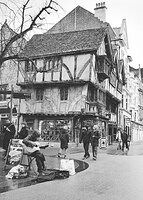
OXFORD 02.jpg

A
OXFORD 02.jpg

  • 1
  • 0
  • 18
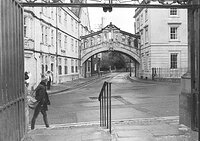
OXFORD 01.jpg

A
OXFORD 01.jpg

  • 0
  • 0
  • 15

Recent Classifieds

Forum statistics

Threads
202,457
Messages
2,841,119
Members
101,336
Latest member
freedomalways
Recent bookmarks
4
Hey,
I used two layers of I believe is 3 mil tape.
Darkest Blacks I have seen so far. Just great density.
I'm very happy!
The only downsides are that there is this yellow cast that wasn't there with Ilford Paper, and the biggest issue is that now that the rails are taller, there seems to be developer left behind.

It seems the rollers can't roll off the excess developer.
I tried wiping the print but the image smeared.
Edit: Oh, I guess I haven't tried a stripping layer, whoops!
 

Attachments

  • _20260201_180746_______.jpg
    _20260201_180746_______.jpg
    159.4 KB · Views: 50
Last edited:
Here's the recipe for this receiver (I'm calling it Rx-01)

5mL Ludox HS-30 (+ 20 mL water, see below)
5mL 1% Sodium Sulfide
1mL 5% Nickel Acetate
1mL 20% Zinc Acetate (+ 5mL water, see below)
10% Polysorbate 20 (1-2 drops)

In a small beaker under continuous stirring, add 5mL Ludox to 20mL water. After 30 seconds, add 5mL 1% Na2S. After 30 seconds, add 1mL 5% Ni(Ace), drop by drop. The solution will turn dark grey or black. Immediately add 1mL 20% Zn(Ace) in 5mL water. Add 1-2 drops 10% polysorbate 20. Coat solution onto baryta paper (Adox Art Baryta) with 10µm coater bar.

When dry, coat layer of 2% Gum Arabic with 50µm coater bar.

Please use proper PPE + ventilation and dispose of all chemicals properly.

Hey analogwisdom, when you did research to develop Rx-01, did you find any information leading you to think this receiver will help prevent fading? Is this a coaterless formula?
Thanks, Kevin.
 
Just as a matter of historical record, coated Polaroid products were based around metal in silica coatings with hydroquinone/thiosulphate chemistry, and the coaterless ones used a layer of cellulose acetate containing nucleation sites with DEHA/uracil type chemistry.
 
I am finding better density like Alec said with higher rails, 6mil.
But now I'm getting excess developer that 3% Gum Arabic is not getting rid of, and I'm dying to find a way to not have to soak the prints in water.
I'm going to hire someone to electronically slow the speed of the laminator such that prints gain density.
Any advice will be greatly appreciated :smile:
 
20260203_184047.jpg


Same paper as my last couple of posts, with a new (TBHQ + Dimezone S + Uracil + AEEA) developer

Photo paper negative @ 32 iso
 
20260203_194945.jpg


Same paper, another developer (DEHA + AEEA)

Negative @ 64 iso

edit: the paper uses cupric sulfide as the nucleating agent
 
Last edited:
I am finding better density like Alec said with higher rails, 6mil.
But now I'm getting excess developer that 3% Gum Arabic is not getting rid of, and I'm dying to find a way to not have to soak the prints in water.
I'm going to hire someone to electronically slow the speed of the laminator such that prints gain density.
Any advice will be greatly appreciated :smile:

are you using the least amount of developer possible?
 
whats with the weird discontinuity over the doll’s left ear? Did the paper rip? Photo paper at 64ASA is impressive too. I missed that detail.
 
whats with the weird discontinuity over the doll’s left ear? Did the paper rip?

Yes... I accidentally sat a discarded negative on top of it before I took the photo with my phone and the corner ripped off with it.
 
I am finding better density like Alec said with higher rails, 6mil.
But now I'm getting excess developer that 3% Gum Arabic is not getting rid of, and I'm dying to find a way to not have to soak the prints in water.
I'm going to hire someone to electronically slow the speed of the laminator such that prints gain density.
Any advice will be greatly appreciated :smile:

Stick you thumb on the rollers to slow them down, and see if it’s beneficial, before you spend on engineering resource.
 
Tonight I worked a bit on stripping layers.
20260205_202938.jpg

20260205_203013.jpg


the PVA image is a bit overexposed, I bumped the aperture dial without realizing it.

they are labeled appropriately, both are 5% solutions of Gum Arabic or Polyvinyl Alcohol, with ~10 drops of 10% Tween 20. I coated them on the same positives as my last few posts, with a 50um bar.

These are my best results with each. I think once I practice the coating technique more they will be more successful.

I did notice that they needed to "cook" a bit longer after coming out of the laminator, compared to the paper without a stripping layer. Separation was also much easier with the stripping layer.

reminder: I'm using baryta paper, not plastic/waterproof paper. YMMV.
 
Last edited:
20260211_210230.jpg

I started coating the receiver onto Highh Image plastic paper (after stubbornly not listening to Alec at first 😅)

Anyone reading — skip the baryta paper. It's not worth the frustration (curl while drying, delamination during peeling that requires the 2nd layer of gum arabic/PVA), the plastic "paper" eliminates all of those problems.

This image used lead sulfide as the nucleating agent and the same developer as my last few images. I find the tonality very pleasing, sharpness + dmax are also excellent. I have PdCl₂ arriving tomorrow to start experimenting with.
 
Last edited:
Last night I did more testing with different coater formulations, experimenting with different combinations of heavy metal salts. I stumbled upon something curious.

20260212_203512.jpg


The above image was coated on Highh Image at 10µ with:

10mL Ludox HS-30 (colloidal silica, any should work)
1mL 1% Nickel(OAc)₂
0.5mL 1% Copper(OAc)₂
2 drops 1% Na₂S
1 drop 10% polysorbate 20

I used a DEHA/AEEA/Uracil developer. The result was unsurprising, I expected there to be some amount of yellow/sepia tonality. However:

20260212_203202.jpg


I coated the above positive only minutes after taking the first image, using the same beaker of coating solution - but with 1-phenyl-5-mercaptotetrazole added (to the coating solution, not the developer). The amount added was miniscule, certainly in the µg range (I called it a "frog hair"). Both images used MultiTone B&W RC paper as the negative.

Mechanism-wise, the effect of 1P5MT and other mercaptans is known in the literature, but now it’s time to see how controllable it is. I'll work on upgrading my measurement system from "frog hair" to something slightly more scientific.
 
Last edited:
20260213_190430.jpg

Tonight I coated paper with Palladium Sulfide. My best results so far.

I believe the mottling in the shadows might be from the MultiTone paper negative. Several people have reported mottling when printing (traditionally) with it.
 
Hey AnalogWisdom,

Can I ask a few questions?

Are you using rails? Developing by hand or machine?
Are you washing off excess developer?

Great results so far! Keep going!
 
Are you using rails? Developing by hand or machine?
Are you washing off excess developer?

No rails. Using the cheap motorized laminator machine. Not washing the prints afterwards.

20260214_180404.jpg

Today I finally got X-ray film (HR-U) to work well. This is using the 1P5MT paper. Extremely pleased with this result.
 
Last edited:
Hey AnalogWisdom, Thanks for the reply.
I also obtained 1P5MT, just waiting for more chemicals to arrive and then I need to figure out how to slow down my rollers. I met a CTO of an electric car transmission company and he's agreed to help mod the laminator.
I would really like to immediately try no rails.
Have you noticed how when one doesn't use rails, how the developer spreads without squishing out the sides where the rails were. Do you have a special technique? Thanks again :smile: And great images you've been posting, congratulations!
 
Have you noticed how when one doesn't use rails, how the developer spreads without squishing out the sides where the rails were. Do you have a special technique? Thanks again :smile: And great images you've been posting, congratulations!

Thanks!

I don't have a special technique; I just wipe up the laminator developing pouch afterward. The photos drying with the gunk on them really doesn't bother me, in fact I kind of like the aesthetic of it.
 
Hey AnalogWisdom, Thanks for the reply.
I also obtained 1P5MT, just waiting for more chemicals to arrive and then I need to figure out how to slow down my rollers. I met a CTO of an electric car transmission company and he's agreed to help mod the laminator.

Have you tried slowing the roller by hand to see if it improves your print density? What was the result?

It seems premature to go to a lot of trouble reengineering the drive when it's so trivially easy to verify if roller speed makes any difference.
 
20260217_171530.jpg

Yesterday for fun I attempted coating onto cellulose acetate sheets to yield transparency positives. The proof of concept was successful, further testing will need to be done to see if density can be improved at all.
 
Last edited:
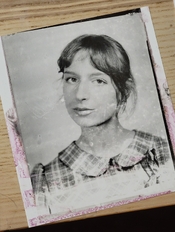
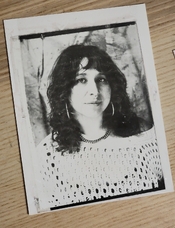
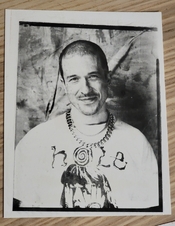
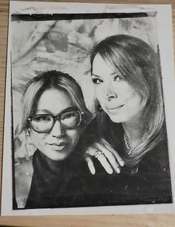
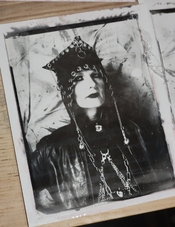
This weekend I traveled to Seattle to attend a gallery event and demonstrate this process. I shot, processed, and gave away over 100 photos. It started off iffy with no transfer for a reason I'm not sure about, but I skipped a few social outings to lock in and figure it out. I had to switch back to Ilford paper for the negatives.

Thanks to alec as always. here are some highlights, more images attached to the bottom of the post. there are certainly still kinks to work out, but the experience was incredible and I'm overall extremely pleased on how the images turned out.

20260221_210053.jpg

Screenshot_20260224_123656_Instagram.png
 

Attachments

  • 20260221_174111.jpg
    20260221_174111.jpg
    624.9 KB · Views: 26
  • 20260221_190119.jpg
    20260221_190119.jpg
    721.2 KB · Views: 23
  • 20260221_212101.jpg
    20260221_212101.jpg
    1.4 MB · Views: 23
  • 20260222_195007.jpg
    20260222_195007.jpg
    1.1 MB · Views: 23
  • 20260222_195000.jpg
    20260222_195000.jpg
    845.7 KB · Views: 20
  • 20260222_182105.jpg
    20260222_182105.jpg
    862.1 KB · Views: 19
  • 20260222_182051.jpg
    20260222_182051.jpg
    925.8 KB · Views: 20
Photrio.com contains affiliate links to products. We may receive a commission for purchases made through these links.
To read our full affiliate disclosure statement please click Here.

PHOTRIO PARTNERS EQUALLY FUNDING OUR COMMUNITY:



Ilford ADOX Freestyle Photographic Stearman Press Weldon Color Lab Blue Moon Camera & Machine
Top Bottom