• Welcome to Photrio!
    Registration is fast and free. Join today to unlock search, see fewer ads, and access all forum features.
    Click here to sign up

What is the grainiest bw film and developer?

Recent Classifieds

Forum statistics

Threads
204,282
Messages
2,866,585
Members
102,207
Latest member
gustavocf
Recent bookmarks
0
PT. 1:
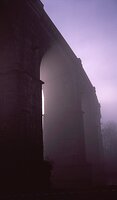
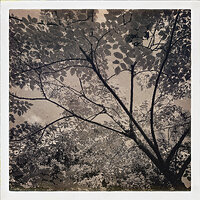
HP5, Rodinal 1:6, 1 min, 45 s. 68ºF, Petri 7s
lrhii006.jpg
lrhii013.jpg
lrhii022.jpg
(The perils of shooting at f 1.8...)^
lrhii027.jpg
 
Rodinal 1:3! That's nuts. Great pictures.
 
Strange that no one has mentioned caffenol as a developer. Use the formula for slow films on a high speed film e.g. 400 or greater. The Arista/Fomapan films work for this.


Edit note: Curse you autocorrect!
 
Strange that no one has mentioned caffenol as a developer. Use the formula for slow films on a high speed film e.g. 400 or greater. The Arista/Fomapan films work for this.


Edit note: Curse you autocorrect!


I've used caffenol for developing expired Kodachrome, but not much else. might be worth trying down the line
 
A good deal of fog helps; you end up with a muted negative that needs a lot of contrast boosting to normalize contrast, and that will boost the grain along with it.

Another thing that you could try is to use a red filter; not orange, yellow etc, but red. The red-sensitive part of a panchromatic emulsion tends to be on the grainy side. Of course, you get the particular color response for free to go with it...
 
Rodinal 1:3! That's nuts. Great pictures.

Well it certainly is to a Scotsman like me 😎 Actually if the same size prints looked similar on a darkroom print I'd say that Rodinal 1+3 looks OK but I do wonder what, if any, improvement there is on 1+25/50

pentaxuser
 
I'm loving the grain that you are getting with STRONG Rodinal dilutions, GasMaskMan. :smile:

I have a nearly full bottle of Rodinal that I didn't really get on with at it's usual dilutions, so I might just use it up on one or two 35mm films at your low dilutions.

Interestingly, to try and get some grain before, I tried a roll of HP5+ in Ilford MG developer, at 1+9 (= usual paper strength), and developed for two minutes, and I was quite impressed with how good the negatives came out. They were totally useable for printing with no extra grain. I've kept this in mind for when I need to d+p a film in the minimum time. But your tests have shown me an even faster way! :smile:

Terry S
UK
 
I'm loving the grain that you are getting with STRONG Rodinal dilutions, GasMaskMan. :smile:

I have a nearly full bottle of Rodinal that I didn't really get on with at it's usual dilutions, so I might just use it up on one or two 35mm films at your low dilutions.

Interestingly, to try and get some grain before, I tried a roll of HP5+ in Ilford MG developer, at 1+9 (= usual paper strength), and developed for two minutes, and I was quite impressed with how good the negatives came out. They were totally useable for printing with no extra grain. I've kept this in mind for when I need to d+p a film in the minimum time. But your tests have shown me an even faster way! :smile:

Terry S
UK

Always happy to inspire. the big tradeoff is these high dilutions absolutely will drain a 500ml bottle, especially if you try 1:3 and 1:1.
and yes, throughout the year, there will be more low dilution rodinal tests with more films.
 
1000017518.jpg

Kodak SO-078 developed in Kalogen 1+50 for 12 minutes.


This isn't quite to the level of some of the photos here, but it's pretty chunky. Definitely seems like a high speed film in Kalogen could be a good candidate. I think I've got a bit of orwo n75 left in the fridge somewhere so maybe I'll give that a try
 
Reticulation gives what appears to be coarse grain. I never had it happen to me but have seen some examples.

Also shooting half-frame gets you more grain.

The most grain I’ve ever had was Super-XX expired from the forties, exposed as low as the meter can go EI 2-4.

There’s a thread where I showed some of these examples.

Formats in themselves have no graininess or lack of graininess inherently. If shooting the equivalent photo as in another format, it doesn't appear any more or less grainy ("Equivalent" = multiply focal length and aperture by crop factor, and divide ISO by the square of the crop factor: the grains will be as much smaller as the amount of enlargement is bigger and it cancels out, while everything else looks identical, framing, DOF, motion blur, etc)

It allows you to get more grain for the same image, but you'd have to use an ND filter to do so without changing anything else. Which you could also do (indefinitely) for larger formats too, except that commercial availability of faster films runs out (not a matter of physics, but of marketing)
 
Years ago if I wanted a lot of grain, I would use Kodak 2475 Recording Film and develop it in not very dilute Dektol. I also sometimes used 2484. These films remained in production for longer than I thought. They were probably used for surveillance. For regular pictorial purposes, TMAX 3200 has much finer and tighter grain but I had some fun with 2475.
 
I just bought myself a roll of 1970 expired 2475- which I'm planning on shooting soon and developing in Rodinal. I've also got some Tmax and Delta 3200 Rodinal images on previous pages.
 
View attachment 422759
Kodak SO-078 developed in Kalogen 1+50 for 12 minutes.


This isn't quite to the level of some of the photos here, but it's pretty chunky. Definitely seems like a high speed film in Kalogen could be a good candidate. I think I've got a bit of orwo n75 left in the fridge somewhere so maybe I'll give that a try

Frame no.2&3 Coopersville-Marne Railroad. My wife is from Marne and I'm from Coopersville. Marne used to be called Berlin, but they thought it might be a good idea to change the name from Berlin to Marne during the war.
Frame 8&9 are Eastmanville Bayou and 68th Ave. bridge over the Grand River in Eastmanville. I fished the river and the bayou ever since I was a little kid. All the bayous along the Grand River used to be excellent fishing. A very nice area to live and visit.
I use Kalogen developer for both film and paper on occasion and find it to be a good developer and very long lasting. It doesn't seem to be a very good solvent developer, but it works fine for films like Tmax 100 and even Tmy2.
 
Frame no.2&3 Coopersville-Marne Railroad. My wife is from Marne and I'm from Coopersville. Marne used to be called Berlin, but they thought it might be a good idea to change the name from Berlin to Marne during the war.
Frame 8&9 are Eastmanville Bayou and 68th Ave. bridge over the Grand River in Eastmanville. I fished the river and the bayou ever since I was a little kid. All the bayous along the Grand River used to be excellent fishing. A very nice area to live and visit.
I use Kalogen developer for both film and paper on occasion and find it to be a good developer and very long lasting. It doesn't seem to be a very good solvent developer, but it works fine for films like Tmax 100 and even Tmy2.

Coopersville is only about a 10-20 minute drive from where I'm at right now. Interestingly Eastman Bayou is the one place for this experiment that I had my films break in my camera: The RPX 400 from last summer, and the N74/ Ultrafine 1:3.
 
Photrio.com contains affiliate links to products. We may receive a commission for purchases made through these links.
To read our full affiliate disclosure statement please click Here.

PHOTRIO PARTNERS EQUALLY FUNDING OUR COMMUNITY:


Ilford ADOX Freestyle Photographic Stearman Press Weldon Color Lab Blue Moon Camera & Machine
Top Bottom