
• Welcome to Photrio!
    Registration is fast and free. Join today to unlock search, see fewer ads, and access all forum features.
    Click here to sign up

Y marks on my negatives! Why?

Recent Classifieds

Forum statistics

Threads
201,903
Messages
2,831,937
Members
101,014
Latest member
photomaximo
Recent bookmarks
0

JW PHOTO

Member
Allowing Ads
Joined
May 15, 2006
Messages
1,148
Location
Lake, Michig
Format
Medium Format
I had missed that post. Thank you for drawing that to my attention.

Okay assuming no naughty student turned on the heat to hurry things along... :D

RR

Naughty student might just be it? My instructor for college photo 101 from many moons ago told a of a class that kept having terrible problems, but there were just a few students that never had a problem. Seems the schools furnished developer/fixer somehow stopped working right. They'd then mix new stuff and within a day or two it was back to problems. Then they found out the folks that were having good luck never used the schools supply of chemicals. He said the instructor told the class that he would be randomly checking the chemicals after a student or students were done in the darkroom. Wouldn't you know it, the problem stopped. It seems some or one of those smartass - naughty students that used their own chemicals was screwing with other folks by doctoring the photo chemicals. I could think of a ton of things to add to a developer or fixer to jerk people around that's for sure. They never did pinpoint the person, but my instructor said they had a pretty good idea and suggested we use our own required HC110 and Kodak fixer. I did just as he suggested and never had a problem. Remember, there are evil ones among us! Just a thought of course. John W
 

Photo Engineer

Subscriber
Allowing Ads
Joined
Apr 19, 2005
Messages
29,018
Location
Rochester, NY
Format
Multi Format
The photos above of the drying cabinet seem to indicate to me that film on the left side can come into contact with the brace or whatever it is on the inside. If this brace is some sort of particle board or synthetic, this might be the source of the odd pattern. The wet film sticks at random, but only the ones on the left can ever hit the brace.

A good look with a magnifying glass would reveal that pattern.

If I am right.

PE
 

MartinP

Member
Allowing Ads
Joined
Jun 23, 2007
Messages
1,569
Location
Netherlands
Format
Medium Format
Aha . . . looking at the film cabinet, it is not impossible that two films could also stick to each other - as well as the side of the drier - and that could very well cause some emulsion damage. The film might not be 100% dry in 45 minutes, and if superficially dry film is put into neg sleeves it could stick and dry there too.
 

Dave in Kansas

Member
Allowing Ads
Joined
Jan 8, 2009
Messages
302
Location
Eastern Kans
Format
Multi Format
This is one of those situations where I feel that if I was there in person I could figure the problem out pretty quickly.

Anyone else fee that way?

There are only so many things that could be causing this issue.
 

Simon R Galley

Member
Allowing Ads
Joined
Nov 2, 2005
Messages
2,034
Location
Cheshire UK
Format
Medium Format
Whenever we get a post like this its always the same......if you could physically examine the neg ( or the print ) you would have a much better idea of what you 'think' it is, but in most cases you actually still have to examine under a microscope, and frequently we have to resort to our electron microscope... and often its actually not what you thought it was in teh first place, but regardless from then it is actually even more difficult as you usually have to determine 'how' the defect was actually caused and the actual cause can be many, many reasons, very, very occasionally its manufacturing and our fault and we say so... but more often its not and you actually end up having to ask lots of questions etc, etc to try and get to the bottom of a problem, luckily we have some very experienced QC people in our team, they have seen most things in their photo lifetime with ILFORD and HARMAN.. in saying that we certainly do occasionally have a verdict of cause not certain. Its one of the main reasons we archive film and paper from every coating ( master batch ) so that we can expose, process and test and see if we can replicate any issue a customer of ILFORD Photo products has experienced.

Simon ILFORD Photo / HARMAN technology Limited
 

Photo Engineer

Subscriber
Allowing Ads
Joined
Apr 19, 2005
Messages
29,018
Location
Rochester, NY
Format
Multi Format
I agree totally with Simon. We at Kodak had much the same practice. Doing this is an expensive process and in these times of declining analog sales, I especially applaud Ilford for maintaining this practice in order to maintain quality.

Bravo!

PE
 

pentaxuser

Member
Joined
May 9, 2005
Messages
20,348
Location
Daventry, No
Format
35mm
Maybe I should add that my less than 45 mins is achieved not by simply hanging it in my cabinet but using a fan assisted blower on the top which blows only ambient air which is filtered over the film very gently. With a weight on the bottom of the film the air's force is only enough to blow the film only slightly but it's enough to dry it completely in the time I have stated

pentaxuser
 
OP
OP

mrs.martin

Member
Allowing Ads
Joined
Oct 2, 2014
Messages
18
Format
35mm
We are still having troubles here. Freestyle is convinced that it is NOT the film. I'm still not sold. I've tried many different methods of mixing/cleaning/straining the D76. The print dryer points are excellent - it is a tight spot, especially for the row by the wall. I have had some stick at times but only resulting in the stuck emulsion marks, not these. There has been random results with the location of the film hanging too - some have hung alone and still had the Ys.
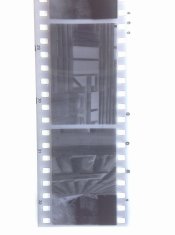
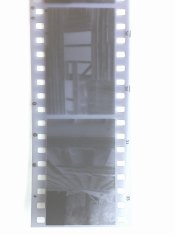
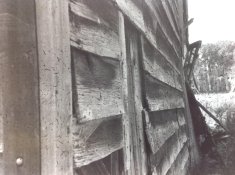
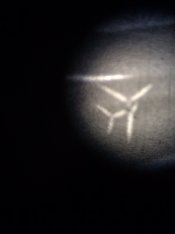
For what it's worth...here are some close ups of the negs and a new print. She thought it was cool...looking like an attack of birds! At least a happy outlook. Not from me...
photo 1-1.JPGphoto 2-1.JPGgranted, there there are some extra smudge/scratches, but no evidence of dents to emulsion or other marks. If blown up you can definitely make out the Ys
photo 3-1.jpg "Attack of the birds"
 
OP
OP

mrs.martin

Member
Allowing Ads
Joined
Oct 2, 2014
Messages
18
Format
35mm
Here are some microscopic images of the negative photo 2.JPG photo 1.JPG photo 3.JPG this last one shows the Ys going out of the frame (in between neg images)
 

Rick A

Subscriber
Allowing Ads
Joined
Mar 31, 2009
Messages
10,032
Location
Laurel Highlands
Format
8x10 Format
They almost appear to be where hot emulsion cooled rapidly leaving small tears.
 

Kirks518

Member
Allowing Ads
Joined
Oct 5, 2013
Messages
1,494
Location
Flori-DUH
Format
Multi Format
In your first post, you say: "Tri-x 400 and Arista EDU 400, Kodak D76, Kodak Fixer.", which leads me to understand you're using 2 different films? If that's correct, I would agree it's not the film.

You have 3 variables; film, developer, fixer.

I would start from scratch with a new (different) developer, and fixer, and see how that goes. If it still shows, then it's the film. If not, then re-introduce the dev or fixer one at a time, and see where the problem shows up.

That's about all I could think of doing.

Good luck!
 

Old-N-Feeble

Member
Allowing Ads
Joined
Feb 22, 2012
Messages
6,805
Location
South Texas
Format
Multi Format
Who mixes the chemistry? Has anyone checked their procedures? Who wrote the procedures? Has anyone checked those written procedures?
 

cliveh

Subscriber
Allowing Ads
Joined
Oct 9, 2010
Messages
7,804
Format
35mm RF
luckily we have some very experienced QC people in our team, they have seen most things in their photo lifetime with ILFORD and HARMAN.. in saying that we certainly do occasionally have a verdict of cause not certain. Its one of the main reasons we archive film and paper from every coating ( master batch ) so that we can expose, process and test and see if we can replicate any issue a customer of ILFORD Photo products has experienced.

Simon ILFORD Photo / HARMAN technology Limited

Great to know you archive film and paper from every coating, but that doesn't help solve this problem. What do your very experienced QC people in your team that have seen most things in their photo lifetime think is causing this?
 

pdeeh

Member
Allowing Ads
Joined
Jun 8, 2012
Messages
4,770
Location
UK
Format
Multi Format
If I was a very experienced QC person, or indeed a sales director, at Ilford, it wouldn't be one of my priorities to solve problems that occurred on my competitors' emulsions ...
 

cliveh

Subscriber
Allowing Ads
Joined
Oct 9, 2010
Messages
7,804
Format
35mm RF
If I was a very experienced QC person, or indeed a sales director, at Ilford, it wouldn't be one of my priorities to solve problems that occurred on my competitors' emulsions ...

Then why bother to post on the thread?
 

djdister

Subscriber
Joined
Oct 6, 2012
Messages
268
Location
Maryland USA
Format
Multi Format
It has nothing to do with the drying process. My money is on a chemical contamination or precipitate problem in the developer, or related to the developing process or technique. For example, crud sticks on the film pre-development or during the development, preventing development, then fixes out as clear specks, printing black on the print, as shown.
 

Photo Engineer

Subscriber
Allowing Ads
Joined
Apr 19, 2005
Messages
29,018
Location
Rochester, NY
Format
Multi Format
The full negative scans show poor process techniques and rough handling.

Look to the right of frame #32 and you see a scratch that runs full width. See the black half moon? That is kinking. See the bright halos around the sprocket holes? That is bromide drag from bad agitation. You have just about every problem here that a beginner can experience!

I said earlier that it is not the film as you are using 2 types of film. I am less inclined to think it is the chemistry as well. I am now inclined more than ever to think it is in the handling of the film due to the handling defects I mention above and saw in the scans. Where and when it takes place is still a mystery to me. If, with a jeweler's loupe, you can see tiny fractures in the emulsion on that worst sample, then it was somehow induced by a rapid change in process condition, most likely temperature. If you cannot see fractures, then I start over. BTW, what film was that terrible example?

PE
 

MartinP

Member
Allowing Ads
Joined
Jun 23, 2007
Messages
1,569
Location
Netherlands
Format
Medium Format
Out of the two mentioned, it would appear to be the Arista-EDU (made by Foma as an own-label product for the retailer).

Looking at the microscope photos, it does appear as though the gelatine is intact and that the silver is "not there" in the Y-shapes, but as they are neither sharp or with alternative top-lighting it is not 100% clear. It does make the ideas of mechanical damage more confusing though.

I'll also add that I'm very glad that I don't have to teach, and especially students who don't really want to be in the lesson!
 
Last edited by a moderator:
OP
OP

mrs.martin

Member
Allowing Ads
Joined
Oct 2, 2014
Messages
18
Format
35mm
It's just odd that typical beginner mistakes or instances such as quick change in temperature during processing or drying too rapidly that more people wouldn't have encountered this. I have asked so many people. These solutions are all great - I appreciate and will try it all!
 

Truzi

Member
Joined
Mar 18, 2012
Messages
2,685
Format
Multi Format
Perhaps you can watch what they are doing, and ultimately, try to reproduce the faults on demand. Otherwise you may never know exactly what it is.
 
Photrio.com contains affiliate links to products. We may receive a commission for purchases made through these links.
To read our full affiliate disclosure statement please click Here.

PHOTRIO PARTNERS EQUALLY FUNDING OUR COMMUNITY:


Ilford ADOX Freestyle Photographic Stearman Press Weldon Color Lab Blue Moon Camera & Machine
Top Bottom