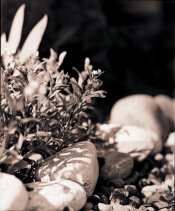
[video=youtube;xVkU8dDSC9w]https://www.youtube.com/watch?v=xVkU8dDSC9w[/video]
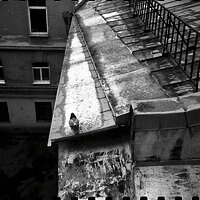
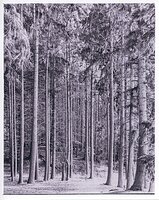

I (the OP) put some samples in post 8....

I'm looking at the mamiya 645. Will the 645 negative give me that medium format pop? That heavenly 3d look?
Thanks in advance. Any illustrations are welcomed.
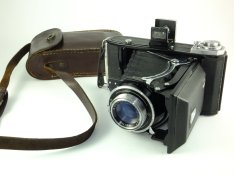

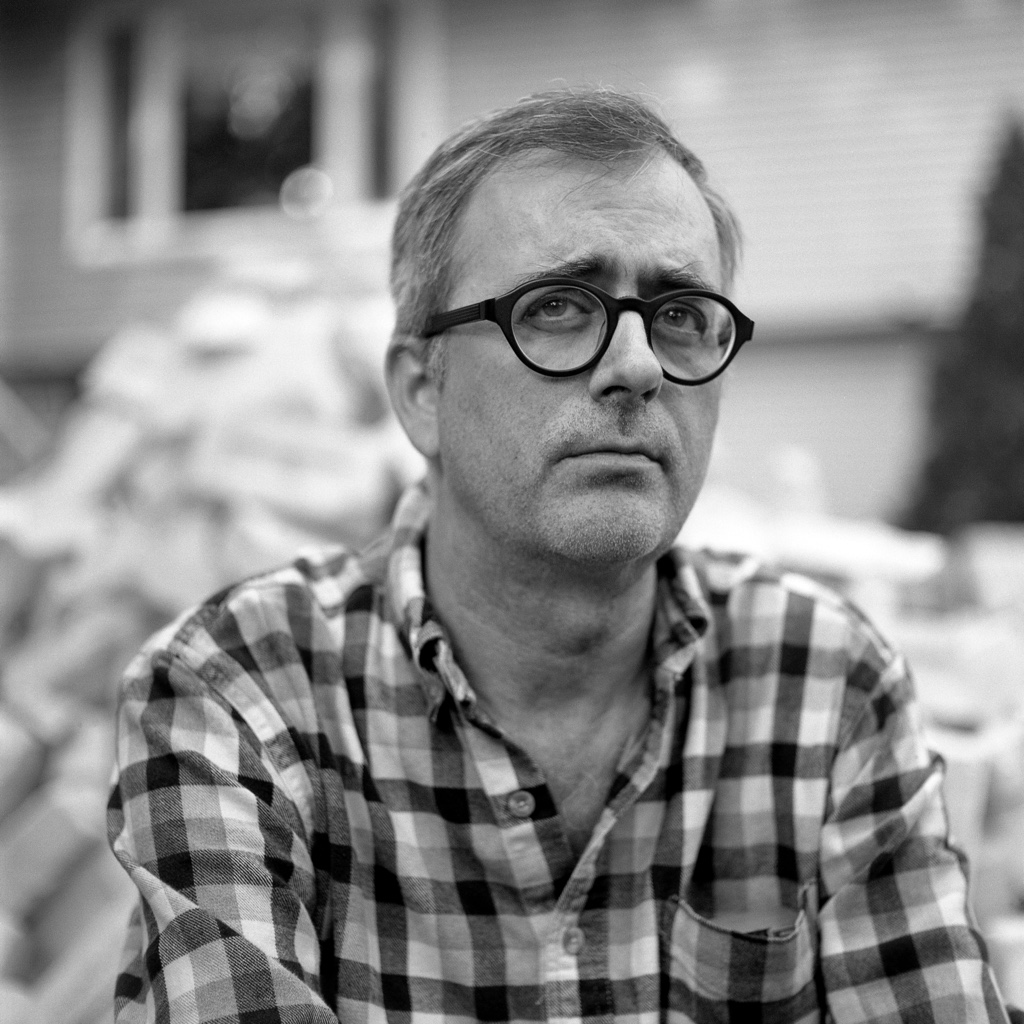
Fine examples, Patrick!Allow me to submit a few portraits and you tell me if they have that 'pop.' - shot with a Mamiya 645AF - great camera for MF starters.


Sorry to be late. You will get 3d look on 135 with good lens and good light. Don't need half-frame MF for it

........why stop at just 645 when you might get to 6x9, which makes negatives six times the area of a standard 35mm--and you can still have the same framing!! AKA 2 x 3 (inches--actually 2-1/4 x 3-1/4), you're now in the Twilight Zone between MF and LF.

Medium format pop for me, means the almost hyper realism in detail, clarity, and tonality compared to a 135 format print.
repeat after me: There Are No Magic Bullets.
"pop" is all in the lighting, not the choice of camera.
Sorry to be late. You will get 3d look on 135 with good lens and good light. Don't need half-frame MF for it


Hold on thar, Mr. Peabody...! You're on the right track, but let us compare apples to apples, shall we?The 35mm neg is 24mm tall. The 645 neg is 43mm tall. The 6x6 neg is 56mm tall. The 6x9 neg is 56mm tall. The 4x5 neg is 93mm tall.
- So 4x5 is 1.66x better than 6x9 for frame height detail and tonality,
- 6x7 is 1.30x better than 645 for frame height detail and tonality, while
- 645 is 1.79x better than 135 for frame height detail and tonality.
Not sure where 6x7 shooters come off belittling 645 when the 4x5 outdoes 6x9 by a larger margin than 6x9 'outdoes' 645.
Yes, 6x7 is a big step up from 135, at 2.33x 135 format. No one disputes the superiority of 4x5 over 6x7 at 1.66x, so 1.79x over 135 is a healthy margin by any measure.


It will be better than 35mm, but I think the "medium format look" really starts at uncropped 6x6 or 6x7.
Well, yeah...645 is a wonderful format. For most the greatly increased tonal quality and enlargement capability is a huge improvement over 35mm.
Are there larger formats that provide even more improvement? Of course. It goes without saying that a properly exposed 6x9 negative will have even more usable detail. Ditto with 4x5.
But it isn't all roses. Along with increased negative size comes the need for even better technique and equipment. Negatives are larger and keeping them flat during exposure becomes more difficult. Normal focal lengths get longer and longer and are more and more difficult to hand hold. This means that tripods are more important. Since the cameras are usually bigger and heavier than the tripod has to be bigger and heavier.
Along with that comes depth of field changes. While f/8 is considered a good aperture setting with 35mm, you need to move to f/16 or f/22 to get the same depth of field with medium format. Even with 645, using an aperture of f/2.8 comes with a very narrow depth of field. It is very difficult to get a clear, properly focused, photograph at that aperture.
So, while medium format can provide some amazing improvements in tonal quality, detail and enlargement or cropping potential, it also demands an increase in your own technique to get the best from it.
Hold on thar, Mr. Peabody...! You're on the right track, but let us compare apples to apples, shall we?
- The area of a 35mm negative is nominally (cameras differ slightly, so I'm using basic dimensions here) 24 x 36mm or 864mm2, with an aspect ratio of 1:1.5.
+1 Right well said, Fred. er--Drew. Whoever...Apples to apples in terms of lens quality etc, each true size change does make a difference. I'd far rather shoot 6x7 than 645 or 66, but like
6x9 much more than 6x7. The more real estate on the film, the better. Of course, ergonomics and camera choice factor into all such decisions. Any day of the week I'd rather enlarge sheet film instead of anything med format, but that's a different kind of system entirely.
Came across an utterly spectacular lighting situation last fall which I knew would only last a few seconds. Had my 4x5 along but no time to set it up or focus it in rapidly dimming light. Out comes the 6x7 and I bagged it. Really wished it would have be taken with my 8x10, but there are times smaller cameras are essential. Each format has its pros and cons, but in terms of ultimate print quality, size always matters, and Godzilla always squishes Bambi.
FWIW, I think you're a pretty bright bugshutter wiltw; I will just agree to disagree. Seems we're moving into what appears to be statistical analysis and we can use that to argue our views ad infinitum. We certainly all concur bigger negatives in and of themselves can be expected to yield superior technical results over smaller formats regardless of size, everything else being equal. A 6 x 4.5 Portra 400 taken under ideal conditions with a lens of equivalent field of view and design, can be expected to be a serious improvement over a 35mm neg made the same way. I would add, a 6 x 9 neg would be seen to be a noticeable improvement over the 6 x 4.5--but probably not under, say, an 11 x 14 enlargement. And of course, the 4 x 5 would put everything smaller to shame at nearly any size...But it is the LINEAR difference which accounts for the fact that a 16x20" print that we compare requires...
- 16.9x magnification * 24mm tall 135 neg
- 9.5x magnification * 43mm tall 645 neg
- 7.2x magnification * 56mm tall 6x7 neg
- 4.4x magnification * 93mm tall 4x5 neg
And that is why
- grain from 4x5 is 26% of the single dimension size of grain from 135
- grain from 4x5 is 61% of the single dimension size of grain from 6x7
- grain from 645 is 56% of the single dimension size of grain from 135
- grain from 6x7 is 42% of the single dimension size of grain from 135
...because of the LINEAR magnification difference, NOT because of area change! The human eye is limited in it ability to detect angular differences, not area differences.

| Photrio.com contains affiliate links to products. We may receive a commission for purchases made through these links. To read our full affiliate disclosure statement please click Here. |
PHOTRIO PARTNERS EQUALLY FUNDING OUR COMMUNITY:  |