• Welcome to Photrio!
    Registration is fast and free. Join today to unlock search, see fewer ads, and access all forum features.
    Click here to sign up

Will 645 give me "that medium format pop"?

Recent Classifieds

Forum statistics

Threads
201,977
Messages
2,833,181
Members
101,043
Latest member
Obla
Recent bookmarks
1

Old-N-Feeble

Member
Allowing Ads
Joined
Feb 22, 2012
Messages
6,805
Location
South Texas
Format
Multi Format
:D :D :D

[video=youtube;xVkU8dDSC9w]https://www.youtube.com/watch?v=xVkU8dDSC9w[/video]
 

Monday317

Subscriber
Allowing Ads
Joined
Apr 3, 2015
Messages
136
Location
Pittsburgh,
Format
Medium Format
I think so

I'm looking at the mamiya 645. Will the 645 negative give me that medium format pop? That heavenly 3d look?

Thanks in advance. Any illustrations are welcomed.
I went from a Nikon FM to an M645 1000S and yes, you'll see an obvious upgrade in your images--especially color transparencies. Even a 6x4.5 negative is a bit over 3X the size of 35mm and the difference is substantial! I can personally attest to the quality of that system; the only caveat being that illuminati report the Pentax 645 lenses are just a bit better. No personal experience thereupon.

However to really throw some stop bath into your developer: why stop at just 645 when you might get to 6x9, which makes negatives six times the area of a standard 35mm--and you can still have the same framing!! AKA 2 x 3 (inches--actually 2-1/4 x 3-1/4), you're now in the Twilight Zone between MF and LF.

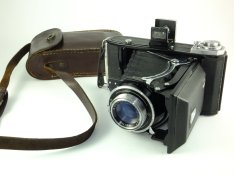
Yes, the M645 is compact, but a Voigtlander Bessa, Zeiss Ikon, or Agfa Billy will fold up enough to fit in a coat pocket, usually have superb lenses (alas at a fixed focal length), obtainable at or less than what you'd pay for the M645 + lenses and accessories.
ikonta.jpg

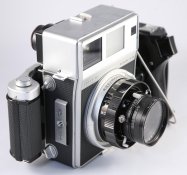
If you really need a system camera in that format, you can get a Mamiya Press 23 and go nuts, though not exactly a pocket camera.
0287_Mamiya_Super_23_Silver_100mm_f3.5_6x7.jpg

Whatever you decide, I hope you enjoy! :sideways:

Kevin
 
Last edited by a moderator:

Monday317

Subscriber
Allowing Ads
Joined
Apr 3, 2015
Messages
136
Location
Pittsburgh,
Format
Medium Format
You Got It!

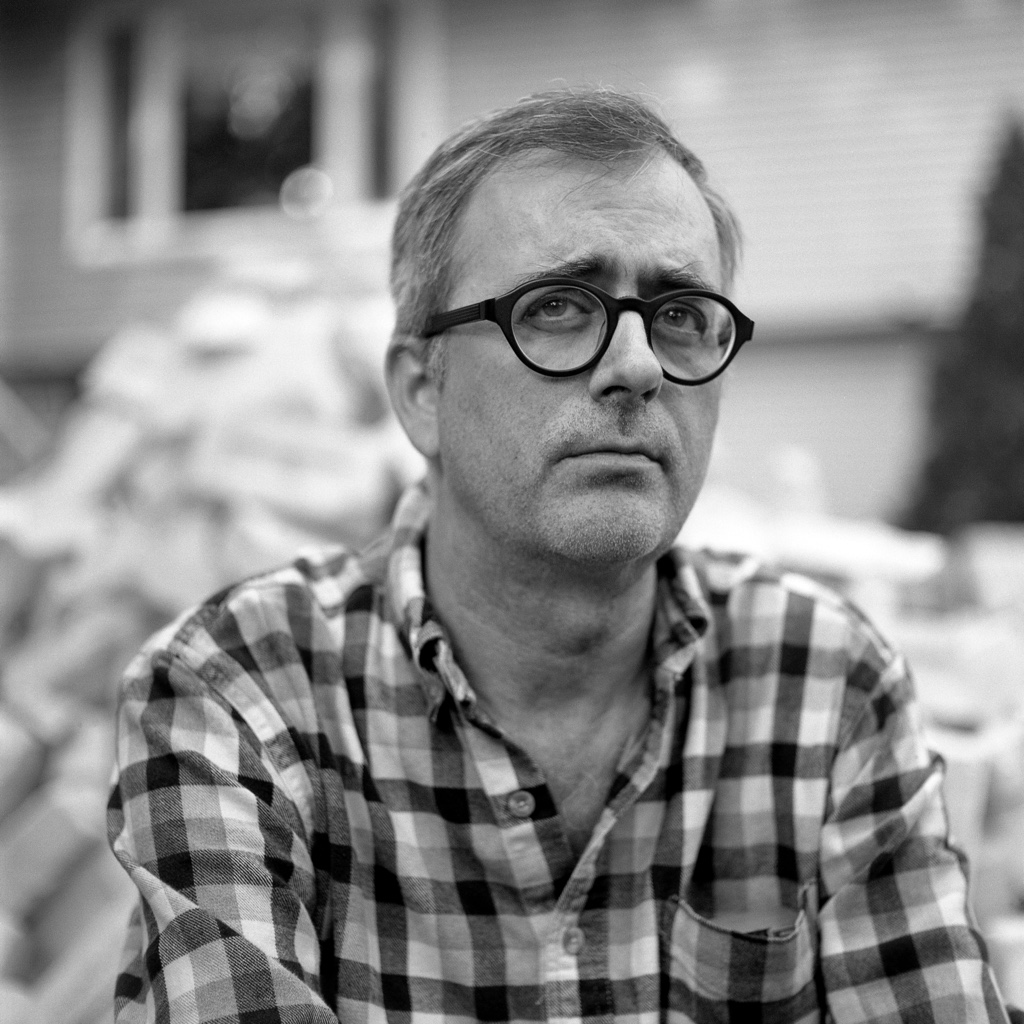
Allow me to submit a few portraits and you tell me if they have that 'pop.' - shot with a Mamiya 645AF - great camera for MF starters.
Fine examples, Patrick! :D
 
OP
OP
Atracksler

Atracksler

Member
Allowing Ads
Joined
Mar 25, 2013
Messages
116
Location
Maine USA
Format
Medium Format
I ended up getting a RB67....
attachment.php
 

Attachments

  • rb67-2.jpg
    rb67-2.jpg
    917.2 KB · Views: 383

fotch

Member
Allowing Ads
Joined
Mar 16, 2005
Messages
4,774
Location
SE WI- USA
Format
Multi Format
........why stop at just 645 when you might get to 6x9, which makes negatives six times the area of a standard 35mm--and you can still have the same framing!! AKA 2 x 3 (inches--actually 2-1/4 x 3-1/4), you're now in the Twilight Zone between MF and LF.

Comparing SLR cameras, a 6x9 is huge compared to 645. The RF including fold up are not the sames as a SLR however, I agree, a good alternative to 35mm RF with a big negative. Anyway, have several alternatives to pick from gives one the ability to fit the choice to their needs & wants. Best to have lots of cameras in difference sizes
.:D
 

Gimenosaiz

Member
Allowing Ads
Joined
Feb 4, 2014
Messages
189
Location
Spain - old
Format
Multi Format

Dismayed

Member
Allowing Ads
Joined
Feb 26, 2011
Messages
438
Location
Boston
Format
Med. Format RF
repeat after me: There Are No Magic Bullets.

"pop" is all in the lighting, not the choice of camera.

Of course there are no magic bullets, but it is easy to see differences in tonal gradations when comparing medium and large format to miniature formats. It's even visible in fairly small prints. To deny this is like claiming that there is no difference between oil paints and water colors.
 

Dismayed

Member
Allowing Ads
Joined
Feb 26, 2011
Messages
438
Location
Boston
Format
Med. Format RF
Sorry to be late. You will get 3d look on 135 with good lens and good light. Don't need half-frame MF for it:smile:

What you are calling 'half-frame medium format' has an area 2,7 times larger than your 35 mm neg. Sorry, but size does matter, little guy.
 

wiltw

Subscriber
Allowing Ads
Joined
Oct 4, 2008
Messages
6,709
Location
SF Bay area
Format
Multi Format
The 35mm neg is 24mm tall. The 645 neg is 43mm tall. The 6x6 neg is 56mm tall. The 6x9 neg is 56mm tall. The 4x5 neg is 93mm tall.

  • So 4x5 is 1.66x better than 6x9 for frame height detail and tonality,
  • 6x7 is 1.30x better than 645 for frame height detail and tonality, while
  • 645 is 1.79x better than 135 for frame height detail and tonality.


Not sure where 6x7 shooters come off belittling 645 when the 4x5 outdoes 6x9 by a larger margin than 6x9 'outdoes' 645.
Yes, 6x7 is a big step up from 135, at 2.33x 135 format. No one disputes the superiority of 4x5 over 6x7 at 1.66x, so 1.79x over 135 is a healthy margin by any measure.
 

NJH

Member
Allowing Ads
Joined
Dec 30, 2013
Messages
702
Location
Dorset
Format
Multi Format
More than that for many people its 'sufficient' such that a 20x16 print is broadly similar to a 12x8 from 135, this for me personally is a big thing as 645 hits that sweet spot really nicely between portability/handling and output.

The current 'hot' system thanks to Jose Villa et al is also a 645 system (Contax), its an odd thread and an odd question this one to ask if 645 does the job when the very person who is repeatedly quoted as showing the way for a current pro weeding photog to shot film, himself shots a 645 system and all his fans driving the price of that system to comparatively insane levels.
 

Toonboy7

Member
Allowing Ads
Joined
Mar 1, 2013
Messages
2
Location
Ottawa, Cana
Format
35mm
Sounds like you're attached to the 645, let's throw a wrench into things and suggest the king of TLRs (I'm biased) a Mamiya C-220 or the C-330.

C-220, standard 80mm lens . . .
642a568ae1a9f1ef42c381ac717278fc.jpg


I like film.
 

Monday317

Subscriber
Allowing Ads
Joined
Apr 3, 2015
Messages
136
Location
Pittsburgh,
Format
Medium Format
Apples To Apples

The 35mm neg is 24mm tall. The 645 neg is 43mm tall. The 6x6 neg is 56mm tall. The 6x9 neg is 56mm tall. The 4x5 neg is 93mm tall.

  • So 4x5 is 1.66x better than 6x9 for frame height detail and tonality,
  • 6x7 is 1.30x better than 645 for frame height detail and tonality, while
  • 645 is 1.79x better than 135 for frame height detail and tonality.


Not sure where 6x7 shooters come off belittling 645 when the 4x5 outdoes 6x9 by a larger margin than 6x9 'outdoes' 645.
Yes, 6x7 is a big step up from 135, at 2.33x 135 format. No one disputes the superiority of 4x5 over 6x7 at 1.66x, so 1.79x over 135 is a healthy margin by any measure.
Hold on thar, Mr. Peabody...! You're on the right track, but let us compare apples to apples, shall we?
  • The area of a 35mm negative is nominally (cameras differ slightly, so I'm using basic dimensions here) 24 x 36mm or 864mm2, with an aspect ratio of 1:1.5.
  • The area of a 6 x 4.5 (keeping apples to apples, we'll call the MFs out in mm as well) negative is 60 x 45mm or 2700mm2, with an aspect ratio slightly more square at 1:1.333. The raw difference is, of course, 2700/864 or 3.125. The effective difference is properly arrived at by comparing the 35mm neg at the same aspect ratio of 1:1.333 of the 60 x 45mm neg. So 24mm x 1.333=32mm; it's area will be 24 x 32mm=768mm2. When we divide 2700 by 768, the difference is a bit higher at just over 3.5. It's fair to say then, that a 645 neg has 3.5x more effective area than a 35mm negative and at least a solid 3x advantage no matter how we look at it.
  • Now to continue our apples to apples comparison, a 60 x 90mm MF neg is the same aspect ratio of the 24 x 36mm neg. The 60 x 90mm neg's surface area, 60 x 90=5400 is exactly twice the 60 x 45 neg's area and a whopping 6.25x improvement over 35mm; that's serious bidniz, folks!
  • I do not argue 4 x 5 (or in apples, about 102 x 127mm) is another big jump up. BUT--apples to apples--if we use the same aspect ratio of 3:2 here, our 102 x 127mm neg shrinks a tad to 85 x 127 for a comparable area of 10795mm2, which is nothing to sniff at either. That's about 2x bigger than the 60 x 90, 6x bigger than 60 x 45, and 12.5x bigger than the lowly 35mm.
  • 110 aficions, go stick your heads in the oven...
:whistling:

No quibbles about the other MF formats; they all have their advantages and every format ever made will have at least one or more disadvantage in relation to another, to be sure. For this writer, the Zeiss Ercona I (East German version of the Ikon), for a slew of technical and artistic reasons I will save for the cold, lonely, winter nights to come is ideal. I've owned a Mamiya 645 1000s in my day with no complaint, same for a Pentax 6x7, a 4 x5 and an 8 x10 Wisner. Now I just use the Zeiss, with only an occasional twitch about buliding a Holganon for kicks.

My bottom line is, whatever camera you shoot well with is going to be the Ideal Format.

So there. :kissing:
 
Last edited by a moderator:

Sirius Glass

Subscriber
Joined
Jan 18, 2007
Messages
50,836
Location
Southern California
Format
Multi Format
It will be better than 35mm, but I think the "medium format look" really starts at uncropped 6x6 or 6x7.

What he said. 645 is like kissing you sister on a date, not what you really should want.
 

Pioneer

Member
Joined
May 29, 2010
Messages
3,998
Location
Elko, Nevada
Format
Multi Format
645 is a wonderful format. For most the greatly increased tonal quality and enlargement capability is a huge improvement over 35mm.

Are there larger formats that provide even more improvement? Of course. It goes without saying that a properly exposed 6x9 negative will have even more usable detail. Ditto with 4x5.

But it isn't all roses. Along with increased negative size comes the need for even better technique and equipment. Negatives are larger and keeping them flat during exposure becomes more difficult. Normal focal lengths get longer and longer and are more and more difficult to hand hold. This means that tripods are more important. Since the cameras are usually bigger and heavier than the tripod has to be bigger and heavier.

Along with that comes depth of field changes. While f/8 is considered a good aperture setting with 35mm, you need to move to f/16 or f/22 to get the same depth of field with medium format. Even with 645, using an aperture of f/2.8 comes with a very narrow depth of field. It is very difficult to get a clear, properly focused, photograph at that aperture.

So, while medium format can provide some amazing improvements in tonal quality, detail and enlargement or cropping potential, it also demands an increase in your own technique to get the best from it.
 

Monday317

Subscriber
Allowing Ads
Joined
Apr 3, 2015
Messages
136
Location
Pittsburgh,
Format
Medium Format
645 is a wonderful format. For most the greatly increased tonal quality and enlargement capability is a huge improvement over 35mm.

Are there larger formats that provide even more improvement? Of course. It goes without saying that a properly exposed 6x9 negative will have even more usable detail. Ditto with 4x5.

But it isn't all roses. Along with increased negative size comes the need for even better technique and equipment. Negatives are larger and keeping them flat during exposure becomes more difficult. Normal focal lengths get longer and longer and are more and more difficult to hand hold. This means that tripods are more important. Since the cameras are usually bigger and heavier than the tripod has to be bigger and heavier.

Along with that comes depth of field changes. While f/8 is considered a good aperture setting with 35mm, you need to move to f/16 or f/22 to get the same depth of field with medium format. Even with 645, using an aperture of f/2.8 comes with a very narrow depth of field. It is very difficult to get a clear, properly focused, photograph at that aperture.

So, while medium format can provide some amazing improvements in tonal quality, detail and enlargement or cropping potential, it also demands an increase in your own technique to get the best from it.
Well, yeah...
 

wiltw

Subscriber
Allowing Ads
Joined
Oct 4, 2008
Messages
6,709
Location
SF Bay area
Format
Multi Format
Hold on thar, Mr. Peabody...! You're on the right track, but let us compare apples to apples, shall we?
  • The area of a 35mm negative is nominally (cameras differ slightly, so I'm using basic dimensions here) 24 x 36mm or 864mm2, with an aspect ratio of 1:1.5.


  • But it is the LINEAR difference which accounts for the fact that a 16x20" print that we compare requires...
    • 16.9x magnification * 24mm tall 135 neg
    • 9.5x magnification * 43mm tall 645 neg
    • 7.2x magnification * 56mm tall 6x7 neg
    • 4.4x magnification * 93mm tall 4x5 neg

    And that is why
    • grain from 4x5 is 26% of the single dimension size of grain from 135
    • grain from 4x5 is 61% of the single dimension size of grain from 6x7
    • grain from 645 is 56% of the single dimension size of grain from 135
    • grain from 6x7 is 42% of the single dimension size of grain from 135

    ...because of the LINEAR magnification difference, NOT because of area change! The human eye is limited in it ability to detect angular differences, not area differences.
 

DREW WILEY

Member
Allowing Ads
Joined
Jul 14, 2011
Messages
14,878
Format
8x10 Format
Apples to apples in terms of lens quality etc, each true size change does make a difference. I'd far rather shoot 6x7 than 645 or 66, but like
6x9 much more than 6x7. The more real estate on the film, the better. Of course, ergonomics and camera choice factor into all such decisions. Any day of the week I'd rather enlarge sheet film instead of anything med format, but that's a different kind of system entirely.
Came across an utterly spectacular lighting situation last fall which I knew would only last a few seconds. Had my 4x5 along but no time to set it up or focus it in rapidly dimming light. Out comes the 6x7 and I bagged it. Really wished it would have be taken with my 8x10, but there are times smaller cameras are essential. Each format has its pros and cons, but in terms of ultimate print quality, size always matters, and Godzilla always squishes Bambi.
 

Monday317

Subscriber
Allowing Ads
Joined
Apr 3, 2015
Messages
136
Location
Pittsburgh,
Format
Medium Format
I Agree

Apples to apples in terms of lens quality etc, each true size change does make a difference. I'd far rather shoot 6x7 than 645 or 66, but like
6x9 much more than 6x7. The more real estate on the film, the better. Of course, ergonomics and camera choice factor into all such decisions. Any day of the week I'd rather enlarge sheet film instead of anything med format, but that's a different kind of system entirely.
Came across an utterly spectacular lighting situation last fall which I knew would only last a few seconds. Had my 4x5 along but no time to set it up or focus it in rapidly dimming light. Out comes the 6x7 and I bagged it. Really wished it would have be taken with my 8x10, but there are times smaller cameras are essential. Each format has its pros and cons, but in terms of ultimate print quality, size always matters, and Godzilla always squishes Bambi.
+1 Right well said, Fred. er--Drew. Whoever... :whistling:
 

Monday317

Subscriber
Allowing Ads
Joined
Apr 3, 2015
Messages
136
Location
Pittsburgh,
Format
Medium Format
I Dunno...

But it is the LINEAR difference which accounts for the fact that a 16x20" print that we compare requires...

  • 16.9x magnification * 24mm tall 135 neg
  • 9.5x magnification * 43mm tall 645 neg
  • 7.2x magnification * 56mm tall 6x7 neg
  • 4.4x magnification * 93mm tall 4x5 neg

And that is why
  • grain from 4x5 is 26% of the single dimension size of grain from 135
  • grain from 4x5 is 61% of the single dimension size of grain from 6x7
  • grain from 645 is 56% of the single dimension size of grain from 135
  • grain from 6x7 is 42% of the single dimension size of grain from 135

...because of the LINEAR magnification difference, NOT because of area change! The human eye is limited in it ability to detect angular differences, not area differences.
FWIW, I think you're a pretty bright bugshutter wiltw; I will just agree to disagree. Seems we're moving into what appears to be statistical analysis and we can use that to argue our views ad infinitum. We certainly all concur bigger negatives in and of themselves can be expected to yield superior technical results over smaller formats regardless of size, everything else being equal. A 6 x 4.5 Portra 400 taken under ideal conditions with a lens of equivalent field of view and design, can be expected to be a serious improvement over a 35mm neg made the same way. I would add, a 6 x 9 neg would be seen to be a noticeable improvement over the 6 x 4.5--but probably not under, say, an 11 x 14 enlargement. And of course, the 4 x 5 would put everything smaller to shame at nearly any size...

If I wanted to quibble, I'd contest the overall value of 6 x 6 (unless the square format is the particular photographer's forte) beingt a worthwhile improvement over 6 x 4.5, since most workers crop their 6 x 6 images into some rectangular format anyway. And even my own HO has its caveats:
  1. I don't think you can beat a Hasselblad lens image per given focal length with any other 6 x 4.5 lens, even though Japanese glass (Mamiya or [especially] Pentax) are also superb.
  2. But that said, you wouldn't see the difference until you have made at least an 8x B + W enlargement and that means a 16 x20 print. A good color print might have to go 10x. Or for about $16.00 USD, you could have a service scan a neg at 6400 x 6400 ppi and then you could sit at your monitor and pore over the fine details. Wouldn't be my favorite hobby.
  3. That said, there will be image quality overlaps due to tripod use, lens design, use of hood/filters, film type, developer and general craftsmanship. A 35mm at 4 x 5 can be mistaken for a 4 x 5 contact print if done with care. No doubt a carefully executed 11 x 14 print from a 6 x 4.5 neg could beat a tyro's 6 x 9 as well. That's why I feel we're needlessly splitting hairs here.
It's not my intention to pooh-pooh your observations or opinions, just to keep all this in perspective and remember it's not so much the tools we use, but how we use the tools that counts, yais?

Happy days, all. :munch:
 

Greg Heath

Member
Allowing Ads
Joined
Jul 13, 2008
Messages
591
Location
Racine, Wisc
Format
Medium Format
The image from my Fuji GS645S is about as crisp as my Hasselblad. It's lighter and easier to carry and I get 16 frames. Plus it's a Rangefinder.
I've got my cameras nailed down to the Fuji, Hasselblad and Leica IIIc with 35mm Summaron.
 

trondsi

Member
Allowing Ads
Joined
Jun 29, 2015
Messages
454
Format
35mm
No expert on this, but a I can say is that my recent move from 35mm (Minolta) to 6x6 cm (Rolleiflex) was a huge improvement. Part of it may be the quality of the Rollei lens though. I would expect 6x4.5 to be somewhere in between.
 

NJH

Member
Allowing Ads
Joined
Dec 30, 2013
Messages
702
Location
Dorset
Format
Multi Format
Just a point which frequently get missed in these discussions. The first thing that grabbed me straight away going bigger is the improvement in subtle tonality, one of the first pictures I took on MF was on Provia 100f of the front of my new house and spotted from it that the rendering has an odd unevenness to it. I never noticed it with the many 35mm B&W photos I took during build or for that matter with my own eye. Its this sort of hyper reality you get with going bigger than 35mm. I believe this happens because as we know with film the resolving capability is highly linked to contrast difference between the things being resolved. This is why people say stuff like you can tell the difference just looking at a 10x8, if the thing you are looking for is subtle contrast changes then yes I am sure you will see that difference even in a small output. This is why for me the nerds looking at test charts and 1000:1 contrast ratios is in the realms of the photographically irrelevant.
 
Photrio.com contains affiliate links to products. We may receive a commission for purchases made through these links.
To read our full affiliate disclosure statement please click Here.

PHOTRIO PARTNERS EQUALLY FUNDING OUR COMMUNITY:



Ilford ADOX Freestyle Photographic Stearman Press Weldon Color Lab Blue Moon Camera & Machine
Top Bottom