• Welcome to Photrio!
    Registration is fast and free. Join today to unlock search, see fewer ads, and access all forum features.
    Click here to sign up

What is the biggest size print from a good 35mm photo ?

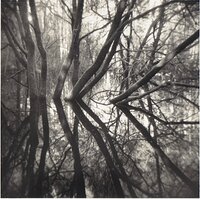
Flooded woodland

Flooded woodland

  • 14
  • 0
  • 96
Babylon

D
Babylon

  • 3
  • 1
  • 85

Recent Classifieds

Forum statistics

Threads
202,841
Messages
2,846,333
Members
101,559
Latest member
gnafin61
Recent bookmarks
0
What is the biggest size print from a good 35mm photo?

Diffraction will limit the size you can enlarge directly.

For example a 50ft diagonal print from a 35mm negative using a f2.8 lens wide open will be about f1000 with Airy disk size in the print roughly 1.3mm

An 8x10 enlargement of the negative, can be easily made with minimal deterioration from diffraction.

That 8x10 internegative, when projected to 50ft diagonal, with a f5.6 lens wide open will be f280. That will yield an Airy disk size in the print roughly 0.4mm.
 
I was merely pointing out that apparent quality is dependent upon viewing distance, and gave multiple examples of that. That a person chooses to NOT adhere to that viewing distance proportionality is the reason why folks complain about 'too grainy' enlargements and max sizes you can print from 135 format.
The proverbial greasy nose prints on museum photo displays is indicative of that.
Otherwise there is no limit for 35mm. The limit is the enlarging and paper not the quality of 35mm. So to say what size is the largest you must consider that the print will be view at normal reading distance. Otherwise there is no largest size.
 
I've enlarged a 35 chrome , using cibachrome to 16x20 and it is razor sharp. I think the film was agfachrome 200. I' also enlarged an agfacolor 200 to 40x60 and it too came out razor sharp. The grain was there but didn't interfere with the image. The shot was taken with an Alpa Macro Switar in close-up and could have been enlarged more if my set-up had been able. This was 30 years ago. With the quality of modern films now, the sky is almost the limit
 
I love grain and I love blur.... Printed a 20x24" (50x60cm) portrait this evening. Unsharp, obvious grain... but one of the best portraits I've ever printed. You want sharpness? You don't like grain? Go digital!
 
Otherwise there is no limit for 35mm. The limit is the enlarging and paper not the quality of 35mm. So to say what size is the largest you must consider that the print will be view at normal reading distance. Otherwise there is no largest size.
Exactly. The largest practical size of print form a 35mm negative is approximately the size of planet Earth, but you have to view the print from Neptune.

:D
 
Exactly. The largest practical size of print form a 35mm negative is approximately the size of planet Earth, but you have to view the print from Neptune.

:D
You forgot about youranus! :tongue:

On my living room wall is a 12" x 60" canvas made from a photo taken with a camera that has a miniscule 7.6mm x 5.7mm sensor... 200X enlargement.
 
You forgot about youranus! :tongue:

On my living room wall is a 12" x 60" canvas made from a photo taken with a camera that has a miniscule 7.6mm x 5.7mm sensor... 200X enlargement.
Have a pic of that handy? I’m curious what it looks like!
 
Have a pic of that handy? I’m curious what it looks like!
A very low res version of what was used to print 20" x 60" canvas. Plitvice Lakes National Park, UNESCO World Heritage site, Czechia.
If you can, view at about 80% of the distance that the photo appears wide on your monitor.

 
Last edited:
I' also enlarged an agfacolor 200 to 40x60 and it too came out razor sharp. The grain was there but didn't interfere with the image. The shot was taken with an Alpa Macro Switar in close-up and could have been enlarged more if my set-up had been able. This was 30 years ago. With the quality of modern films now, the sky is almost the limit

One hypothesis is that the grain enhances the perception of sharpness due to local contrast, when viewed at the correct distance. A simple test of this for me is comparing enlargements from TMAX and HP5+. My 10 year old son says that he prefers HP5+ shots.


These are awesome. I had in the past an Edmund optics resolution chart and saw my Pentax 24mm achieve over 100lpmm, using TMAX 100 and XTOL, and reading directly on the negative using a 20x scope and raising the enlarger head up. It would enable reading printed letters at 4mm as small as maybe 4/100mm on the film. This equates to shrinking the text by 100x to get it on the film. By the same token, this means being able to record 4mm text from say 5m with a 50mm lens. Then when you enlarge it, maybe you enlarge it by 10x. Now the lettering is there, in the print, but only measuring 0.4mm, so you cannot read it! I believe I am right in saying paper like MGIV can also do similar resolutions to film, around 50lpmm. This means that the text is there on the paper, but you cannot read it without a loupe!

I have a shot with flyer in the frame, in the plane of focus, where you can read a phone number on the bill, but you have to use a loupe, on a 8 x 10 print. Shot was with a 100mm Pentax M lens, f8 sunny day, 100 speed film, 1/500 shutter speed on a monopod, with a hood. Using a loupe to see the detail in a print is really sniffing the print. I've just processed a roll of Rollei 100, which although grainy, has done the same again, with text in the frame of BBQ stuff.

If you want to get really geeky, you will start wondering about differences in resolution limits by using tri-colour filters, to remove chromatic aberration. :wink:
 
I printed 100 to 400 ISO 35mm black & white negatives up to 16x20 inches because that was the maximum size my darkroom equipment could handle.

However, when I knew in advance that I needed to print something larger, I would shoot with medium format (6x6, 6x7, or 6x9cm) or large format (4x5 inch) film. Plus, I would have a custom lab make the prints.
 
Hello All,

Can anyone tell me what is the biggest print I can reasonably take from a good 35mm photo ? I have a few I would like to frame from my Cosmic 35m .

Thanks all
Depends on what you want, grain/no grain, viewing distance etc.
This is a 50x75cm (20x30 inch) print from a 35mm tri-x negative.
This negative was scanned, but you can do the same in the darkroom.
CAF5A6CA-EEA2-410B-BEFE-618AA1BCDBBB.jpeg
 
I just made 5- 6 ft wide silver Gelatin prints from XPan negatives for a new Gallery opening in Toronto... As long as the original intent is held and one is sharp at the printing stage it can work.

this would be a 27 x magnification in the above case.
I've personally seen them in billboard size.
 
A very low res version of what was used to print 12" x 60" canvas. Plitvice Lakes National Park, UNESCO World Heritage site, Czechia.
If you can, view at about 80% of the distance that the photo appears wide on your monitor.

Actually I was more interested in seeing a pic of the canvas if that’s convenient. I’m curious what a 200 X enlargement looks like printed on canvas. I am assuming there is a riot of grain, and texture from the canvas too. It sounds cool.
 
Actually I was more interested in seeing a pic of the canvas if that’s convenient. I’m curious what a 200 X enlargement looks like printed on canvas. I am assuming there is a riot of grain, and texture from the canvas too. It sounds cool.

I had a 50x75cm (20x30inch) canvas print made from a Reala 35mm neg (back in the mid 1990s, before inkjet, it was a RA4 print bonded onto a canvas backing). The texture of the canvas appeared to hide rather than amplify the "grain". I had it framed and on display in the studio. A lot of fellow photographers would not believe it was from a 35mm neg.
 
I had a 50x75cm (20x30inch) canvas print made from a Reala 35mm neg (back in the mid 1990s, before inkjet, it was a RA4 print bonded onto a canvas backing). The texture of the canvas appeared to hide rather than amplify the "grain". I had it framed and on display in the studio. A lot of fellow photographers would not believe it was from a 35mm neg.
And wiltw made a canvas print twice that size, with a negative 1/4 the size of a 35mm negative?! I can't get my head around that. I'm assuming a print that large with so little information on the negative would look almost abstract, but I don't know.
 
I saw an absolutely spectacular poster size (30" x 40"?) enlargement from a Kodak disc negative, when disc cameras were current.
Of course, it was made in the research labs in Rochester, to be put on display at a surprise retirement celebration for a Kodak Canada employee retiring at 65 after 49.5 years of service!
 
I saw an absolutely spectacular poster size (30" x 40"?) enlargement from a Kodak disc negative, when disc cameras were current.
Of course, it was made in the research labs in Rochester, to be put on display at a surprise retirement celebration for a Kodak Canada employee retiring at 65 after 49.5 years of service!
That's amazing. I would have enjoyed seeing it.
 
Actually I was more interested in seeing a pic of the canvas if that’s convenient. I’m curious what a 200 X enlargement looks like printed on canvas. I am assuming there is a riot of grain, and texture from the canvas too. It sounds cool.
It will not show you anything not seen in that tiny image. Maybe what you really want is pehaps a small section (8x10) of the canvas, as if you are sticking your nose close to the canvas rather than viewing the entire print?!
 
It's not really size but viewing angle that counts.

A 5x7" print, made from a 35mm negative and held in the hands at 18", is generally grainless, sharp and smoothly gradated. To hold the quality constant the ratio of print size to viewing distance needs to stay constant, in this case a 7/18 or 0.4 ratio.

A table of print size Vs distance is:

DistancePrint Size
18"5x7
3' / 1m11x14
6' / 2m20x24
12' / 4m40x48
24' / 8m80x96

* * *​

Anybody know/guess the enlargement size of the photograph used in the movie Blow Up?
 
Last edited:
It will not show you anything not seen in that tiny image. Maybe what you really want is pehaps a small section (8x10) of the canvas, as if you are sticking your nose close to the canvas rather than viewing the entire print?!
OK here is about 9" tall section of the canvas, for the entire image in post 85.
Unfortunately because of window lighting on the opposite end of the room, the left portion of the image has clear evidence of glare from the light striking the surface of the canvas, but it does permit perception of the canvas texture.
Note that on the boat you can readily identify a reddish orange safety float attached to the side of the boat (and a white one on the side of the pilot house), and at the right edge of the image you can see the red and the yellow jackets of two hikers on the trail in the woods.
Of course, this 4000x3000 photo of the canvas is resized to 1600x1200 to fit within limits of posting.
Plivice(2).JPG


The original canvas wrap was printed from 4000 x 3000 RAW file, cropped and resized to15000 x 5400 pixel JPG, to produce a print of 250dpi quality (really 250ppi!)
 
Last edited:
It will not show you anything not seen in that tiny image. Maybe what you really want is pehaps a small section (8x10) of the canvas, as if you are sticking your nose close to the canvas rather than viewing the entire print?!

Yes! That's exactly right. Part of the fun of giant prints is seeing them from a distance and up close. ;-)

OK here is about 9" tall section of the canvas, ....
The original canvas wrap was printed from 4000 x 3000 RAW file, cropped and resized to15000 x 5400 pixel JPG, to produce a print of 250dpi quality (really 250ppi!)
The canvas looks nice, and with far more detail than I was expecting! And, it's incredible what modern tech and talent can accomplish now. That's at least a 300% enlargement from the RAW file and it still looks great. Thanks for sharing the canvas.
 
Is 16×12" a good maximum size print for 35mm (Ektar 100/Portra 160), enlarged in a darkroom (RA-4 paper) ?

I'd like to build a camera + lenses kit from 35mm, but I have considered MF an option.
But seeing that this size might be the largest I'd print, I don't think that MF could be worth the extra bulk (6×4.5 or 6×6 format).
What do you think ?

hi Ryan
only way to tell if that is a good "maximum size print" is to print something bigger and live with it on your wall for a while, and you decide what you like.
none of our opinions really matter.
John
 
hi Ryan
only way to tell if that is a good "maximum size print" is to print something bigger and live with it on your wall for a while, and you decide what you like.
none of our opinions really matter.
John
I think that sums it up!
 
Photrio.com contains affiliate links to products. We may receive a commission for purchases made through these links.
To read our full affiliate disclosure statement please click Here.

PHOTRIO PARTNERS EQUALLY FUNDING OUR COMMUNITY:


Ilford ADOX Freestyle Photographic Stearman Press Weldon Color Lab Blue Moon Camera & Machine
Top Bottom