Just testing some of the statements folks have made about what they heard about good metering surrogate targets, to see how close or misleading the statement is...
- 18% gray card, reflective meter (averaged) = ISO 200, 1/6 f/8
- Incident meter = ISO 200, 1/10 f/8
- Newsprint, reflective meter (averaged) = ISO 200, 1/15 f/8
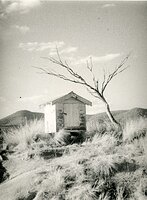
Not all grass reflects exactly the same amount of light, so that is an approximation and NOT a assessment of ABSOLUTE accuracy!
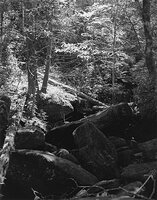
I have not trusted green vegetation in a long time. I measured my lawn in Jan 2017: 1/250 f/5.6 (ISO 400),
and other green trees (both deciduous and evergreen) measured within a range or
-0.7EV < 1/250 f/5.6 <
+1.0EV, hardly a 'reliable' set of readings.
Grey concrete is equally deceiving. In front of my home we had new concrete driveway approach poured by the city, and a new concrete walkway to the front door and driveway to the garage. 1/250 f/5.6 < 1.4EV walkway < +2.5EV driveway approach.
BTW, the incident meter reading, at the time period of the greenery and concrete metering, was 1/250 f/9.5
As to which gray card, in lieu of Kodak card...
I have mutilple gray cards/metering targets, including
- genuine Kodak gray card(s)
- Douglas Gray Card
- EZ Balance target, 18% gray center strip (plus white and black strips flanking)
- not identified source targets
All of them agree.
One simply needs to be careful about technique in the use of ANY gray card, to address the card surface's reflectivity due to surface sheen. Here is a series of shots all taken at same shutter + aperture, of one gray card, using two different orientations of camera position vs. sun.
Shots 1-8 are with sun at my back, shots 9-15 are with the sun at my left. The main point of this series is the illustration of the criticality of the angle of the card, but also that the card angle can HIDE the variation in exposure caused by change of the position of illumination source vs. subject...shot 2 looks quite like shot 12, even though in theory the incident reading for shot 12 is -0.5EV from shot 2. And #5 looks like #11, again in spite of incident reading for shot 11 is -0.5EV from shot 5. If one compares #5 vs. #13, with similar angling of the card to the lens, one can see some of the lower light condition of shot #13 as expected. but the illumination difference is clearly visible in #1 vs. #9.