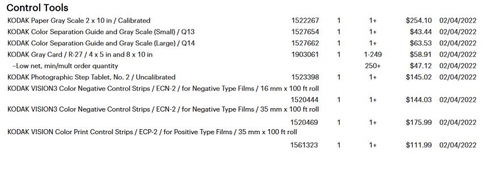
I once took a huge stack of "gray cards" of various brands to my worksite industrial spectrophotometer. Not one of them was even within 3% of 18%, some as far off as 15%, not one was actual neutral gray, and even those within the same brand differed from one another. Kodak ones were among the worst. At the glacial rate camera stores sold those, I'm surprised there wasn't moss growing on some of them. I ended up formulating a quart of true 18% paint, consistent in neutrality clear across the board all the way from one step into UV clear up into one step of IR. It was quite a chore, but otherwise a fun rainy day project.
What was spot on in terms of both gray scale neutrality and true 18% reflectance was the middle gray patch of my McBeth Color Checker Chart, which is keep clean and unfaded. And more recently, some of the best collapsible gray/white discs intended for digital camera calibration are excellent; certainly not all - you get what you pay for!
Does it make a difference? Undoubtedly in color photography. Don't waste your money on a typical camera store gray card. It's probably going to be either faded or just plain off in terms of quality control. And looking for exactly the right shade of a cereal box interior? What kind of joke is that? Is it the same brand of cereal with a free toy inside, in this case a free disposable camera? Anyone who does serious color photography and printing is way ahead spending the money for something serious, like the McBeth Chart, and at least using that as a reference for the accuracy of your alternative gray cards. It's like me keeping on hand a real machinist's try square to check the reliability of my carpenter's squares, or a machinist level to check my ordinary levels. You can't make assumptions.
The classic McBeth chart is now marketed by Spyder, and possibly rebranded under other names too, and costs around $50. Decent fabric gray/white discs are around the same price in medium sizing.