• Welcome to Photrio!
    Registration is fast and free. Join today to unlock search, see fewer ads, and access all forum features.
    Click here to sign up

Vivitar VI w/o power supply

Horicon Marsh-5

A
Horicon Marsh-5

  • 1
  • 0
  • 49
Millstone, High Water

A
Millstone, High Water

  • sly
  • Dec 17, 2025
  • 7
  • 5
  • 117

Recent Classifieds

Forum statistics

Threads
201,246
Messages
2,821,187
Members
100,617
Latest member
blackspirit
Recent bookmarks
1

VinceInMT

Subscriber
Allowing Ads
Joined
Nov 14, 2017
Messages
1,917
Location
Montana, USA
Format
Multi Format
I was gifted a Vivitar VI with color head but no power supply or timer. The specifications indicate that the halogen bulb requires a 18V, 4.3 amp regulated power supply (from 110/120 AV input). I have seen some fancy electronics bench type supplies that will probably work. Does anyone have a suggestion for these? And, I assume that a “switching” type power supply is OK in this application? Also, the plug from the enlarger is polarized but I think that the halogen bulb is probably not. Is that true?
 
Last edited:

koraks

Moderator
Moderator
Allowing Ads
Joined
Nov 29, 2018
Messages
26,144
Location
Europe
Format
Multi Format
Does anyone have a suggestion for these?
Personally I'd consider a bench top power supply a bit on the fancy side for this application. They also tend to have lots of status indicators, 7-segment displays and whatnot to create problems in a darkroom. For a convenient and fairly affordable option, look in the direction of the variety of Chinese-made switch-mode power supplies on the market today. Most come in a simple sheet metal framing and a series of clamp connectors that you connect your own wiring to. It takes a tiny bit of electronics awareness and safety precaution to do this in a safe and effective manner. It's up to you to decide if you feel comfortable with this.

And anre “switching” type power supplies OK in this application?
Yes, in principle, they are. The main caveat is that these power supplies have a fair amount of output filter capacitance to clean up the DC output. This results in a turn-off delay; once you cut the AC power, the output caps discharge into the load (in your case, enlarger bulb) and that means it takes some time for the light to die. Given the consumption of a 75W-ish bulb, this will drain pretty quickly, and the afterglow will be very consistent, so I wouldn't worry about it.

Switching the AC side is generally preferable because it's a lot less hard on the switch used (typically integrated in your enlarger timer) than switching 4A DC.
 
OP
OP
VinceInMT

VinceInMT

Subscriber
Allowing Ads
Joined
Nov 14, 2017
Messages
1,917
Location
Montana, USA
Format
Multi Format
Personally I'd consider a bench top power supply a bit on the fancy side for this application. They also tend to have lots of status indicators, 7-segment displays and whatnot to create problems in a darkroom. For a convenient and fairly affordable option, look in the direction of the variety of Chinese-made switch-mode power supplies on the market today. …

Thanks, that’s what I’m looking at. There is one an Amazon for under $25:

Hailimayo 18V 10A Switching Power Supply Transformer AC110/220V to DC 18V 10A 180W for Industrial Automation, Electronic Equipment, Communications​


It looks like it might work. And thanks for the info on where best to switch it on and off. On my Beseler 23C I’ve been using a Time-O-Lite P49 which I assume could handle the job. I also have a GR-72 that I could use.
 

koraks

Moderator
Moderator
Allowing Ads
Joined
Nov 29, 2018
Messages
26,144
Location
Europe
Format
Multi Format
Yeah, something like that would work. I'd just give it a try and if the turn-off behavior is unacceptable, devise a way to switch the secondary/DC side. That'll be instantaneous. Something like a MOSFET switch would be nice, but it'll require a little DIY-ing to interface that with your timer of choice.
 
OP
OP
VinceInMT

VinceInMT

Subscriber
Allowing Ads
Joined
Nov 14, 2017
Messages
1,917
Location
Montana, USA
Format
Multi Format
Yeah, something like that would work. I'd just give it a try and if the turn-off behavior is unacceptable, devise a way to switch the secondary/DC side. That'll be instantaneous. Something like a MOSFET switch would be nice, but it'll require a little DIY-ing to interface that with your timer of choice.

I’m handier with relays than solid state. ;-) But I do know to put a diode across the relay coil to prevent a back flow when the magnetic field collapses.

But it does remind me that in the Kodak printers we had in the photo lab I worked in back in the 70s, the lamps were on all the time and they used a mechanical shutter hooked to a solenoid. I suppose the low-rent alternative would be for me to snap a piece of cardboard under the lens when the timer shuts off. After all, I’m standing right there.
 
Last edited:

koraks

Moderator
Moderator
Allowing Ads
Joined
Nov 29, 2018
Messages
26,144
Location
Europe
Format
Multi Format
I’m handier with relays than solid state.

The problem with a relays in that function is that if you switch the DC side, you'll get problems with contact welding and arcing. A relays generally just doesn't survive very long in that position. It's different on the AC side where current is lower, and it's of course AC, which matters a lot. On the DC side, a solid state switch is a better idea overall.

I suppose the low-rent alternative would be for me to snap a piece of cardboard under the lens when the timer shuts off.

Yeah, that'll work as well, but sounds a bit cumbersome to me.

I'd start by just hooking it up as any old enlarger power supply and see what happens. Odds are it'll work just fine as-is.
 
OP
OP
VinceInMT

VinceInMT

Subscriber
Allowing Ads
Joined
Nov 14, 2017
Messages
1,917
Location
Montana, USA
Format
Multi Format
I'd start by just hooking it up as any old enlarger power supply and see what happens. Odds are it'll work just fine as-is.

Yep, that’s what I’ll do. I‘ll resist planning to solve problems that I might not have.
 

john_s

Member
Allowing Ads
Joined
Nov 19, 2002
Messages
2,195
Location
Melbourne, A
Format
Medium Format
The problem with a relays in that function is that if you switch the DC side, you'll get problems with contact welding and arcing. A relays generally just doesn't survive very long in that position. It's different on the AC side where current is lower, and it's of course AC, which matters a lot. On the DC side, a solid state switch is a better idea overall.

.........

I have no expertise in electronics. Like a previous poster I'm more comfortable with relays etc, even rheostats(!)
Not photography, but a similar situation: I use a float switch to switch 20V DC to an irrigation pump. The first switch didn't last long for the reason cited by Koraks. Second one I fitted with a simple snubber circuit, a resistor and a capacitor in series across the contacts and it is still going strong after many years.
I'm not actually recommending it as a solution for the OP, just a possibility.
 

ic-racer

Member
Joined
Feb 25, 2007
Messages
16,696
Location
USA
Format
Multi Format
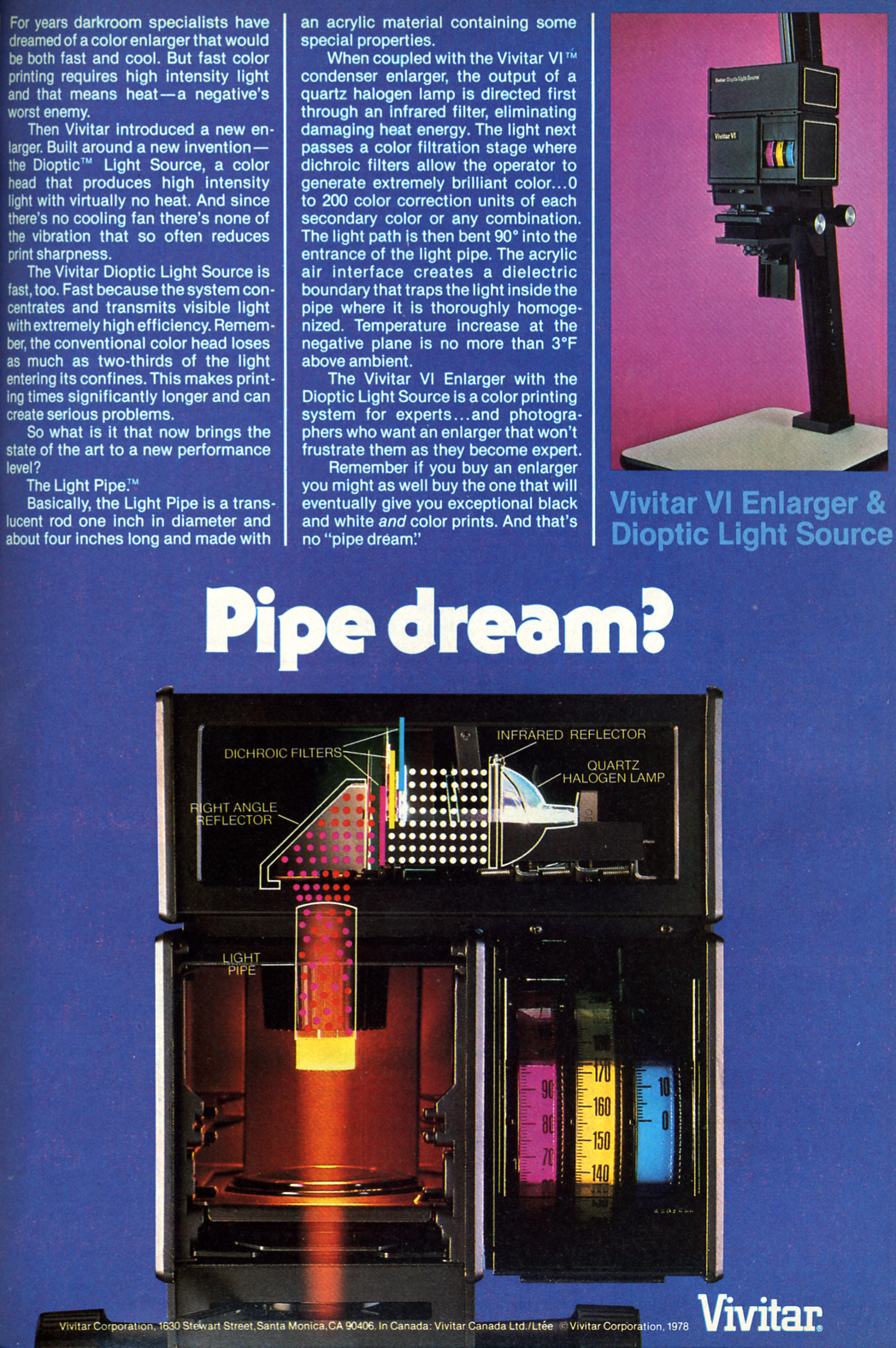
I was wondering if this enlarger has the fascinating optical light pipe. I believe it is made of optical fibers that are random and it scatters the light, like a mixing box would, but with less loss. For those that don't know, since the filters come in from the edge of the frame, if the light is not 'mixed' before it gets to the negative, only one side of the frame will have the color. Seems like a great enlarger; worth saving.

vivitar_vi_ad(1978).jpg
 
OP
OP
VinceInMT

VinceInMT

Subscriber
Allowing Ads
Joined
Nov 14, 2017
Messages
1,917
Location
Montana, USA
Format
Multi Format
…Second one I fitted with a simple snubber circuit, a resistor and a capacitor in series across the contacts and it is still going strong after many years….

Yes, in traditional automotive ignitions systems, this was the purpose of the “condenser” that bridged the “points,” to divert the voltage from arcing across the contacts to a “sink.”
 
OP
OP
VinceInMT

VinceInMT

Subscriber
Allowing Ads
Joined
Nov 14, 2017
Messages
1,917
Location
Montana, USA
Format
Multi Format
I was wondering if this enlarger has the fascinating optical light pipe. I believe it is made of optical fibers that are random and it scatters the light, like a mixing box would, but with less loss. For those that don't know, since the filters come in from the edge of the frame, if the light is not 'mixed' before it gets to the negative, only one side of the frame will have the color. Seems like a great enlarger; worth saving.

Yes, this is the enlarger that was gifted to me. I came with a 50mm Nikon lens. I have a Schneider that I use in my Beseler for my medium format that I plan to refit to the Vivitar.
 

4season

Member
Allowing Ads
Joined
Jul 13, 2015
Messages
2,108
Format
Plastic Cameras
A similar question arose earlier this year, and the OP of that thread found this page:

https://www.homemade-circuits.com/how-triac-phase-control-works/

I thought the circuit depicted in Figure 4 looked especially promising, as the article specifically mentions it's value in maintaining constant brightness with tungsten light sources. And what you don't want in this particular application is for bulb brightness to briefly flare up during the initial current inrush.
 

koraks

Moderator
Moderator
Allowing Ads
Joined
Nov 29, 2018
Messages
26,144
Location
Europe
Format
Multi Format
Second one I fitted with a simple snubber circuit, a resistor and a capacitor in series across the contacts and it is still going strong after many years.

For an AC switch, this helps for sure and is good practice. For a DC switch, it won't do much.

I thought the circuit depicted in Figure 4 looked especially promising

Given today's technology, I'd just grab any off the shelf triac dimmer module that has active zero crossing detection. These are cheap and easy and generally take a simple logic level (e.g. 5v) PWM input or an analog pot meter control.

And what you don't want in this particular application is for bulb brightness to briefly flare up during the initial current inrush.

Running an 18V bulb from 115V AC with a triac circuit means the active part of the phase will be pretty tiny. This makes the whole thing rather sensitive to minor disturbances/deviations in the triac control, and the fireworks when the triac blows (which it ultimately does) will be rather spectacular. I'd at least then put something like an 18-24V AC transformer in front of the triac circuit. Since that will likely be more expensive than a brand new 18V DC SMPS, and likely bulkier and certainly heavier too, it's not the route I'd personally take.

Also, I'm not convinced that the inrush current of the bulb would be much of a problem, either in a DC or an AC supply scenario. It's an inherent property of incandescent bulbs and many enlargers (including color enlargers) have worked fine under these conditions for many decades.
 

john_s

Member
Allowing Ads
Joined
Nov 19, 2002
Messages
2,195
Location
Melbourne, A
Format
Medium Format
For an AC switch, this helps for sure and is good practice. For a DC switch, it won't do much.
Sorry this is a bit OT, and I know you know a lot more about physics and electronics than I do, but it has seemed to work. Maybe I've just been lucky with a good switch?
 

Joel_L

Subscriber
Joined
Mar 12, 2011
Messages
580
Location
Colorado
Format
Multi Format
I was wondering if this enlarger has the fascinating optical light pipe. I believe it is made of optical fibers that are random and it scatters the light, like a mixing box would, but with less loss. For those that don't know, since the filters come in from the edge of the frame, if the light is not 'mixed' before it gets to the negative, only one side of the frame will have the color. Seems like a great enlarger; worth saving.

vivitar_vi_ad(1978).jpg

I have one of these, they are actually a nice enlarger. The light pipe is not a bundle of fibers, just a solid what looks like an acrylic rod.
 

hsvdg

Member
Allowing Ads
Joined
May 25, 2023
Messages
16
Location
UK
Format
Medium Format
On a slightly different topic. Do you know happen to know how to adjust the illumination? I have the manual which is available on the internet, but it is for a slightly different model. (There seem to be a few variations of the Vivitar VI). This manual suggests to turn the "lamp receptacle" to adjust, but in my model this is only a cover which does not do anything; see page 7 of http://www.jollinger.com/photo/cam-coll/manuals/enlargers/misc/VivitarVI_Manual.pdf .

I would be grateful for any suggestions.
 

ic-racer

Member
Joined
Feb 25, 2007
Messages
16,696
Location
USA
Format
Multi Format
I have one of these, they are actually a nice enlarger. The light pipe is not a bundle of fibers, just a solid what looks like an acrylic rod.

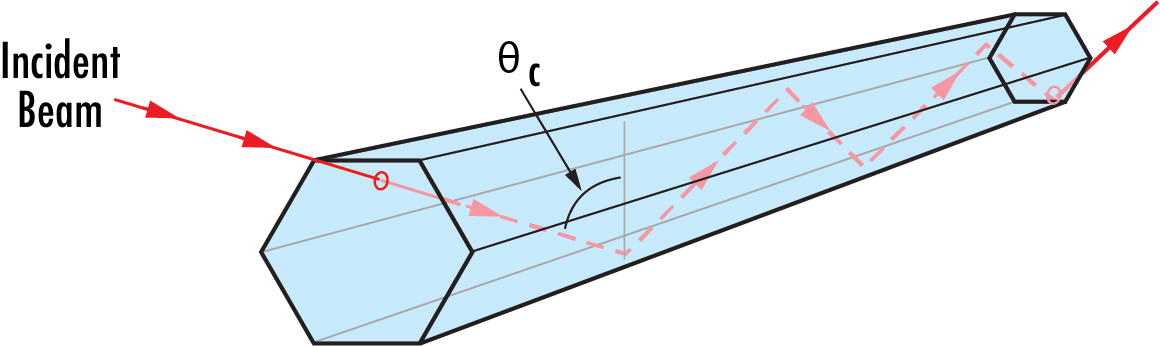
Ok, thank you for the correction. So it is maybe more like a light pipe homogenizing rod?

rodlenshomogenizer28229-1920x661-768x264.png

howtoselecttherightlightpipehomogenizingrod_ii.png
 

ic-racer

Member
Joined
Feb 25, 2007
Messages
16,696
Location
USA
Format
Multi Format
On a slightly different topic. Do you know happen to know how to adjust the illumination? I have the manual which is available on the internet, but it is for a slightly different model. (There seem to be a few variations of the Vivitar VI). This manual suggests to turn the "lamp receptacle" to adjust, but in my model this is only a cover which does not do anything; see page 7 of http://www.jollinger.com/photo/cam-coll/manuals/enlargers/misc/VivitarVI_Manual.pdf .

I would be grateful for any suggestions.

So, rotating the lamp like the manual suggests has no effect?

Screen Shot 2023-10-15 at 8.17.08 AM.png
 

hsvdg

Member
Allowing Ads
Joined
May 25, 2023
Messages
16
Location
UK
Format
Medium Format
No, on my (dichronic) head this is different. This "receptacle" leads to an empty hole and does not do anything. There must be a different method.
 

ic-racer

Member
Joined
Feb 25, 2007
Messages
16,696
Location
USA
Format
Multi Format
I guess I'm confused, the adjustment in the manual is to center to lamp for the condenser head. If you have the dichroic head, what are you trying to adjust? A picture would be helpful.
 

hsvdg

Member
Allowing Ads
Joined
May 25, 2023
Messages
16
Location
UK
Format
Medium Format
Ok, it seems that I do not understand something fundamental. Are you saying that the dichronic heard does not need lamp alignment. In any case, I describe the problem.

When I try to project the image to the board, then a well defined part of the image is simply not illuminated. I indicate this in the drawing attached, which shows the image as it should be (upper), vs how it is. Actually, the drawing, I just noticed, is slightly wrong. The circle goes the other way.

What this tells me is that the illumination is misaligned.

I did *something* to the enlarger, which reduced the problem, so I must have, by coincidence, adjusted in the right direction, but I am not sure what exactly it is I did.
 

Attachments

  • Screenshot from 2023-10-16 14-22-50.png
    Screenshot from 2023-10-16 14-22-50.png
    139.9 KB · Views: 68

Ian C

Member
Allowing Ads
Joined
Feb 8, 2009
Messages
1,293
Format
Large Format
Regarding posts #17, 20, and 22

My first—and only—darkroom printing lesson was enlarging a 35 mm B&W negative with a Vivitar VI equipped with the dichroic head and a 50 mm f/4 Fuji enlarging lens. The result was perfect. The owner, Paul Lippert from Brussels Belgium, made many excellent prints with this machine, mostly on Kodacolor papers.

The 19-volt 80-watt EKG quartz-halogen lamp as used in the Vivitar VI dichroic head has only one position—fully seated into the holder. There is no adjustment.

The diagram of post #22 is useful. Obviously, something is blocking the light path, something is missing, or one of the parts is out of position (blocking the light as described). Likely candidates are some part of the condenser assembly. That would include the frames holding the condensers in position as well as the spacers between the upper and lower condenser lenses. Be sure that everything is properly positioned as shown in the manual.

In the owner’s manual, examine the page entitled “Main Condenser Cluster” for a diagram of how these parts must be configured relative to each other.

http://www.jollinger.com/photo/cam-coll/manuals/enlargers/misc/VivitarVI_Manual.pdf

Also, be sure that there is no obstruction blocking either end of the acrylic “light pipe”. Such an object there could block a portion of the light to one side as your diagram shows.

The fact that you indicate an arc-shaped curve roughly concentric to the lens axis (and opposite to the sketch as you noted) is possible evidence of one of the condenser components being out of position. For example, if the Tension Ring for the upper condenser was out of position, its inside diameter could cast such a curved shadow.

Your problem is likely to be something simple like this. You have to carefully inspect the assembly of the parts, paying particular attention to anything with a curved edge that looks a bit out of proper position.

If you disassemble the condenser assembly to verify that it’s put together correctly, be careful. These are large glass lenses that are difficult to find replacements if scratched or broken. I like to do such work sitting on a bed so that the lens won’t fall far and will land softly if dropped.

 
Last edited:

titrisol

Subscriber
Allowing Ads
Joined
Aug 2, 2004
Messages
2,094
Location
UIO/ RDU / RTM/ POZ / GRU
Format
Multi Format
I have the monochrome version of the Vivitar VI, and there are some adjustments possible
Not sure about the Dichroic though but in page 14 of the manual there is a section about it.
I don;t think there is much adjustment
 

Joel_L

Subscriber
Joined
Mar 12, 2011
Messages
580
Location
Colorado
Format
Multi Format
I'm not sure what you are trying to do. There are no bulb level adjustments. The bulb snaps into place and that's it. There is a white light lever you can pull to move any filtration you have out.

The bulb is accessible through a panel on top of the head.

Do you have the condensor in place?
 
Photrio.com contains affiliate links to products. We may receive a commission for purchases made through these links.
To read our full affiliate disclosure statement please click Here.

PHOTRIO PARTNERS EQUALLY FUNDING OUR COMMUNITY:


Ilford ADOX Freestyle Photographic Stearman Press Weldon Color Lab Blue Moon Camera & Machine
Top Bottom