Regarding posts #17, 20, and 22
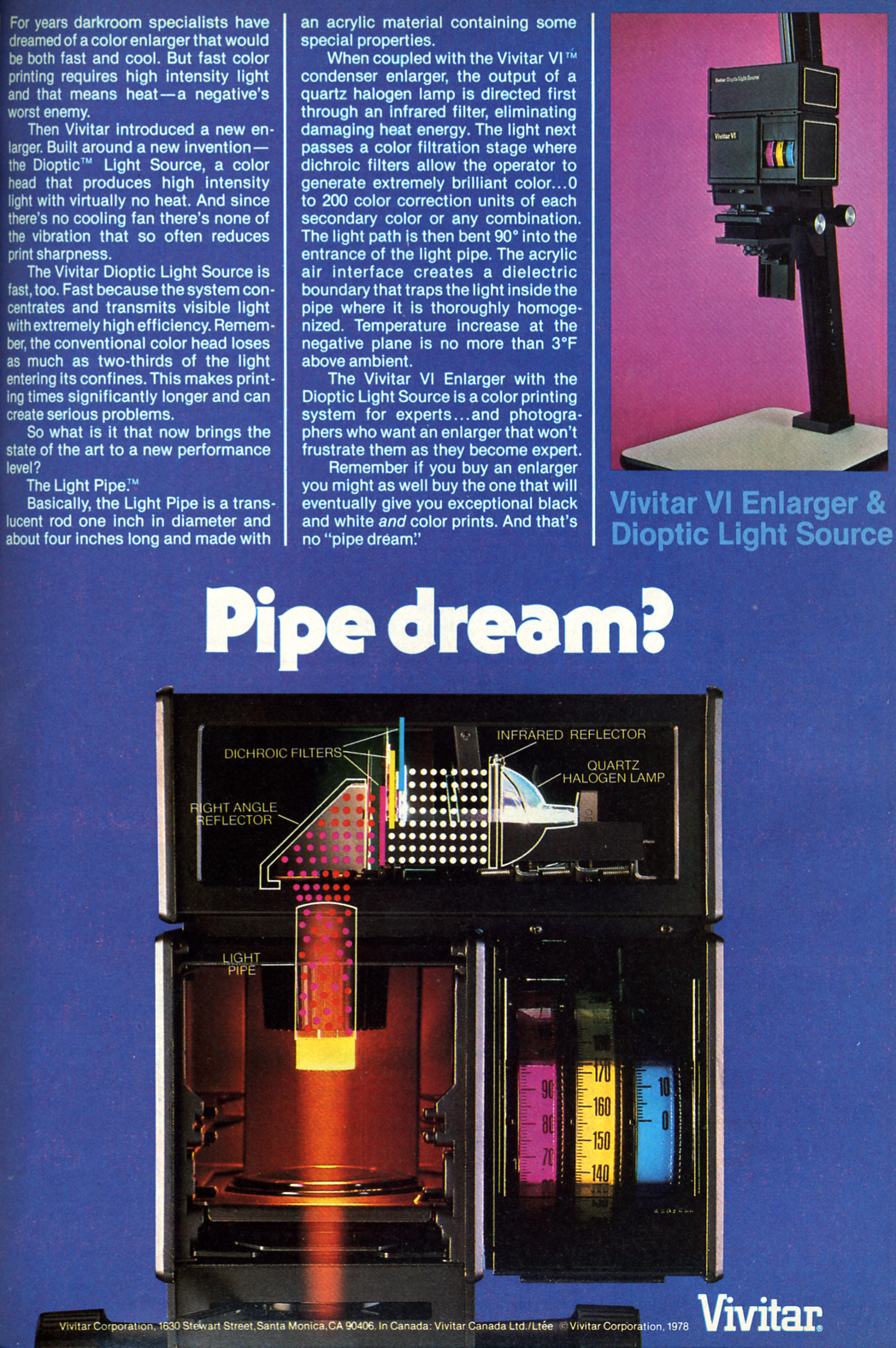
My first—and only—darkroom printing lesson was enlarging a 35 mm B&W negative with a Vivitar VI equipped with the dichroic head and a 50 mm f/4 Fuji enlarging lens. The result was perfect. The owner, Paul Lippert from Brussels Belgium, made many excellent prints with this machine, mostly on Kodacolor papers.
The 19-volt 80-watt EKG quartz-halogen lamp as used in the Vivitar VI dichroic head has only one position—fully seated into the holder. There is no adjustment.
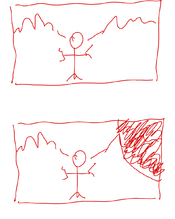
The diagram of post #22 is useful. Obviously, something is blocking the light path, something is missing, or one of the parts is out of position (blocking the light as described). Likely candidates are some part of the condenser assembly. That would include the frames holding the condensers in position as well as the spacers between the upper and lower condenser lenses. Be sure that everything is properly positioned as shown in the manual.
In the owner’s manual, examine the page entitled
“Main Condenser Cluster” for a diagram of how these parts must be configured relative to each other.
http://www.jollinger.com/photo/cam-coll/manuals/enlargers/misc/VivitarVI_Manual.pdf
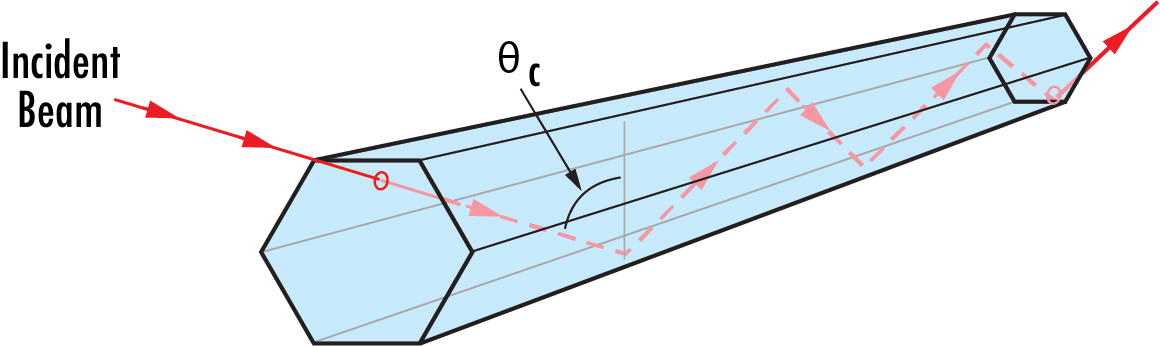
Also, be sure that there is no obstruction blocking either end of the acrylic “light pipe”. Such an object there could block a portion of the light to one side as your diagram shows.
The fact that you indicate an arc-shaped curve roughly concentric to the lens axis (and opposite to the sketch as you noted) is possible evidence of one of the condenser components being out of position. For example, if the Tension Ring for the upper condenser was out of position, its inside diameter could cast such a curved shadow.
Your problem is likely to be something simple like this. You have to carefully inspect the assembly of the parts, paying particular attention to anything with a curved edge that looks a bit out of proper position.
If you disassemble the condenser assembly to verify that it’s put together correctly, be careful. These are large glass lenses that are difficult to find replacements if scratched or broken. I like to do such work sitting on a bed so that the lens won’t fall far and will land softly if dropped.