
• Welcome to Photrio!
    Registration is fast and free. Join today to unlock search, see fewer ads, and access all forum features.
    Click here to sign up

The Toner Thread

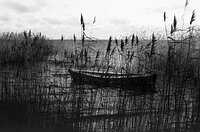
At the Lagoon

A
At the Lagoon

  • 1
  • 0
  • 35
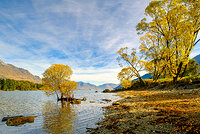
Afternoon Calm II

D
Afternoon Calm II

  • 2
  • 3
  • 35

Forum statistics

Threads
203,512
Messages
2,855,780
Members
101,876
Latest member
GUOWEN
Recent bookmarks
0
Why is it that a warmtone paper like Fomatone responds so aggressively to toning while Ilford Multigrade does not? Its all just silver by this point isn't it?
It is the shape and type of silver crystal that determines how light reflects back from it, and therefore what image tone it presents. And that shape and type determines how it reacts to toning.
Ilford Multigrade neutral tone papers are designed to give extremely predictable and repeatable results under a wide variety of conditions. That means a very consistent image tone, but it also means relatively small response to toners.
The Ilford Warmtone Multigrade and Cooltone Multigrade papers are much more responsive to toners. When un-toned, they are also more variable in their response to varying conditions.
 
With the ilford products Thiourea toner gives nice browns and you can control its tone from sepia to chocolate based on a/b mix. Bleach/redevelop with diluted developer also makes it respond to selenium with warmer brown tone.
 
Then I guess it depends what you want in your printing. Predictable and likely repeatable, or unpredictable with some chance of producing a certain result. Neither is right or wrong. As a result of experimentation with Ilford Classic and Warmtone Fiber papers, I find I like the subtle brown tone from Bleach/Redevelop with pyrocat M much more than the chocolate tones I get with Thiorurea, unless I am going for the golden/tan sepia tone. I am also leaning toward the dichromate bleach tanning vs a ferri-bromide reducer because of the increased edge or visual sharpness it seems to give to busy images.
 
Now that I wanted to mix the IT-8 toner from the chemicals I ordered some time ago, I discovered that the cheap jewel scale from Amazon doesn't work. I need this for the developer ingredients.

Options are:
- order another scale and wait. Can anyone recommend a scale with a 0.1 .. 0.01 g accuracy, preferably available within Canada?
- mix 5.7 liter of developer that uses the full 10 g catechol that I have. I could weigh the 28.5 g sodium carbonate on a household digital scale but his scale isn't very accurate, approx. 1 g. Is the sodium carbonate amount critical? If I use distilled water to mix the developer and store it in brown PET bottles, will it stay good for a few months? I'll probably do this and see how it goes.
 
Last edited:
I saw a recent recommendation for triple beam scales. The ones I have seen are 1-500grams with additional weights if you need more than that and have sliders down to 0.1g . The digital ones vary greatly - I have two and they are about 0.2g different once I get over 10grams.
 
I am also leaning toward the dichromate bleach tanning vs a ferri-bromide reducer because of the increased edge or visual sharpness it seems to give to busy images

I am about to try redeveloping a (ferricyanide-bromide) bleached print with Pyrocat M with a "normal" dilution for film like you mentioned earlier in this thread (1:1:100), but also would like to give it try and bleach with bichromate. Do you use diluted HCl in Solution B as originally mentioned in IT-8 formula from Ian or substitute it with different acid?
 
I experimented with iron blue toner and liked some of the results. The brilliancy of the tones is unlike anything I have ever seen. It definitely has some uses.

To make half liter:

300 mL warm water
4 g ferric ammounium citrate
4 g potassium ferricyanide
130 mL of 28% acetic acid (or 35 g glacial acetic acid)
water to 500 mL

2 minutes for complete toning, any time for parial toning.

Here are some of the results; they are all scans of 8x10 contact prints.

I made a youtube video/tutorial about the process,
and A blog post with plenty of details at this link.

Any comment or critique is highly appreciated.


Full toning:
boats089.jpg


Partial toning:
andys071.jpg


palms069.jpg


bridge2-after073.jpg
 
Look really nice. Sorry if I missed that in your video, but are those made on RC paper of FB?
Too bad iron toning is not an archival...
 
I am about to try redeveloping a (ferricyanide-bromide) bleached print with Pyrocat M with a "normal" dilution for film like you mentioned earlier in this thread (1:1:100), but also would like to give it try and bleach with bichromate. Do you use diluted HCl in Solution B as originally mentioned in IT-8 formula from Ian or substitute it with different acid?

Look forward to seeing your results.
I use the STOCK Part B from Pyrocat HD which is 750grams per Liter of Potassium Carbonate10A:10B:1000W. Not seeing much difference in a dichromate bleach for Bromoil vs standard reducer other than the tanning. You can only redevelop 2-4 8x10 sheets in a liter. Rapid fix after also seems to clear the image a bit more.
 
My latest experiment for toning with second pass redevelopment on Ilford MGFB Classic Matt paper which has a flatter more ink like appearance compared to glossy paper.
Bleached with Pot-ferri reducing bleach and redeveloped with Photographers Formulary/Ansco 130 @1:10 vs Pyrocat-M @ 1:1:100.
No tonal change in the PF130 but the Pyrocat-M is decisively warm and stained but still much more subtle than using a Thiourea toner.
No olive tone like the formula that started this tread.
Both prints scanned together to illustrate the tonal difference but there is some scanner shift of color.

PF130vsPyroM.jpg
 
Bit of an old thread, but @adelorenzo how did you get those blueish tones on the river water in print 2,3,4?
Lovely gallery btw, must have been a nice exhibit!
 
I happen to have a large unopened bottle of Kodak Brown Toner and I intend to use. some of it in the near future. Should I mix it with Selenium or use it straight? If I do add Selenium, how much? Also, I understand the KBT is very slow and might best be used hot to speed it up. Any thoughts?
 
You use Kodak brown toner straight. if you want to split tone you put selenium in one tray and the kodak brown in another. Read the directions on the bottle if any dilution is needed. You do need a well washed print free of hypo or you get staining.
 
Without having to read through a long thread, are there any direct polysulphide toners available sold as liquid concentrates?
 
Moersch probably has one. In any case he does still produce his sepia-selenium toner which he sells as 'carbon' toner. His MT4 'Siena' toner is a direct polysulfide toner I think.
 
Can toner be used for solarising please?
 
You'll need to elaborate a bit more on what you want/need.

I read that you can solarise a print, by briefly exposing it to a normal lamp light, and that a contrasty image is best for this, because the solarising effect works well on prints which have a good contrast in them. But also that toning can boost contrast anyway, so I'd like to mix the two techniques.

So, I was wondering - which toner/s would be best for this ~

Is 'split-toning' also something I could use here?

Many thanks!
 
A solarized print is just like any other print in terms of its chemical makeup: a metallic silver image. In that sense it doesn't matter much if you tone a regular print or a solarized one. There may be some difference due to silver particle size which can be smaller in solarized prints, at least some areas. These areas will respond stronger to toners and may give a somewhat more colorful end results.

But by and large the processes of solarization and toning are separate ones. Thus, the question if a particular toner will "work with solarization" is no different than asking if a toner will work anyway.
 
A solarized print is just like any other print in terms of its chemical makeup: a metallic silver image. In that sense it doesn't matter much if you tone a regular print or a solarized one. There may be some difference due to silver particle size which can be smaller in solarized prints, at least some areas. These areas will respond stronger to toners and may give a somewhat more colorful end results.

But by and large the processes of solarization and toning are separate ones. Thus, the question if a particular toner will "work with solarization" is no different than asking if a toner will work anyway.

Thank you. So which toners are best at boosting contrast in prints, please?
 
Thank you. So which toners are best at boosting contrast in prints, please?

Please have a look at this as it may be what you are looking for : https://www.moersch-photochemie.de/content/artikel/anleitungen/116

Much of the Moersch site is bilingual, but unfortunately the part on Carbon toning is only in German.

A second option could be using a 2 bath paper developer with your first developer Moersch SE20 (https://www.moersch-photochemie.de/content/shop/positiv/9)
 
Last edited:
Photrio.com contains affiliate links to products. We may receive a commission for purchases made through these links.
To read our full affiliate disclosure statement please click Here.

PHOTRIO PARTNERS EQUALLY FUNDING OUR COMMUNITY:


Ilford ADOX Freestyle Photographic Stearman Press Weldon Color Lab Blue Moon Camera & Machine
Top Bottom
