
-
Welcome to Photrio!Registration is fast and free. Join today to unlock search, see fewer ads, and access all forum features.Click here to sign up
You are using an out of date browser. It may not display this or other websites correctly.
You should upgrade or use an alternative browser.
You should upgrade or use an alternative browser.
Stand & Semi Stand - Is it the Best Development Technique?
-
A
- Thread starter Andre Noble
- Start date

Recent Classifieds
-
Want to Buy Arca swiss plate for Mamiya RZ67
- Started by blee1996
-
For Sale Hi-Con IR film
- Started by MCB18
-
Want to Buy Hasselblad tripod quick release plate... level
- Started by eli griggs
-
For Sale Fotodiox Pronto AF adapter
- Started by OAPOli
-
Sold 612 Holga modded body
- Started by OAPOli
Forum statistics


pentaxuser-I once used Rodinal with Tri-X and HP-5 long ago and didn't like the results. I've never been disappointed in Rodinal and FP-4. I've used D-76 back in the day but now I'm more inclined to go with HC-110 Dil H with those two 400 speed films and that's what my comparison was about. I've looked over my scans from Tri-X and HC-110 and the ones with FP-4 and Rodinal and there is a distinct difference in the tones. FP-4 will always give a better tonal range than Tri-X or HP-5. At least, that's been my experience as they just don't differentiate tones like a slower film.
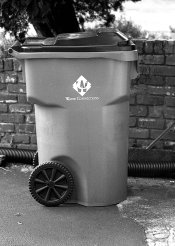
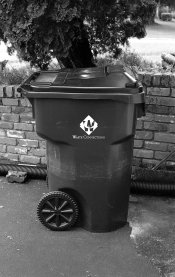
I usually rate Tri-X and HP-5 at ASA 250 and FP-4 at 100. The first one is from FP-4. I couldn't locate the sample from Tri-X but the other one is from Delta 400 in ID-11. As you can see you can tell little difference in the blue body of the can and the black top with D400 over FP-4.
I usually rate Tri-X and HP-5 at ASA 250 and FP-4 at 100. The first one is from FP-4. I couldn't locate the sample from Tri-X but the other one is from Delta 400 in ID-11. As you can see you can tell little difference in the blue body of the can and the black top with D400 over FP-4.
Attachments
Last edited:
pentaxuser
Member
Well that's certainly quite a difference. Are these reversed scans of the negs to resemble prints or scans of the prints? Under a loop on say a light table the tones of the respective negatives (FP4 and D400) show up such a large difference in tone?pentaxuser-I once used Rodinal with Tri-X and HP-5 long ago and didn't like the results. I've never been disappointed in Rodinal and FP-4. I've used D-76 back in the day but now I'm more inclined to go with HC-110 Dil H with those two 400 speed films and that's what my comparison was about. I've looked over my scans from Tri-X and HC-110 and the ones with FP-4 and Rodinal and there is a distinct difference in the tones. FP-4 will always give a better tonal range than Tri-X or HP-5. At least, that's been my experience as they just don't differentiate tones like a slower film.
I usually rate Tri-X and HP-5 at ASA 250 and FP-4 at 100. The first one is from FP-4. I couldn't locate the sample from Tri-X but the other one is from Delta 400 in ID-11. As you can see you can tell little difference in the blue body of the can and the black top with D400 over FP-4.
So the FP4 scan is with Rodinal but the D400 is with ID-11 not HC 110. There isn't any HP5 or Tri-X with either Rodinal for a comparison with FP4, nor a Tri-X or HP5 with HC110?
Thanks
pentaxuser
Well that's certainly quite a difference. Are these reversed scans of the negs to resemble prints
Yes-The negatives do look a bit different with a 10x loupe. I may have put the Tri-X/HP-5 negatives in a different folder for unknown reasons and haven't located them yet. They was a similar to the D400 negatives, however. I've only seen a tonal change distinction with the FP-4.
The point is, I've ran up on no 400 speed film that will differentiate tonal separation like the medium speed films. In this case, FP-4.

It is a fact that there are many ways in the craft of photography to achieve similarly acceptable results. The best ways are those that produce exceptional results. To achieve such perfection calls for complete familiarity with the materials at hand, espescially the consequences of deviating from the well trodden path of manufacturers times, temperatures and agitation patterns. Stand development is an extreme variation from those reccomendations and is as such the opposite end of the spectrum from continuous agitation, usually by rotary means. In between is a continuously variable scale of possibilities and thereby lies the real potential of using agitation as a tool as well as time and temperature. I admit to using less than the standard pattern but not full on stand development. It is all about achieving a balance and one that looks credible to the eye.

I'd be amazed if very much of the film sold now ever sees the negative stage of an enlarger.
So long as your development is reasonably even, any of the effects that stand development might have to make wet printing difficult are easily compensated for in digital post-processing after scanning.
It's rather sad that the stand developer users must essentially "photoshop" their negatives to get acceptable results.

MartinCrabtree
Member
It's rather sad that the stand developer users must essentially "photoshop" their negatives to get acceptable results.
Well it's just so difficult to get flash powder these days.

To me it is related to developer. I'm not interested on semi, stand with HC-110. With Rodinal I do.
I like HC-110 on B and regular time for normal results, Rodinal and stand is for the times I'm going slightly mad.
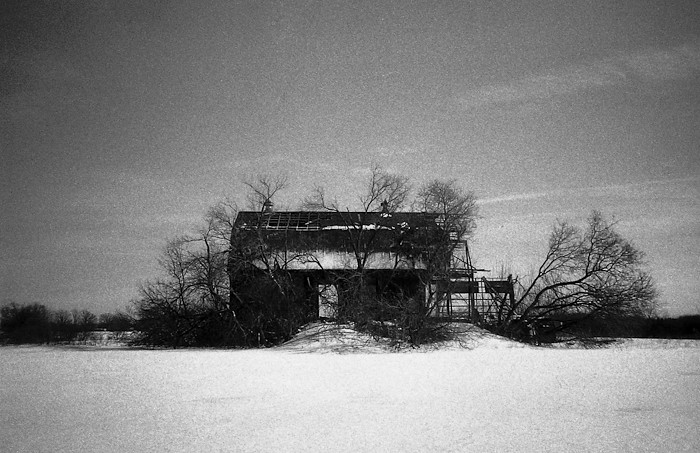
Fomapan 400 in Rodinal for two hours. It is negative scan, on the darkroom print it is as I need it. Crazy.
I like HC-110 on B and regular time for normal results, Rodinal and stand is for the times I'm going slightly mad.
Fomapan 400 in Rodinal for two hours. It is negative scan, on the darkroom print it is as I need it. Crazy.
It's rather sad that the stand developer users must essentially "photoshop" their negatives to get acceptable results.
well, I didn't say that.
For someone who never prints their negatives, and perhaps never used film "in the old days", but just "likes the look of film" or whatever, and who decides they'd like to develop their own film (or can't find a lab to do so), then stand looks very convenient and easy. Many advocates of the technique across the 'net make suggestions that it provides you with the ability to shoot at any ISO setting over the length of the roll.
Put together this makes it look rather attractive.
If one is ignorant of what makes a negative a "good" negative to the wet printer, then a flat, rather compressed negative which scans perfectly well and is amenable to post processing to look exactly as you wish on Flickr or wherever might be absolutely fine. In fact, is absolutely fine.
I have a lot of negatives I stand developed. They are mostly fine, and are perfectly printable in the darkroom for someone with my limited skills and ambitions. I only stopped doing it because it doesn't seem any more convenient to me than my standing in the kitchen for 10 minutes doing the odd tank inversion.
There's no point in the anti-stand brigade grumbling on about the process. It is what it is and people will do what they like, and be happy with the results. It doesn't make them wrong, any more than it makes someone wrong to prefer pork ribs braised in the oven while others like them on the barbeque.

stand looks very convenient and easy.
If that was the only benefit that was used to "sell" newbies I'd have no issue with it's promotion. For example:
Many advocates of the technique across the 'net make suggestions that it provides you with the ability to shoot at any ISO setting over the length of the roll.
That stand development makes that possible is just plain wrong.
The ability to shoot at "any EI" over the length of the roll is inherent with all negatives. It is inherent because a second exposure (the printing/scanning exposure) is absolutely required and any time an exposure is made there is the opportunity to adjust that exposure.
If one is ignorant of what makes a negative a "good" negative to the wet printer, then a flat, rather compressed negative which scans perfectly well and is amenable to post processing to look exactly as you wish on Flickr or wherever might be absolutely fine. In fact, is absolutely fine.
Sure any negative that gets the job done is fine.
My biggest grumble about the way stand development is generally sold to newbies is that it's sold as if it has magical qualities of compensation in the highlights and extra detail in the shadows without a shred of objective evidence and without discussion of how to use the reshaped curve.
This linked artical is an exception to that rule. (there was a url link here which no longer exists)
That article actually deals with the issues and shows that to take advantage of stand's manipulation of tone placement you need to use a specific (but non-standard) EI, not a floating any EI approach, not a film speed based approach, but a curve shape based approach.
I have a lot of negatives I stand developed. They are mostly fine, and are perfectly printable in the darkroom for someone with my limited skills and ambitions. I only stopped doing it because it doesn't seem any more convenient to me than my standing in the kitchen for 10 minutes doing the odd tank inversion.
Which brings us back to whatever works for you is really ok.
There's no point in the anti-stand brigade grumbling on about the process. It is what it is and people will do what they like, and be happy with the results. It doesn't make them wrong, any more than it makes someone wrong to prefer pork ribs braised in the oven while others like them on the barbeque.
Promoting myths is harmful because when there is a real problem to solve you have to overcome the myth before you can address the problem.
Last edited:
The unwary night think from the way you quote me that I'm a subscriber to myth not merely a reporter, mark 
All that really concerns me in all this is to try and prevent Gerald popping a blood vessel in frustration. He's far too valuable to lose!
All that really concerns me in all this is to try and prevent Gerald popping a blood vessel in frustration. He's far too valuable to lose!
Read what juan says above. Minor White suggested exposing for the mid-tones, developing for the shadows and agitating to get the highlights you want. The part I never understood was the "developing for the shadows and agitating for highlights". I always thought time and agitation went hand&hand. Now, if he means exposing for the mid-tones you want and just letting the shadows fall where they may? Then I understand that, along with developing time and agitation for highlight control. More like expose for the mid-tones and develop for the highlights.Develop longer: Dilution plays a big role.
Just broke the ideas into manageable chunks. No ill intent.The unwary night think from the way you quote me that I'm a subscriber to myth not merely a reporter, mark
All that really concerns me in all this is to try and prevent Gerald popping a blood vessel in frustration. He's far too valuable to lose!

baachitraka
Member
Read what juan says above. Minor White suggested exposing for the mid-tones, developing for the shadows and agitating to get the highlights you want. The part I never understood was the "developing for the shadows and agitating for highlights". I always thought time and agitation went hand&hand. Now, if he means exposing for the mid-tones you want and just letting the shadows fall where they may? Then I understand that, along with developing time and agitation for highlight control. More like expose for the mid-tones and develop for the highlights.
Yeah. There is an article some which talks about the shaping the tone curve of Rodinal and in which exposure is based on mid-tones. Author developed two identically exposed film with Rodinal 1+50 for 11' and 16' and maintaining slightly different agitation. Both the curves are matched and the one which is developed for 16' shows slightly increased shadow detail.
He also used different developers for different lights. For overcast day Rodinal works the best.
(there was a url link here which no longer exists)
This scheme is rather good for portraits but I do not know how it will work for landscapes.

destroya
Subscriber
i tried stand development for fun on a few rolls, looking for that magical tonality and super high acutance people who use it claim. i got lots of uneven development, streaking, spots on the edge of the negs, so so tonality and lots of compression. acutance was nothing special. so i got lots of unprintable negs, had some fun and learned a lot. I do use what i guess is called semi stand when i use pyrocat-MC. I do 1 minute initial agitation and then agitate for 10 seconds every 3 minutes. I like the results better than agitation every 1 minute. I found if i really want sharp high acutance negs the the best results I get is to use beutler developer wiith normal agitation and a tradioinal grained film like FP4, pan f+ or rollei retro 80s & 400s. super sharp and very high acutance when appropriate.
there is no magic bullet when it comes to developers or development. Find one or two at most that work for you, stick with them and learn how to use em in your workflow
there is no magic bullet when it comes to developers or development. Find one or two at most that work for you, stick with them and learn how to use em in your workflow

As has been said - there is no spoon.
I find that to me, semi-stand and stand development are seldom used special case techniques catering to extreme situations - when doing wet prints.
I find that to me, semi-stand and stand development are seldom used special case techniques catering to extreme situations - when doing wet prints.
- Joined
- Jun 21, 2003
- Messages
- 29,810
- Format
- Hybrid
If that was the only benefit that was used to "sell" newbies I'd have no issue with it's promotion. For example:
The ability to shoot at "any EI" over the length of the roll is inherent with all negatives. It is inherent because a second exposure (the printing/scanning exposure) is absolutely required and any time an exposure is made there is the opportunity to adjust that exposure.
Sure any negative that gets the job done is fine.
Which brings us back to whatever works for you is really ok.
hi mark
i have stand developed ( really more like semi stand i guess because i agitate for about 1 min and slam the bubbles off the film )
for about 30 mins and then again for 10-30 seconds just before i remove the film from the reel tank or fr tank ... i have put every iso
in there that i had shot, 50 - 400. sheets of color film, and e6. expired and fresh film ... as well as stuff that pushed by a few stops
i've never really had trouble, for me it works fine, and as i said i mostly did it so i could leave the room,
i got tired of agitation 10 seconds ever 60, or shuffling sheets in a tray for 18 mins.
it got the job done. the film was wet printed, and some of the film was electric without heroics ...
now i do something a bit different which takes even less time. same developer for part of the routine (D sumatranol C (with dektol ) ) and dektol dilute 1:6 ..
3 mins in dektol 1 min and 10 seconds /60 .. then in the coffee for continuous agitation for 3-4 mins ... same thing, every film i can find, shot any which way i feel like it ..
comes out printable with an enlarger or contact printed or sun printed or electric and no funny stuff .
more people should take your advice to heart. do what works and enjoy.
unfortunately a lot of people treat this stuff like it is some sort of religion. its just film and just being processed.
one won't be burning in the firey depths of hell if s/he stands or semi stands or follows the book ( doesn't matter the book )
if they like what they get, rinse, wash repeat. there really isn't any right way to do any of this, unless someone has decided
it is the right way for THEM, and has made it a point to shoot everyone down who does something different.
the thing that makes me laugh is that folks get all insulting when someone decides
they are going to print film or expose it or print it different than the manufacturer' recommendation.
oh well, it is the internet after all, everyone is wildly opinionated. gotta love it !
Last edited:
As has been said - there is no spoon.
I find that to me, semi-stand and stand development are seldom used special case techniques catering to extreme situations - when doing wet prints.
+1
I have no problem with people who use stand development if they know what they are doing and are satisfied with the results. It is when they try to proselytize to the unwary that this method is the holy grail of development methods, the non plus ultra of development techniques that upsets me. I do credit those few who have come out of the closet and now admit that they are too lazy or too cheap to use regular development. Honesty is always an asset in any discussion.
Last edited:

pentaxuser-I once used Rodinal with Tri-X and HP-5 long ago and didn't like the results. I've never been disappointed in Rodinal and FP-4. I've used D-76 back in the day but now I'm more inclined to go with HC-110 Dil H with those two 400 speed films and that's what my comparison was about. I've looked over my scans from Tri-X and HC-110 and the ones with FP-4 and Rodinal and there is a distinct difference in the tones. FP-4 will always give a better tonal range than Tri-X or HP-5. At least, that's been my experience as they just don't differentiate tones like a slower film.
I usually rate Tri-X and HP-5 at ASA 250 and FP-4 at 100. The first one is from FP-4. I couldn't locate the sample from Tri-X but the other one is from Delta 400 in ID-11. As you can see you can tell little difference in the blue body of the can and the black top with D400 over FP-4.
Are you aware that the developer chosen has nothing to do with the color response of any given emulsion? Tonal range, whatever you mean by that is not color response curve.
- Joined
- Jun 21, 2003
- Messages
- 29,810
- Format
- Hybrid
as wollensak used to say: let the user judge
there are too many people who like to discourage and tell people they are doing stuff " all wrong"
the person doing their darkroom work should be the decision maker not internet experts.
i have never read or suggested anything is the holy grail of anything, i've always said
what works for me might not work for anyone else.
while i said i didn't want to stand around for 18-20 mins it had nothing ot do with laziness.
i've had a bad back for IDK 30 years, broken bones and joints that have bothered me for close to 35 years. i
i have better things to do than stand around on a concrete floor.
that said, if someone wants to be lazy do something else instead of waiting for their film to be done.
(mortenson used to leave his in the frige from what i remember ),
good for them.
if they like the results, that is great.
as wolleksak embossed every lenscap: let the user judge.
if i had a nickel for everytime i have been discouraged to becaue someone else said do something else, i'd be rich.
there are too many people who like to discourage and tell people they are doing stuff " all wrong"
the person doing their darkroom work should be the decision maker not internet experts.
i have never read or suggested anything is the holy grail of anything, i've always said
what works for me might not work for anyone else.
while i said i didn't want to stand around for 18-20 mins it had nothing ot do with laziness.
i've had a bad back for IDK 30 years, broken bones and joints that have bothered me for close to 35 years. i
i have better things to do than stand around on a concrete floor.
that said, if someone wants to be lazy do something else instead of waiting for their film to be done.
(mortenson used to leave his in the frige from what i remember ),
good for them.
if they like the results, that is great.
as wolleksak embossed every lenscap: let the user judge.
if i had a nickel for everytime i have been discouraged to becaue someone else said do something else, i'd be rich.

Maybe not commonly at apug, but the kinds of blog posts and forums that show up on searches on the wild west of the web tend to be the extremist Holy Grail variety and tend to read like "This suburban mother in YOUR town was mystified by lackluster acutance until she found THIS secret recipe!"
Something to be aware of
Something to be aware of

I think the current fascination with minimal agitation schemes began about a dozen years ago with Steve Sherman's posts on the Azo forum. Steve seems to shoot in unusual lighting situations. I know that I shoot in extreme SBR setting and find minimal agitation useful in controlling the brightness range. I contact print these large format negatives on silver gelatin or albumen - no photoshop. Smaller negatives shot in more average lighting get more normal development.
Stand/minimal can be a useful tool. There are no magic bullets.
Juan
Stand/minimal can be a useful tool. There are no magic bullets.
Juan
You might consider Minor White's writings advocating expose for the mid tones, develop for the shadows and agitate for the highlights.
Juan
I have used this quote for years without knowing its original source. Thanks for that!
I don't do stand or semi-stand, but I do less agitation than often recommended, and fairly gentle too. It works for me. I used to get negs that were too contrasty in the highlights but fine in other tones: now they are easier to print.
RE "no magic bullets": It's true there are none but there are many different kinds of bullets... wad cutter, spire point, hollow point, round nose solid, as well as different weights and materials. Forgetting calibers, each type of bullet is better for specific needs. I'm just playing devil's advocate regarding the magic bullet analogy. 
- removed account8
- Deleted
| Photrio.com contains affiliate links to products. We may receive a commission for purchases made through these links. To read our full affiliate disclosure statement please click Here. |
PHOTRIO PARTNERS EQUALLY FUNDING OUR COMMUNITY:  |