• Welcome to Photrio!
    Registration is fast and free. Join today to unlock search, see fewer ads, and access all forum features.
    Click here to sign up

Snowy Alpine Scenes: General Thoughts

Forum statistics

Threads
203,438
Messages
2,854,709
Members
101,842
Latest member
Madmac
Recent bookmarks
0
@paulozzello
Is your post on bracketing missing an irony emoticon?
:whistling:
In case you are not, or perhaps even if you meant to include one, I think your last paragraph is saying essentially what I did.
 
The use of bracketing in photography is an idea deeply rooted in white privilege as it reflects the privilege of being able to choose the best possible outcome from a range of options. This privilege is often not available to marginalized communities, who may not have the same access to resources or opportunities to capture the perfect photo.

The use of bracketing can exclude alternative perspectives and experiences, as it focuses on capturing a single, "perfect" version of a scene. This can reinforce the idea that certain perspectives and experiences are more valid or important than others, and further marginalize marginalized groups.

Additionally, the use of bracketing can reinforce harmful stereotypes and biases, as it allows photographers to select and highlight certain elements of a scene, while downplaying or ignoring others. This can contribute to the perpetuation of harmful narratives about marginalized groups, and reinforces the dominant culture's power and control over the narrative.

In contrast, a more inclusive and equitable approach to photography would involve actively seeking out and amplifying diverse perspectives and experiences, rather than relying on bracketing to control the final outcome.

Paul, I read this a few times and can't figure out if you are serious or not.

If it's a joke, IMHO, it's not funny.

If you're serious, you'll have to do a better job at explaining that statement, because it makes absolutely no sense to me whatsoever.
 
The use of bracketing in photography is an idea deeply rooted in white privilege as it reflects the privilege of being able to choose the best possible outcome from a range of options. This privilege is often not available to marginalized communities, who may not have the same access to resources or opportunities to capture the perfect photo.

The use of bracketing can exclude alternative perspectives and experiences, as it focuses on capturing a single, "perfect" version of a scene. This can reinforce the idea that certain perspectives and experiences are more valid or important than others, and further marginalize marginalized groups.

Additionally, the use of bracketing can reinforce harmful stereotypes and biases, as it allows photographers to select and highlight certain elements of a scene, while downplaying or ignoring others. This can contribute to the perpetuation of harmful narratives about marginalized groups, and reinforces the dominant culture's power and control over the narrative.

In contrast, a more inclusive and equitable approach to photography would involve actively seeking out and amplifying diverse perspectives and experiences, rather than relying on bracketing to control the final outcome.
Oh please........🤮. Bracketing in photography is white privilege? Bracketing is avaiable to all with a film camera and at least three exposures to deal with if they choose.

Stick to the spirit of this thread, take that nonsense somewhere else.
 
Folks - unless and until we hear otherwise, I'd suggest treating Paul Ozzello's missive on bracketing as a very Canadian example of "pulling our leg"!
 
Yep. Stuff an extra twenty sheet film holders into your ski pack or week's backpacking load for sake of the privilege of wasting 90% of the film bracketing, just because you don't want to bother with a light meter no heavier than a single 8x10 film holder itself. Oh- forgot I'm getting old, and now have 4x5 holders in the pack instead.
 
The use of bracketing in photography is an idea deeply rooted in white privilege ...

That's why I do not discriminate and refrain from burn and dodging...trying not to push my bias on reality.

Let the highlights stay high, man... 🤩

I often bracket development...exposing both sides of the holder on the same scene at the same exposure. Develop one and see how it looks and use that to determine how to develop the second. I heavily edit in the field, so can usually 'afford' to double up on images. Printing alt processes can be hard on negatives...nice to have back-ups. Or...I will develop the two negs differently for different processes.
 
Last edited:
If you're serious, you'll have to do a better job at explaining that statement, because it makes absolutely no sense to me whatsoever.

Stick to the spirit of this thread, take that nonsense somewhere else.

Folks - unless and until we hear otherwise, I'd suggest treating Paul Ozzello's missive on bracketing as a very Canadian example of "pulling our leg"!

Judge for yourself - I was referencing a recent interview from a Hollywood celebrity photographer
 

So your saying those comments are not you......

Ok, will take your word on it........but you did a poor job of separating yourself and making it known that you're making any kind of reference to any other thing with those garbage comments. I'm not spending time here trying to read between anybody's lines.......so I make no apology for my reaction.

Nice snowy alpine pic you had, btw.
 
A good example of a bright snow scene being recorded with grayish snow, due to metering trying to average things to mid-tone gray!

That's what you get with a digital photo copied from my internet files.....(photo by my son)
 
Somewhere on the web there is a wet plate video done in the mountains, in Tibet, if fact. The logistics were obviously centered around how to keep solutions, and everything else, from freezing during the process.
 
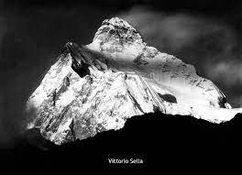
Vittorio Sella did. Processed all his plates in the mountains...you name it...the Karakorum, Mt Saint Elias. Everyone afterwards had it easy....even Bradford Washburn with his Fairchild aerial camera and LF long roll film.
(Jannu...V Sella)
 

Attachments

  • download-2.jpg
    download-2.jpg
    7.4 KB · Views: 108
A good example of a bright snow scene being recorded with grayish snow, due to metering trying to average things to mid-tone gray!

I did that a few times until I learned not to meter the snow.
 
Serious Glass first suggestion to use an exposure calculator or table makes the most sense. Almost every introductory book on photography has a chapter devoted to photographing snow scenes. Usually a discussion of appropriate filters is also included.
 
Did what, Sirius? Hike to Chernjuma Pass, or however the heck it's spelled, for a shot of Jannu? Hate to break the news to you - but it's a lot higher and colder than the Grapevine above LA. Shirakawa took the effort to locate the exact same spot and repeat the shot in both IR film and Ektachrome, using a Pentax 6X7 of course. Hassleblad bodies would only be suitable for brewing yak butter tea in, under those conditions.

But how about that? - all my favorite mountain photographers together on the last few posts : Sella, Washburn, Shirakawa. Plus me, of course (no wet plate experience, but at least runny nose experiences in the cold, and that might make a decent emulsion).
 
Last edited:
Dew.... Sella did process all his plates in the mountains...& I am serious..
but I'm not Sirius Glass.
 
I know about Sella. He lost a lot of plates during the St Elias expedition, and took many of his most famous shots of the Baltoro Glacier when they were being chased by Gurkha soldiers. One of those, containing a row of expedition members on the expedition below, turned out to be a fake! Two different negs were involved, the actual panoramic shot itself, and an earlier neg of the climbers themselves, taken in the Alps. He dubbed them in so well that it would have never been recognized if the original negs hadn't been inspected. But if it were an authentic perspective of them, they would have been about 18 feet tall in that scene. Way better than it could have been done in PS.

The highest point Sella ever got with his big camera was over 22,000 ft on Chogolisa (Bride Peak, opposite K2). That's where Herman Buell fell off somewhere in the fog, when Kurt Diemberger was trying to fiind him. My nephew has been on expeditions with Kurt, and his favorite Himalayan climbing partner was kidnapped at the base camp of Chogolisa, and wrote a book about the incident.
 
. Hassleblad bodies would only be suitable for brewing yak butter tea in, under those conditions.

How would you know? Now we all know that your eyes are brown because you are full to the top.
 
I'll admit I've only watched it being done, Sirius. I can't stand yak butter myself. Tossed out Hassie bodies are fairly common in the mountains. No sense lugging em. I think the Yeti drink stream water with them.
 
Am I going to have to start a thread titled "Drew and Sirius nattering at each other" and move a bunch of posts into it!?
 
Photrio.com contains affiliate links to products. We may receive a commission for purchases made through these links.
To read our full affiliate disclosure statement please click Here.

PHOTRIO PARTNERS EQUALLY FUNDING OUR COMMUNITY:


Ilford ADOX Freestyle Photographic Stearman Press Weldon Color Lab Blue Moon Camera & Machine
Top Bottom