• Welcome to Photrio!
    Registration is fast and free. Join today to unlock search, see fewer ads, and access all forum features.
    Click here to sign up

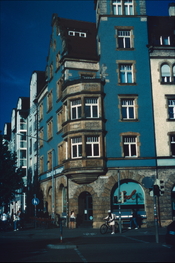
Slide with Harman Phoenix 200

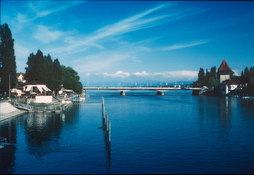
Tied to the dock

D
Tied to the dock

  • 1
  • 0
  • 22
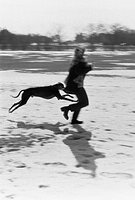
Running in the Snow

H
Running in the Snow

  • 0
  • 1
  • 34

Recent Classifieds

Forum statistics

Threads
203,076
Messages
2,849,528
Members
101,642
Latest member
unillo
Recent bookmarks
2
@loccdor thanks! I'm really looking forward to see your results on 6x6!
I wonder if the base color is a result of us using regular blix, while chromemax used SR-29 bleach and neutral fixer.

@chromemax your results don't have any redish color shifts, right?

Regarding contrast... this will sound crazy but what if we would pull it one stop? To ISO 6 or 8 would that help a bit? (It's still bigger ISO than the wet plate!!!)
I mean I like it the way it is right now. But I also understand that one might want at least some shadow detail.
 
I'm not familiar enough with this C-41 reversal process to know if pulling on the first developer will work. If I recall correctly, slide films aren't recommending for pulling, but can push well, so my instinct is that things might fall apart.
 
@loccdor thanks! I'm really looking forward to see your results on 6x6!
I wonder if the base color is a result of us using regular blix, while chromemax used SR-29 bleach and neutral fixer.

@chromemax your results don't have any redish color shifts, right?

Regarding contrast... this will sound crazy but what if we would pull it one stop? To ISO 6 or 8 would that help a bit? (It's still bigger ISO than the wet plate!!!)
I mean I like it the way it is right now. But I also understand that one might want at least some shadow detail.


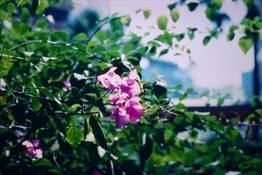
When used as color negative film Phoenix has strong color crossover with cyan highlights, so it would be strange if same behaviour had not been shown using Phoenix 200 as slide. Looking at gray squares of colorchecker (scans in my first post) you can see a crossover with light pink highlights and cyan shadows. In post #13 I read the base+fog and the maximum black with a color densitometer comparing with maximum black of some slide film of 20 years ago and the D-max imho is comparable but also the densitometer show a cyan cast on the blacks.

Phoenix is indeed a young color film and may be that is for its "youth" that inversion is so successfull with this film, but the imperfect color balance is inherent in this film: intepreting Harman's words, at this stage of development the Phoenix 200 is a "beta version" film.

I'm sorry for delays in my reply and in my research for best results with the inversion of the Phoenix but I have a broken leg due to a motorcycle accident and I can't go upstairs in to my darkroom and all my photographic activity is stopped for the next two months.
 
In order to tame the contrast, I'm going to try using this old, cloudy Vivitar cross screen filter. I hope it helps.

Well, here are my results with the Autocord and the cloudy filter. While it did help me get more shadow detail, it also made colorful veiling flares and bloom all over the place that can't really be corrected, so not much of a solution. This was at f/8 and 1/4 second if I recall correctly, metered at 16 for the shadows, possibly underdeveloped although couldn't have been by much.

I ended up preferring the black and white conversion. I think that will be it for my Phoenix reversal experiments, I just can't nail it down enough to get consistency in the results. 50x25mm crop. Maybe good for XPro lovers?

film32acurves2crop25x50edit.jpg
film32acurves2crop25x50editbw.jpg
 
Thanks for all the pioneering experiments and wish @chromemax a speedy recovery.
I tried Phoenix 200 reversal process with ISO 12. First development HC110 1:19 @38°C and 6m30s, followed by reversal exposure. With general C41 color development, bleaching, and fixing.
It performs well in good lighting conditions, but the exposure latitude is a little low, resulting in highlights appearing warm and shadows appearing cold. The sunset, flowers, and night scenes(ISO?) might be a good idea, but portraits are not so great.
 

Attachments

  • _DSC5691_DxO_副本.jpg
    _DSC5691_DxO_副本.jpg
    1.4 MB · Views: 177
  • _DSC5692_DxO_副本.jpg
    _DSC5692_DxO_副本.jpg
    1.7 MB · Views: 162
  • _DSC5693_DxO_副本.jpg
    _DSC5693_DxO_副本.jpg
    1.3 MB · Views: 155
  • _DSC5696_DxO_副本.jpg
    _DSC5696_DxO_副本.jpg
    1.2 MB · Views: 187
@Yezishu I like those results and to me it's looking better with blown highlights than underexposed. It is hard to use! My rolls were mostly filled with barely visible slides even though I hadn't done much of a processing difference with my last one, and even though on one of the rolls I went out with very flat light (it was raining) and carefully used incident metering.
 
Your results look quite good with good dmax in your photo showing all the film strips, but your scans seem off in contrast. I took a few and set the black point to the rebate in photoshop. Would you say this is similar to how they render in person?

View attachment 394498View attachment 394499View attachment 394500

I don't know how the slides would look on the light table or projected but that's the important thing. Enhance the contrast after scan doesn't make much sense because if the scan is what you want then simply process as negative then scan.
 
You'll end up with very different results. Grain will be much higher if processed as negative for example. Many people use slide film with the intention to scan, and in the old days of wet dark rooms a lot of photographers preferred slide even though their final goal was a print.
 
You'll end up with very different results. Grain will be much higher if processed as negative for example. Many people use slide film with the intention to scan, and in the old days of wet dark rooms a lot of photographers preferred slide even though their final goal was a print.

Why grain is higher? The film is a negative film to begin with and processing it into slides I would think compromise the quality more.
 
Must have to do with the speed drop to ISO 12-16.
 
Why grain is higher? The film is a negative film to begin with and processing it into slides I would think compromise the quality more.

When developing negatives, the largest grains develop first and are left, whereas in slides, the largest grains are developed first and bleached away. So slides generally has finer grain.

Cross processing presents many issues, such as color shifts, that is why low iso and C41 is used here as a kind of compensation. In my search results, directly using E6 on this flim typically results in a severe blue tint.
 
When developing negatives, the largest grains develop first and are left, whereas in slides, the largest grains are developed first and bleached away. So slides generally has finer grain.

Cross processing presents many issues, such as color shifts, that is why low iso and C41 is used here as a kind of compensation. In my search results, directly using E6 on this flim typically results in a severe blue tint.

I have never done it but I can't think that you can get finer grain by cross processing the film.
 
I have never done it but I can't think that you can get finer grain by cross processing the film.

Well, do some research instead of plain thinking then.
Same applies to BW material: when reversed to slides, grain is a lot smaller. Delta 3200 processed as a slide looks like a 400 negative film grain-wise. Just the nature of the processing involving reversal.
 
new roll, shot at 100ASA, HC 1:19 for 13´
Ph01.jpg
 

Attachments

  • Ph02.jpg
    Ph02.jpg
    402.4 KB · Views: 165
  • Ph03.jpg
    Ph03.jpg
    309 KB · Views: 167
  • Ph04.jpg
    Ph04.jpg
    387.1 KB · Views: 153
  • Ph05.jpg
    Ph05.jpg
    175.4 KB · Views: 160
@Meinrad Very nice! Your method works well on images with a lot of sky and water.
 
Thank you for the flowers, yes the yellows are not the strongest... Maybe i try a KR6 filter, hope it does not get too muddy...
 
and for korax: "What's mostly puzzling me is the magenta band along the left edge of the image; is this due to the flashing exposure?"

Now i know the reason, i spool the films under my blanket in my bed due to the absence of a dark room, and during daylight i need to add one blanket more to have no light falling in... Don't ask me how i found out, i have learned it the hard way on a sunny day with a very stubborn roll of film :smile:
 
It seems that the new Phoenix II is not suitable for the reversal process. I want to make more attempts but I'm not very optimistic...

Phoenix_II_invertita.jpg
😕
 
Hello Chromemax,
thanks for sharing! Hmm you are right, i would have also expected more. Could you please tell us your settings, same as yours for Phoenix I?
And how did you get rid of the violet base?
 
That's rather disappointing. I just got some of it (as well as a couple of rolls of the original to play with reversal because of this thread). Ah well. Can't complain too much if a new color film doesn't conform well to my oddball off-label use case :wink:
 
Hello Chromemax,
thanks for sharing! Hmm you are right, i would have also expected more. Could you please tell us your settings, same as yours for Phoenix I?
And how did you get rid of the violet base?

Hello Meinrad, the process was the same of Phoenix II but with few modifications; I thought to increase the color development (regular C-41 CD) to 5' because the lower contrast of Phoenix-II and, having at hand the C41 chemistry, I used the c-41 bleach for 5' and c-41 fixer for 4'.
I don't think that the C-41 bleach instead of ferrycianide is the cause of the blu/cyan hue, I think that it is because of the changes in the emulsion and in layer arrangment. But I want to do more tests before I throw in the towel :smile:
 
Photrio.com contains affiliate links to products. We may receive a commission for purchases made through these links.
To read our full affiliate disclosure statement please click Here.

PHOTRIO PARTNERS EQUALLY FUNDING OUR COMMUNITY:


Ilford ADOX Freestyle Photographic Stearman Press Weldon Color Lab Blue Moon Camera & Machine
Top Bottom