• Welcome to Photrio!
    Registration is fast and free. Join today to unlock search, see fewer ads, and access all forum features.
    Click here to sign up

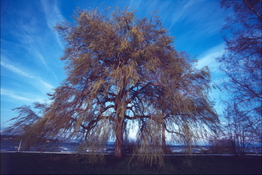
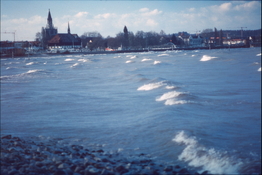
Slide with Harman Phoenix 200

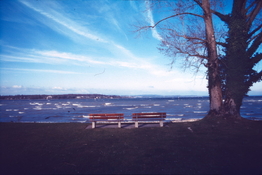
Tied to the dock

D
Tied to the dock

  • 2
  • 0
  • 39
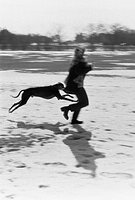
Running in the Snow

H
Running in the Snow

  • 0
  • 1
  • 51

Recent Classifieds

Forum statistics

Threads
203,080
Messages
2,849,557
Members
101,646
Latest member
theshininglad
Recent bookmarks
0
Presumably the grain is finer than normal negative processed Phoenix as it is a reversal process?

Yes, much finer grain, but similar high contrast.
 
@chromemax and @loccdor - fantastic results! Thank you for sharing.

What was the reason for using ferricyanide bleach and neutral fixer instead of the bleach/fix from the Bellini kit?

@chromemax - You probably meant citrazinic acid which is used in the E6 color developer. Can you still obtain it at a reasonable price? Do you know if it works with C-41 couplers the same way as with the E6 process?

For citrazinic acid,you can find some Food Grade Citric Acid Powder in Walmart for drink and cooking,sometimes they are sold as Detergent.

Sorry, I confused Citric acid with Citrazinic acid. Thanks @lamerko for figuring it out.
 
Last edited:
Unfortunately, the brightness range is pretty extreme.

It's a very steep film. Not sure there's much you can do about it. Although it appears that in this reversal process, both the fogging exposure and the color development don't necessarily go to completion. You could try to manipulate contrast by varying the initial exposure, first development, fogging exposure and color development. Yes, that's 4 parameters to tune to each other. But it does give you something to play with.
 
For citrazinic acid,you can find some Food Grade Citric Acid Powder in Walmart for drink and cooking,sometimes they are sold as Detergent.

These are two different things. Citrazinic acid can be synthesized from citric acid, but it cannot be directly substituted.
 
It's a very steep film. Not sure there's much you can do about it. Although it appears that in this reversal process, both the fogging exposure and the color development don't necessarily go to completion. You could try to manipulate contrast by varying the initial exposure, first development, fogging exposure and color development. Yes, that's 4 parameters to tune to each other. But it does give you something to play with.

Thank you, I had the thought of reducing the HC-110 concentration and doing it semi-stand, but I don't know if I will have time to try in the near future. That would probably result in a different ISO as well so I would bracket that roll.
 
@chromemax and @loccdor - fantastic results! Thank you for sharing.

What was the reason for using ferricyanide bleach and neutral fixer instead of the bleach/fix from the Bellini kit?

@chromemax - You probably meant citrazinic acid which is used in the E6 color developer. Can you still obtain it at a reasonable price? Do you know if it works with C-41 couplers the same way as with the E6 process?

Hi Romanko, I used ferry bleach and neutral fixer because my goal was a low cost inversion process for photographers that just want to try shoot slide film but are scared by high cost. For best results with transparencies nothing is better than Prova, Velvia, E100 in E6 process, but these films and the E6 process may be too expensive for just a try.
I tried to find the chemists that can already be found in a darkroom of an amateur photographer: a BW film dev that can be used also with generic BW films, ferrycianide bleach is the same of sepia toner or Farmer'r reducer, neutral generic fix because, afaik, color fixers don't are acid.
The only color chemical is color developer and Ars-Imago sell separately the bottle of C-41 developer that is less expensive than purchase a whole 3 baths kit.
For photographers that already develop color negative films in their darkroom should'nt be problem using C-41 bleach and fixer (or blix in 2 baths kits) using the same times and temperature of C-41 process, in this way the whole inversione process is shorter.

Citrazinc acid was mentioned by @Meinrad I don't know how get it or its cost
 
great, looks promising! I think the physical inversion is not so critical, i put the reel in a glass filled with water and proceed as you did.
The most critical step is first development and color developer.
Bleach and fix might be longer without harm and as i have learned from b/W inversion: best with vivid agitation.

I cant wait to try it too, thanks chromemax!

Thank you, please post your results
 
Hi Romanko, I used ferry bleach and neutral fixer because my goal was a low cost inversion process for photographers that just want to try shoot slide film but are scared by high cost.
In Australia the full Bellini C-41 kit (A$90) is cheaper than buying the color developer (A$75), chemistry for the bleach and the fixer separately. The difference between the C-41 and E-6 (A$104) kits is just A$14.

With the C-41 color developer you are not cross-processing, you are doing "C-41 reversal processing" (if there is such thing). The difference from cross-processing in E6 is that you are using the proper developer and the rest of the process but adding a reversal step.

I am very interested to see the results of "C-41 reversal processing" of Kodak Aerocolor - a far more superior film than Phoenix. Has anyone tried this?
 
I am very interested to see the results of "C-41 reversal processing" of Kodak Aerocolor - a far more superior film than Phoenix. Has anyone tried this?
I will order it and post my results of reversal processing in a separate thread. Does anyone have a guess at the ISO I would get if I processed it identically to how the Phoenix was done here? I'm going to bracket but I'd like to at least get an idea.
 
  • loccdor
  • loccdor
  • Deleted
  • Reason: duplicate
Does anyone have a guess at the ISO I would get if I processed it identically to how the Phoenix was done here? I'm going to bracket but I'd like to at least get an idea.

It is only a guess. Aerocolor is basically the same speed (~ISO 100) as Phoenix but it is much more forgiving when overexposed. If you shoot it like Phoenix erring on the side of overexposure you should be fine, theoretically. Bracketing is always a good idea.
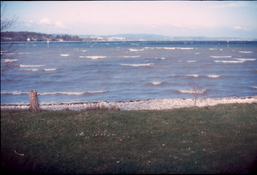
 
It is only a guess. Aerocolor is basically the same speed (~ISO 100) as Phoenix but it is much more forgiving when overexposed. If you shoot it like Phoenix erring on the side of overexposure you should be fine, theoretically. Bracketing is always a good idea.

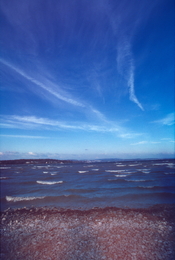
Ok, thanks! I'll post something in a couple weeks.
 
i shot this aerocolor at 100ASA and developped it in Ilford HC 1:15 for 6´
PT20.jpg
 
Hm, there might be some room for optimization. What's mostly puzzling me is the magenta band along the left edge of the image; is this due to the flashing exposure?
 
yes, far away from being perfect, and this was one of the better ones.

I think the left color shift came from uneven development.
I just showed it if someones wants to find a starting point.
I will stick to the phoenix because i spend a lot of time with it, the aerocolor is much harder to get for me and was only a try...
 
According to the film data sheet, for a normal contrast of 0.65 the rating is 80 ASA. I would shoot it at EI 40 (or less) if I wanted to reverse it.
 
New try with Phoenix @25asa, developed in HC1:19 for 8:30'
So far my best results, thanks to chromemax's suggestions!
Scan neutral with all Fuzzes :smile:
PhD1.jpgPhD2.jpgPhD3.jpg
 
what i found interesting is that slightly overexposed the colors are quite neutral, maybe a bit towards reds,and underexposed much more vivid PhD4.jpgPhD5.jpg
 
I don't know why I want to try this so bad. I have Ektachrome 100 on hand and always get great results out of that film. But these look so much better than I would have expected out of Phoenix reversal processed. I think I still have a roll of Phoenix stashed away in the fridge. Maybe I'll do something weird with it like shoot it through a medium format camera and process as positive.

Wonder how much different the colors will be for me, since I'll be using an ECN-2 color dev instead of C-41.
 
Wonder how much different the colors will be for me, since I'll be using an ECN-2 color dev instead of C-41.

I've done a test using C-41, ECN-2 and RA-4 for colour developer. There are differences, but nothing earth shattering. It was on a proper E-6 film (Ektachrome), though.

Since I can't find my notes, it's quite possible that I didn't get the labels right, but you can see there is not a huge difference between them:

2024-11-13-0001.jpg
 
Last edited:
Yeah I mean with Harman Phoenix especially. I suspect my colors with Ektachrome are better using ECN-2 dev than they would be with C-41 because "proper" E6 color dev also uses CD-3 instead of CD-4. Phoenix is presumably designed for a CD-4 based developer though.

Not expecting a massive difference, but it will be interesting to see.
 
If Harman Phoenix 200 and Kodak Aerocolor 100 works out well enough for slides, then we have some cheaper alternatives to Ektachrome 100. Thank you @chromemax and others for your experiments and sharing your recipe!

About the first developer, will Rodinal, Clayton F76+, or Adox FX-39 II work? I don't have any HC110 at the moment.
 
I think these are fantastic results!

My only concern is that Harman ... who have done nothing to improve the original Phoenix in 18+ months ... will now release the same original Phoenix as "Phoenix Reversal" film! They had to audacity to roll the film inside out and call it Phoenix Red (instead of "Phoenix rolled inside out") so I put nothing past them.

The only positive (excuse the pun) news is that when they finally make a decent version of Phoenix, it might only need fairly minor further development to make a transparency film to rival Provia 100f. Wishful thinking perhaps but why not dream?
 
Photrio.com contains affiliate links to products. We may receive a commission for purchases made through these links.
To read our full affiliate disclosure statement please click Here.

PHOTRIO PARTNERS EQUALLY FUNDING OUR COMMUNITY:



Ilford ADOX Freestyle Photographic Stearman Press Weldon Color Lab Blue Moon Camera & Machine
Top Bottom