• Welcome to Photrio!
    Registration is fast and free. Join today to unlock search, see fewer ads, and access all forum features.
    Click here to sign up

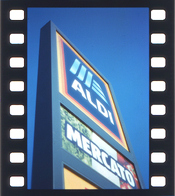
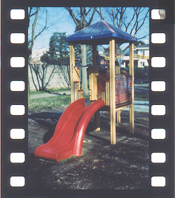
Slide with Harman Phoenix 200

Tied to the dock

D
Tied to the dock

  • 1
  • 0
  • 22
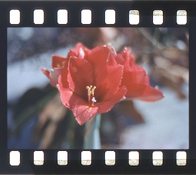
Running in the Snow

H
Running in the Snow

  • 0
  • 1
  • 34

Recent Classifieds

Forum statistics

Threads
203,075
Messages
2,849,527
Members
101,642
Latest member
unillo
Recent bookmarks
2

chromemax

Member
Joined
Aug 28, 2009
Messages
45
Location
Monza e dell
Format
Multi Format
I would share some test for get slides from Phoenix 200.
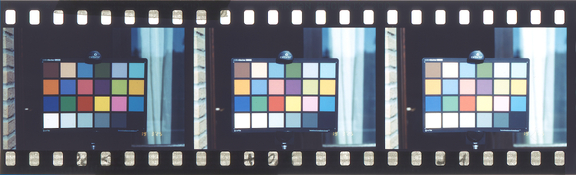
The speed is quite low, at 16 ISO there is the best balance between highlight and shadows. Color balance is quite good and color fidelity is like the Phoenix in C-41, brilliant reds and blues but yellow, orange and caucasian skin tones are lacking hue and saturation. Looking at the grayscale of the color-checker there is just a bit of cross-color with warm highlight and cold/greenish shadows.
This was the Process I used:
First developer Kodak HC-110 (old formula "Original Syrup") 1+19 for 6'30" @ 38°C
4 water rinses of 30" each
Inversion exposing the reel at a 400w halogen lamps for a total of 4', flipping upside down the reel after 2'
Color developer of Bellini C-41 kit for 3' @ 38°C
4 water rinses of 30" each
ECN-2 ferrycianide bleach (SR-29) for 5' @ 38°C
4 water rinses of 30" each
Rollei RXN neutral fixer 1+4 for 5' @ 38°C
wash
C-41 stabilizer

These are scans of the transparencies:
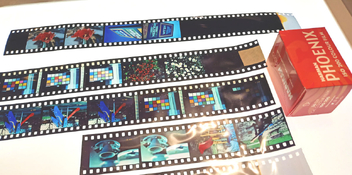
img-002.jpgdiapositive-001.jpgdiapositive-003.jpgdiapositive-004.jpgdiapositive-005.jpgdiapositive-006.jpgdiapositive-007.jpgdiapositive-008.jpgdiapositive-009.jpg
 
Hello chromemax,
very interesting, thank you for sharing !
Have you seen my approach?
I tried faster Iso and much longer first developing, but your way seems to be much more promising! I will try… Greetings from Southern Germany, Meinrad
 
Have you seen my approach?

You mean this? https://www.photrio.com/forum/threads/harman-red-in-e6.212700/
I understand you used Harman Red, which is the same film wound backwards, so I can imagine that won't work quite as well as the regular Phoenix exposed the proper way.

I would share some test for get slides from Phoenix 200.

That's surprisingly good - excellent in fact! I had not expected them to come out this neutral looking.

there is just a bit of cross-color with warm highlight and cold/greenish shadows.

Well, a lot less than I had expected and of course, there's the magenta dmin that you'll always run into, I imagine.
 
Much better than I expected as well!
 
Hello chromemax,
very interesting, thank you for sharing !
Have you seen my approach?
I tried faster Iso and much longer first developing, but your way seems to be much more promising! I will try… Greetings from Southern Germany, Meinrad


Hi Meinrad, surely I'll take a look to your approach. In my test I got too much contrast using longer or more concentrated BN dev in attempt to get higher film speed. 16 ISO is low but it is more than the 1940's Kodachrome 😅

My goal was find an easy and cheap way for get color slide for photographer that approach to analog photography and want to try color transparencies, especially younger photographers. For this I tried to use chemistry that can be easily found found in a darkroom or can be used for other uses: the HC-110 can be used to develop BW films, ferrycianide bleach is in the Farmer's reducer or in sepia toner and here in Italy Ars-Imago sells C-41 color developer without having to buy the entire kit.
Fortunally to make beautiful slides there are excellent films, Provia, Velvia, Ektachrome E100 and the E6 process. For those who are curious to try the slides but do not want to spend too much, the Phoenix and this process imho can be a good approach.
 
Thanks for sharing the nice results, they are definitely better than I expected.

It made me curious about how it will turn out with regular E6 chemistry (I still have some fresh Tetenal E6 left). I will start with ISO 16 as you recommended.
 
Salü Chromemax,
i am having the same motivation like you to find an afforable slide film. Because i like fast films ISO 16 is a bit slow, I found the info that Citrazic acid could calm a bit the contrast. I got some but didn't try yet, but maybe there is a way to reach at least about 50ISO? But i don't know how to add it properly, only to first developer? And how much?
 
Your results look quite good with good dmax in your photo showing all the film strips, but your scans seem off in contrast. I took a few and set the black point to the rebate in photoshop. Would you say this is similar to how they render in person?

diapositive-006.jpgdiapositive-005.jpgdiapositive-003.jpg
 
Woah, those are excellent examples when compared to what others have achieved!
 
Your results look quite good with good dmax in your photo showing all the film strips, but your scans seem off in contrast. I took a few and set the black point to the rebate in photoshop. Would you say this is similar to how they render in person?

View attachment 394498View attachment 394499View attachment 394500

If it really looks like that, then there will have to be another "reading" of the Phoenix. And Harman should think carefully about whether to just release a slide :smile:
 
True. And people are much more forgiving of a thin-latitude film if it's for slide.
 
Your results look quite good with good dmax in your photo showing all the film strips, but your scans seem off in contrast. I took a few and set the black point to the rebate in photoshop. Would you say this is similar to how they render in person?

View attachment 394498View attachment 394499View attachment 394500

The photo showing all film strips was taken with all "improvements" of a cell phone camera. The scans came from an entry-level flat bed scanner (Epson V550) and I have just basic scanning skills.
For a more objective judgment the densitometer readings of D-min and D-max are the following:
D-min (status A)
R = 0.32
G = 0.34
B = 0.32

D-Max (status A)
R = 3.43
G = 2.90
B = 2.36

The D-min is quite high: to my eyes the base of Phoenix is the same triacetate of Harman/Ilford BW films and surely isn't crystal-clear how a transparency color film base should be.. but Phoenix 200 isn't slide film (BTW D-min of Ilford BW films are about at the same density of 0.28/0.32).
D-max is shifting to blue/cyan tones, confirmed by backlight vieving the leader of the film.

For my curiosity I read D-mx of some old ('90) transparency film and the readings are:
Ektachrome 400 6074
R = 2.25
G = 2.80
B = 2.91

Kodak Ektachrome 100HC 6009
R = 2.74
G = 2.95
B = 2.94

Apart from the blue/cyan shift, the maximum density is similar to other invertible films.
 
Last edited:
The photo showing all film strips was taken with all "improvements" of a cell phone camera. The scans came from an entry-level flat bed scanner (Epson V550) and I have just basic scanning skills.
For a more objective judgment the densitometer readings of D-min and D-max are the following:
D-min (status A)
R = 0.32
G = 0.34
B = 0.32

D-Max (status A)
R = 3.43
G = 2.90
B = 2.36

The D-min is quite high: to my eyes the base of Phoenix is the same triacetate of Harman/Ilford BW films and surely isn't crystal-clear how a transparency color film base should be.. but Phoenix 200 isn't slide film (BTW D-min of Ilford BW films are about at the same density of 0.28/0.32).
D-max is shifting to blue/cyan tones, confirmed by backlight vieving the leader of the film.

For my curiosity I read D-mx of some may old ('90) transparency film and the readings are:
Ektachrome 400 6074
R = 2.25
G = 2.80
B = 2.91

Kodak Ektachrome 100HC 6009
R = 2.74
G = 2.95
B = 2.94

Apart from the blue/cyan shift, the maximum density is similar to other invertible films.

Very interesting results from the slides, well done!

Good to see that it is likely a scanning issue then if the Dmax is good. What are the Dmin for the Ektachrome slides for comparison?
 
Very interesting results from the slides, well done!

Good to see that it is likely a scanning issue then if the Dmax is good. What are the Dmin for the Ektachrome slides for comparison?

D-min of Ektachrome 100 is about R=0,13; G=0.15;B=0.16
 
First developer Kodak HC-110 (old formula "Original Syrup") 1+19 for 6'30" @ 38°C
4 water rinses of 30" each
Inversion exposing the reel at a 400w halogen lamps for a total of 4', flipping upside down the reel after 2'
Color developer of Bellini C-41 kit for 3' @ 38°C

How does the HC-110 change things in comparison to an E-6 kit's first developer?

Why is the color developer of a C-41 kit rather than an E-6 kit used?

Sorry, I know these are maybe basic and confused questions.
 
How does the HC-110 change things in comparison to an E-6 kit's first developer?

Why is the color developer of a C-41 kit rather than an E-6 kit used?

Sorry, I know these are maybe basic and confused questions.

Hi loccdor,

My idea was an inversion process without buy an E6 kit. Imho HC-110 is a good first developer for inversion process because in high concentration raise the contrast, work well at high temperature and has a good amount of antifog because it was formulated for use in high speed BW process machine.

C-41 Color Dev can be purchased separately without spend for a whole kit and Phoenix, as color negative film, should be optimized for C-41 process.

On internet I found that E6 cross-processed Phoenix have an heavy blue cast, may be because the inversion bath, but without experimenting cross-processing a Phoenix in E6 with light-exposure inversione rather than with the chemical bath, my is only a speculation.
 
I'm going to try your process today. The lamp above my sink is a 15W cool white fluorescent tube. Will 2 minutes on each side, on the reel, at a distance of 1 foot be okay for the reversal?
 
I tried it and they're hanging to dry. I'll post an analysis for comparison today or tomorrow.

I exposed for 16 ISO with an incident light meter but I think I ended up getting perhaps 12 ISO. I reciprocity corrected any 4 second shots to 8 seconds, that was necessary, you can see it in the 2 shots of the test chart, one is 4 sec as measured by meter, other is 8 with reciprocity correction applied.

Here were my steps:

5 38C agitation prewashes
HC-110 (new formula) 1+19 6.5 minutes 38C
5 38C washes
Hold under flourescent tube for 2 minutes each side about 8 inches distance while tilting reel around
Film Photography Project C-41 developer 3 minutes 39C (had already been used on 3 films)
5 38C washes
Film Photography Project C-41 blix 6 minutes 39C (had already been used on 3 films)
7 washes descending from 38C to around 25C
Fotoflo, distilled water

signal-2025-03-26-132229_006.jpeg
signal-2025-03-26-132229_005.jpeg
signal-2025-03-26-132229_004.jpeg
signal-2025-03-26-132229_003.jpeg
signal-2025-03-26-132229_002.jpeg
 
Last edited:
Seems like pretty good colors!

signal-2025-03-26-135339_002.jpeg
 
great, looks promising! I think the physical inversion is not so critical, i put the reel in a glass filled with water and proceed as you did.
The most critical step is first development and color developer.
Bleach and fix might be longer without harm and as i have learned from b/W inversion: best with vivid agitation.

I cant wait to try it too, thanks chromemax!
 
Bit of a sidetrack here: @chromemax what camera/date back were you using for your initial shots? I notice the date back is able to record current dates. That's a rarity these days.
 
I made the mistake of doing the light exposure without submerging the reel in water, leading to some uneven bubbles on the frames.

Still, a couple things to show. Here are the straight out of camera frames.

film18anocurves2048.jpg
film18bnocurves2048.jpg


They've got a red shift. Corrected:

film18acurves2048.jpg
film18bcurves2048.jpg


Unfortunately, the brightness range is pretty extreme. It's hard to retain both highlights and shadows. Maybe someone can figure out how to fix that. These shots were taken in soft window light.

At 1:1, critical detail is what we expect from Phoenix, not very good compared to most other films:

film18bcurvessharpnessexample.jpg
 
@chromemax and @loccdor - fantastic results! Thank you for sharing.

What was the reason for using ferricyanide bleach and neutral fixer instead of the bleach/fix from the Bellini kit?

@chromemax - You probably meant citrazinic acid which is used in the E6 color developer. Can you still obtain it at a reasonable price? Do you know if it works with C-41 couplers the same way as with the E6 process?
 
Photrio.com contains affiliate links to products. We may receive a commission for purchases made through these links.
To read our full affiliate disclosure statement please click Here.

PHOTRIO PARTNERS EQUALLY FUNDING OUR COMMUNITY:


Ilford ADOX Freestyle Photographic Stearman Press Weldon Color Lab Blue Moon Camera & Machine
Top Bottom