
• Welcome to Photrio!
    Registration is fast and free. Join today to unlock search, see fewer ads, and access all forum features.
    Click here to sign up

Showcase for Your HCWP's

Untitled

A
Untitled

  • 1
  • 0
  • 20
The Hot Waters

A
The Hot Waters

  • 0
  • 0
  • 36

Forum statistics

Threads
204,317
Messages
2,867,098
Members
102,222
Latest member
forest_f2026
Recent bookmarks
0
11x14" glass plate coated with DAS-sensitised gelatine and india ink, exposed from a 4x5 negative with my UV enlarger through the glass and developed in-situ (no transfer involved). Few micro-bubbles that I think were caused by the gelatine gelling too quickly while I was trying to spread it, I need to start pre-heating the glass plate now that it's winter here, but otherwise really happy with how it turned out.
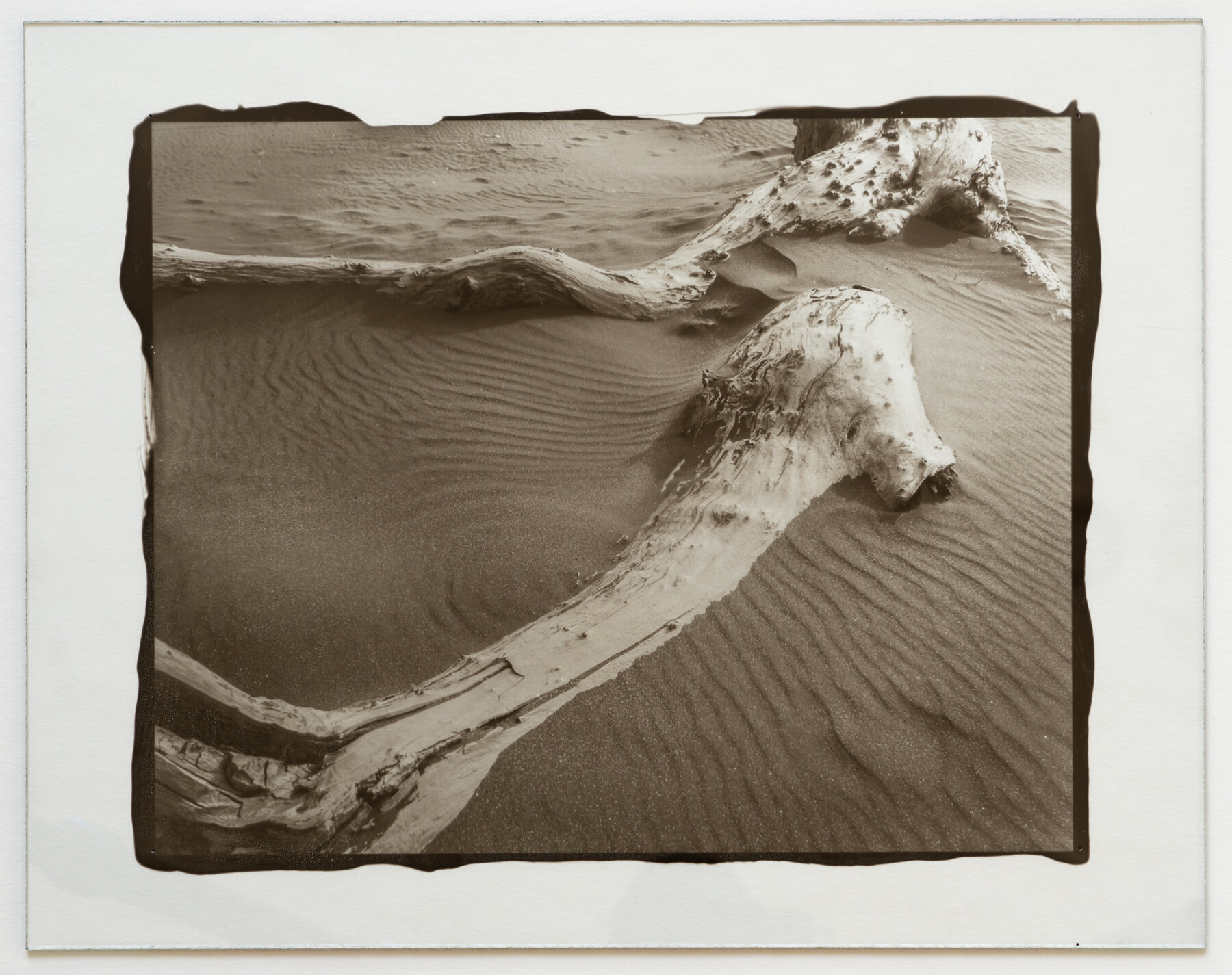
_DSC5240.jpg


Going to pour iridescent silver acrylic paint onto the back and see how that looks, the sand at this beach is mostly black iron oxide and so it sparkles in the sun, which I want to see if I can replicate.
 
Yeah....amazing. Real good idea about the reflective coat. Kind of like orotone.

:Niranjan.

Yeah basically, I have to back it with something and I'd rather coat the back side of the glass vs. sandwiching it onto a piece of paper because then the carbon layer is protected and there's no gap between the image and reflective layer.

Unfortunately every attempt I've made to pour a layer of acrylic paint over the back of these plates has been a disaster for one reason or another. With this one I was trying to mix a silver and an iridescent white paint with a thin acrylic medium which I then poured over the back of the glass. I found that the two paint types and the medium proved impossible to mix together well (at least by hand) so the colour of the pour wasn't uniform and there were also a lot of bubbles in it despite trying to get rid of them all before pouring. I popped them with a heat gun but little pock marks remained.

Also when attempting to speed up the setting of the paint so that I could move the plate by using a fan heater a skin formed over the wet paint, which contracted and caused ugly cracks and wrinkles! Luckily I was able to wash all the paint off the plate seemingly without damaging the image, so now I'm back to square one.

I think I'm just going to spray paint the back of this plate with gold paint and make it an orotone, and spend some time with a scrap piece of glass in the future investigating better ways of backing them. What I'm imagining is a relatively thick and partially translucent reflective layer on the back to help give the image more depth, kind-of like encaustic wax maybe? I know Koraks had good results using a pigmented gelatin layer poured over the back of the plate when making orotones, so I suppose I could try that (at least it would set faster than the acrylic which takes weeks if poured thickly).
 
Yeah basically, I have to back it with something and I'd rather coat the back side of the glass vs. sandwiching it onto a piece of paper because then the carbon layer is protected and there's no gap between the image and reflective layer.

Unfortunately every attempt I've made to pour a layer of acrylic paint over the back of these plates has been a disaster for one reason or another. With this one I was trying to mix a silver and an iridescent white paint with a thin acrylic medium which I then poured over the back of the glass. I found that the two paint types and the medium proved impossible to mix together well (at least by hand) so the colour of the pour wasn't uniform and there were also a lot of bubbles in it despite trying to get rid of them all before pouring. I popped them with a heat gun but little pock marks remained.

Also when attempting to speed up the setting of the paint so that I could move the plate by using a fan heater a skin formed over the wet paint, which contracted and caused ugly cracks and wrinkles! Luckily I was able to wash all the paint off the plate seemingly without damaging the image, so now I'm back to square one.

I think I'm just going to spray paint the back of this plate with gold paint and make it an orotone, and spend some time with a scrap piece of glass in the future investigating better ways of backing them. What I'm imagining is a relatively thick and partially translucent reflective layer on the back to help give the image more depth, kind-of like encaustic wax maybe? I know Koraks had good results using a pigmented gelatin layer poured over the back of the plate when making orotones, so I suppose I could try that (at least it would set faster than the acrylic which takes weeks if poured thickly).

You can try silver or gold (real or imitation) gild as well - lots of people selling on line for all kind of projects. Check out Dan Burkholder's work for gilded Pt/Pd on vellum. I think he also sells some on his website.

:Niranjan.
 
Here's the orotone version of the direct carbon print from above, eventually spray painted the back with metallic gold paint (and even that turned out to be a bit of a disaster!).

_DSC5241.jpg


I quite like the effect of the metallic backing, but it does make the print very difficult to display. You need a light source pointed at the print at the correct angle so that you can see the print well, but not the reflection of the light source itself in the glass. I don't think you could hang this on the wall just anywhere and have it look good, you'd either need a space with a lot of diffuse light or you'd need some dedicated lights pointing at the print from angles that illuminate it without reflecting directly at the viewer.

It encourages the viewer to move around and look at it from different angles, and it doesn't reveal everything about itself instantly from first viewing, but it's pretty 'fussy' to display so I'm of two minds about printing a series of these at this stage.
 
Here's the orotone version of the direct carbon print from above, eventually spray painted the back with metallic gold paint (and even that turned out to be a bit of a disaster!).

View attachment 426291

I quite like the effect of the metallic backing, but it does make the print very difficult to display. You need a light source pointed at the print at the correct angle so that you can see the print well, but not the reflection of the light source itself in the glass. I don't think you could hang this on the wall just anywhere and have it look good, you'd either need a space with a lot of diffuse light or you'd need some dedicated lights pointing at the print from angles that illuminate it without reflecting directly at the viewer.

It encourages the viewer to move around and look at it from different angles, and it doesn't reveal everything about itself instantly from first viewing, but it's pretty 'fussy' to display so I'm of two minds about printing a series of these at this stage.

Looks nice. I could be wrong but weren't original orotones made by coating the emulsion side and viewed through the glass. Wonder how that would change the situation about viewability. Also, by the way, since you are projecting the image when printing, is your print flipped side-to-side? If not, how did you make it right?

:Niranjan.
 
Looks nice. I could be wrong but weren't original orotones made by coating the emulsion side and viewed through the glass. Wonder how that would change the situation about viewability. Also, by the way, since you are projecting the image when printing, is your print flipped side-to-side? If not, how did you make it right?

:Niranjan.

This one is already coated on the emulsion side and viewed through the glass. Anti-reflective glass might make a difference as there would be less distracting reflections from the glass surface itself (but UV-blocking coatings would stop the process from working at all, so that may not be a viable solution).

When I install the negative into the carrier I just do it in the orientation that results in the print being the correct way around. I use a camera to create the negative in the first place so the negative gets flipped in the camera and then flipped back in the enlarger. Because I expose through the glass and also the print is viewed through the glass there's no additional flipping.
 
This one is already coated on the emulsion side and viewed through the glass. Anti-reflective glass might make a difference as there would be less distracting reflections from the glass surface itself (but UV-blocking coatings would stop the process from working at all, so that may not be a viable solution).

When I install the negative into the carrier I just do it in the orientation that results in the print being the correct way around. I use a camera to create the negative in the first place so the negative gets flipped in the camera and then flipped back in the enlarger. Because I expose through the glass and also the print is viewed through the glass there's no additional flipping.

That makes sense....I was confused when you said you were going to spray paint the "back of the plate." I thought you meant the glass side. Anyway, perhaps you can lookup some AR film that can be applied to the glass in the end to get around this problem.

:Niranjan.
 
Photrio.com contains affiliate links to products. We may receive a commission for purchases made through these links.
To read our full affiliate disclosure statement please click Here.

PHOTRIO PARTNERS EQUALLY FUNDING OUR COMMUNITY:


Ilford ADOX Freestyle Photographic Stearman Press Weldon Color Lab Blue Moon Camera & Machine
Top Bottom
