• Welcome to Photrio!
    Registration is fast and free. Join today to unlock search, see fewer ads, and access all forum features.
    Click here to sign up

Making a UV projector for alt-process prints

Cool as Ice

A
Cool as Ice

  • 0
  • 0
  • 22
Pond

H
Pond

  • 2
  • 0
  • 47

Recent Classifieds

Forum statistics

Threads
202,703
Messages
2,844,454
Members
101,478
Latest member
The Count
Recent bookmarks
0
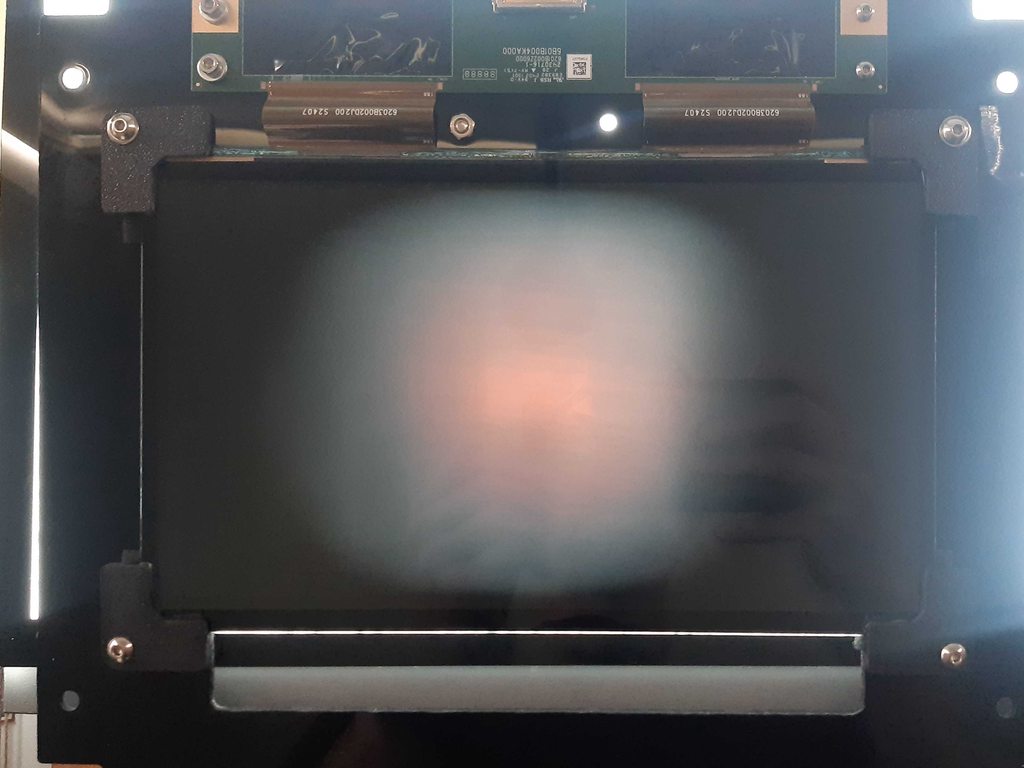
Wow, I removed the LCD screen today so I could start working on a negative carrier and it is STUFFED. It's uhh... not supposed to be clear in the middle like that...


I couldn't see how bad it had gotten while it was installed in the projector, I did see some light leakage through the middle when projecting a black screen but looking at it on a light table I'm surprised it has been printing anything recognisable recently.

So that's another nail in the coffin of the digital UV projector idea I think, I might not even have run this screen with the UV light on for 100 hours and it's completely bleached. I don't think I could have given it any more cooling than I already am, and at the current UV power exposure times are still relatively long and inadequate for DAS carbon. I think the concept would still work for PVA-SbQ and silver gelatin due to their extreme sensitivity, but not for more traditional processes.

Of course the same thing could still happen to film negatives, but I guess the advantage there is A) exposure times will be much shorter and B) I can always produce another copy of the negative if the first one bleaches out/gets damaged.
Wow! Thanks for posting that. That's a serious no go unless having a free stock of LCDs :sad:

Could we see some of the prints you're going to exhibit?
 
Wow! Thanks for posting that. That's a serious no go unless having a free stock of LCDs :sad:

Could we see some of the prints you're going to exhibit?
Yeah I think that the LCD projector approach would still work for very fast processes like PVA-SbQ but the same bleaching effect would likely still happen only much slower. So you might get tens of thousands of prints out of an LCD rather than hundreds or less.

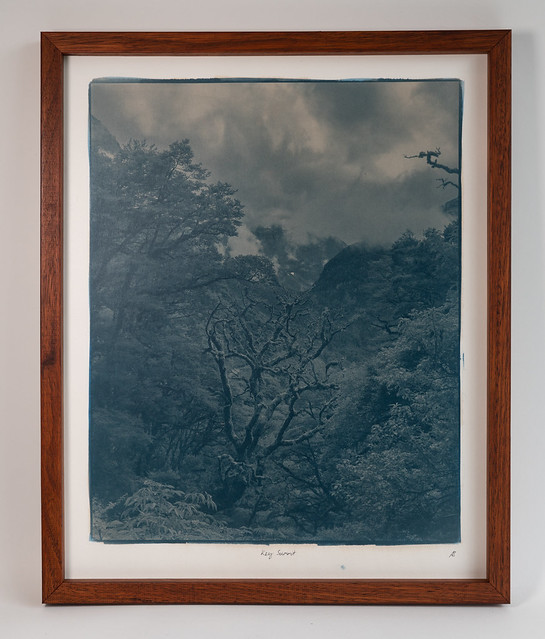
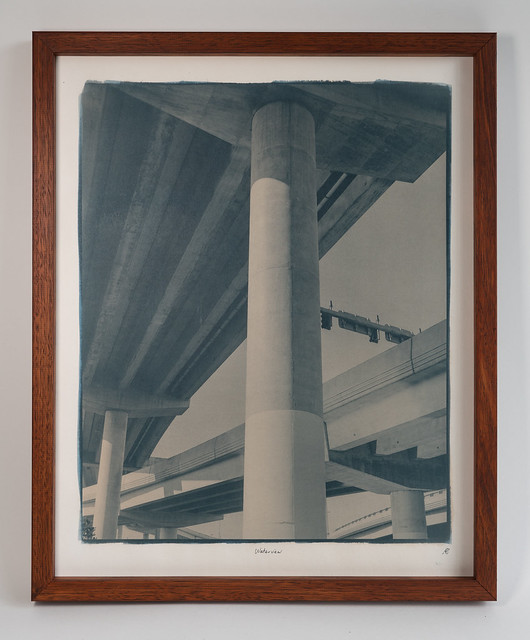
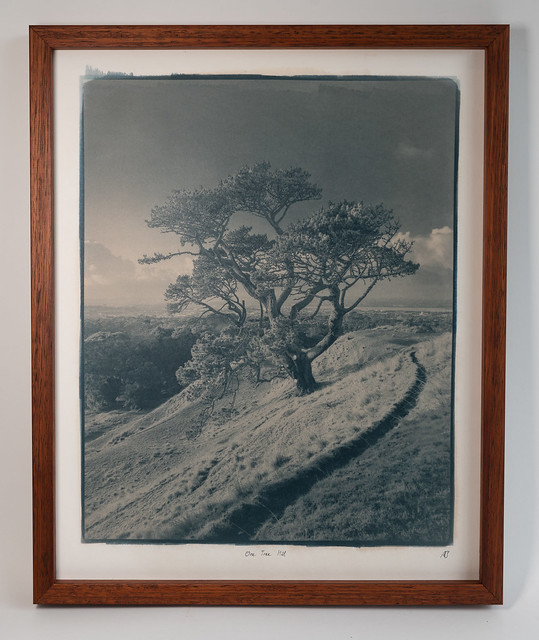
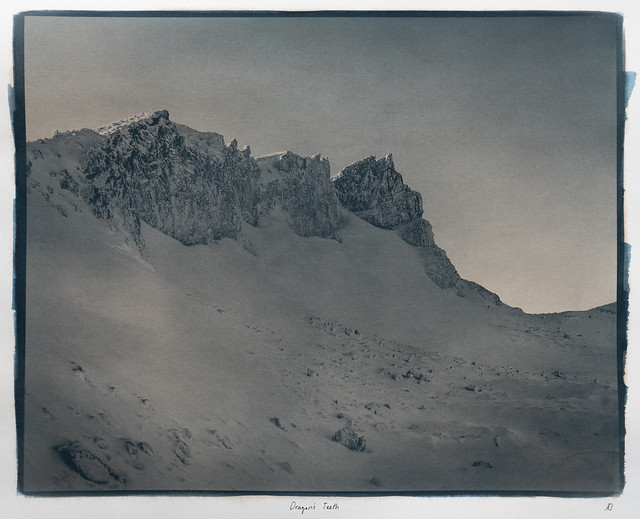
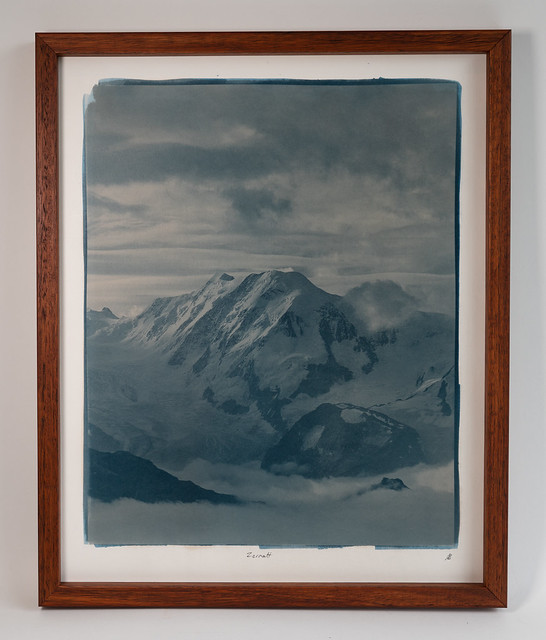
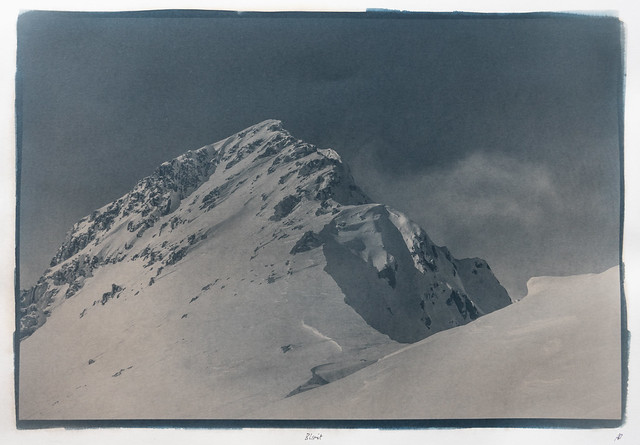
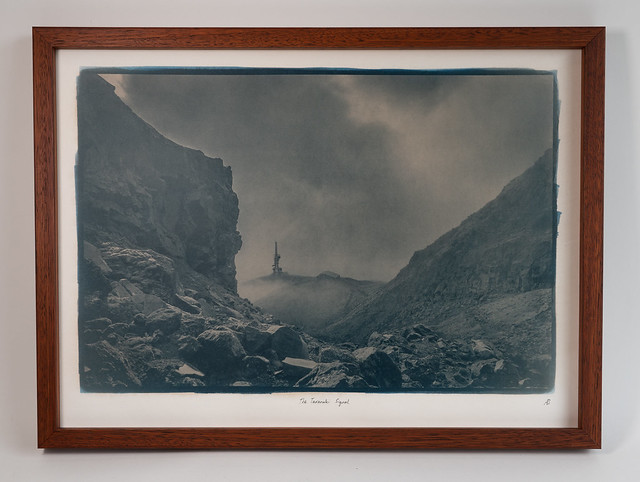
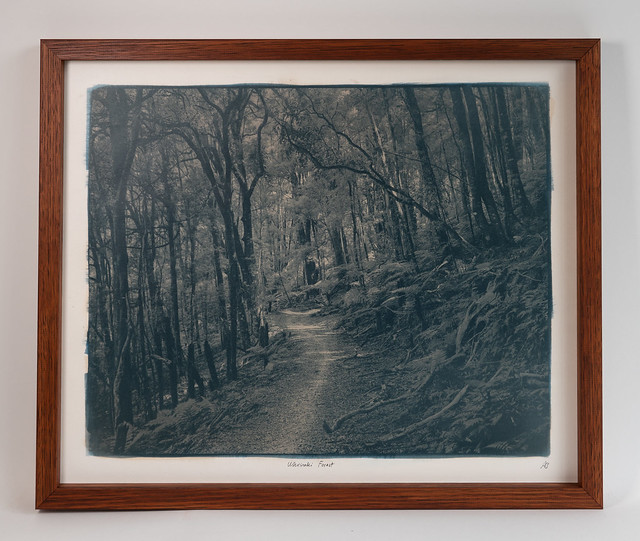
I don't have photos of all of the prints that I'll be exhibiting (about 12 or 14 all up) as they're currently off being framed however here are some that I do have photos of. They're all coffee toned cyanotypes made using this projector (all contributing to the cooked LCD!). The funny thing is that now the LCD is cooked and I'm going to look at taking a different approach to exposure they're all de-facto edition 1 of 1!


Very nice results and photos! Thanks for sharing. Editions 1 of 1 are good for selling :wink: I hope I will be able to achieve that someday.

I don't know PVA-SbQ. I've had a look at your thread about it but it seems very complicated to me.
 
Beautiful work!

I don't know PVA-SbQ. I've had a look at your thread about it but it seems very complicated to me.

A brief introduction: PVA-SbQ is actually an important non-silver halide imaging process in the printing industry, used to create screen-printing masks for printing patterns on fabrics or cartons. Its advantages include the absence of hexavalent chromium or diazonium salts, making it quite friendly, and it's also cheaper than photoinitiator polymerization systems.
 
Very nice results and photos! Thanks for sharing. Editions 1 of 1 are good for selling :wink: I hope I will be able to achieve that someday.
I don't know PVA-SbQ. I've had a look at your thread about it but it seems very complicated to me.

Cheers. PVA-SbQ won't be that hard once I figure out a workflow, including dilutions and additives. It definitely seems way trickier than gum or any of the metal-based processes but people do manage good results with it and it's so insanely fast it's worth the effort to figure out. One big attraction is that you can buy the raw emulsion in kg+ quantities for a reasonable price which makes all the experimentation I've done less painful compared to something like Pt/Pd.

They look great! Did you try cooling the lcd, perhaps with a fan? I think that matters a lot for longevity of the lcd.

Thanks! Yeah I've had a very powerful air blower on the LCD the whole time, on the order of 120 watts and loud enough you don't really want to be around the thing without hearing protection for a significant length of time. With the blower I measured temperatures of around 60 degrees Celsius on the surface of the LCD, without and I think the LCD would have failed in seconds. I'm not sure how much of the bleaching was from heat and how much was just from direct UV damage, but I don't think I could have done more to prevent it. Having separate polarisers from the liquid crystal would help with cooling and allow more robust polarisers to be used (and replaced as needed) but nobody makes a display like this in the resolution I'd want off the shelf.
 
Photrio.com contains affiliate links to products. We may receive a commission for purchases made through these links.
To read our full affiliate disclosure statement please click Here.

PHOTRIO PARTNERS EQUALLY FUNDING OUR COMMUNITY:


Ilford ADOX Freestyle Photographic Stearman Press Weldon Color Lab Blue Moon Camera & Machine
Top Bottom