
-
Welcome to Photrio!Registration is fast and free. Join today to unlock search, see fewer ads, and access all forum features.Click here to sign up
You are using an out of date browser. It may not display this or other websites correctly.
You should upgrade or use an alternative browser.
You should upgrade or use an alternative browser.
I've got the blues - Cyanotype pain
-
A
- Thread starter cirwin2010
- Start date

Recent Classifieds
-
For Sale Eight (8) 620 film spools w/ Etone film case
- Started by Disconnekt
-
Under Offer FREE for Shipping Cost: Expired 16mm Film, Tri-X and Ektachrome
- Started by AnselMortensen
-
For Sale Linhof 135mm Focusing Cam for Technika IV 4x5 45.00.
- Started by John Ackley
-
For Sale Darkroom Tool Set for Print or Sheet Film Handling
- Started by davela
Forum statistics

cirwin2010
Member
Very nice! The prints on the Canson paper look especially good to me.
It is quite the improvement! The paper is cheap too which is nice. Though I'd say it is pretty high effort for prep work between acidification, and pre-humidification or double coating. The results seem to be worth it and it is cheap.
There might be ways to improve the HPR results with classic cyanotype as well. I have not tried double coating it yet and I might revisit using a different acid for the first wash. The HPR paper is nicer than the Canson paper and it doesn't curl, but once matted it probably doesn't matter.
Like you said, what counts really is what the final product looks like. I personally don't care much whether a paper is supposed to be fancy or not; the question is if it works well! Looks like you found a winning combo, enjoy!
fgorga
Member
Congratulations! Your persistence has paid off well.I've made three prints of the same image with the following recipes:
Good use of the good old fashion New England cold spell!

All three of these prints are perfectly acceptable... slightly different interpretations, but certainly acceptable.
The toned print is also very nice... the toning really takes the edge off the in your face Prussian Blue.
I look forward to seeing more work in due time.

Raghu Kuvempunagar
Member
Well done! Looking forward for more.

John Ackley
Subscriber
I've made three prints of the same image with the following recipes:
Left:
-Hahnemuhle Platinum Rag
-Classic Cyanotype (CC) 20% FAC
-Paper pre-humidified before coating
-single layer coating
-exposed 4.5m
-0.25% citric acid first wash
Middle:
-Canson XL Watercolor
-Classic Cyanotype (CC) 20% FAC
-Paper coated dry
-Paper acidified in 10% sulfamic acid
-double layer coating
-exposed 6m
-0.20% sulfamic acid first wash
Right:
-Canson XL Watercolor
-Mike Ware's New Cyanotype (NC)
-Paper acidified in 10% sulfamic acid
-Paper pre-humidified before coating
-single layer coating
-exposed 4m
-1.00% sulfamic acid first wash
I feel like this is the culmination of all my efforts. Canson XL Watercolor after acidification has given me results I am very happy with. As you can see from the attached images, I get better dmax and smoothness with both combos using the Canson paper.
The double coated CC combo definitely has more dmax giving more visual punch to the image. Though it does have some "grain" that is visible in the midtones. This appears to be some slight unevenness to how the solution absorbs into the paper.
The NC combo has improved dmax over the HPR CC combo, but not as much as the double coated CC Canson combo. It does have much better smoothness than using CC and the royal blue color is beautiful. Not sure which I like better.
Oh and for fun I attached an image of CC HPR toned in instant coffee for a few hours
Thanks for your post. It’s full of useful information. And I appreciate the info on Canson watercolor paper. I’ve ordered some. It is certainly more economical.
4LivingWage
Subscriber
I assume you have surmounted your problems. You commented on my later post. I was having similar problems with the crystallization and coating. Diluting the new cyanotype solution 20% fixed the problem, eliminating the crystals without any drop in dmax. Good luck and catch up with you later. Nice photo btw.
cirwin2010
Member
I assume you have surmounted your problems. You commented on my later post. I was having similar problems with the crystallization and coating. Diluting the new cyanotype solution 20% fixed the problem, eliminating the crystals without any drop in dmax. Good luck and catch up with you later. Nice photo btw.
Glad that is working for you! Took me a while to realize that the advice of other users really was the best. "Just try a different paper." Worked for me in this instance and I ended up with something that gave me superior (imo) results than where I originally started.
John Ackley
Subscriber
Glad that is working for you! Took me a while to realize that the advice of other users really was the best. "Just try a different paper." Worked for me in this instance and I ended up with something that gave me superior (imo) results than where I originally started.
I’m interested in the papers you are using. Would you share those?
cirwin2010
Member
I’m interested in the papers you are using. Would you share those?
It's all in my post from February 3rd on this thread.

I've got the blues - Cyanotype pain
Looks really nice and I am glad your making progress. I had severe trouble getting Ware's Simple Cyanotype working last year and never had a desire for NEW,
 www.photrio.com
John Ackley
Subscriber
Thanks and I have used your information. I was trying to reply to another post. Sorry, I haven’t figured the messaging. I’m receiving some Canson paper this week. I’m anxious to try it.
cirwin2010
Member
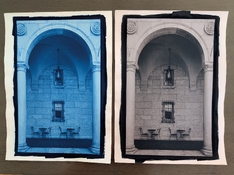
I haven't done too much more over the last few weeks, but I did try toning the prints using tannic acid.
The process:
1. Bleach for 1 minute in a 0.5% sodium carbonate solution
2. Rinse for 2 minutes
3. Tone in 0.35% tannic acid solution for 60 minutes
5. Rinse for 15 minutes
I tried both new cyanotype and classic cyanotype on Canson XL Watercolor paper. Both images produced using the recipes I outlined earlier in this thread.
The new cyanotype print was a fail. The image bleached away very unevenly, leaving spots in the highlights and midtones. To me it appears that the cyanotype solution penetrates unevenly into the paper fibers despite the original image being extremely smooth. Its almost like the surface has pits in it where the prussian blue is much thicker. I wish I took a picture before tossing the print.
The double coated classic cyanotype was a success! It did not bleach away as rapidly and it bleached more evenly despite there being "grain" in the midtones when compared to the new cyanotype print. I suspect that a more complete bleach may show unevenness, but shorter bleaches at this concentration appear fine. I continued with this print and toned it in the tannic acid.
Toning was slow, but nearly all the density lost in the highlights enventually returned. Maybe some of the finestest textures in the highlights were slightly more difficult to see than before, but nothing that hurts the image. I was expecting more of a split tone effect, but the whole image turned a uniform purple, purple-brown color. Perhaps a shorter toning bath would maybe give more split tone? But, the color is nice regardless. The attached picture doesn't properly represent it making it look more gray. The "blacks" look darker than the original image, but I think that is just an illusion of the color.
I might experiment with different bleaching soutions to see how it affects color, but I'm happy with this combination and see myself using it going forward. Its too bad that the new cyanotype solution did not bleach nicely on the Canson paper. But the original color of that combination is beautiful on its own so no toning required I suppose.
The process:
1. Bleach for 1 minute in a 0.5% sodium carbonate solution
2. Rinse for 2 minutes
3. Tone in 0.35% tannic acid solution for 60 minutes
5. Rinse for 15 minutes
I tried both new cyanotype and classic cyanotype on Canson XL Watercolor paper. Both images produced using the recipes I outlined earlier in this thread.
The new cyanotype print was a fail. The image bleached away very unevenly, leaving spots in the highlights and midtones. To me it appears that the cyanotype solution penetrates unevenly into the paper fibers despite the original image being extremely smooth. Its almost like the surface has pits in it where the prussian blue is much thicker. I wish I took a picture before tossing the print.
The double coated classic cyanotype was a success! It did not bleach away as rapidly and it bleached more evenly despite there being "grain" in the midtones when compared to the new cyanotype print. I suspect that a more complete bleach may show unevenness, but shorter bleaches at this concentration appear fine. I continued with this print and toned it in the tannic acid.
Toning was slow, but nearly all the density lost in the highlights enventually returned. Maybe some of the finestest textures in the highlights were slightly more difficult to see than before, but nothing that hurts the image. I was expecting more of a split tone effect, but the whole image turned a uniform purple, purple-brown color. Perhaps a shorter toning bath would maybe give more split tone? But, the color is nice regardless. The attached picture doesn't properly represent it making it look more gray. The "blacks" look darker than the original image, but I think that is just an illusion of the color.
I might experiment with different bleaching soutions to see how it affects color, but I'm happy with this combination and see myself using it going forward. Its too bad that the new cyanotype solution did not bleach nicely on the Canson paper. But the original color of that combination is beautiful on its own so no toning required I suppose.
Attachments
Last edited:
Raghu Kuvempunagar
Member
The more I work with New Cyanotype, the more I like it. I think Dr. Ware gave us a truly remarkable process though plagued by some issues. All these issues can be addressed especially if a suitable paper is found. One such paper is Lana Lanquarelle 100% cotton (both HP and CP) if the buffer is neutralised before using it for New Cyanotype. Interestingly, Lanaquarelle is substantially cheaper than HPR in India though I don't know how long that'll be. 
I've had surprising success with the lowly butter paper out of the box. The texture and translucency of butter paper works beautifully for some subjects.
I've had surprising success with the lowly butter paper out of the box. The texture and translucency of butter paper works beautifully for some subjects.
cirwin2010
Member
Thanks and I have used your information. I was trying to reply to another post. Sorry, I haven’t figured the messaging. I’m receiving some Canson paper this week. I’m anxious to try it.
Just some tips using that paper. In my opinion, pre-acidifying it give the best results, but it is not necessary. Classic cyanotype works with the paper out of the box and gives a more muted blue-gray color.
I acidify the paper in a 10% sulfamic acid bath until the paper stops fizzing. Usually about 30 20-30 minutes. Then wash for 30 minute and dry.
The paper absorbs a lot of water and takes longer to dry than other papers I've used. The paper is made using wood pulp unlike the cotton of many of the commonly used papers like Hahnemuhle platinum rag. As a result the paper is cheaper (yay!) and the finish is a bit different than these rag papers. I find the finish holds up well so long as you don't heat dry the paper using a blow drier. It causes some surface cracking and damages the image.
Pre-humidifying the paper is not required for classic cyanotype and tween20 is not necessary either under my very dry conditions of 30-35% relative humidity.
This paper will warp and curl when drying, but you can flatten it pretty well with some books or other weighted flat surface.
Raghu Kuvempunagar
Member
If one wants to try a non-botanical toner for Cyanotype, I recommend the following Cuprammonium toner. It works fine with New Cyanotype and pushes blue towards blue-black.
Water: 200 ml
Copper Sulphate: 2.5 g
Ammonium Carbonate: 5 g
Add Ammonium Carbonate in small amounts and stir well. Every addition results in fizzing and so use a long necked beaker. After all Ammonium Carbonate has been added and dissolved, the solution takes a deep blue colour.
Use about 25 ml of the toner for toning the print A4 siz. Toning is fast and is complete in about two minutes. Can be diluted 1+1 with water. Can be reused a couple of times.
p.s. Household Ammonia can be be used in place of Ammonium Carbonate. Use just enough Ammonia to get a deep blue solution.
Water: 200 ml
Copper Sulphate: 2.5 g
Ammonium Carbonate: 5 g
Add Ammonium Carbonate in small amounts and stir well. Every addition results in fizzing and so use a long necked beaker. After all Ammonium Carbonate has been added and dissolved, the solution takes a deep blue colour.
Use about 25 ml of the toner for toning the print A4 siz. Toning is fast and is complete in about two minutes. Can be diluted 1+1 with water. Can be reused a couple of times.
p.s. Household Ammonia can be be used in place of Ammonium Carbonate. Use just enough Ammonia to get a deep blue solution.
cirwin2010
Member
The more I work with New Cyanotype, the more I like it. I think Dr. Ware gave us a truly remarkable process though plagued by some issues. All these issues can be addressed especially if a suitable paper is found. One such paper is Lana Lanquarelle 100% cotton (both HP and CP) if the buffer is neutralised before using it for New Cyanotype. Interestingly, Lanaquarelle is substantially cheaper than HPR in India though I don't know how long that'll be.
I've had surprising success with the lowly butter paper out of the box. The texture and translucency of butter paper works beautifully for some subjects.
I know nothing about the Lana Lanquarelle paper. How would you say it compares to a paper like HPR?
I'm happy with this combination
You should be; those prints are grand!

titrisol
Subscriber
It is quite the improvement! The paper is cheap too which is nice. Though I'd say it is pretty high effort for prep work between acidification, and pre-humidification or double coating. The results seem to be worth it and it is cheap.
There might be ways to improve the HPR results with classic cyanotype as well. I have not tried double coating it yet and I might revisit using a different acid for the first wash. The HPR paper is nicer than the Canson paper and it doesn't curl, but once matted it probably doesn't matter.
I've had the same experience, Canson works better and is cheaper
cirwin2010
Member
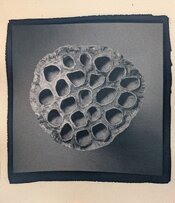
Just a small update. I decided to re-explore bleaching and toning a New Cyanotype print. Per my earlier post, the double coated Classic Cyanotype appeared to be more viable for bleaching. The single coated New Cyanotype, despite being smoother with less grain, would not bleach evenly. To my eyes the solution appeared to soak into the paper deeper in some portions of the fibers than others and the thinner areas would bleach away first leaving a splotchy appearance. Think of it like sanding away paint, but if you don't sand deep enough you will still see the paint in the pits of the wood.
Well I decided to give it another go. This time I tried a 0.2% solution of sodium carbonate solution instead of the earlier 0.5%. This still bleaches the New Cayanotype prints way too fast for my liking (significant bleaching before 30 seconds) and it did not help with the splotchy bleaching issue. I decided to proceed with toning anyways too see what would happen.
I've attached some images, but my phone definitely doesn't represent the color very well. I increased the saturation on the close up image to better demonstrate the splotches caused by uneven bleaching. It isn't super visible after toning and drying, but it is still there if you look at smooth areas closely.
The color of New vs Classic cyanotypes after a brief bleach and tannic acid redevelopment appear to be somewhat different. The Classic Cyanotype gave me tan-brown highlights and purple, brown black shadows. New Caynotype is very similar, but retains more blue in the shadows and highlights have a slighly more pink undertone. But, this is certainly inconclusive as slight bleaching and toning time difference may be a larger contibuting factor.
For now I still stand by that double coated Classic Cyanotype on acidified Canson XL Watercolor paper is the better choice if bleaching is going to be involved in the toning process.
My bottle of New Cyanotype solution may be starting to show signs of degredation. I mixed this batch during December of 2025 and omitted the addition of dichromate as a preservative. After drying my lastest coated sheets, I noticed some tiny specs of blue across the sensitized area. This did not impact the final prints in any noticable way for now, but may be a sign that the solution is "going bad?" I think my reading suggested that without dichromate the solution may only last a few months. It is possible there was some other form of contamination during the coating process. I'll see what happens for my next batch of prints.
Well I decided to give it another go. This time I tried a 0.2% solution of sodium carbonate solution instead of the earlier 0.5%. This still bleaches the New Cayanotype prints way too fast for my liking (significant bleaching before 30 seconds) and it did not help with the splotchy bleaching issue. I decided to proceed with toning anyways too see what would happen.
I've attached some images, but my phone definitely doesn't represent the color very well. I increased the saturation on the close up image to better demonstrate the splotches caused by uneven bleaching. It isn't super visible after toning and drying, but it is still there if you look at smooth areas closely.
The color of New vs Classic cyanotypes after a brief bleach and tannic acid redevelopment appear to be somewhat different. The Classic Cyanotype gave me tan-brown highlights and purple, brown black shadows. New Caynotype is very similar, but retains more blue in the shadows and highlights have a slighly more pink undertone. But, this is certainly inconclusive as slight bleaching and toning time difference may be a larger contibuting factor.
For now I still stand by that double coated Classic Cyanotype on acidified Canson XL Watercolor paper is the better choice if bleaching is going to be involved in the toning process.
My bottle of New Cyanotype solution may be starting to show signs of degredation. I mixed this batch during December of 2025 and omitted the addition of dichromate as a preservative. After drying my lastest coated sheets, I noticed some tiny specs of blue across the sensitized area. This did not impact the final prints in any noticable way for now, but may be a sign that the solution is "going bad?" I think my reading suggested that without dichromate the solution may only last a few months. It is possible there was some other form of contamination during the coating process. I'll see what happens for my next batch of prints.
Attachments
Last edited:
nmp
Member
Just a small update. I decided to re-explore bleaching and toning a New Cyanotype print. Per my earlier post, the double coated Classic Cyanotype appeared to be more viable for bleaching. The single coated New Cyanotype, despite being smoother with less grain, would not bleach evenly. To my eyes the solution appeared to soak into the paper deeper in some portions of the fibers than others and the thinner areas would bleach away first leaving a splotchy appearance. Think of it like sanding away paint, but if you don't sand deep enough you will still see the paint in the pits of the wood.
Well I decided to give it another go. This time I tried a 0.2% solution of sodium carbonate solution instead of the earlier 0.5%. This still bleaches the New Cayanotype prints way too fast for my liking (significant bleaching before 30 seconds) and it did not help with the splotchy bleaching issue. I decided to proceed with toning anyways too see what would happen.
I've attached some images, but my phone definitely doesn't represent the color very well. I increased the saturation on the close up image to better demonstrate the splotches caused by uneven bleaching. It isn't super visible after toning and drying, but it is still there if you look at smooth areas closely.
The color of New vs Classic cyanotypes after a brief bleach and tannic acid redevelopment appear to be somewhat different. The Classic Cyanotype gave me tan-brown highlights and purple, brown black shadows. New Caynotype is very similar, but retains more blue in the shadows and highlights have a slighly more pink undertone. But, this is certainly inconclusive as slight bleaching and toning time difference may be a larger contibuting factor.
For now I still stand by that double coated Classic Cyanotype on acidified Canson XL Watercolor paper is the better choice if bleaching is going to be involved in the toning process.
My bottle of New Cyanotype solution may be starting to show signs of degredation. I mixed this batch during December of 2025 and omitted the addition of dichromate as a preservative. After drying my lastest coated sheets, I noticed some tiny specs of blue across the sensitized area. This did not impact the final prints in any noticable way for now, but may be a sign that the solution is "going bad?" I think my reading suggested that without dichromate the solution may only last a few months. It is possible there was some other form of contamination during the coating process. I'll see what happens for my next batch of prints.
You could use borax if you want slow bleaching.
:Niranjan.
fgorga
Member
You could use borax if you want slow bleaching.
:Niranjan.
Yes, and one can also try bicarbonate or ammonia as well. Each base gives a different result. See: https://www.photrio.com/forum/threads/on-the-toning-of-cyanotypes.175185/
John Ackley
Subscriber
I’m interested in the papers you are using. Would you share those?
John Ackley
Subscriber
Wouldn’t Canson Edition paper be superior to Watercolor XL? It is 100% cotton rag, where the Canson XL watercolor paper is cellulose
cirwin2010
Member
Wouldn’t Canson Edition paper be superior to Watercolor XL? It is 100% cotton rag, where the Canson XL watercolor paper is cellulose
It could be? If I'm looking at the correct paper it appears to be a lot more expensive, more difficult to source, and doesn't come in smaller sizes. For those reasons I haven't tried it. I'm also hesitant to try different papers for cyanotype right now give all my difficultly with getting the sensitizer to absorb evenly.
Eventually I'll try some other cotton papers to see if I can find one that works as well. I do agree cotton is a much nicer material than cellulose, especially when holding it or under close inspection.
fgorga
Member
Superior in what way?Wouldn’t Canson Edition paper be superior to Watercolor XL? It is 100% cotton rag, where the Canson XL watercolor paper is cellulose
Canson XL watercolor is an inexpensive paper that works well with traditional cyanotype, an inexpensive alt process. It is a great place to start.
There are many papers that work with cyanotype especially if you are willing to treat the paper with acid to remove the carbonate buffer present in many papers. Maybe it is a bit counter intuitive, but many inexpensive papers work well for cyanotype right out of the package probably because they do not have any (or only small amounts) of carbonate buffer in them. Carbonate is added to 'fancy' papers so that they meet one of the standards for archival-ness which less expensive papers may ignore.
A good resource for alt process papers is "The Massive Paper Chart" (see: https://www.alternativephotography.com/massive-paper-chart/). If you do a lot of alt process work the paid version is well worth the money but there is also a free version with just the basics (scroll down on the cited page).
Lastly, with regard to carbonate buffers and pre-treatment of papers with acid, I find that if I 'develop' my cyanotypes with a first wash of 15% vinegar instead of plain water, I can use papers that would otherwise require acid pre-treatment straight from the package.
| Photrio.com contains affiliate links to products. We may receive a commission for purchases made through these links. To read our full affiliate disclosure statement please click Here. |
PHOTRIO PARTNERS EQUALLY FUNDING OUR COMMUNITY:  |