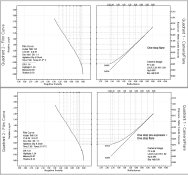
Mark, there is a threshold, i.e. a minimum number of photons required) to make a silver halide grain developable, and that number is higher than one. You can therefore not interpret preflash+exposure as linear superposition of exposures.
At very low exposure levels, we have three stages:
- One silver atom is created, but neither stable nor developable. Unless another silver atom is created within a very short time frame, it will likely turn into silver ion. This is the effect which causes reciprocity failure.
- Two silver atoms are created and form a cluster, which is stable but not developable. In this case you have time to convert such clusters into larger clusters which are developable.
- Three or more silver atoms form a cluster, which is both stable and developable. Once you have reached this stage, preflashes and postflashes will add density but not sensitivity.
A preflash converting stage 1 clusters into stage 2 or 3 clusters will be tricky, as it would have to be applied within seconds or less before or after the actual exposure, but obviously the additional effective sensitivity could make it worth the effort. A preflash which converts stage 2 clusters into stage 3 clusters will definitely add ISO speed, albeit less than a stage 1 ---> stage 3 preflash, and such a preflash should be quite easy to dial in.
You can argue that none of these tricks alter the light sensitivity of film, and you are right. These trick do change the sensitivity to image forming light, though.