• Welcome to Photrio!
    Registration is fast and free. Join today to unlock search, see fewer ads, and access all forum features.
    Click here to sign up

How to meter for landscape, architecture etc.

Somewhere...

D
Somewhere...

  • 5
  • 2
  • 112
Iriana

H
Iriana

  • 8
  • 1
  • 179

Recent Classifieds

Forum statistics

Threads
202,753
Messages
2,845,134
Members
101,505
Latest member
PeterFFM
Recent bookmarks
2

smokeandnomirrors

Member
Allowing Ads
Joined
Feb 23, 2026
Messages
12
Location
Central Europe
Format
Multi Format
Hi Guys,

I'm a bit lost as to how to meter for landscape and architecture or anything that is too far away from the camera for me to meter with an incident light meter.

Tips on how you're doing this would be appreciated!
 
As someone who prefers incident metering, there's not always an incident-based solution. Most of the time, I can get myself in the same light as the subject. For example, if I'm taking a shot of a distant mountain, and I'm in the shade, I can usually move into the same light as the mountain. Barring that option, I can set my meter for spot metering and try to find something that looks like a medium gray, and bracket.

As long as the meter is in the same light as the subject it doesn't matter how far away you are from the subject.
 
As someone who prefers incident metering, there's not always an incident-based solution..

Yeah, this is exactly what I'm up against.

I don't have a spot meter (which is my preferred metering for landscape and architecture since I can almost always find something with the right luminance) and I don't see anything available here in Europe that has one except for the high-end Sekonic (almost 1000 USD)

In the scenes I'm used to, the light where I am is nothing like what I'm shooting. I'm kinda surprised that you can work it out. I've been in Colorado...what a wonderful place!
 
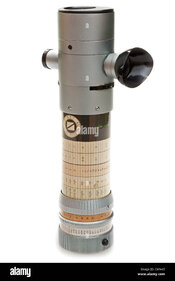
When I'm using camera's without a built in meter I use a Minolta Spot meter , so don't have the problem.
If your using an incident meter , as long as the light your in is the same as the subject, it doesn't matter if the subject is a few miles away .
The sun's even further away , so your both on the same light .
If your in different light , ie, shade and sun , you just have to get use to the difference and adjust accordingly.

Some incident meter have the option of a spot meter attachment, typically 5° rather than 1° , but still helpful.

What camera is it your using ?
 
Another option that might work -- depends on what gear you have (we can only guess) -- is to use a long lens, if you are using a camera with TTL metering.
 
Spot/multispot meter (in my case a 1° Sekonic L758D), for any and all landscapes.
I do not use incident unless I have strong backlighting to account for.

A weighted or averaging spot meter that provides for multiple readings then 'levels' them, with adjustable options for filter factors (e.g. when using polarisers, ND filters etc.) will get you over the line in many circumstances, with appropriate skills and experience. Critically, there is much more to consider in-situ with a meter than just "meter the scene"!
 
Last edited:
When I'm using camera's without a built in meter I use a Minolta Spot meter , so don't have the problem.
If your using an incident meter , as long as the light your in is the same as the subject, it doesn't matter if the subject is a few miles away .
The sun's even further away , so your both on the same light .
If your in different light , ie, shade and sun , you just have to get use to the difference and adjust accordingly.

Some incident meter have the option of a spot meter attachment, typically 5° rather than 1° , but still helpful.

What camera is it your using ?

This is for some TLRs I picked up recently.

Another option that might work -- depends on what gear you have (we can only guess) -- is to use a long lens, if you are using a camera with TTL metering.

No metering at all with these. But I just saw there's an affordable spot meter made in Canada which I can buy in EUrop so that could be an option.

Thank you all.
 
In tricky light situations, it's possible to take both an incident and reflected reading and go in-between. You can always bracket if necessary.
 
I take an incident reading from where I am.
I then visually evaluate the light I am in, and the light that the subject is in.
If it appears to differ, I bracket a bit, based on my best guess about the difference.
If all the light appears to be consistent across the scene and over much of the foreground, a simple centre weighted reflective reading usually suffices. Sometimes with a nudge based on apparent unusual reflectance.
 
Hi Guys,

I'm a bit lost as to how to meter for landscape and architecture or anything that is too far away from the camera for me to meter with an incident light meter.

Tips on how you're doing this would be appreciated!

for35mm, I rely on Nikon's matrix metering, and for everything else, I use the spotmeter to measure the most-important shadow detail. But by the way, incident metering works even for faraway subjects as long as they are illuminated similarly to where one stands.
 
Last edited:
Sunny 16 works for me, except for reversal film.

Sunny 16 works for me including reversal film!

Just use a bit of common sense and give a little more or less exposure depending on the light and scene, in particular, don't overexpose reversal film. I use a little AstrHori AH-M1 to guide my "common sense" but do not rely on it.

I should add I've been shooting film for 70+ years, so perhaps I've learnt how to estimate exposure. It's not rocket science.
 
Worth a read. Basically explaining why sunny 16 is effective and raises it a few notches-


Other than a spot meter, there are two answers. Either learn light values of assorted situations- the Ansel Adam's Moonrise "I know the moon is X value so I guessed it from there.' Or meter a situation that you can reach- e.g. the shade from your body represent open shade in the landscape.

Apostasy, I know, but at some point after all the matrix this and Zone that, there are three numbers. ISO, a given in film (developer variance, reciprocity, etc. of course). Shutter. Aperture. Dance all you want, not really many options at the actual moment of exposure.
 
I took Nick Carver's course on spot metering and found it very helpful. I was new to manual metering and spot metering and wanted a structured course to learn from. It delivered. Plus, it comes with a 10% coupon code for the revini labs spotmeter.

 
Use your cellphone to get reflective readings for exposure settings. Download an app. I use my Olympus Micro 4/3 digital camera for exposure settings. IT's pretty effective since it also has blinkies to flag clipping and a histogram.
 
I normally use incident metering, when I'm in a situation that doesn't quite work for metering I either switch to a reflected reading or grab my spot meter.
 
If you really want to go down a rabbit hole, I suppose the "master" of incident meter use was Phil Davis. Check out "Beyond the Zone System", if you dare. :wink:

Also, somewhere in this thread mentioned the meter guy in Canada; I assume we're talking Reveni Labs. I think it prudent to point out that his spot meter is not a 1 degree spot as you might expect. I think of it more as a heavily weighted center area meter. It's a fine meter (I have one), but like all meters or if you don't use one at all you will need to gain experience with judging light.
 
There is another new spot meter in development that I’m curious about from HEDECO. I’m not a kickstarter type so I’m not bought in but I’m following it because the Pentax or Minolta F are both huge. The Sekonics are not as bad but still pretty big for the 1 degree models. In some cases the size isn’t an issue, but when I’m packing a 4x5 on my motorcycle every cubic centimeter of space is precious. There was another tiny 1 degree that was made a decade or so ago, and it has a lot of adherents, but is impossible to find (I can’t remember the name offhand.)

I had heard the Reveni was ~1.5 degree, is it that bad with off axis light? I was considering one but the early battery issues turned me off.

Here is the new one:

 
Photrio.com contains affiliate links to products. We may receive a commission for purchases made through these links.
To read our full affiliate disclosure statement please click Here.

PHOTRIO PARTNERS EQUALLY FUNDING OUR COMMUNITY:


Ilford ADOX Freestyle Photographic Stearman Press Weldon Color Lab Blue Moon Camera & Machine
Top Bottom