• Welcome to Photrio!
    Registration is fast and free. Join today to unlock search, see fewer ads, and access all forum features.
    Click here to sign up

How to (consistently) make positive E-6 transparencies with C-41 chemicals

Procession

A
Procession

  • 1
  • 0
  • 35
Millers Lane

A
Millers Lane

  • 4
  • 2
  • 64

Forum statistics

Threads
202,899
Messages
2,847,210
Members
101,531
Latest member
F2_User
Recent bookmarks
2
The E6 FD and CD are highly fogging and highly solvent developers though. The HC110 and C41 developers are not particularly solvent. Also, they use different color developing agents and thus color reproduction and dye stability may come into question.

PE
 
The E6 FD and CD are highly fogging and highly solvent developers though. The HC110 and C41 developers are not particularly solvent. Also, they use different color developing agents and thus color reproduction and dye stability may come into question.

PE

I'm not worried about stability and color reproduction.

What B&W developer besides for HC110 A @ 110 would get me results?
 
Ok, so I tried this.

I shot some old Gold 200 @ ISO 25 because that's what's been working with this batch.

1+9 Ilford MultiGrade @ 102 for 6:30

I pulled it off and fogged from a bank of CFLs for 3-4 min. I think I messed up here. I've never fogged film so I'm not sure what's supposed to happen. There was a strong image on one side of the film, it was still there when I put it back on the reel.

7:30 in Dev

12:00 in Blix. Rinse etc...

There is a very very faint image on the film. I'll try to scan later after it dries. Now, I extended the times so very long because this was the 25th or 26th roll put through my chems. They're still usable but only just so.

I think I messed up at the fogging. I need a fogging solution I guess. I don't have a daylight lightpad.
 
Well, D76 with some Hypo or Thiocyanate comes to mind. But... This is about processing a reversal film in C41 with an FD, not in processing a negative film in C41 to create a reversal, so I'm not sure beyond that.

Oh, and the CD also has a lot of other solvents and competing materials in it.

PE
 
Well, D76 with some Hypo or Thiocyanate comes to mind. But... This is about processing a reversal film in C41 with an FD, not in processing a negative film in C41 to create a reversal, so I'm not sure beyond that.

Oh, and the CD also has a lot of other solvents and competing materials in it.

PE

Original post OP mentions that he pulled this off with C-41 film.
 
Original post:


Nope.

  • C-41 Superia 400 - Extreme color shifts, skin tones can look blotchy and purple in the wrong light
  • C-41 Lomo color 400 / Kodak Gold - Reasonable colors, though some mild shifts. Very punchy and vibrant with lots of saturation. High levels of contrast. Resembles a more tame version of Velvia with a lot more grain
So what were you saying?

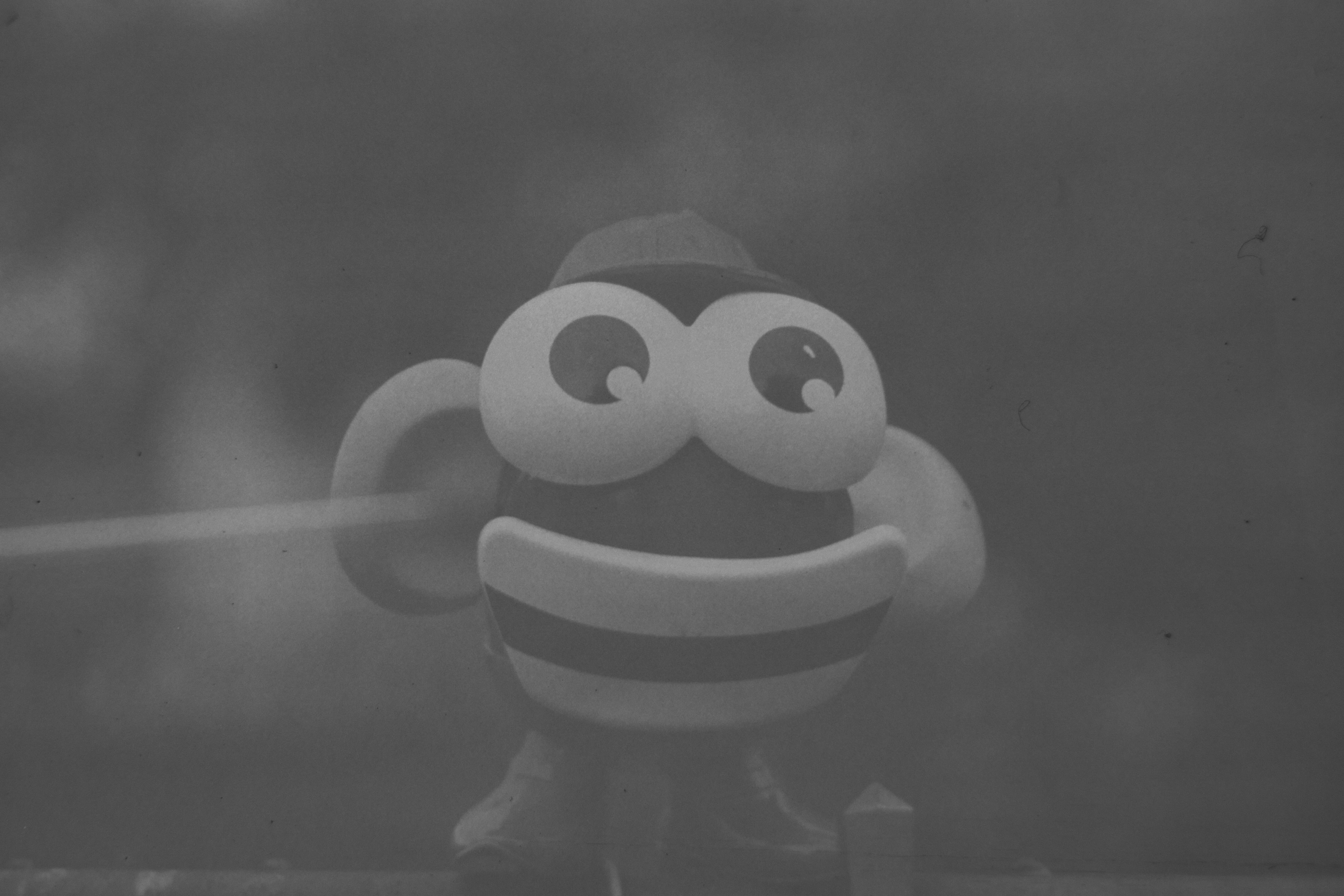
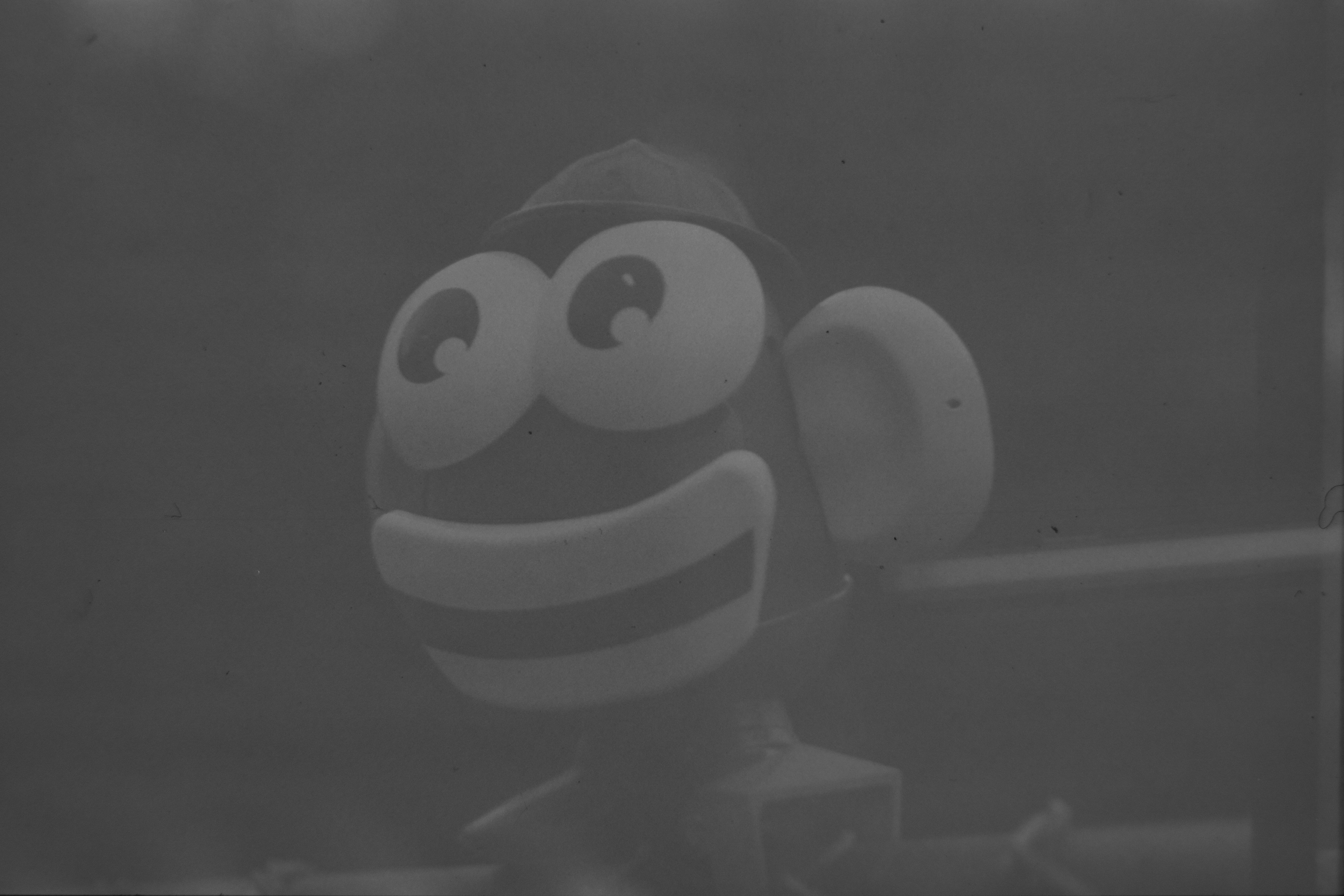
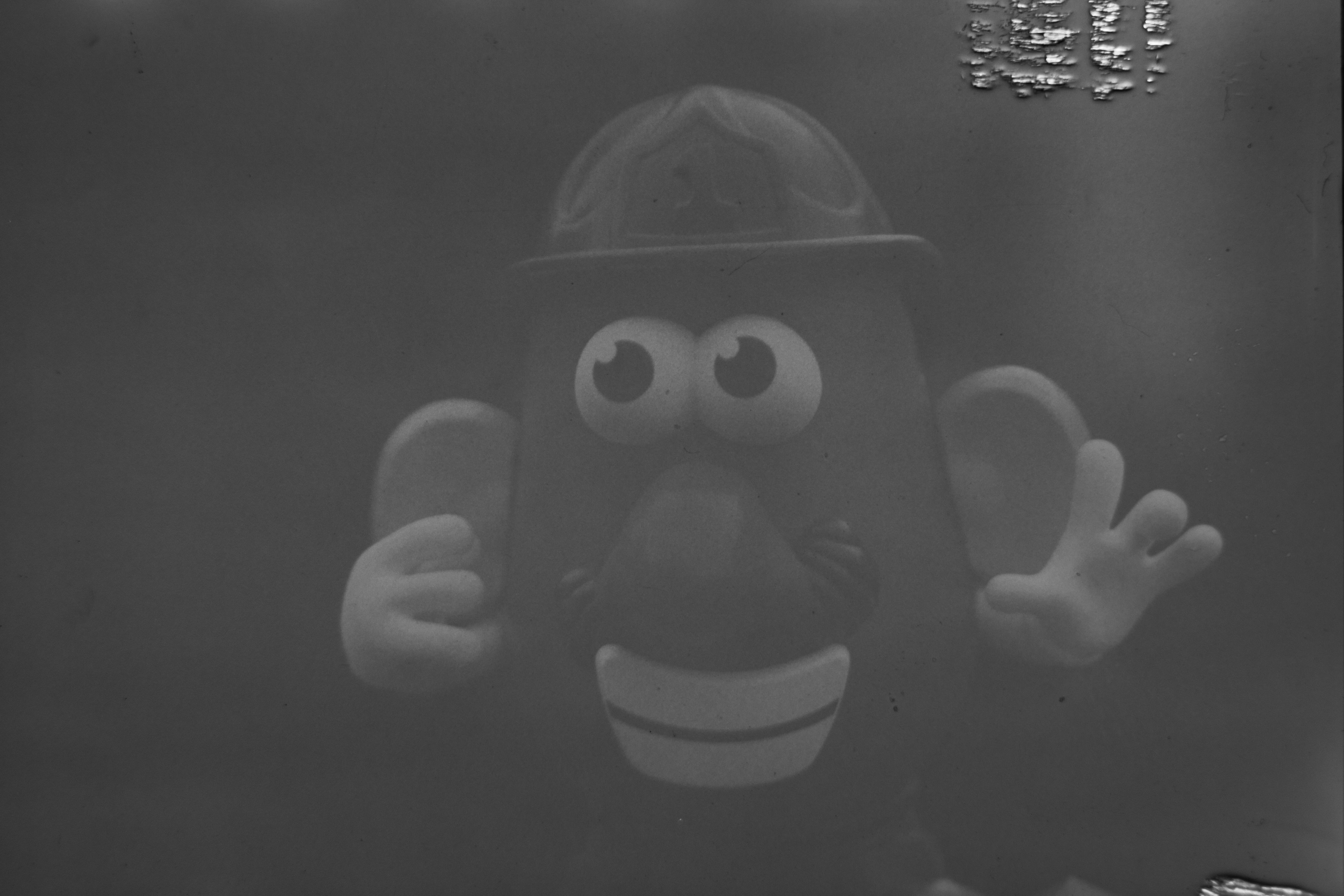
Anyhow here's Mr. Potatohead. I had to go B&W because I could not get rid of the orange mask no matter how hard I huffed and puffed.

Promaster PK, Jupiter 85 @ 2.8, Kodak Gold 200 @ 25. Photos were not inverted.

zDyEsN0.jpg


DK9fT17.jpg


FxrMfw5.jpg


So it was a success in the fact that I got images that did not need inversions. When I get info how to fog better I'll try again.
 
Here's some links to my results with C-41 film in this process.

Kodak Gold 400: https://i.redd.it/ghgmouphn2711.jpg

Superia 400: http://earlz.net/films/xpro-reversal/jpeg/haley-push.jpg

@Cholentpot -- You must take the film off the reels in order to fog it. I'd recommend using a different source than CFCLs since they have gaps in their light spectrum. I've used a simple thing like an iphone flashlight in the past with no problems. I see the scans, but what did the results look like to the eye? Was the exposed leader (ie, should be "clear") portions very dark, or did it just look like orange mask? This process does NOT remove the orange mask, but you can correct it out in photoshop just like with color negative. If the film looked mostly clear (ie, just orange mask) then this was probably caused by shooting it at such a low ISO (25 rather than 200).

On the other hand, if the film is super dense, then it's most likely that the first developer wasn't active enough, and with such a long color development process, that probably didn't help things. I've heard paper developers work well for this process when used at paper strength, but I don't have any times or temperatures.

Also for fogging. If you didn't fog it properly, then the results would be a nearly clear strip of film, since the color developer wouldn't have worked on anything and everything would be stripped by blix.

 
That the OP's original post indicated that he was only successful when working with E6 film.

The only normal looking results are with E-6. It can be used for artistic purposes with C-41 film if you like color crossing and weird contrast, similar to doing normal negative E-6 x-pro. The color casts etc are unpredictable and it reacts differently with different film stocks. I've yet to use this process and not get pictures off a strip of film though. Along with trying more C-41 films in this process (since E-6 film is mostly dead outside of Fuji), I also have a roll of XP2 that I'm going to try in this process to see if I can get high speed (>25 ISO) B/W positives.
 
Apologies to Cholentpot - I should have paid more attention to whom I was responding to.
Given my familiarity with his past posts, I should have remembered that Cholentpot is considerably more "adventurous" then I am when it comes to being happy with the response of colour films.
 
Here's some links to my results with C-41 film in this process.

Kodak Gold 400: https://i.redd.it/ghgmouphn2711.jpg

Superia 400: http://earlz.net/films/xpro-reversal/jpeg/haley-push.jpg

@Cholentpot -- You must take the film off the reels in order to fog it. I'd recommend using a different source than CFCLs since they have gaps in their light spectrum. I've used a simple thing like an iphone flashlight in the past with no problems. I see the scans, but what did the results look like to the eye? Was the exposed leader (ie, should be "clear") portions very dark, or did it just look like orange mask? This process does NOT remove the orange mask, but you can correct it out in photoshop just like with color negative. If the film looked mostly clear (ie, just orange mask) then this was probably caused by shooting it at such a low ISO (25 rather than 200).

On the other hand, if the film is super dense, then it's most likely that the first developer wasn't active enough, and with such a long color development process, that probably didn't help things. I've heard paper developers work well for this process when used at paper strength, but I don't have any times or temperatures.

Also for fogging. If you didn't fog it properly, then the results would be a nearly clear strip of film, since the color developer wouldn't have worked on anything and everything would be stripped by blix.


I didn't fog it properly. The finished negatives are almost completely clear. The film I used is very very expired, I've shot 50+ rolls from this batch and I'm familiar with it's range. It shoots best at 25. The first developer worked great. When I pulled it off the reels I saw very clear and sharp images. I guess the CFLs failed me. I'll try the light on my phone next time. Would an incandescent bulb work by any chance? And I should see the whole thing go opaque I would assume, like the image would disappear? The results of the Gold 400 look pretty nice to my eye.

Apologies to Cholentpot - I should have paid more attention to whom I was responding to.
Given my familiarity with his past posts, I should have remembered that Cholentpot is considerably more "adventurous" then I am when it comes to being happy with the response of colour films.

Ya got that right Matt. It's a dirty job but someone's gotta do it.

Apologies accepted, I can be paid in expired useless film.
 
To get expired and useless images? :wink:

C41 is a strange film giving strange results in a reversal process, but E6 films in many processes can yield surprising results (good or bad - but the C41 films are almost always bad).

Anyhow, do what you enjoy.

PE
 
To get expired and useless images? :wink:

C41 is a strange film giving strange results in a reversal process, but E6 films in many processes can yield surprising results (good or bad - but the C41 films are almost always bad).

Anyhow, do what you enjoy.

PE

Right on PE.

Good and bad is subjective.

Yes, my images for the most part are terrible but I'm aware of it. If I want to shoot clear sharp colorful images I can. And I do...on occasion.

However, I enjoy using a hammer as a screwdriver. Why not?
 
So what were you saying?

Anyhow here's Mr. Potatohead. I had to go B&W because I could not get rid of the orange mask no matter how hard I huffed and puffed.
.

Note that the cited process will not erase the orange mask.

Unless you mean you couldn't erase the orange mask on scanning. If you're doing DSLR scanning, try using a blue filter on the lens so the amount of blue reaching the sensor is higher.
 
C41 is a strange film giving strange results in a reversal process, but E6 films in many processes can yield surprising results (good or bad - but the C41 films are almost always bad).

I wonder how will it work with the "Rollei Digibase" maskless C41 film. This one should be interesting.

Do you think that the image sharpness enhancing effects due to the DIR/DIAR couplers present on C41 film will still work on this modified process, considering that the same C41 color developer is being used?

Thanks in advance for the reply.

Anyhow, do what you enjoy.

PE advocates hedonism? Yay!! Hooray!!
 
Note that the cited process will not erase the orange mask.

Unless you mean you couldn't erase the orange mask on scanning. If you're doing DSLR scanning, try using a blue filter on the lens so the amount of blue reaching the sensor is higher.

No good. Film was toasty to begin with.

The good news is I tried again tonight. The film is drying. I tried fogging with a phone flashlight and no dice. Popped the incandescent bulb on in my darkroom and it did the trick. I have a faint but visible image this time. Much thicker than last time. I just need to figure out how to get an even darker image. One step at a time...I'll post the scans at some point.
 
Reversal processes more or less go to completion. For this reason, the film and process have to be designed to yield the best color reproduction and sharpness. Otherwise you risk having some sort of problem. Negative films are kind of open ended in this respect and give better results.

Now, as to hedonism, I'm looking forward to seeing those who follow this thought making fools of themselves. :D

JK.

PE
 
It would be interesting if you could cross process color negative using X-tol developer. This post https://www.photrio.com/forum/threads/bleaching-out-c41-orange-mask.53207/ claims that the orange layer was removed. Unfortunately most of the examples are gone.

This is very similar to examples I have. It's a mistake to think the orange mask isn't there despite the images that look to have none. If you over expose it so that the highlights are completely blown, it will definitely be orange. However, when not over exposed, the color couplers that do react and such form strange colors due to mixing with the orange mask. I have an almost identical "green sky" scan to his on Superia film. The first developer choice should make no impact on color rendition other than contrast.


No good. Film was toasty to begin with.

The good news is I tried again tonight. The film is drying. I tried fogging with a phone flashlight and no dice. Popped the incandescent bulb on in my darkroom and it did the trick. I have a faint but visible image this time. Much thicker than last time. I just need to figure out how to get an even darker image. One step at a time...I'll post the scans at some point.

How long did you fog it for? I've had bad results in the past with incadescent bulbs, though they were low power. What wattage bulb are you using?

Reversal processes more or less go to completion. For this reason, the film and process have to be designed to yield the best color reproduction and sharpness. Otherwise you risk having some sort of problem. Negative films are kind of open ended in this respect and give better results.

Now, as to hedonism, I'm looking forward to seeing those who follow this thought making fools of themselves. :D

JK.

PE

I was actually very surprised with how much exposure latitude C-41 film had with this process. It's pretty difficult to completely blow the highlights. Of course, it's a much lower contrast image, so this probably has something to do with it.

I wonder how will it work with the "Rollei Digibase" maskless C41 film. This one should be interesting.

Do you think that the image sharpness enhancing effects due to the DIR/DIAR couplers present on C41 film will still work on this modified process, considering that the same C41 color developer is being used?

Thanks in advance for the reply.


PE advocates hedonism? Yay!! Hooray!!

I tried the maskless C-41 film and it looks like shit. Something about this process causes that film to just turn out awful. Colors lack any saturation, certain colors just flat out fail to develop, The dMin is a murky orangey gray that tends to be uneven across the film (ie, hard to correct), and the film after being developer has a really weird shiny sheen to it that makes me think it's not properly blixed, but I've tried super hot blix, E-6 blix, etc, and no change in results. I very highly do not recommend using that film with this process. To be honest though, I think the film looks pretty terrible when processed with normal C-41 processing too.

No idea on the specific color coupler chemistry effects of this process, but C-41 film definitely gets finer grain from using this process.
 
This is very similar to examples I have. It's a mistake to think the orange mask isn't there despite the images that look to have none. If you over expose it so that the highlights are completely blown, it will definitely be orange. However, when not over exposed, the color couplers that do react and such form strange colors due to mixing with the orange mask. I have an almost identical "green sky" scan to his on Superia film. The first developer choice should make no impact on color rendition other than contrast.


How long did you fog it for? I've had bad results in the past with incadescent bulbs, though they were low power. What wattage bulb are you using?


I was actually very surprised with how much exposure latitude C-41 film had with this process. It's pretty difficult to completely blow the highlights. Of course, it's a much lower contrast image, so this probably has something to do with it.


I tried the maskless C-41 film and it looks like shit. Something about this process causes that film to just turn out awful. Colors lack any saturation, certain colors just flat out fail to develop, The dMin is a murky orangey gray that tends to be uneven across the film (ie, hard to correct), and the film after being developer has a really weird shiny sheen to it that makes me think it's not properly blixed, but I've tried super hot blix, E-6 blix, etc, and no change in results. I very highly do not recommend using that film with this process. To be honest though, I think the film looks pretty terrible when processed with normal C-41 processing too.

No idea on the specific color coupler chemistry effects of this process, but C-41 film definitely gets finer grain from using this process.

Yeah, looks like a I screwed up on the fogging again. It was a 40-60 watt bulb and the images ended up solarized. The phone trick did not work. Any suggestions? LED? Diffused sunlight? I have a tracing pad but it's not practical to use for this and it's flat white light. Maybe hit the film with some speedlight stuff?
 
Yeah, looks like a I screwed up on the fogging again. It was a 40-60 watt bulb and the images ended up solarized. The phone trick did not work. Any suggestions? LED? Diffused sunlight? I have a tracing pad but it's not practical to use for this and it's flat white light. Maybe hit the film with some speedlight stuff?

Are you sure it's the fogging that's going wrong? If doesn't take that much light to fog film once it is of a reel. I would start with bracketing your shots, starting at iso 200 and working my way down. Making sure exposure isn't the problem.
 
Are you sure it's the fogging that's going wrong? If doesn't take that much light to fog film once it is of a reel. I would start with bracketing your shots, starting at iso 200 and working my way down. Making sure exposure isn't the problem.

Half the shots are solarized. I think it's fogging. I'll post some scans at some point.
 
Right-o

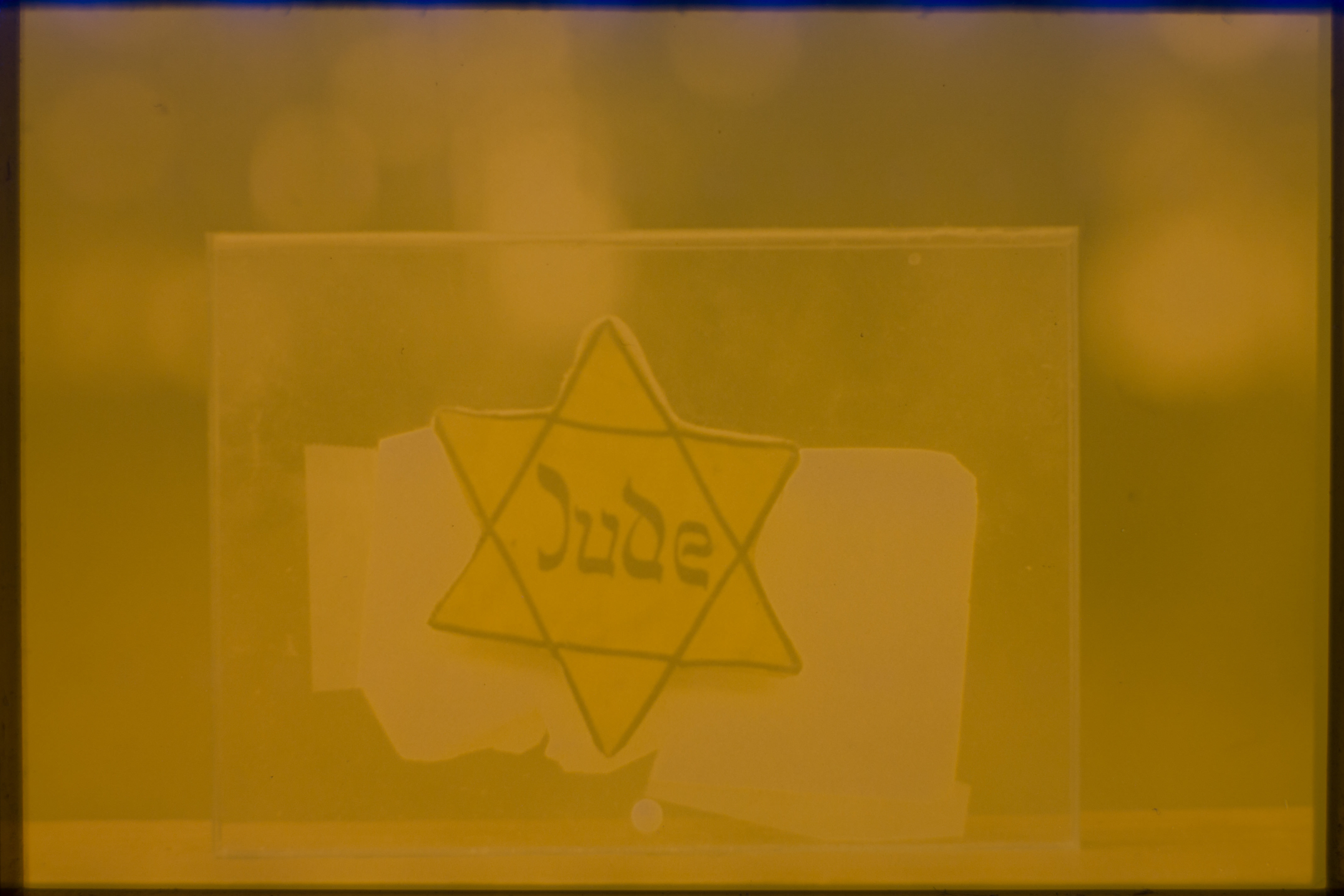
Here we have the film scanned and corrected the best I can via Lightroom. Promaster SLR, Jupiter 85mm, Kodak Portra 160NC expired.

T0wabYL.jpg


Here's the original.
byzh9zQ.jpg


And yes, it's an authentic patch. Why did I use it for a test? Dunno, it was laying around.
 
Photrio.com contains affiliate links to products. We may receive a commission for purchases made through these links.
To read our full affiliate disclosure statement please click Here.

PHOTRIO PARTNERS EQUALLY FUNDING OUR COMMUNITY:


Ilford ADOX Freestyle Photographic Stearman Press Weldon Color Lab Blue Moon Camera & Machine
Top Bottom