
• Welcome to Photrio!
    Registration is fast and free. Join today to unlock search, see fewer ads, and access all forum features.
    Click here to sign up

Edible Film Developers

Angular building 6

A
Angular building 6

  • 1
  • 0
  • 12
Angular building 5

A
Angular building 5

  • 0
  • 0
  • 7

Recent Classifieds

Forum statistics

Threads
202,549
Messages
2,842,226
Members
101,379
Latest member
deckeda
Recent bookmarks
0
A more recent publication giving antioxidant content:
Dead Link Removed
There are some notably high contents from Amla (Indian Gooseberry) dried 261.5. Clove, dried and ground, 277.3.Mint leaves dried 116.4
However, in early developers using hydroquinone, they added sulphite,as well as using the carbonate part 2, see eg Wall's Dictionary p 187:
https://archive.org/stream/cu31924031226065#page/n0/mode/2up
So it is also not known if sulphite might have some effect on the activity of these antioxidants as developers.
 
I just tried Tri-X Mountain Dew for 45 min with 5 tbsp of sodium carbonate...didn't get an image

Caffeine IMHO does nothing....I've used pure caffeine from the drug store + sodium carbonate and nothing happened

I understand it's the tannins/phenols or something in coffee & tea that do the developing

The developing agents in coffee are caffeic acid and its esters. These compounds are widely distributes in the plant kingdom.
 
Last edited:
jerry

i remember reading about someone who
got a bunch of caffic acid and tried to process film with it,
but it didn't work.
i don't know what he / she did
or didn't do, no idea how actively experimenting the person was
just remember they bought and tried using caffic acid and it was a dud.

i've no idea what it is in coffee that processes film but i know whatever it might be, its magical.
 
jerry

i remember reading about someone who
got a bunch of caffic acid and tried to process film with it,
but it didn't work.
i don't know what he / she did
or didn't do, no idea how actively experimenting the person was
just remember they bought and tried using caffic acid and it was a dud.

i've no idea what it is in coffee that processes film but i know whatever it might be, its magical.

You may be thinking of a couple of people who tried using No-Doze tablets a few years ago as a source of caffeine. IIRc Pat Gainer was one of them. But caffeic acid is definitely a developing agent as can be seen by comparing its structure to the Kendall-Peltz Rule. Caffeic acid is a substituted catechol. As PE points out urine will also work because it contains catecholamines such as adrenaline. Look at Other Uses section in the following article.

https://en.wikipedia.org/wiki/Caffeic_acid
 
The developing agents in coffee are caffeic acid and its esters.

Like hydroquinone? I have no idea if its an ester of caffeic acid but I know its in coffee and the plant kingdom
 
As PE points out urine will also work because it contains catecholamines such as adrenaline.

Yup. I find when I'm photographing lions up close on the savanna, I have to reduce my development time considerably when making piss negatives...
 
jerry

i remember reading about someone who
got a bunch of caffic acid and tried to process film with it,
but it didn't work.
i don't know what he / she did
or didn't do, no idea how actively experimenting the person was
just remember they bought and tried using caffic acid and it was a dud.

i've no idea what it is in coffee that processes film but i know whatever it might be, its magical.
John,
If you refer to my caffeic acid thread:
(there was a url link here which no longer exists)
What I found (post 17) was that caffeic acid was not responsible for ALL the development.
It is still responsible for a substantial part of it.
Sorry if the original wording was not clear.
 
hi alan

yeah, i think that was it !
thanks , i had no recollection where it was from.
and no worries, whatever is responsible for coffee development
can remain a mystery to me :smile:

- john
 
Amla Developer 1.jpg

Indian Gooseberry powder, Amla (post 303) is a weak developer.
The pic was on Fuji Acros at EI=10 (ten) developed 3hs 25C.
The chemistry of the active ingredients, not identified, is probably similar to that of hydroquinone, discussed in "Photographic Processing Chemistry", LFA Mason, p64, but everything is slower as the molecules from Amla are likely big.
Details-Amla powder 2tsp,Sodium Sulfite 1tsp, Potassium Carbonate 3tsp, water @50C to 600ml,filter, pH ~11
Develop 3hrs 25C agitate every 15 min.
 
Camera: Diana
Film: Fuji Acros 100
Developer: Old Crow Bourbon
chips_low.jpg
 
Last edited:
Camera: Bronica SQ-A
Film: Kodak Tri-X
Developer: Tiparos Fish Sauce
gordon 003.jpg
 

Attachments

  • gordon 003 workshop.jpg
    gordon 003 workshop.jpg
    977.1 KB · Views: 142
Last edited:
Camera: Zeiss Super Ikonta
Film: Fuji Acros 100
Developer: Clove and Anise Tea
clove 5_low.jpg
 

Attachments

  • clove 5_low.jpg
    clove 5_low.jpg
    465.4 KB · Views: 142
As an estimate coffee contains several hundred chemicals. Very few have been identified. But of these caffeic acid and its esters are considered to be present in modest amounts. The problem with these natural constituents is that their amounts differ, often widely, in different samples. If you are merely enjoying coffee as a beverage this really does not matter much. However if you are using it as a developer this can be a serious problem.

If you look at the following article you can see that caffeic acid is definitely a substituted catechol. As such it would a developing agent. You can also use the Kendall-Peltz rule to come to the same conclusion.

https://en.wikipedia.org/wiki/Caffeic_acid
 
Last edited:
I'm no expert when it comes to developing film but I have been refining this beer recipe for a while and I'm happy with the results I've been getting. I call it Berrenol. I have used Budweiser and Pabst Blue Ribbon but mostly I use a local beer called Rainier, they are all cheap lagers.

Beer (cheap Lager) - 24oz
Washing Soda - 5.5 Tsp
Ascorbic acid (Vitamin C) - 2.5 Tsp
Salt - 1/2 Tsp

Add the Washing Soda to the beer first and mix it in thoroughly. This will make the beer go flat. If you add the Ascorbic Acid to the beer first you will have a foam explosion. Develop at 20 degrees C for 20 minutes. Agitate first 30 seconds then 15 seconds every minute. Normal fix.

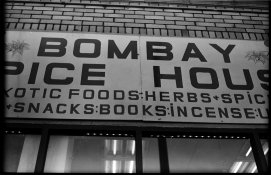
Bothell Landing Bridge Reflection by Bryan Chernick, on Flickr

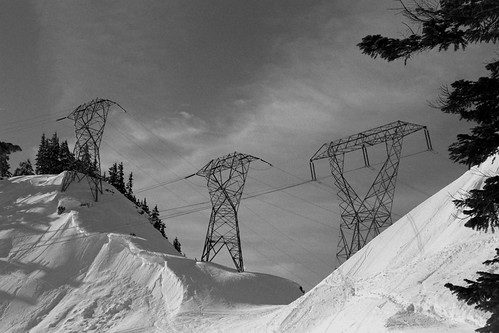
Power Lines at Stevens Pass by Bryan Chernick, on Flickr

Curving Crates by Bryan Chernick, on Flickr
 
I used "Pure" Coconut water to develop this film.

Coconal Test by Bryan Chernick, on Flickr

The recipe is as follows:

Pure Coconut Water (I used Vita Coco brand) - 500mL
Washing Soda - 20g
Vitamin C - 8g
Develop at 20 degrees C for 15 minutes. 30 seconds of agitation at start and 15 seconds for every minute after that.

Clearly the recipe needs some work but I think this answers the question that has stumped the scientific community for decades: How did the castaways develop the film in the Gilligan's Island episode Castaway Pictures Presents? Now we know.

<a href="http://gilligan.wikia.com/wiki/Castaways_Pictures_Presents" rel="nofollow">gilligan.wikia.com/wiki/Castaways_Pictures_Presents</a>
 
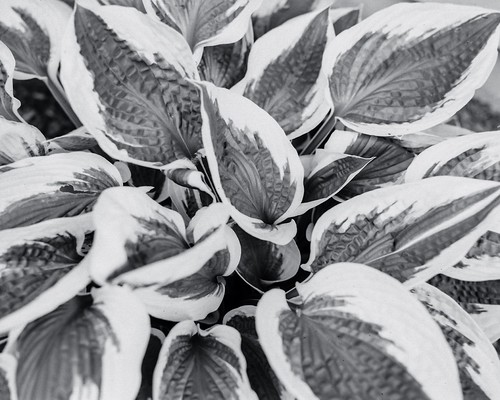
You can also fix film with table Salt. These photos were developed in Caffenol C-L/S for 70 minutes and fixed in a salt water solution for 48 hours. I mixed up 225g of iodized table salt into 750ml of distilled water (equivalent to 300g salt in 1L). It takes a lot of stirring to get that much salt dissolved. After adding the salt solution to the film I agitated it every now and then for the next 48 hours. The agitation was not on a regular schedule, just whenever I happened by and remembered. Usually I did 30 agitations then went about my business. I did not wake up in the middle of the night to agitate.

Hosta by Bryan Chernick, on Flickr

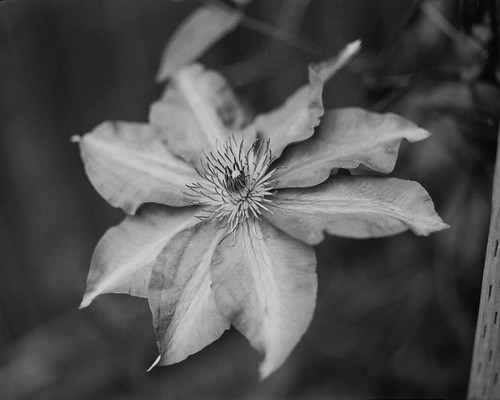
Clematis in Caffenol by Bryan Chernick, on Flickr
 
Probably true but do we have experimental work that says it is true, or that the development just takes longer or what....

PE
 
:smile: people said the same thing 5-10 years ago about caffenol ...
and there were still other apug members who process the film in straight coffee ( and nothing else )
and prints in coffee+carbonate.
 
Photrio.com contains affiliate links to products. We may receive a commission for purchases made through these links.
To read our full affiliate disclosure statement please click Here.

PHOTRIO PARTNERS EQUALLY FUNDING OUR COMMUNITY:


Ilford ADOX Freestyle Photographic Stearman Press Weldon Color Lab Blue Moon Camera & Machine
Top Bottom