• Welcome to Photrio!
    Registration is fast and free. Join today to unlock search, see fewer ads, and access all forum features.
    Click here to sign up

Diffusion Transfer Printing ("Polaroid" peel-apart) recipes

Forum statistics

Threads
203,443
Messages
2,854,813
Members
101,846
Latest member
fulgacian
Recent bookmarks
1
@alecrmyers excellent; I've just done two things:
1: Made this thread a sticky post so it always remains on top of this forum.
2: Added the link to the site above to post #1 so it's immediately visible to new visitors.
Thanks for your commitment to this project!
 
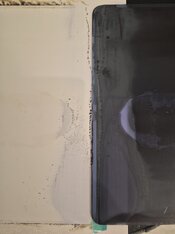
3029.jpg


Back in the lab (cellar)!

This batch of receiver uses PdCl₂ (palladium [II] chloride) reduced with KBH₄ (potassium borohydride) as the nucleation layer. The detail is excellent - if you zoom in you can see the texture of the doll's shirt.
 
Last edited:
The Dmax and tone both look excellent.

As far as detail goes - this process is effectively a contact print from a large format negative. The detail should be absurdly fine (and I have some prints where it is). If the detail isn’t eye-popping then there’s something to investigate.
 
I have not, I've been on a short hiatus from experimenting and testing during March. I'm going to get back to it soon and I will let you know, though.

How on earth are you coating such giant receiver sheets? I'd imagine a mayer rod and granite slab big enough to coat 32 inches are massively expensive.

Thanks so much! My only attempt with xray film was massively over exposed at 320 iso estimation. But it doesn't look like I need to use the 1P5MT (for now).
But did you ever make a solution or find a way to measure how much you were using?

Sorry not been on the forums, as experimentation was on hold due to the laminator machine we modified jammed or something and the gear box broke. We now switched from a DC to AC stepper motor. Enough torque and slow enough speeds.

Concerning the receiver sheets, I had a custom spiral bar applicator made. I can send you the companies details if you're interested.
For the flat surface, all I could figure out so far was a giant sheet of aluminum. It hasn't been treated to be super flat, but granite would be too expensive and heavy. Though, aluminium will corrode with some of the chemicals we all use, it's good enough for now.


------


Does anyone know why when I did a test with xray film and plastic paper, the xray film's surface seemed to stick to the plastic paper, leaving areas and specs of black.
I did use a stripping layer of 2% or 5% Gum Arabic on the receiver sheet.

Thanks :smile:
 
But did you ever make a solution or find a way to measure how much you were using?

I have not. I'm getting good enough results without it that I haven't messed around with it very much. You could test yourself and let us know!

I'm more curious about different additives and ratios in the developer currently, that's where I'm going to start playing around a bit more.

I just really, really hate mixing and then waiting on the cellulose. I'm considering buying some kind of mixer like you can see around the 1:40 mark in NileRed's video from his Polaroid factory visit. Being able to mix in an inert atmosphere would be nice, I could start experimenting with hydroquinone developers again. It's hard for me to mix those without creating a bunch of oxidation.

 
Last edited:
Photrio.com contains affiliate links to products. We may receive a commission for purchases made through these links.
To read our full affiliate disclosure statement please click Here.

PHOTRIO PARTNERS EQUALLY FUNDING OUR COMMUNITY:


Ilford ADOX Freestyle Photographic Stearman Press Weldon Color Lab Blue Moon Camera & Machine
Top Bottom