• Welcome to Photrio!
    Registration is fast and free. Join today to unlock search, see fewer ads, and access all forum features.
    Click here to sign up

Building A Professional Grade Shutter Tester

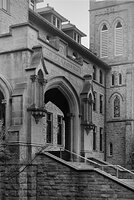
Stella Niagara Steps

H
Stella Niagara Steps

  • 0
  • 0
  • 11
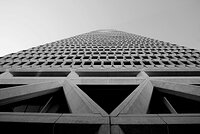
Up_the_TransAm.jpg

D
Up_the_TransAm.jpg

  • 1
  • 2
  • 36

Recent Classifieds

Forum statistics

Threads
202,873
Messages
2,846,857
Members
101,579
Latest member
And ee
Recent bookmarks
0
I'm having a rough time locating an acrylic sheet in Europe that fits? I'm not sure how important the light transmission percentage is for this or if it being any acrylic sheet that is matte on one side would just work? Any help regarding that would be appreciated

EDIT: I ended up ordering a sheet off of the US amazon because the shipping was only 8 euros
 
Last edited:
I think the acrylic sheet is important, if it is too thick or dense, the voltage will have to be set higher than 12V. If it is too transparent, the light distribution may show a hot-spot in the middle.
 
For a similar project I found a frosted white acrylic clipboard at Office Depot.
 
Since the calibration curve of the EV light output is fixed in the firmware, the 'correct' acrylic is important, as is the 'correct' LED.
 
Hello there!

I want to let you know that I just published the source code of Film Camera Tester SRT-2 on Github.
I am glad that after so many years there are still interest in building that project.

What you possibly can do with that code?

You may want to modify calibration tables to match your LED. Add different sensors or measuring modes. What else?

Consider that latest version takes almost all memory of Atmega 328 chip. So if you want to add new functionality you have to sacrifice some existing functionality.

I doubt that it can be easily transferred to more powerful architecture. But who knows?

Best,
Serhiy

P.S. Big thanks to @ic-racer for believing in this project and guiding other builders.
 
Thank you Serhiy! What an awesome device you created. Can't imaging repairing a camera without it.

Hope so see others complete the project!
 
Hello there!

I want to let you know that I just published the source code of Film Camera Tester SRT-2 on Github.
I am glad that after so many years there are still interest in building that project.

What you possibly can do with that code?

You may want to modify calibration tables to match your LED. Add different sensors or measuring modes. What else?

Consider that latest version takes almost all memory of Atmega 328 chip. So if you want to add new functionality you have to sacrifice some existing functionality.

I doubt that it can be easily transferred to more powerful architecture. But who knows?

Best,
Serhiy

P.S. Big thanks to @ic-racer for believing in this project and guiding other builders.

Amazing news! This is huge gift to the community. Thank you!
 
Hello to everyone,

being a long time lurker in this forum, I am planing to build this nice project. Big thanks to srozum, ic-racer and other participants!
First parts are ready, others in the mail.

I will be using a FDM printer. I am wondering what temperature will be reached in the led mount area while running at highest current? Is PLA+ still sufficient or should I use something like ASA for this part? I prefer PLA+ because I like the matte black more than the shiny ASA. And it is easier to print, of course.

Thanks again!
 
Last edited:
Hello to everyone,

being a long time lurker in this forum, I am planing to build this nice project. Big thanks to scrozum, ic-racer and other participants!
First parts are ready, others in the mail.

I will be using a FDM printer. I am wondering what temperature will be reached in the led mount area while running at highest current? Is PLA+ still sufficient or should I use something like ASA for this part? I prefer PLA+ because I like the matte black more than the shiny ASA. And it is easier to print, of course.

Thanks again!

No issue using PLA for the light source. LED runs max at 1A, which is below its maximum rating. Plus heat sink keeps it cool and stable.
 
Hi everyone, I'm planning on building the tester, and I have most of the parts already, but I need the 3D printed ones, and the light source.

I'm thinking of ordering everything from JLCPCB, but for the case and some other small parts, I can't get them printed in PLA. Any suggestions what other materials to use that are available from their site?

I also ordered these LEDs, hopefully they will be ok.

Epileds 7070 20W 12V 6V Led replace Cree MKR XHP70 XHP50 LED Emitter 6500K


Thanks!
 
Hi everyone, I'm planning on building the tester, and I have most of the parts already, but I need the 3D printed ones, and the light source.

I'm thinking of ordering everything from JLCPCB, but for the case and some other small parts, I can't get them printed in PLA. Any suggestions what other materials to use that are available from their site?

I also ordered these LEDs, hopefully they will be ok.

Epileds 7070 20W 12V 6V Led replace Cree MKR XHP70 XHP50 LED Emitter 6500K


Thanks!

 
Oh, I started reading the topic backwards, looks like I didn't go far enough, sorry!

One more question regarding the Sensor 6 housing, there seem to be three diagonally positioned rectangle holes on the inner part of the lid STL. They don't correspond to sensor orientation, at first I thought
Sensor 6 and 1 got mixed up, but now I wonder, what's supposed to fit inside those?
 
I've assembled the tester, complete with the power supply, and I've tested it a bit. It measures nicely, tested with the simple sensor and a Nikon F5, it's dead on.

I powered everything with a Meanwell LRS 50-12, but the voltage regulator on the Nano gets hot, and I think I'll add a buck converter and power it with 5V, and reserve the 12V for the light unit.

However, I am running into an issue with the LCD or booting. Sometimes the LCD only shows blocks, until I reset the Nano repeatedly 2-3 times by pressing the reset button on the Nano, and then it powers up normally and runs normally. Any ideas what might be the issue?
 
I've assembled the tester, complete with the power supply, and I've tested it a bit. It measures nicely, tested with the simple sensor and a Nikon F5, it's dead on.

I powered everything with a Meanwell LRS 50-12, but the voltage regulator on the Nano gets hot, and I think I'll add a buck converter and power it with 5V, and reserve the 12V for the light unit.

However, I am running into an issue with the LCD or booting. Sometimes the LCD only shows blocks, until I reset the Nano repeatedly 2-3 times by pressing the reset button on the Nano, and then it powers up normally and runs normally. Any ideas what might be the issue?

Hello,

Option 1 it could be corrupted Nano memory.

Option 2 interference with i2c bus. Socket 2 has i2c pins, you might want to remove those wires because socket 2 doesn’t use it.

Option 3 power issue. If regulator gets hot, something drains the power. Check for shorts, bad soldering, etc
 
Hi, thanks for the answer!

The B socket isn't connected at all, I haven't soldered it yet, only A, so I don't think that's the issue, since even without the A socket it had the same problem.

With only the board and LCD connected, the LCD goes haywire, probably because the keyboard is missing. As soon as the keyboard is connected, it is stable, not cycling through the menus.

I'll recheck the soldering on the keyboard, but it should be ok, I tested the continuity after soldering. The shield is pretty straightforward, I don't think the issue is there.

I suppose the regulator is getting hot, because I could smell something giving off a burning smell running it on 12V, that's why I think something is getting hot, and my first thought was the regulator. It shouldn't be an issue, it's rated for 12V, but with these knockoff boards, it's a gamble.

Corrupt memory may well be the issue as well.
 
Yes, maybe a short. Check for things like stray strands of wire, etc.

stray wires.jpg
 
but the voltage regulator on the Nano gets hot, and I think I'll add a buck converter and power it with 5V, and reserve the 12V for the light unit.

Just regarding power supply for the Nano. I would not recommend running the Nano from 12 V, because the onboard power regulator is very simple and just generates a lot of heat, perhaps adding to the rest of problems; better add a small voltage regulator und supply it with 5 V, as you already suggested.
 
I think I solved it. Jeez, this took a while.

For uploading the firmware I used the USB ASP dongle, but I also used a program called AVRDUDESS. I don't really like the cmd layout, I prefer GUIs. :smile:

Basically, I read the fuses and the lock bits, didn't touch anything, loaded the firmware and the settings and went my merry way. I failed to realise that the command line on github for setting fuses and LBs didn't match what I read from my Nano.

After chasing cold solder joints, shorts and whatnot, I said to myself, no way there's an issue with connections, since I always check my connections with a multimeter after soldering.

So, I turned to software issues, retraced my steps and compared the settings and saw the fuses and LBs. I set them according to the github code and now the tester reliably starts at 5V from USB.

However, I will add a buck converter as Arborix suggested, because it runs fine from the MW PSU up to about 11V. After that it kinda starts falling apart. The screen goes nuts, doesn't turn on the backlight, doesn't respond to reset command. No need to stress the board further.
 
  • nusproizvodjac
  • nusproizvodjac
  • Deleted
  • Reason: Noticed a fundamental mistake
Photrio.com contains affiliate links to products. We may receive a commission for purchases made through these links.
To read our full affiliate disclosure statement please click Here.

PHOTRIO PARTNERS EQUALLY FUNDING OUR COMMUNITY:


Ilford ADOX Freestyle Photographic Stearman Press Weldon Color Lab Blue Moon Camera & Machine
Top Bottom