Chrstphrlee
Member
- Joined
- Apr 6, 2008
- Messages
- 4
- Format
- Multi Format
Good luck Dimas. I'm rooting for you. If you don't try, you'll never know.
I also recall that he reckoned that it would cost about $200 per film to process - and that was after he'd spent many thousands getting to the point where he could process it at all. Though that might have been AUS$ and not US$.
Good luck Dimas. I'm rooting for you. If you don't try, you'll never know.
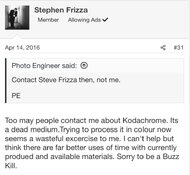
Sounds like classic gatekeeping. If he already figured it out, why be so stingy with the notes?
I'd take what he says there at face value...
Let's cut the guy some slack..


The guy on here from Australia who figured out how to do it was Stephen (Steven?) Frizza. He hasn't been on here or on his social media for ages, so I don't know what's going on with him. He ran a commercial photo lab in Sydney for a while and so had the tools and facilities to try and do it. He was also independently wealthy.

I have a few old undeveloped rolls sitting around. I’m not expecting a miracle, but I’m curious to see if any images can still be salvaged from them before throwing them out.

I'd take what he says there at face value: after mucking about with it for a long time, he realized there were so many other things he could do. I know the feeling; some endeavors seem tantalizing, you spend a lot of time on it and at some point you realize that what you're after is perhaps not even really in there to begin with. Then if someone else comes along, one may be rather hesitant to bring the new kids up to speed - after all, if you've decided to walk away from something, why would you go back and spend more time with it?
Moreover, if it were gatekeeping, what's behind the gate that's supposedly so precious? He didn't pursue it further, it seems.
So no, I don't think it's gatekeeping. I think he just rearranged priorities and doesn't identify as an interactive encyclopedia. That may be disappointing if you're looking for one, but hardly something we can blame him for.
Let's cut the guy some slack and assume he was just being honest.
What is the point if there is little or no Kodachrome film available? Just to process a handful of rolls?
Likewise very understandable!I guess I was just a bit frustrated by the lack of available data out there
Likewise very understandable!
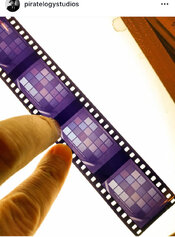
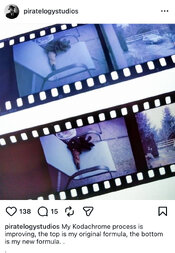
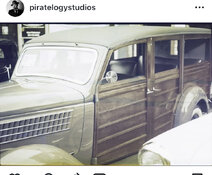
Btw, the results I've seen so far, which are indeed few and far between, I found academically interesting, but nowhere near what I associate with Kodachrome as it looked when it was being used a lot and processed at its common industrial scale. This, to me, suggests that while it's feasible to get color images of some sort in a DIY process, it's probably exceedingly challenging and time-consuming (potentially costly, too) to achieve a level of color fidelity that approximates the glory days. There's the complicating factor that the film is all expired, some badly so, and subject to often unknown and potentially adverse storage conditions even if you can get hold of it. I think this combination of challenges is what has made others ultimately throw in the towel - even if you get it to work well, you're still facing a dwindling supply of variable quality. It all looks like an uphill battle to me.
He was using mostly original kodachrome chemistry (which came in tins mind you right to the very end) with an improvised yellow using the older 1930's patents.
The issue today is expense, you can have chemical companies manufacture the colour couplers but be prepared to spend thousands of dollars in any currency. nobody else needs them so you're asking a big company to make a small amount of an otherwise useless chemical times three!
This is why Adrian takes a far more artistic route, using all sorts of novel materials as couplers to form rather amazing images. Kodachrome is a great medium for this, as you can add any coupler you like within reason. the combination of different couplers and colour developers is damn near endless when you're in that deep.
From a purely practical point of view, wouldn't developing these already exposed rolls as B&W negatives be more effective in salvaging the images than trying to reinvent the original complicated colour process? In any case, colour processing is unlikely to render the colours as intended by the original process.
BTW you might have already seen this: https://eng.vsco.co/reviving-kodachrome/
They write: "After months and months of iterations in our experiments and roll after roll of Kodachrome developing, we finally achieved results for Kodachrome that we were proud of. We achieved acceptable film density (Dmin and Dmax), acceptable overall color balance, and consistent results on the same batch of film."
Unfortunately but unsuprisingly, they have not revealed the details of their process other than what is shown in this pic.
That makes perfect sense. Once you prove it to yourself and scratch that itch, the motivation drops. And honestly, nobody wants their inbox flooded with troubleshooting questions for the rest of their life!I honestly think that Mr. Frizza achieved his goal of processing Kodachrome and moved on. Having proved the point to himself and the photography community, he simply walked away from it. And the reason he doesn't publish his methods and research is because he doesn't want hundreds of people asking him about it.
Yeah, exactly. That would put is in the territory where many threads have gone: "what are the odds of reviving Kodachrome". Although you could argue that it wouldn't have to take Kodak to play a part in this; it could be a 3rd party.You hit the nail on the head. Even with a perfect, lab-standard process, 20-year-old expired film will never give us those classic "glory days" colors. It is absolutely an uphill battle.
But honestly, that just reinforces my previous point. If the goal is true Kodachrome color fidelity, fighting with degraded, unpredictable expired stock is a dead end. The only real way to eventually achieve that level of quality again is to figure out the chemistry first, and then step up to coating fresh, custom film.
Yeah, exactly. That would put is in the territory where many threads have gone: "what are the odds of reviving Kodachrome". Although you could argue that it wouldn't have to take Kodak to play a part in this; it could be a 3rd party.
Then again, if the objective is ultimately to have fresh film manufactured, wouldn't it make more sense to engineer a film and process in tandem to mimic Kodachrome as closely as possible, but with modern materials and equipment? Mind you, that's a huge endeavor, obviously. But I'd say that shedding the burden of "full Kodachrome compatibility" at a technical level might be helpful just to create some degrees of freedom.

I also recall that he reckoned that it would cost about $200 per film to process - and that was after he'd spent many thousands getting to the point where he could process it at all. Though that might have been AUS$ and not US$.
I'd take what he says there at face value: after mucking about with it for a long time, he realized there were so many other things he could do. I know the feeling; some endeavors seem tantalizing, you spend a lot of time on it and at some point you realize that what you're after is perhaps not even really in there to begin with. Then if someone else comes along, one may be rather hesitant to bring the new kids up to speed - after all, if you've decided to walk away from something, why would you go back and spend more time with it?
Moreover, if it were gatekeeping, what's behind the gate that's supposedly so precious? He didn't pursue it further, it seems.
So no, I don't think it's gatekeeping. I think he just rearranged priorities and doesn't identify as an interactive encyclopedia. That may be disappointing if you're looking for one, but hardly something we can blame him for.
Let's cut the guy some slack and assume he was just being honest.
| Photrio.com contains affiliate links to products. We may receive a commission for purchases made through these links. To read our full affiliate disclosure statement please click Here. |
PHOTRIO PARTNERS EQUALLY FUNDING OUR COMMUNITY:  |