• Welcome to Photrio!
    Registration is fast and free. Join today to unlock search, see fewer ads, and access all forum features.
    Click here to sign up

Would anyone be interested in testing some film?

Watch Your Step

H
Watch Your Step

  • 5
  • 1
  • 91
The Royal Mile.

A
The Royal Mile.

  • 5
  • 4
  • 138

Recent Classifieds

Forum statistics

Threads
201,639
Messages
2,827,668
Members
100,864
Latest member
boredindiego
Recent bookmarks
0
OP
OP

MCB18

Subscriber
Allowing Ads
Joined
Jan 16, 2023
Messages
1,351
Location
Colorado
Format
Medium Format
I tried developing a roll of this today with very poor results. I shot a roll of 120, 3 scenes each shot at EI of 6, 12, 25 and 50.

I developed this in TDLC-103, which is composed of:

1g Metol
5g Sodium Sulfite
10g Sodium Bicarbonate
Water to make 1000ml

I developed this roll for 10min at 68f, 30 sec initial agitation, 3 inversions every 2 minutes thereafter. (10 minutes is the recommended starting time for document, copy and microfilms)

First off, it turned my fixer yellow, which hopefully is some kind of dye and not this fairly fresh batch of rapid fixer sulfuring out because of this film. Neither the developer or water stop were tinted yellow.

View attachment 414512


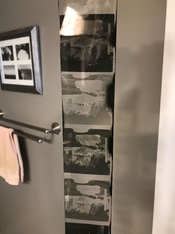
Basically no development occurred, and I've used this developer formula on Kodak Plus-X Aerographic 2402 before, so I know it should work to some extent in this time range for a normal film.

Film base still has a yellow tint and strange patches of fogging. Banding that occurs every 7 inches or so and starts with a sharp line of high density that then fades to low density before repeating. Also spherical areas of low density along one edge.

Only the first image that was exposed at EI 6 was visible on the negative, albeit very faintly. None of the other images exposed at the same EI or otherwise are visible.

Next time I'll try something like T-Max Dev or D-23.

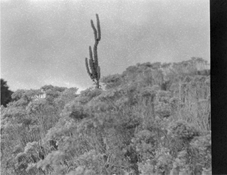
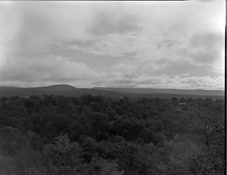
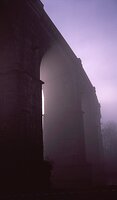
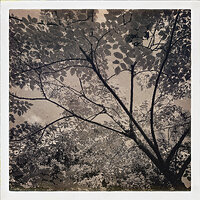
View attachment 414511View attachment 414510View attachment 414509View attachment 414508
That is certainly an interesting result, not exactly sure what’s going on there. The base should be almost perfectly clear. And I have no idea what’s up with the fog patterns you are seeing.

As far as your question about fixer, I do believe that this film has some sort of anti-halation die that might be the yellow that you’re seeing.
 
OP
OP

MCB18

Subscriber
Allowing Ads
Joined
Jan 16, 2023
Messages
1,351
Location
Colorado
Format
Medium Format
with a light-yello filtwr theEI will most likely drop to EI6, but the high blue sensitivity and exaggerated contrast will be better controlled. I do this with Harman's direct-positivepapr with great success;willing to try in 120 in Rodinal or D76.

gave away all the 120 I made already, but if you want some 4x5 I’ll happily send it your way!
 

lt_col_gordon_tall

Member
Allowing Ads
Joined
Dec 27, 2025
Messages
13
Location
Northern Virginia
Format
Medium Format
New to this forum so I missed this opportunity. I also saw this film on eBay and am considering purchasing it due to the price. Can I ask how you slit it down from 105mm to ~61.5mm?

I normally develop with Xtol (1+1 or 1+3). Any thoughts how that would work?
 
OP
OP

MCB18

Subscriber
Allowing Ads
Joined
Jan 16, 2023
Messages
1,351
Location
Colorado
Format
Medium Format
New to this forum so I missed this opportunity. I also saw this film on eBay and am considering purchasing it due to the price. Can I ask how you slit it down from 105mm to ~61.5mm?

I normally develop with Xtol (1+1 or 1+3). Any thoughts how that would work?
I have a large darkroom, which is a requirement for this. You absolutely cannot do this in a changing bag, and if you are making 120, you need a 3’ measuring thing.

Technically the film is orthochromatic, but I (and a friend) have found that it will get fogged if you put it under red light long enough, so I do not use it.

I cut the film with a 3D printed slitter, using a big 100 ft developing spiral loader that I have. First I trim to 70mm, then I trim to 61.5mm. You get a 35mm offcut and a minox strip.

I also have a 99mm slitter for making sheet film so I don’t have to cut it twice.
 
Last edited:

lt_col_gordon_tall

Member
Allowing Ads
Joined
Dec 27, 2025
Messages
13
Location
Northern Virginia
Format
Medium Format
I have a large darkroom, which is a requirement for this. You absolutely cannot do this in a changing bag, and if you are making 120, you need a 3’ measuring thing.

Technically the film is orthochromatic, but I (and a friend) have found that it will get fogged if you put it under red light long enough, so I do not use it.

I cut the film with a 3D printed slitter, using a big 100 ft developing spiral loader that I have. First I trim to 70mm, then I trim to 61.5mm. You get a 35mm offcut and a minox strip.

I also have a 99mm slitter for making sheet film so I don’t have to cut it twice.

Thank you. Yes I'm primarily interested in cutting and rolling for 120. Fortunately I have access to a completely dark workspace so I'd have plenty of room to operate, so to speak. I'll look into printing a slitter. I saw an image of yours in another thread. And thanks also for pointing out the safe light issue. Appreciate your insights!
 
OP
OP

MCB18

Subscriber
Allowing Ads
Joined
Jan 16, 2023
Messages
1,351
Location
Colorado
Format
Medium Format
Slitting is definitely an adventure, I try and do it in big batches, makes things easier. Less waste. I slit 100 ft of 61mm and 50 ft of 99mm. Gave me 36 120 rolls and 120 sheets of 4x5.
 

Hunter_Compton

Subscriber
Joined
Nov 20, 2019
Messages
271
Location
Oxford, MI
Format
Analog
New test with this film with some better results.

Thus time I developed in D-23 1:1 dilution for 15 minutes at 68F. 60 second prewash. Agitation continuous for first 30 seconds, then 5 inversions every 3 minutes thereafter. Acid stop bath, rapid fixer 5 minutes, hypo clear and 10 minute wash.

Test 1 - SM.jpgTest 2 - SM.jpg

The good:
Base is much clearer and doesn't show any signs of the fogging from the previous roll. Since D-23 uses the same chemicals as TDLC-103 other than dilution and the lack of sodium bicarbonate, I'd theorize this film doesn't respond well to sodium bicarbonate for some reason.

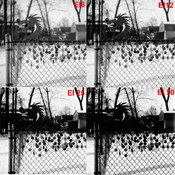
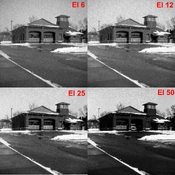
Exposure testing was done with an EI of 6, 12, 25 and 50 for each scene. I used a handheld reflective meter for measurement. Both EI 6 and 12 and usable with 6 showing a bit more shadow detail. 25 might be useable but is identifiably underexposed in my opinion. 50 is unusable.

The weird:
Continues to tint my fixer yellow for some reason. Doesn't seem to affect the fixing capacity in any meaningful way though it is odd. Normally sensitization or anti-halation dyes wash out in alkaline solutions. Whatever is tinting my fixer doesn't wash out in the water prewash, alkaline developer or acidic fixer but does wash out in the fixer.

The bad:
Light leaks are visible on the edge of the film. Since I shot this in a camera which I have used previously for multiple rolls of much faster film, and the spacing of the light leaks do not align with the spacing of the frames, I'm not inclined to think it is an in camera light leak. I believe this film is on a polyester base, so it might be more susceptible to light piping.

As with the test exposure Thinkbrown showed in post #16 of this thread, visible speckles are apparent in each frame. This pattern does not show up on the unexposed portion of the film and is more visible in highlight areas than shadows, which leads me to speculate that this is some kind of loss of sensitivity rather than fogging.

Because the speckling is visible on all frames and consistent throughout the roll, it's pretty apparent this is endemic to the available rolls of this film, probably due to storage conditions or some such. As such, it pretty much rules this film out for me for anything other than experimenting or maybe checking cameras for light leaks, as every picture is going to have that speckling on it.
 

lt_col_gordon_tall

Member
Allowing Ads
Joined
Dec 27, 2025
Messages
13
Location
Northern Virginia
Format
Medium Format
New test with this film with some better results.

Thus time I developed in D-23 1:1 dilution for 15 minutes at 68F. 60 second prewash. Agitation continuous for first 30 seconds, then 5 inversions every 3 minutes thereafter. Acid stop bath, rapid fixer 5 minutes, hypo clear and 10 minute wash.

View attachment 415116View attachment 415117

The good:
Base is much clearer and doesn't show any signs of the fogging from the previous roll. Since D-23 uses the same chemicals as TDLC-103 other than dilution and the lack of sodium bicarbonate, I'd theorize this film doesn't respond well to sodium bicarbonate for some reason.

Exposure testing was done with an EI of 6, 12, 25 and 50 for each scene. I used a handheld reflective meter for measurement. Both EI 6 and 12 and usable with 6 showing a bit more shadow detail. 25 might be useable but is identifiably underexposed in my opinion. 50 is unusable.

The weird:
Continues to tint my fixer yellow for some reason. Doesn't seem to affect the fixing capacity in any meaningful way though it is odd. Normally sensitization or anti-halation dyes wash out in alkaline solutions. Whatever is tinting my fixer doesn't wash out in the water prewash, alkaline developer or acidic fixer but does wash out in the fixer.

The bad:
Light leaks are visible on the edge of the film. Since I shot this in a camera which I have used previously for multiple rolls of much faster film, and the spacing of the light leaks do not align with the spacing of the frames, I'm not inclined to think it is an in camera light leak. I believe this film is on a polyester base, so it might be more susceptible to light piping.

As with the test exposure Thinkbrown showed in post #16 of this thread, visible speckles are apparent in each frame. This pattern does not show up on the unexposed portion of the film and is more visible in highlight areas than shadows, which leads me to speculate that this is some kind of loss of sensitivity rather than fogging.

Because the speckling is visible on all frames and consistent throughout the roll, it's pretty apparent this is endemic to the available rolls of this film, probably due to storage conditions or some such. As such, it pretty much rules this film out for me for anything other than experimenting or maybe checking cameras for light leaks, as every picture is going to have that speckling on it.

Very helpful and very interesting results. Thank you for testing and sharing
 

Dr. no

Subscriber
Allowing Ads
Joined
Mar 7, 2010
Messages
138
Location
Santa Fe
Format
Multi Format
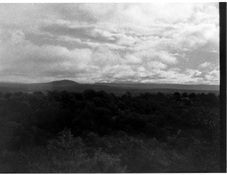
Here are a couple of shots on the Dacomatic:


it looks pretty old...
EI 12ish, D76 1:1 14 min. 4x5 in a Busch Pressman.
I don't think the splotches are developer/contrast dependent.

For comparison here is one on Kodak Commercial film 4127, same time, same tank (but younger film.


(though I sent this two days ago, didn't hit send 😜
 

Attachments

  • 25.119.1.jpg
    25.119.1.jpg
    116.4 KB · Views: 10
  • 25.119.2.jpg
    25.119.2.jpg
    146.6 KB · Views: 8
  • 25.119.3.jpg
    25.119.3.jpg
    102.2 KB · Views: 11
Last edited:
OP
OP

MCB18

Subscriber
Allowing Ads
Joined
Jan 16, 2023
Messages
1,351
Location
Colorado
Format
Medium Format
That looks like what I see sometimes when I leave a roll out too long in room light without foil wrapper. That is probably on me unless it was loaded in very bright light. Very sorry for that. They were wrapped in foil pretty quickly but if it wasn’t rolled tight enough I can see that happening.
 
Photrio.com contains affiliate links to products. We may receive a commission for purchases made through these links.
To read our full affiliate disclosure statement please click Here.

PHOTRIO PARTNERS EQUALLY FUNDING OUR COMMUNITY:


Ilford ADOX Freestyle Photographic Stearman Press Weldon Color Lab Blue Moon Camera & Machine
Top Bottom