

• Welcome to Photrio!
    Registration is fast and free. Join today to unlock search, see fewer ads, and access all forum features.
    Click here to sign up

What should I develop my 1st roll of Foma 400 in?

Somewhere...

D
Somewhere...

  • 5
  • 2
  • 104
Iriana

H
Iriana

  • 7
  • 1
  • 169

Recent Classifieds

Forum statistics

Threads
202,750
Messages
2,845,067
Members
101,503
Latest member
Avinash Aggarwal
Recent bookmarks
0

gone

Member
Allowing Ads
Joined
Jun 14, 2009
Messages
5,502
Location
gone
Format
Medium Format
Just finished my first roll, and have: Adox Rodinal, R09 One Shot, D76 (always use it at stock dilution), and Arista Premium liquid film developer. I usually shoot Tri-X at 200-250 and develop in stock D76, so deep blacks and manageable grain are the hoped for look. Most of the film was metered at 400, but a few at 200 just to see what that looks like.

Trouble is, I have no idea what this film is supposed to look like, other than online scans, and they're all over the place. So any suggestions would help. Thanks.
 
Depends on what ISO you shot your FOMA at, with most developers it tops out at around 250, if you have not already check out the data sheet. But I shot 400 and developed in Arista Premium at ISO 320, with D76 if shot at 400 might have issues with shadow details.

https://www.foma.cz/en/fomapan-400
 
Just finished my first roll, and have: Adox Rodinal, R09 One Shot, D76 (always use it at stock dilution), and Arista Premium liquid film developer. I usually shoot Tri-X at 200-250 and develop in stock D76, so deep blacks and manageable grain are the hoped for look. Most of the film was metered at 400, but a few at 200 just to see what that looks like.

Trouble is, I have no idea what this film is supposed to look like, other than online scans, and they're all over the place. So any suggestions would help. Thanks.

It looks like films used during the second world war... Very present grain, low sharpness, bad for pushing. It's not horrible, but it's a different technology.
I think it's called poured emulsion or something like that, and it doesn't refer to the moment emulsion is placed on the base, but to the moment emulsion is made: once I read it's the only film made the old way these days. I'd say at 100-200 in Perceptol it should look better than at 200-400 in MQ developers. But if a photograph is great, it won't matter.
 
Someone who uses Arista developer. Great. Thanks for that info. Reviews say this film "has issues on red (others say blue) sensitivity", "lightens people's skin", "looks like Tri-X used to look", etc. Tri-X looks like it always did to me, just that now it has tighter grain.

Sounds like this Foma has it's own look, but developers play a part in that. I tried the Artsta EDU Ultra 100 in 35mm and didn't care for it, but it looked great in Mic-X. Sharp and grainy.

D76 for 8 min @68 w/ gentle inversions might work. Haven't settled on anything yet.
 
Last edited:
I like this film. It sure is different than Tri-X. The shadows block up very easily, but it came out well for the first roll. This was D76 stock at 68 degrees for 7.5 minutes w/ 1 inversion every 30 sec, and 2 inversions the last 2 times. Shot at f2 in Az sun w/ a red filter, so w/o the filter, the skin tones should look a bit darker.

04SLkUI.jpg
 
Last edited:
I think it is the worst combo to photograph caucasian ski:. Foma 400 + red filter. The subject looks like a ghost.. Even without red filter it just doesn't work at all because what I believe lack of red sensitivity in the film.
 
D76 stock, at 250 8 minutes @20, if exposed at 400, then 10 minutes @20, I use this all the time, but expose at 250, I develop mainly in ID11, same as D76, for Rodinal, exposed at 250 then 18 minutes @ 1in 50, 22minutes at 400 @@1/50, works well,these are the only 5 developers, and Adonal/rodinal and RO9/one shot are the same developing times
 
Even without red filter it just doesn't work at all because what I believe lack of red sensitivity in the film.

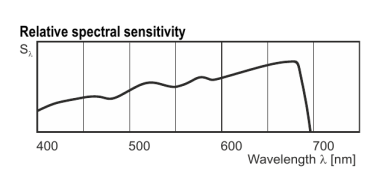
Looking at the spectral sensitivity chart from Foma, this film seem to have extended red sensitivity, more than, say, HP5.

upload_2021-5-4_11-22-50.png
 
Looking at the spectral sensitivity chart from Foma, this film seem to have extended red sensitivity, more than, say, HP5.

Stange.. What then explains such effect on white skin? In previous example the skin might be a bit overexposed but still you can see that effect.
 
In my (limited) experience

Foma 400 shot @ 400 - 800, Microphen would be my choice

I have tried Fomadon LQN and P (=D76) --> just too thin negatives

A couple of days ago I developed one roll of 400 shot @400 in Fomadon P stock for 13 minutes, still thin. It's really ISO 250 if you use something other than Microphen..
 
I second the recommendation of Microphen. Foma 400 is grainy stuff and that developer is billed as producing finer grain for full emulsion speed or push process. It doesn't push much beyond ISO 400 so, I don't recommend that.
 
Stange.. What then explains such effect on white skin? In previous example the skin might be a bit overexposed but still you can see that effect.

I would say that it is consistent with extended red sensitivity. If the film was not sensitive to red (like an ortho film) then it would look darker, not lighter.
 
Fomapan 400 is NOT a poured emulsion and it DOES push to 1600. Though at that speed you will notice the grain even in medium format, and will lose mid/shadow detail. But it is doable in ID-11/D76 or better yet Microphen.


The first time I used Fomapan 400, I read all the advice about shooting at 250-320 and decided to shoot at 320ASA. The shots taken outside in relatively bright conditions were over-exposed and very grainy due to the shenanigans I needed to get the right contrast....however shots I'd made indoors in a museum and church where I'd decided to be brave and meter for 400 were great...if a little grainy. So this isn't a favourite of mine in 135 but in 120 it is gorgeous. It doesn't really look like anything else, it is an older style emulsion but doesn't look like Tri-X or HP5. It's great when photographing green plants or landscapes due to the extended red sensitivity. It has an effect of bringing out greenery and not blowing out skies.

If you have D76/ID-11 to hand they are excellent. You might find Microphen gives less grain. You will likely find that in 135 it's grainy anyway.
 
if you have the ingredients for caffenol C I'd use that along with a shake of whatever print developer you might have on hand
agitate about 8 minutes ..
foma loves coffee from my experience
have fun
John
 
Last edited:
I would say that it is consistent with extended red sensitivity. If the film was not sensitive to red (like an ortho film) then it would look darker, not lighter.

Ah yes. The effect is the same; skin becomes lighter and using red filter it even lighter :smile:
 
I'd first point out that Adox Rodinal and R09 One-Shot are effectively the same -- the formulae probably have detail differences, but both are based on Rodinal as evolved before Agfa stopped production. They should produce effectively identical results: poor shadow detail and coarse grain.

D-76 is pretty much default for everything B&W, and I have no experience with the Arista liquid, but I'd suggest D-76 stock is probably the best choice among those you have on hand.

Rodinal(s) loses speed and tends to accentuate grain (and as others have noted, Foma 400 isn't a fine grain film by modern standards). I'll disagree on speed; I've used Foma 400 (under its Arista .EDU Ultra rebranding) for years, always shoot it at box speed, and am happy with the negatives I get. My own preference at present is Xtol replenished stock -- I'm into the last liter of replenisher from a 5L batch I mixed last fall -- but the differences between Xtol stock and D-76 stock are quite subtle.
 
Have a look at Gregg Davis' test of Foma 400. Quite enlightening I thought. I think he sticks to one developer for all his tests for comparison purposes and I think it is D76 but as ID11 is the same then if you like what you see in D76, ID11 should give you the same.

pentaxuser
 
Have a look at Gregg Davis' test of Foma 400.

In case you're not aware, that's YouTube channel "The Naked Photographer" -- lots of good stuff there.
 
This film is native ISO 200-250 or so in most developers, according to Foma's own datasheet. It is nice for portraits of caucasian people, because the red sensitvity tends to paper over any red imperfections in skin tones. IMO it's a nice film in 120 and not that nice in 35mm because of the grain. I have shot nearly 100 feet of it in 35mm so I know.

As for developers, I would say it looks best in highly solvent developers like D-76 or XTOL stock solutions. If you are into mixing your own stuff, I have also had good luck in PC-Glycol with 5g/L carbonate and 1g/L potassium bromide. The ascorbic acid helps control the grain

This is with a Kiev-4a, Jupiter-8M lens, Fomapan 400 at 200 in PC-Glycol as described above.

50589624781_2aab0308f3_h.jpg
 
I went through a bulk roll of Ultra 400 (rebranded Foma) back in 2005-2006 time frame, and I've got another in the loader in my darkroom right now (need to remember to load up some cassettes, thanks for the reminder). I've processed it in D-23, HC-110, Parodinal (yep, grainy), and Xtol. When I get through this bulk roll, I'll get another, and I try never to run out of it in 120 (and usually have a partial box of 4x5).
 
I'm also going to recommend not Rodinal. Looks awful, even in 120 IMO. I like it in XTOL, but that's not on your list. I have some ID-11 lying around but not used it with Foma so can't comment about D76
 
Looking at the spectral sensitivity chart from Foma, this film seem to have extended red sensitivity, more than, say, HP5.

That's an older technical sheet. The current one shows a full drop off before 700nm.

foma-response.png

The reformulation may also be why my experience with Arista EDU 400 Ultra (which is supposed to be repackaged Foma Action 400) is very different from what Juan reports in post #4.
 
Sterioma's chart appears to show the sensitivity ending at about 695 and grat's in #24 appears to be ending about 705 nm Would that be (a) enough to make any appreciable difference in sensitivity? Could it be basically the same chart that when redrawn was done in a slightly different way

If it represents a genuine change then why only about 10nm? What might Foma have done to deliberately bring about what appears to be a very marginal change. Of course I am extrapolating here as there are no marks between 650 and 700 but each graph's end suggests only a minus and plus of about 5nm around the 700 mark, doesn't it?

pentaxuser
 
Photrio.com contains affiliate links to products. We may receive a commission for purchases made through these links.
To read our full affiliate disclosure statement please click Here.

PHOTRIO PARTNERS EQUALLY FUNDING OUR COMMUNITY:


Ilford ADOX Freestyle Photographic Stearman Press Weldon Color Lab Blue Moon Camera & Machine
Top Bottom