

Im sure almost everyone has experienced this at one time or another. You think you understand a certain concept until you have to explain it to someone, and then you realize there are gaps or questionable assumptions in your thought process. I believe this is a frequent occurrence with teachers early in their careers. From my experience, after the flop sweat has dried, it can prove to be as much of a learning experience for the teacher as for the student. The following concept might just fall into this category.
The classic saying for exposure is the exposure meter wants to make whatever it is pointing at middle gray. In a recent thread there was a discussion about the scene luminance range and the range of Reflectances from a 12% and 18% Zone V model. So, I would like to think weve determined what the scene is and what the meter keys on.
In order for the exposure meter to work properly with films of differing sensitivities, the speed of the film is entered into the meters exposure calculator. Theres been copious discussions on film speed on this forum, so the basics of film speed should be relatively well understood.
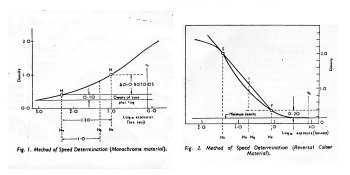
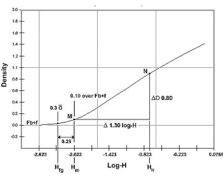
In a paper by D. Connelly, he writes, It is evident that the relationship between the sensitometric measurement of exposure (film speed) and the photographic exposure (camera exposure) requirement must be determine. There needs to be a way of connecting the various photographic elements together. You determine the film speed and that value somehow has to relate to the exposure meter and camera exposure in order to achieve good repeatable negatives.
Here are the questions to consider, and please keep in mind it's the sensitometric measurement of exposure.
What is the relationship that Connelly writes about?
How can it be determined?
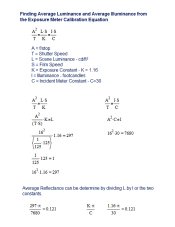
How does the film speed work with the exposure meter to determine the exposure placement of whatever the meter is pointing at?
Also keeping in mind that exposure meters are designed to produce one data value for the scene, what should that exposure be for a given film speed?
I know it seems pretty straight forward, but it involves some fundamental underlying principles. I've uploaded Connelly's paper for a reference. The above quote comes from the section on Film Speed on page 187.
The classic saying for exposure is the exposure meter wants to make whatever it is pointing at middle gray. In a recent thread there was a discussion about the scene luminance range and the range of Reflectances from a 12% and 18% Zone V model. So, I would like to think weve determined what the scene is and what the meter keys on.
In order for the exposure meter to work properly with films of differing sensitivities, the speed of the film is entered into the meters exposure calculator. Theres been copious discussions on film speed on this forum, so the basics of film speed should be relatively well understood.
In a paper by D. Connelly, he writes, It is evident that the relationship between the sensitometric measurement of exposure (film speed) and the photographic exposure (camera exposure) requirement must be determine. There needs to be a way of connecting the various photographic elements together. You determine the film speed and that value somehow has to relate to the exposure meter and camera exposure in order to achieve good repeatable negatives.
Here are the questions to consider, and please keep in mind it's the sensitometric measurement of exposure.
What is the relationship that Connelly writes about?
How can it be determined?
How does the film speed work with the exposure meter to determine the exposure placement of whatever the meter is pointing at?
Also keeping in mind that exposure meters are designed to produce one data value for the scene, what should that exposure be for a given film speed?
I know it seems pretty straight forward, but it involves some fundamental underlying principles. I've uploaded Connelly's paper for a reference. The above quote comes from the section on Film Speed on page 187.
Attachments
Last edited by a moderator: