
• Welcome to Photrio!
    Registration is fast and free. Join today to unlock search, see fewer ads, and access all forum features.
    Click here to sign up

What Happens When We Ultra-Dilute Pyrocat-HDC?

Forum statistics

Threads
203,366
Messages
2,853,538
Members
101,805
Latest member
itsallart
Recent bookmarks
0

chuckroast

Subscriber
Joined
Jun 2, 2023
Messages
3,520
Location
All Over The Place
Format
Multi Format
DISCLAIMER: The following is a notation of my experience. It is not a specific recommendation nor has it been calculated to 12 decimal places of analysis. Quantum effects have not been considered. This product is not intended to diagnose, cure, or treat whatever ails you. Your mileage may vary. Beauty is in the eye of the beholder. Neener Neener.

As I have noted in the past, I have spent some years exploring (semi)stand and Extreme Minimal Agitation (EMA) techniques across a variety of films and developers. For a good many things with normal SBRs, I still prefer using PMK Pyro in its usual manner. But dilute/low dilution/long schemes still have a place in my world when I want to punch up local contrast in a scene.

Today's darkroom exercise was printing some of the Fomapan 200 developed in ultra dilute Pyrocat-HDC. As a point of reference, my normal semistand development (1 initial agitation, 1 midpoint) with that developer/film combo is 1.5:1:250 for 25-30 min.

This gives me consistent and solidly printable negatives. But I felt that the film was giving away fine detail with objects like leaves that it didn't have to. So, I wanted to try longer development using more intermediate agitation cycles (EMA) with ultra high dilution levels to see if I could:

  1. Achieve better sharpness without objectionable grain - because very high dilution should improve developer acutance behavior.

  2. Enhance edge effects - with very dilute, infrequent agitation, the highlights should develop to completion almost immediately and encourage formation of so called "Mackie Lines" because of highlight development exhaustion at the dark/white boundaries.
I did two trial runs, both with Fomapan 200 exposed at EI 200. The first was developed with Pyrocat-HDC 2:1:400, the second was 1:1:500.

Both were shot with a Leica IIIf using 50mm f/2.2 or 35mm f/2.5 Color-Skopar lenses. The camera was hand held and I shot in at least one common location and similar (not identical) lighting for both rolls.

Development took place in a filled 500ml Nikor double height 35mm tank with a single stainless Nikor reel resting on an inverted funnel to minimize streaking risk.

Both were agitated for 1 min initially and then again for 5 and 10 seconds respectively at 16, 31, & 46 min, ending development at 60 min.

The 2:1:400 negatives are just a tad more dense than I like which suggests I could eliminate one of the agitation cycles.

The 1:1:500 negatives are nearly perfect, though I probably could dial down the EI to 160 for about 1/3 stop more shadow detail.

The 2:1:400 negatives printed just fine but are not remarkably better than my normal approach. They are sharper, just not dramatically so. HOWEVER, this is not entirely a fair test because I had to handhold at 1/50 which may have injected a small bit of camera shake.

The 1:1:500 negatives printed flawlessly at pretty much a normal "Grade 2" contrast (nearly equal hard and soft filtration on the enlarger). More importantly these negatives are very sharp. At first glance, the wet prints show no notable grain. These were shot at 1/100 which also minimized risk of camera shake.

Edge effects are still unclear. I am waiting for prints to finish washing and dry before I'll really be able to tell if there was much improvement there.

When complete, I'll scan some prints to share with the class. At this point it looks like 1:1:500 promises excellent sharpness, minimal grain, expanded mid tones, and well managed highlights characteristic of this development approach.

I would note ahead of time, that some of these subtleties can be lost in the translation to a forum posting but I'll give it shot.
 
Last edited:
Qualitative tests like this one can be entertaining, but they never really allow for any clear conclusions or patterns. The combination of a lack of control of key variables and a lack of objectively observable performance criteria that makes it very difficult to go beyond the level of "I kind of like what I see". This of course may be perfectly good enough for whomever does the test, but it's difficult to convey the meaning of the test to others without resorting to an unsatisfying "you'll have to try for yourself". The lack of comparison with a control as @Raghu Kuvempunagar is also a bit of a pity.

Having said all that - I've gotten very strong Mackie lines on Foma films in P-Cat HD at the normal 1+1+100 dilution and agitation every 3 minutes, without resorting to extremes on either dilution or agitation. My conclusion from this (and I've shown some snippets of those rolls here on the forum) is that the result was 'interesting' but rather 'artistic' for 35mm use. On 4x5 and low magnification it may be tolerable. On smaller formats it was just way too much even for small prints.

Problems associated with these homeopathic dilutions and very infrequent agitation patterns is that you encounter situations where the contents of the photos start to dominate technical characteristics of the negatives. I.e. it starts to matter how long the roll actually is (e.g. 24 exp vs. 36), how much exposure was given i.e. how much density the film attempts to build, how this is distributed across the roll etc. It's all very finicky and while I do not contest at all that it can result in perfectly printable and even beautiful negatives, the question remains what the utility is of a process that's purposefully taken to the edges of the process envelop where things start to (intentionally) destabilize.
 
No quantum effects? What kind of half assed work is this?
DISCLAIMER: The following is a notation of my experience. It is not a specific recommendation nor has it been calculated to 12 decimal places of analysis. Quantum effects have not been considered. This product is not intended to diagnose, cure, or treat whatever ails you. Your mileage may vary. Beauty is in the eye of the beholder. Neener Neener.

As I have noted in the past, I have spent some years exploring (semi)stand and Extreme Minimal Agitation (EMA) techniques across a variety of films and developers. For a good many things with normal SBRs, I still prefer using PMK Pyro in its usual manner. But dilute/low dilution/long schemes still have a place in my world when I want to punch up local contrast in a scene.

Today's darkroom exercise was printing some of the Fomapan 200 developed in ultra dilute Pyrocat-HDC. As a point of reference, my normal semistand development (1 initial agitation, 1 midpoint) with that developer/film combo is 1.5:1:250 for 25-30 min.

This gives me consistent and solidly printable negatives. But I felt that the film was giving away fine detail with objects like leaves that it didn't have to. So, I wanted to try longer development using more intermediate agitation cycles (EMA) with ultra high dilution levels to see if I could:

  1. Achieve better sharpness without objectionable grain - because very high dilution should improve developer acutance behavior.

  2. Enhance edge effects - with very dilute, infrequent agitation, the highlights should develop to completion almost immediately and encourage formation of so called "Mackie Lines" because of highlight development exhaustion at the dark/white boundaries.
I did two trial runs, both with Fomapan 200 exposed at EI 200. The first was developed with Pyrocat-HDC 2:1:400, the second was 1:1:500.

Both were shot with a Leica IIIf using 50mm f/2.2 or 35mm f/2.5 Color-Skopar lenses. The camera was hand held and I shot in at least one common location and similar (not identical) lighting for both rolls.

Development took place in a filled 500ml Nikor double height 35mm tank with a single stainless Nikor reel resting on an inverted funnel to minimize streaking risk.

Both were agitated for 1 min initially and then again for 5 and 10 seconds respectively at 16, 31, & 46 min, ending development at 60 min.

The 2:1:400 negatives are just a tad more dense than I like which suggests I could eliminate one of the agitation cycles.

The 1:1:500 negatives are nearly perfect, though I probably could dial down the EI to 160 for about 1/3 stop more shadow detail.

The 2:1:400 negatives printed just fine but are not remarkably better than my normal approach. They are sharper, just not dramatically so. HOWEVER, this is not entirely a fair test because I had to handhold at 1/50 which may have injected a small bit of camera shake.

The 1:1:500 negatives printed flawlessly at pretty much a normal "Grade 2" contrast (nearly equal hard and soft filtration on the enlarger). More importantly these negatives are very sharp. At first glance, the wet prints show no notable grain. These were shot at 1/100 which also minimized risk of camera shake.

Edge effects are still unclear. I am waiting for prints to finish washing and dry before I'll really be able to tell if there was much improvement there.

When complete, I'll scan some prints to share with the class. At this point it looks like 1:1:500 promises excellent sharpness, minimal grain, expanded mid tones, and well managed highlights characteristic of this development approach.

I would note ahead of time, that some of these subtleties can be lost in the translation to a forum posting but I'll give it shot.
 
Very funny. The problem is if tomorrow someone comes along and tells us "Pyrocat HD at 1+1+50 gave me excellent sharpness, minimal grain, expanded mid tones, and well managed highlights characteristic" they can (and probably are) entirely right in saying exactly the same as OP does of his approach and none of us are any the wiser.
 
I will provide both an example of a print from a negative developed 1.5:1:250 and 1:1:500 when I have scans of both complete.

As @koraks notes, at best, this sort of thing is anecdotal. Moreover, the loss of fidelity of going from print-to-scan-to-forum-to-different monitors injects a lot of noise that may well mask seen differences. But my point in posting this is:

  • To document that the ultra dilution works in case others wish to try it
  • Try to share some visual results as best as possible
  • Provide some description of what I see here
The only real way to see if this works to one's satisfaction is to try it yourself. I am certainly not providing holy writ here, only some hints of how you might do it yourself.

It's also worth noting that how relevant any of this might be, does in some degree depend on the subject. An image with a lot of large abstract geometric forms will not show off sharpness improvement as much as, say, one with a lot of fine detail.

I will try to get to this over the weekend or early next week, since I am sure you are all huddled by your monitors waiting for the outcomes ...
 
Last edited:
Try to share some visual results as best as possible

I'd like that, honestly. I think much of my critical first response boils down to a mild disappointment that no examples were included yet. While I appreciate the time and effort you took to document your findings, I think this is one of these cases where a picture is worth at least as much as the words that come with it.
 
I'd like that, honestly. I think much of my critical first response boils down to a mild disappointment that no examples were included yet. While I appreciate the time and effort you took to document your findings, I think this is one of these cases where a picture is worth at least as much as the words that come with it.

I agree completely, but I like building up the anticipation ...
 
I agree completely, but I like building up the anticipation ...
CR, i could care less about graphs and scientific treatises....
if the prints come out the way you want..... that's the goods
I'd like that, honestly. I think much of my critical first response boils down to a mild disappointment that no examples were included yet. While I appreciate the time and effort you took to document your findings, I think this is one of these cases where a picture is worth at least as much as the words that come with it.
K..... negatives need time to dry.... 😉
 
The answer of course, is you end up with a thread on Photrio and discussion about methodology of the test. :whistling:
 
The answer of course, is you end up with a thread on Photrio and discussion about methodology of the test. :whistling:

And quantum effects!

Like I said, my quantum mechanic, Bob, had to go on holiday. His doctor, a physicsisian, told him he was too tensor ...

That means when I do finally post some images, your viewing of them changes the experiment.

(If you get this joke, you're a nerd.)
 
Last edited:
OK, here we go.

These are all scans of 8x10 Fomabrom Variant 111 silver prints split printed under a Heiland LED head, made from Fomapan 200 exposed at EI 200. These were all lightly toned in Kodak Rapid Selenium Toner 1:40 for 3-4 min.

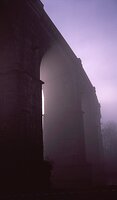
[ April 2024] Plane A Pierance (Reference print as requested)

Leica M2, 35mm f/2 ASPH Summicron
Pyrocat-HDC 1.5:1:250, semistand 45 min

1776536237918.jpeg


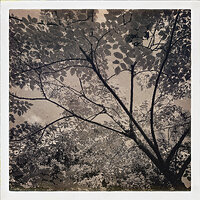
[ April 2026] Swamp Thing

Leica IIIf, 35mm f/2.5 LTM Color-Skopar
Pyrocat-HDC 1.1:1:500, EMA 60 min

1776536428404.jpeg


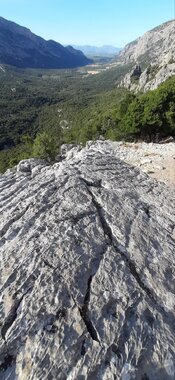
[ April 2026] High Wire Act

Leica IIIf, 35mm f/2.5 LTM Color-Skopar
Pyrocat-HDC 1.1:1:500, EMA 60 min

1776536484499.jpeg


A few observations (thereby changing quantum state :wink::
  • The scans were very lightly adjusted in post so that the tonal range and sharpness are shown as closely as possible to the physical print.

  • To my eye you can see significant improvement in sharpness in these scans, but it's really clear in the original silver prints.

  • Neither in the scan nor the prints themselves was there any objectionable (to me) grain.

  • A similar degree of sharpness can be obtained with Fomapan using D-23 1+9 with 0.5g/l sodium hydroxide (lye) with a potential for also increasing grain.

  • You may see a few blemishes in the scans. This is an artifact of uneven Fomapan quality and I have seen it before.

  • I can't quite see if there are edge effects here or if that just the natural sharpness from this process.

  • If you magnify the top of the vertical post in about 1/3 from the left side of the last image, you can actually see a wire loop. I'd call that fairly hi rez :wink: Compare that to the resolution of the plane in the distance of the reference print.

  • As @koraks notes, there is an homeopathic amount of active developer available at this dilution. It is very important that you use a sufficient amount of developer in the tank. I did this with a 500ml tank filled for just one test roll of film. You can also open tank process this in a 2 liter Kodak rubber tank which would also ensure there is more than enough developer. As always, the reel goes on an inverted funnel.

  • I realise that in some degree you have to take my word for what I've done here.

Constructive and corrective comments, criticisms, or questions are welcome. However, if you're going to be nasty, you jolly well better be funny too ...
 
Last edited:
Chuck those apier 😉 to be nice prints....
I really like the delicate tonal separation in the swamp photo!
 
Chuck those apier 😉 to be nice prints....
I really like the delicate tonal separation in the swamp photo!

It's that long, slow, low agitation boosting midtone separation, and dilute Pcat keeping the highlights happy. Like I said, I probably should have exposed at EI 160 for just teensie more shadow detail.

(In the MKS measurement system, a "teensie" is 1000 "milliteensies" and 1000 teensies is a "bunch".)
 
Very funny. The problem is if tomorrow someone comes along and tells us "Pyrocat HD at 1+1+50 gave me excellent sharpness, minimal grain, expanded mid tones, and well managed highlights characteristic" they can (and probably are) entirely right in saying exactly the same as OP does of his approach and none of us are any the wiser.

Just to be clear, I am not claiming this is the only way to achieve good results. It's just the way I chose to explore this time around.
 
Just to be clear, I am not claiming this is the only way to achieve good results. It's just the way I chose to explore this time around.

Well said CR....... with our different thermometers, room temperatures... it's a reasonable set of examples.
Besides.....chiseling absolutes in stone is so boringly slow....
 
Very funny. The problem is if tomorrow someone comes along and tells us "Pyrocat HD at 1+1+50 gave me excellent sharpness, minimal grain, expanded mid tones, and well managed highlights characteristic" they can (and probably are) entirely right in saying exactly the same as OP does of his approach and none of us are any the wiser.

K ....none of us are any the wiser given any description or photo viewed on a monitor.
The recipe is not the bread....
"the map is not the territory"
 
Well said CR....... with our different thermometers, room temperatures... it's a reasonable set of examples.
Besides.....chiseling absolutes in stone is so boringly slow....

I compensate for temperature variations by using a compensating development timer I designed and built (link below). The thermocouple it uses claims linearity (as I recall) from 0-100C and absolute accuracy of 0.1C across that range. The temp correction factors were determined using published Kodak and Ilford data and compared to some formulae.

So... I am pretty OK with temps :wink:

OH NO!!!! @MattKing was right. We ARE talking about testing methodology now. Oh The Horror!!

See:
 
K ....none of us are any the wiser given any description or photo viewed on a monitor.
The recipe is not the bread....
"the map is not the territory"

By that logic, science would be moot. Since it isn't, there's apparently a considerable air gap between what I said and how you spin it. But I'm going to leave it at this.
 
I don’t think it makes much sense to discuss tone reproduction and all that but one technical comment I’ll make is these kinds of minimal agitation techniques are probably best reserved for busier subjects ie scenes without featureless areas like skies etc. due to uniform development being an impossibility (example 3 above).
 
By that logic, science would be moot. Since it isn't, there's apparently a considerable air gap between what I said and how you spin it. But I'm going to leave it at this.

K what I'm getting at is that there can be a chasm between what you understand (science...) and what you produce as a photograph. Your practice may intentionally or unintentionally be an interpretation rather than a to-the-letter copy of what someone posits as scientific truth.
 
I don’t think it makes much sense to discuss tone reproduction and all that but one technical comment I’ll make is these kinds of minimal agitation techniques are probably best reserved for busier subjects ie scenes without featureless areas like skies etc. due to uniform development being an impossibility (example 3 above).

"Impossible" is way too strong. Example 1 was done standing and exhibits none of this. I think it's fair to say that the more dilute the developer, the higher the risk.

But Example 3 was done with semi-regular agitation, just widely spaced. I'll have to go and see if the unevenness of the sky is actually in the negative or some other reproduction or scanning artefact.
 
"Impossible" is way too strong. Example 1 was done standing and exhibits none of this. I think it's fair to say that the more dilute the developer, the higher the risk.

But Example 3 was done with semi-regular agitation, just widely spaced. I'll have to go and see if the unevenness of the sky is actually in the negative or some other reproduction or scanning artefact.

If it's there (streaking) it will be close to the sprocket holes for sure. I think the power line shot and the woods scene look like a 35mm shot trying to be a "Big Boy" medium format shot. Those last two look to have the quality of medium format. Of course we're not looking at a 16X20" print. Still, those are darn nice to look at.
 
Photrio.com contains affiliate links to products. We may receive a commission for purchases made through these links.
To read our full affiliate disclosure statement please click Here.

PHOTRIO PARTNERS EQUALLY FUNDING OUR COMMUNITY:


Ilford ADOX Freestyle Photographic Stearman Press Weldon Color Lab Blue Moon Camera & Machine
Top Bottom
