• Welcome to Photrio!
    Registration is fast and free. Join today to unlock search, see fewer ads, and access all forum features.
    Click here to sign up

Washing Film - Best Environmentally Friendly Way to Do It?

Flush

H
Flush

  • 0
  • 0
  • 8
vanhorne_bessa2_1.jpeg

A
vanhorne_bessa2_1.jpeg

  • 0
  • 0
  • 29

Recent Classifieds

Forum statistics

Threads
202,909
Messages
2,847,408
Members
101,538
Latest member
Abjayan
Recent bookmarks
0
• Finally rinse with a few drops of ILFORD ILFOTOL Wetting Agent (1:200) added to the rinse water.

It is good that this final rinse is made with distilled water to prevent drying marks, that water (with wetting agent) can be reused many times, so instead domping it we can keep it in any bottle. If out tap water is high in salt content then this way is specially interesting.
 
It is good that this final rinse is made with distilled water to prevent drying marks, that water (with wetting agent) can be reused many times, so instead domping it we can keep it in any bottle. If out tap water is high in salt content then this way is specially interesting.

Fortunately where I live we have a very clean water. I'll try the tap and distilled water to compare it. Thanks!
 
Fortunately where I live we have a very clean water. I'll try the tap and distilled water to compare it. Thanks!

Mainly, you may see a difference when film is not well wiped, it always can happen that some drops remain.

Also water salt content also may vary depending on the season, rains...
 
Have just processed 5 rolls of 120 film this morning and as I was washing them I started to think about the amount of water I use when printing and processing my B&W work.

Water restrictions are coming into effect yet again in South Australia this summer (and also over this past winter!!) and I want to reduce the amount of H2O I use as much as possible. I do use a print washer, but even then it seems to use copious amounts or am I imagining things?? :wink:

How do you wash your prints and films to use the least amount of water possible?

I think you could remove most of the fixer with film or paper by using fresh water in your tray or tank by agitation and changing the water. afterwards use hypo clear and short wash. Take a look at this. http://www.film-and-darkroom-user.org.uk/forum/archive/index.php/t-296.html
 
So, I've been doing the Ilford method for years (or a modification of it - in total, 9 to 10 water changes). I think I use about 5 to 6 litres of water to wash a roll of 120.

The main reason I use this method is the water temperature in my laundry is too variable. This morning (Australian winter), the water was coming out at 14 deg C. In the dead of summer, its not uncommon to see what coming out at 26 deg C.

But doing this wash method can become a bit of a drag if you have a full day processing in front of you. So, I've been thinking of building a tank with a small pump to do the final wash.

If I read the Kodak literature for film processing, they suggest washing for 20 to 30 minutes, with a flow rate that changes water every 5 minutes. So, If I wash in a 1 litre tank (which I typically would), I am assuming I'd still get away with less than 10L to was a film and a flow rate of around 200ml a minute.

Does this sound like a daft idea?

 
So, I've been doing the Ilford method for years (or a modification of it - in total, 9 to 10 water changes). I think I use about 5 to 6 litres of water to wash a roll of 120.

The main reason I use this method is the water temperature in my laundry is too variable. This morning (Australian winter), the water was coming out at 14 deg C. In the dead of summer, its not uncommon to see what coming out at 26 deg C.

But doing this wash method can become a bit of a drag if you have a full day processing in front of you. So, I've been thinking of building a tank with a small pump to do the final wash.

If I read the Kodak literature for film processing, they suggest washing for 20 to 30 minutes, with a flow rate that changes water every 5 minutes. So, If I wash in a 1 litre tank (which I typically would), I am assuming I'd still get away with less than 10L to was a film and a flow rate of around 200ml a minute.

Does this sound like a daft idea?
The idea of a watertank isn't a daft idea at all!

AAMOF, I do the same, till a certain extend, I have a few jugs of 5L standing overnight to acclimatise to room temperature (+/- 20°C) during the winter, and immerse some frozen ice accu's in the summer.
I have stainless steel tanks for one, two and four 120 reels, the middel one is used the most and contains 800cc (they all have 400cc per roll).
There is an electric 80L water heater in my darkroom, but that's a bit of overkill for just a few tanks of roll films, and in the summer a heater isn't that useful as my darkroom is on the top of the building just under the flat roof causing the room temperature to rise till 32°C (regardless the 14cm insulation), and the tap water is around 25°C (and an air conditioner is a too greedy energy eater)...

I do the Ilford method (for FB paper too) but add an Adox Adostab bath at the end which contents some Agepon too.

BTW, water is too precious to waste, and energy (and life) is getting more expensive by the day thanks to Vladimir P., that's why I hold a bit on analogue photography...
 
If I read the Kodak literature for film processing, they suggest washing for 20 to 30 minutes, with a flow rate that changes water every 5 minutes.

Or if you use a washaid like Kodak HCA first, you only need to rinse in running water for 30 seconds, use the washaid for 1 - 2 minutes, and then wash for 5 minutes in that 5 minute/water change rate.
 
Or if you use a washaid like Kodak HCA first, you only need to rinse in running water for 30 seconds, use the washaid for 1 - 2 minutes, and then wash for 5 minutes in that 5 minute/water change rate.
That is very little water, but I think it will amount to about the same if, for example, I use my 4 reel one liter steel tank:

Pour out the fixer.
Pour in washaid solution (1 liter).
Transfer to rinse tank (1 liter + 1 liter flow for water change)

With Ilford's method I don't need washaid and I don't need to think about controlling the flow of the rinse and maybe buy/make a dedicated rinse tank - yet the process still consumes only 3 liters to wash 4 films.

If I used the flow method, I think I would tend to err on the safe side and rather set the flow rate a little higher than 200ml/min rather than risking setting it to low.

On another note. In most parts of the economically privileged world, we use perfectly good drinking water in our toilets, and many people haven't changed to the most modern toilets with low water usage.
How many times does the family use the toilet in a day? There's som low hanging fruit.
Not to mention; why do we grow grass lawns where grass won't grow naturally?
 
Good chance that in more of the world than some want to believe, the Ilford method will be enforced by law, I'd have thought🙂

pentaxuser
 
On another note. In most parts of the economically privileged world, we use perfectly good drinking water in our toilets, and many people haven't changed to the most modern toilets with low water usage.
How many times does the family use the toilet in a day? There's som low hanging fruit.
Not to mention; why do we grow grass lawns where grass won't grow naturally?

Nitroplait,

These are essential questions we all should confront ourselves with daily!

PS: sometimes I have sleepless nights because these subjects are bothering me: what to do when some households lack the necessary water, farmers don't have enough water to irrigate their crops, when the rivers are so low that barges can't sail, industry can't run their production due to lack of cooling water, and so on? Can we go on waisting water on developing film just for personal satisfaction?
 
Have just processed 5 rolls of 120 film this morning and as I was washing them I started to think about the amount of water I use when printing and processing my B&W work.

Water restrictions are coming into effect yet again in South Australia this summer (and also over this past winter!!) and I want to reduce the amount of H2O I use as much as possible. I do use a print washer, but even then it seems to use copious amounts or am I imagining things?? :wink:

How do you wash your prints and films to use the least amount of water possible?

look up the 'Ilford washing method'; best way to cut down on washing water.
 
Have just processed 5 rolls of 120 film this morning and as I was washing them I started to think about the amount of water I use when printing and processing my B&W work.

Water restrictions are coming into effect yet again in South Australia this summer (and also over this past winter!!) and I want to reduce the amount of H2O I use as much as possible. I do use a print washer, but even then it seems to use copious amounts or am I imagining things?? :wink:

How do you wash your prints and films to use the least amount of water possible?

When I first posed this rather important question almost 14 years ago, I had no idea it would garner so much interest and encourage enlightening discussions with regard to how we approach our washing of film and paper.

While I currently use the Ilford wash system, I am enjoying each new post as they appear, from members old and new; should I ever wish to change my approach, I'm pretty confident I'll find an answer within the current 14 pages of posts!! 🥳

Thanks to everyone who has contributed and I hope that all members find the information here of great interest, and for the newbies, feel free to add your own experiences and comments to the thread.
 
I use to say that I have more water than time, now I have more time than water. I was going to use the ILford method, but decided to follow Perma Wash directions, 1 minute wash, 1 minute in Perma Wash, then another 1 minute wash, which I extend to 3 minutes. I use to give a 10 minute wash, will also try and develop multiple rolls at the same time.
 
I was using the Ilford method, and feeling good about it - yet this thread has made me wonder whether I should make more of an effort 💁‍♂️

..there have been quite a few folks in here that want / need to save water, which is not an issue at all where I live - ironically I have been told by several plumbers that flushing down a lot down the tubes does very much help avoid clogging of the system.
My issue is hot water though - we have flow heaters ("instantaneous water heaters") in our house, and they consume a lot of electricity. As in: about 70% of my electricity bill is just for the warm water, showering mostly.

Hence my question: would it be ok (after doing my whole process at 20°C) to put the tank with my film under cold tap water - which is 12,5°C at the moment - for a couple of minutes?

I searched the thread but found almost nothing in regards to temperature..

Thanks!
 
Hence my question: would it be ok (after doing my whole process at 20°C) to put the tank with my film under cold tap water - which is 12,5°C at the moment - for a couple of minutes?

Best not. Too much of a temperature "shock" can, under extreme circumstances, lead to reticulation - essentially a wrinkling of the emulsion - although modern film is a lot harder to reticulate than the older versions.
At the beginning of your developing session, fill up a big jug with the cold water. Leave it on the counter to slowly warm to at or near room temperature.
When it comes time to use the Ilford method, use the jug of water.
 
Thanks for the quick reply @MattKing - this is how I do it, actually, that is I'll have four little glass bottles standing there already, with room temperature water (the fourth with demineralised water and photo flo).

I got the hunch after reading this thread that the Ilford method is not good enough though and using running water would be better to really clear the film - and as mentioned just letting the water run is not a problem at all, but having it run warm just costs a lot of money (also the flow heater is quite bad at keeping the temp steady).
 
As the necessary flow rate is quite slow - one change of water in 5 minutes - you can use the jugs to create the flow.
 
I am sorry but I'm having a hard time following you.
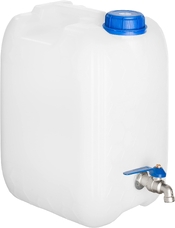
Are you thinking of a big canister like this, with a valve at the bottom, opened just a tiny bit?
61PCsgUglHL.jpg

Surely you're not thinking of standing there for minutes with a jug in hand, "creating the flow" by pouring water out of the jug?
 
A jug like that would work.
As will a low flow siphon, or even a jug with a very small hole in it.
An aquarium pump as well.
Anything that will give you a slow trickle of water, down into the centre tube in a developing tank.
 
Photrio.com contains affiliate links to products. We may receive a commission for purchases made through these links.
To read our full affiliate disclosure statement please click Here.

PHOTRIO PARTNERS EQUALLY FUNDING OUR COMMUNITY:


Ilford ADOX Freestyle Photographic Stearman Press Weldon Color Lab Blue Moon Camera & Machine
Top Bottom