
• Welcome to Photrio!
    Registration is fast and free. Join today to unlock search, see fewer ads, and access all forum features.
    Click here to sign up

Testing and evaluating CatLabs "X Film 320 Pro (2022 version)

Bookcase detail

A
Bookcase detail

  • 0
  • 0
  • 0
Cone and Hoop

A
Cone and Hoop

  • 1
  • 0
  • 29

Recent Classifieds

Forum statistics

Threads
202,761
Messages
2,845,224
Members
101,512
Latest member
FastFred
Recent bookmarks
0
@Dwight Anderson, it looks like you have found your personal EI and development technique...the "overexposed/underdeveloped" images look great.

@Huss, IIRC, didn't you have problems with Shanghai's GP3 220 in DF-96, also?

GP3 220 had issues if I developed it warmer than 70 degrees. DF96 has recommendations for 70, 75, 80. It actually looked really good at 70.

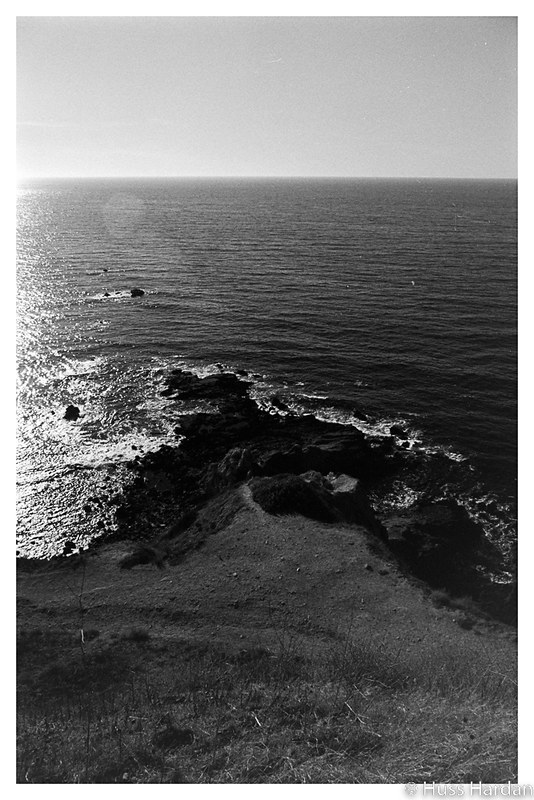
Films that are a no-go: Silberra Orta, Adox CMS, and I feel CatLabs 320.
 
Those pics over the lake are so nice.

And some of the other pics - particularly the last three - are also very nice, and show the film to have more mid-tone capabilities than many of the other examples we have seen previously.
 
For our next attempt at shooting Catlabs 320 Pro...

Pretty much says it all.

Just kidding. Everyone is having fun and that's what counts. I remember when I was young and carefree and tested everything. I once tested the permeability of my bamboo tongs. At a couple of different developer temperatures. They didn't come with a datasheet either. Everything matters.
 
Last edited:
For our next attempt at shooting Catlabs 320 Pro, I decided to over expose and under develop, at least based on the box recomendations. Meters were set to 100
Thanks for sharing all of this, Dwight. The pics look good to me! I think your results are dovetailing nicely with the analysis that aparat has done.

My takeaway from the two Photrio threads is that this film is similar to Ferrania P30 in both speed and contrast, but is significantly cheaper. Not a bad thing at all.
 
This was way back in post #158 but I think @albada might be on to something here. Even with shortish development time and constant agitation (see my post #261 above), the highlights in ZVII and ZVIII are getting compressed. It's not a huge effect but I think we can see it in a lot of the awesome photographs posted here.

I see highlight compression in the last photo from @Dwight Anderson above. That enables midtone contrast to be higher, strengthening the above photos.
With compression of light tones, I wonder how caucasian skin-tones would fare. Does anyone want to try some shots of people?
 
I see highlight compression in the last photo from @Dwight Anderson above. That enables midtone contrast to be higher, strengthening the above photos.
With compression of light tones, I wonder how caucasian skin-tones would fare. Does anyone want to try some shots of people?

In my color response picture, the red patches are lighter than either blue or green, so that might also affect how skin tones are rendered.
 
Huss you have highlighted a number of films that have problems in DF96 so can I ask: Are all of them on a polyester base?

Thanks

pentaxuser
 
Thanks for all the kind words, it was fun trying out new ideas. If not for this forum I would have just followed the box recommendations and decided the film wasn't for me. Now I feel like I've learned a new set of tools, which most of you probably already knew how to use.

I thought it was funny that we both took the same view of the lake, even though we weren't there at the same time. The barn door shot was planned though, to see how close our metering was.
 
Thanks for all the kind words, it was fun trying out new ideas. If not for this forum I would have just followed the box recommendations and decided the film wasn't for me. Now I feel like I've learned a new set of tools, which most of you probably already knew how to use.

I thought it was funny that we both took the same view of the lake, even though we weren't there at the same time. The barn door shot was planned though, to see how close our metering was.

Great photographs, especially those of the lake. It must be really inspiring to share photography with your partner.
 
Huss you have highlighted a number of films that have problems in DF96 so can I ask: Are all of them on a polyester base?

Thanks

pentaxuser
So now that is three films for me that don't work well with DF96 - Catlabs 320, Silberra Orta, Adox CMS 20. Not sure of their bases.
 
Great photographs, especially those of the lake. It must be really inspiring to share photography with your partner.

Thanks, a walk with my wife on a beautiful fall day is great, cameras or not.

It looks like I'm not too far away from you, these shots were taken in Anoka, on the pond behind the Rum River dam.
 
Very interesting, thanks everyone for sharing experiences and especially fine quality images. The Lake Images certainly has changed my thoughts from 'meh, I'll try this film when I get a chance' to 'hmm I wonder how that mid-tone scale would look in my area/methods/chems".
Oh and Huss that is some fine 28mm images despite that bromide drag, it is good to note these incompatible combinations but I will note I'm not fond of bromide drag particularly as a weak excuse for 'artistic expression'.
 
Ok just ordered some, likely to be shot in high EV's, and likely processed in D-23 first and then I'll see. Likely Rodinal and maybe Atomal.
 
Very interesting, thanks everyone for sharing experiences and especially fine quality images. The Lake Images certainly has changed my thoughts from 'meh, I'll try this film when I get a chance' to 'hmm I wonder how that mid-tone scale would look in my area/methods/chems".

I think you really nailed it. I believe that, in the original thread, the discussion quickly split into camps, unfortunately. I think the manufacturer's guarded and sarcastic responses might have contributed to the split. There was a group of posters who insisted on following the manufacturer's recommendations, and refused to accept the fact that the film's speed and development time might be anything other than what's printed on the box, often before even shooting and processing a single roll. But, like virtually every other black and white film out there, it takes time and effort to figure it out. One needs to keep an open mind, test the material, and come up with their own preferred method of working with it. Film performance is a continuum of varying characteristics, not a binary. I think, with these recent photographs posted here, we are seeing that the Catlabs film benefits from exposing at least a stop below box speed and cutting development by at least 20-30 percent. That entire series by @Dwight Anderson (and others) shows increased shadow detail, a wide and smooth tonality, and nicely controlled highlights, in addition to their great artistic merit. Of course, the punchy, contrasty look, with deep blacks and bright highlights is also very interesting. In the end, it's not about who's right but, rather, it's all about finding what works best for one's needs.
 
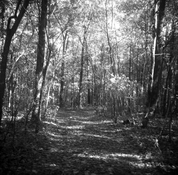
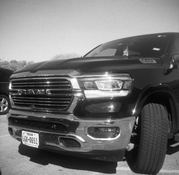
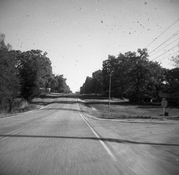
So....I already posted these in "industry news". I shot one roll on my trip to Arkansas and Missouri, and processed the day after I got back home to England. No troubles using or handling the film which has the same backing paper and silver package as Harman/Ilford films. Though I don't think the actual film/emulsion is a Harman brew. As noted in that thread, the film turned my developer the colour of pee or straw, presumably an anti-halation dye. The film dried flat and the negatives show good density without being under or over exposed/developed. I shot at roughly 200 ISO (no great care taken) with a 1937 Zeiss Ikon folder. Processed in Ilford Microphen stock for 6:30 at 20C +/- 0.2C with inversions at every minute. No troubles loading the film onto a Jobo reel.

I am generally pleased with the results except that three frames may exhibit emulsion imperfections. Note the black dots in the picture of the road. When time allows I will examine the negatives properly to try and ascertain what caused this.
 

Attachments

  • 100.jpg
    100.jpg
    1.7 MB · Views: 103
  • 103.jpg
    103.jpg
    1.2 MB · Views: 92
  • AR_MO_044.jpg
    AR_MO_044.jpg
    1.3 MB · Views: 96
There was a group of posters who insisted on following the manufacturer's recommendations, and refused to accept the fact that the film's speed and development time might be anything other than what's printed on the box, often before even shooting and processing a single roll. But, like virtually every other black and white film out there, it takes time and effort to figure it out.
Seems like the CatLABS guy falls in this group too since he told you you had no idea what you were doing in arriving at an approximate 80 film speed instead of the "EI ISO 320" on the box or 200 recommended on the website, and also insisted you develop the film for the 10 minutes he set out in his instructions rather the 8 minutes you used since your were using a rotary processor, which of course would have rendered the film even more contrasty than it already is. I don't know if the CatLABS guy has ever shot or processed the film either. Wouldn't surprise me in the least if he hasn't.

I have this sneaking suspicion that the film speed(s) and development times were supplied by the eminent photochemist James Lane at Zone Imaging since CatLABS is now carrying his 510 Pyro, and has updated its webpage to say that 510 Pyro is the recommended developer for this film. Of course, that could just be a remarkable set of coincidences.
 
Last edited:
  • BrianShaw
  • Deleted
  • Reason: Nope. Don’t take the bait….
I have this sneaky suspicion that the film speed(s) and development times come from the eminent photochemist James Lane since CatLABS is now carrying his 510 Pyro,

Even so, what do they gain by rating the film with a roughly 2 stop push, and NOT TELLING THE USER that's the case? It's very different from (current) manufacturer information for T-Max P3200 or Delta 3200, both of which the manufacturers admit are ISO 800-1000 but intended to be pushed.
 
Even so, what do they gain by rating the film with a roughly 2 stop push, and NOT TELLING THE USER that's the case? It's very different from (current) manufacturer information for T-Max P3200 or Delta 3200, both of which the manufacturers admit are ISO 800-1000 but intended to be pushed.

You would have to ask them. My guess is that they think the film will sell better if it is rated "EI ISO 320" than 80, where it would be in direct competition with Ferrania P30. CatLABS previously sold rebranded Kodak 5222 as ISO 320 even though Kodak, who presumably actually did the ISO film speed tests, rated it as ISO 250 daylight and ISO 200 tungsten. Maybe CatLABS just uses 320 because it is their lucky number.
 
Last edited:
Yeah. Either way, I've now got ten rolls of this stuff that might last me ten years, because I shoot a LOT more high speed film than medium speed. Or maybe I'll try a roll and find I like it (at EI 160 or so), now that I have the setup to haul my RB67 and tripod around. FWIW, I like 5222 very much at EI 400, so EI 320 for the Catlabs X might not be excessive after all...
 
Yeah. Either way, I've now got ten rolls of this stuff that might last me ten years, because I shoot a LOT more high speed film than medium speed. Or maybe I'll try a roll and find I like it (at EI 160 or so), now that I have the setup to haul my RB67 and tripod around. FWIW, I like 5222 very much at EI 400, so EI 320 for the Catlabs X might not be excessive after all...

Let us know how you like it.
 
And what developer did you use? And did you pre-wash? :smile:
 
Thanks for sharing all of this, Dwight. The pics look good to me! I think your results are dovetailing nicely with the analysis that aparat has done.

My takeaway from the two Photrio threads is that this film is similar to Ferrania P30 in both speed and contrast, but is significantly cheaper. Not a bad thing at all.

However it would appear to have a different spectral response in that P30 seems very close to being ortho with reds being very dark whereas CatLABS 320 Pro is sensitive to red according to aparat's findings

pentaxuser
 
Photrio.com contains affiliate links to products. We may receive a commission for purchases made through these links.
To read our full affiliate disclosure statement please click Here.

PHOTRIO PARTNERS EQUALLY FUNDING OUR COMMUNITY:


Ilford ADOX Freestyle Photographic Stearman Press Weldon Color Lab Blue Moon Camera & Machine
Top Bottom