• Welcome to Photrio!
    Registration is fast and free. Join today to unlock search, see fewer ads, and access all forum features.
    Click here to sign up

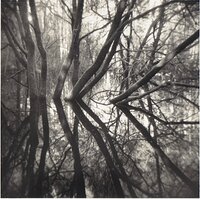
Rollei 400 IR film in Xtol

Flooded woodland

Flooded woodland

  • 14
  • 0
  • 84
Babylon

D
Babylon

  • 3
  • 1
  • 77

Recent Classifieds

Forum statistics

Threads
202,840
Messages
2,846,302
Members
101,559
Latest member
gnafin61
Recent bookmarks
1
For darker filters such as Red29 or 720 I have a filter adapter [holder] that fits over the lens and can be flipped up out of the way for composing and focusing.

Yes I can see how this would work but presumably this is not what Helge meant or did he?

I look forward to his answer

pentaxuser
 
Can you expand on this please? What is IR gel and where in the film gate do you place it that enables you to see through the lens just fine?

pentaxuser

He means something like a Kodak Wratten filter. I've done this in the past, and I did not like the results. Filter in front of the lens gave me a sharper image, and besides that, taping something in the film gate is risky. When the mirror is down, you can see the image normally. Wratten IR filters are not cheap, too. The magnetic filter sounds like a better option.
 
Yes I can see how this would work but presumably this is not what Helge meant or did he?

I look forward to his answer

pentaxuser

I too was perplexed with his statement. Almost always he is crystal clear in his statements.
 
He means something like a Kodak Wratten filter. I've done this in the past, and I did not like the results. Filter in front of the lens gave me a sharper image, and besides that, taping something in the film gate is risky. When the mirror is down, you can see the image normally. Wratten IR filters are not cheap, too. The magnetic filter sounds like a better option.

I have avoided gels or flexible filters due to their fragileness and short term life. I only use glass filters [today some may actually be plastic, IDNK].
 
I too was perplexed with his statement. Almost always he is crystal clear in his statements.

Well, his message seemed clear enough to me. Seems like @Andrew O'Neill also figured out what he meant; I interpreted in the same way. A filter positioned in front of the film and behind the lens (and mirror). But I can also see how this would degrade image quality as Andy noticed. Reflections etc. will be a problem and imperfections in the filter surface will be more detrimental than if the same filter is mounted at the front of the lens.
 
For darker filters such as Red29 or 720 I have a filter adapter [holder] that fits over the lens and can be flipped up out of the way for composing and focusing.

The bird flew away while you were flipping filters.
 
Can you expand on this please? What is IR gel and where in the film gate do you place it that enables you to see through the lens just fine?

There are other IR gels than Wratten. The important thing is that they are optical quality and that it’s exactly the width of the gate.
Any leaks will be quite noticeable. You also have to be extra careful with your fingers when loading film. Any smears and scratches on the gel will be visible. Same with dust.
The length has to be so you can tape the filter strip down in the curve going down the film cartridge and the take up.
It’s also important that the IR gel is taut and doesn’t buckle.
It’s less hard than it sounds.
A vernier callipers, a scalpel and a cutting mat are necessary. Don’t try to wing it with scissors.
 
Well, his message seemed clear enough to me. Seems like @Andrew O'Neill also figured out what he meant; I interpreted in the same way. A filter positioned in front of the film and behind the lens (and mirror). But I can also see how this would degrade image quality as Andy noticed. Reflections etc. will be a problem and imperfections in the filter surface will be more detrimental than if the same filter is mounted at the front of the lens.

True, but rear element gels still work. Of course this is even “worse”.
Optical quality gels are very even though.
And reflections are not a problem since the gel is completely transparent to IR and opaque to be rest of the spectrum.
The rest is up to the film and the antihalation backing (or lack of).
 
Last edited:
The bird flew away while you were flipping filters.

There are always so many birds here that that is never a problem, beside the discussion is about the Wood effect with IR film and not wildlife photography.
 
I have avoided gels or flexible filters due to their fragileness and short term life. I only use glass filters [today some may actually be plastic, IDNK].

I used to cart around several gel filters. Now I only use glass. All one size. Step up rings employed when necessary.
 
Back on the question of the film's speed, I've been going more or less by the book, treating it as ISO 400 and applying a filter factor around 8 with three different Leica filters - an A36 IR, an E39 IR and a Summitar Rd (dark red). Visual comparison of the filters shows differences, the Summitar being the most opaque. But they are all fairly old and can have altered over the years.

As the "maker" suggests 5 minutes in HC-110 dilution B, I began with Ilfotec HC 1+31; but then a dealer introduced me to Bellini's Euro HC, which I really like and use at 1+31. It's a doddle to mix as it's very fluid.

This seems to me to produce acceptable results; so here are photos of a strip and a single frame on a light panel, plus a straight scan of the single frame. The panel photos are shaky - forgive my elderly handholding. This roll was exposed with the Summitar.
Strip.jpg
House.jpg
House scan.jpg
 
There are always so many birds here that that is never a problem, beside the discussion is about the Wood effect with IR film and not wildlife photography.

A bird in a tree with a 135mm looks nice in IR. So insects.
 
Back on the question of the film's speed, I've been going more or less by the book, treating it as ISO 400 and applying a filter factor around 8 with three different Leica filters - an A36 IR, an E39 IR and a Summitar Rd (dark red). Visual comparison of the filters shows differences, the Summitar being the most opaque. But they are all fairly old and can have altered over the years.

As the "maker" suggests 5 minutes in HC-110 dilution B, I began with Ilfotec HC 1+31; but then a dealer introduced me to Bellini's Euro HC, which I really like and use at 1+31. It's a doddle to mix as it's very fluid.

This seems to me to produce acceptable results; so here are photos of a strip and a single frame on a light panel, plus a straight scan of the single frame. The panel photos are shaky - forgive my elderly handholding. This roll was exposed with the Summitar.View attachment 350538View attachment 350539View attachment 350540

Which filter did you use for house and tree photo? The strongest one?
 
I have direct experience with Rollei 400 IR film, exposed at ISO 400 and developed in replenished XTOL in a Jobo processor and I have had very good success. Unfortunately I am out of the country and will not be back until 8 Ocotober, so I cannot look up the information in my notebook. When I get I will look the times I used in the notebook.

I got back and then had to find the reference in my notebook. Using the Jobo processor with replenished XTOL, which has times close to or the same as 1:1, my notes have

°F ____°C_____Time
72____22.2____6'0"
73____22,8____5'45"
74____23.3____5'30"
75____23.9____5'15"

I do not use film development times shorter than 5 minutes.
 
Photrio.com contains affiliate links to products. We may receive a commission for purchases made through these links.
To read our full affiliate disclosure statement please click Here.

PHOTRIO PARTNERS EQUALLY FUNDING OUR COMMUNITY:


Ilford ADOX Freestyle Photographic Stearman Press Weldon Color Lab Blue Moon Camera & Machine
Top Bottom