• Welcome to Photrio!
    Registration is fast and free. Join today to unlock search, see fewer ads, and access all forum features.
    Click here to sign up

Resolution - a few 400 speed films under the loupe

feeling grey

A
feeling grey

  • 0
  • 0
  • 20
Inconsequential

H
Inconsequential

  • 2
  • 0
  • 35

Recent Classifieds

Forum statistics

Threads
201,798
Messages
2,830,385
Members
100,961
Latest member
pisimimail
Recent bookmarks
0

faberryman

Subscriber
Allowing Ads
Joined
Jun 4, 2016
Messages
6,048
Location
Wherever
Format
Multi Format
The OP admits in post #1 "This is a subjective scale." It's been firmly established that granularity cannot be determined by visual inspection. Kodak measures the diffuse RMS granularity of 400TX as 17 (fine). Unless he can produce data that gives a similar scientific measurement then this is all speculative.

So are you basically saying that what the OP sees when he compares TriX with Delta 400 using a loupe, is a mirage? Or when I compare the two when I am enlarging and using a grain focuser, the difference is an optical illusion? I like TriX for some things and Delta 400 for others. Am I deluding myself that there is a difference in the amount of grain?
 
Last edited:

Gerald C Koch

Member
Allowing Ads
Joined
Jul 12, 2010
Messages
8,131
Location
Southern USA
Format
Multi Format
I don't know for sure, but I think post #1 is about "inherent resolution" and not about "granularity". I do know from my own experience that granularity does play a role in perceived sharpness & resolution, but I think the original OP is forming his opinion based on exactly what he sees with his own eyes.

Indeed resolution does depend on granularity. Resolution is on shakier ground since the quality of the test lens/lenses now come into consideration. On APUG we see a fairly constant stream of "test" data from sincere people who believe their results. Unfortunately most of it is done without the proper training or equipment. Producing good quantitative data is an extremely difficult and time consuming task.

Some years ago Ilford discontinued publishing RMS granularity values for their films. I believe this was done because there is more to film than mere resolution and granularity.
 

Gerald C Koch

Member
Allowing Ads
Joined
Jul 12, 2010
Messages
8,131
Location
Southern USA
Format
Multi Format
So are you basically saying that what the OP sees when he compares TriX with Delta 400 using a loupe, is a mirage? Or when I compare the two when I am enlarging and using a grain focuser, the difference is an optical illusion? I like TriX for some things and Delta 400 for others. Am I deluding myself that there is a difference in the amount of grain?

NO What I am saying is that the human eye and brain are not very good scientific instruments. The only scientific method is measuring the RMS granularity.

Then there is the problem that so many variables are involved.

0. The same test setup for each film, ie subject and lighting. A standard resolution chart is a must.
1. Camera stability.
2. Choice of camera and lens. SLR's experience mirror slap.
3. Contrast range of the subject.
4. Choice of developer. Does it support edge effects?
5. Agitation in the developer. Developer temperature.
6. Development Gamma value.
7. The same area of each negative must be used. Granularity differs with negative density.

Etc, etc, etc.

All these things must be rigidly controlled. You really need a microscope and not a loop which typically is a single uncorrected lens, full of aberrations, and has a low magnification. For that matter the eye is a single uncorrected lens.

Then too comparing T-grain (or Delta) films with older emulsions is comparing the proverbial apples and oranges.

And here is the zinger. Unless your method conforms closely with the test method the results are rather meaningless for you.. Use a different camera, developer, ... and you may not see the same thing.

 
Last edited:

John Wiegerink

Subscriber
Allowing Ads
Joined
May 29, 2009
Messages
4,034
Location
Lake Station, MI
Format
Multi Format
The only thing that is meaningful is what you see with your "own" eyes. All the rest doesn't mean "squat shit", in simple laymen terms.
 

pdeeh

Member
Allowing Ads
Joined
Jun 8, 2012
Messages
4,770
Location
UK
Format
Multi Format
How are you sure that the way you see today is the same way as you saw yesterday?
 

pdeeh

Member
Allowing Ads
Joined
Jun 8, 2012
Messages
4,770
Location
UK
Format
Multi Format
I wasn't going to mention that :wink:
 

faberryman

Subscriber
Allowing Ads
Joined
Jun 4, 2016
Messages
6,048
Location
Wherever
Format
Multi Format
NO What I am saying is that the human eye and brain are not very good scientific instruments. The only scientific method is measuring the RMS granularity.

Then there is the problem that so many variables are involved.

0. The same test setup for each film, ie subject and lighting. A standard resolution chart is a must.
1. Camera stability.
2. Choice of camera and lens. SLR's experience mirror slap.
3. Contrast range of the subject.
4. Choice of developer. Does it support edge effects?
5. Agitation in the developer. Developer temperature.
6. Development Gamma value.
7. The same area of each negative must be used. Granularity differs with negative density.

Etc, etc, etc.

All these things must be rigidly controlled. You really need a microscope and not a loop which typically is a single uncorrected lens, full of aberrations, and has a low magnification. For that matter the eye is a single uncorrected lens.

Then too comparing T-grain (or Delta) films with older emulsions is comparing the proverbial apples and oranges.

And here is the zinger. Unless your method conforms closely with the test method the results are rather meaningless for you.. Use a different camera, developer, ... and you may not see the same thing.

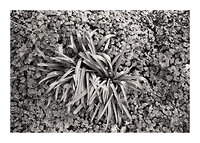
Well, I can look at the two negatives and see a distinct difference, which is why I select TriX for some projects, and Delta 400 for others. You may not believe there is a pothole in front of you and walk around it without scientific evidence, but I do. Break a leg.
 

Gerald C Koch

Member
Allowing Ads
Joined
Jul 12, 2010
Messages
8,131
Location
Southern USA
Format
Multi Format
Since we can't get inside other people's minds there is no guarantee that what we see is what they see. Hence the need for standard scientific testing.

For a long time it was thought that there were canals on Mars. The eye never lies. Closer inspection by space craft show that they do not exist. The mind sees what it thinks it should see whether it is canals or better resolution. IIRC Kodak for many years would submit a group of prints to a committee of people to determine a film's resolution. They ultimately found the system unreliable and devised a more technical method.
 
Last edited:

MattKing

Moderator
Moderator
Allowing Ads
Joined
Apr 24, 2005
Messages
55,167
Location
Delta, BC Canada
Format
Medium Format

pdeeh

Member
Allowing Ads
Joined
Jun 8, 2012
Messages
4,770
Location
UK
Format
Multi Format
It is important to remember - especially at this special time of year - that none of this matters; because, of course, we are all doomed.
 

Ron789

Subscriber
Allowing Ads
Joined
Nov 17, 2014
Messages
382
Location
Haarlem, The
Format
Multi Format
These results are no surprise to meat all. And that's why I love Tri-X..... beautiful grain, especially when developed in Rodinal.
There is a Norwegian web site where people have done a great job comparing many films and many developers, including Tri-x, HP5 and Delta 400 in Xtol:
http://www.fotoimport.no/filmtest/fkxtol.html
Here you can put 2 film-developer combinations side-by-side to see the differences.
 

faberryman

Subscriber
Allowing Ads
Joined
Jun 4, 2016
Messages
6,048
Location
Wherever
Format
Multi Format
For a long time it was thought that there were canals on Mars. The eye never lies. Closer inspection by space craft show that they do not exist. The mind sees what it thinks it should see whether it is canals or better resolution. IIRC Kodak for many years would submit a group of prints to a committee of people to determine a film's resolution. They ultimately found the system unreliable and devised a more technical method.

And some people believe in Sasquatch, alien encounters, and communicating with the dead. Sure, we can engage in a phenomenological discussion of the other, but I am talking about TriX and Delta 400. Have you actually looked at those films with a loupe or grain focuser, or at the resulting prints? As flawed as your vision may be, what do you see? What film do you chose and why? Is your choice based entirely on scientific evidence without regard to what your eyes tell you?
 
Last edited:

Gerald C Koch

Member
Allowing Ads
Joined
Jul 12, 2010
Messages
8,131
Location
Southern USA
Format
Multi Format
And some people believe in Sasquatch, alien encounters, and communicating with the dead. Sure, we can engage in a phenomenological discussion of the other, but I am talking about TriX and Delta 400. Have you actually looked at those films with a loupe or grain focuser, or at the resulting prints? As flawed as your vision may be, what do you see? What film do you chose and why? Is your choice based entirely on scientific evidence without regard to what your eyes tell you?

Granularity and resolution are technical specifications. Things like tonality are aesthetic. As far as granularity is concerned I will take Kodak and Fuji measurements over someone else's. Let's not complicate the question even more.

The original premise is a bit mixed up. Resolution is usually measured for lenses and granularity for films. I would have preferred if the OP had measured the resolving power of the lens used for his tests. Fuji Acros 100 has a RMS granularity of 7 and should be more than capable of returning the necessary data. In addition there are some other important facts omitted from the post. For example the developer used and the Gamma value obtained.

Anyone is perfectly free to believe the OP's conclusions. I see too many questions to find it useful. Simple as that.
 
Last edited:

trythis

Member
Allowing Ads
Joined
Sep 26, 2013
Messages
1,208
Location
St Louis
Format
35mm
Did you guys notice this thread is 8+ years old? Why do zombie threads like this come back?
 

NJH

Member
Allowing Ads
Joined
Dec 30, 2013
Messages
702
Location
Dorset
Format
Multi Format
Not to fan the flames but I bought a scoponet grain focuser recently and thought it would be a good ideal to use it to inspect the projected grain and fine details on some test rolls I shot in the summer (Tri-X and Acros shot at the same time, same subject then developed 1:50 in Rodinal). First thing that surprised me was how little the grain is visible as my eyes had become accustomed to scans, for sure the Tri-X looks more grainy under a scoponet than Acros but it also seems to show much better contrast edge delineation when looking at objects with decent edge contrast, including very small items. On these 35mm negatives for example one item I inspected is a motif on a plant pot about 3 inches high with the photographs taken from the bottom of my garden with a 50mm lens on a Leica M6. As a result I prefer how the Tri-X negatives look under this sort of 'test' despite being more grainy.

Note that the above observations have no baring on my photography though despite being a little surprised that Acros looks a little mushy even after dev in rodinal in the above test.

I prefer Tri-X over all other films now for the simple reason that my favourite looking photographs were shot with it and when one hits on something that works you stick with it right?
 

faberryman

Subscriber
Allowing Ads
Joined
Jun 4, 2016
Messages
6,048
Location
Wherever
Format
Multi Format
Well, you can't trust your eyes, so, without scientific evidence, none of your judgments are valid. :smile:
 

NJH

Member
Allowing Ads
Joined
Dec 30, 2013
Messages
702
Location
Dorset
Format
Multi Format
Well, you can't trust your eyes, so, without scientific evidence, none of your judgments are valid. :smile:
LOL, yes there is an odd logic in this thread. Its similar to anti-democratic ideas that say one can't have an opinion on economic policy unless your a 'decorated' expert in economics, which by extension would mean only academic experts would be qualified to vote.

Anyways to explain why I was inspecting negatives with the scoponet is important I feel. I wanted to see if I could 'see' a difference in grain from frames overexposed 1 stop to those exposed using box speed and incident light reading. I also have a proper calibrated densitometer bought cheap as the hospitals ditch their analog equipment but I won't claim I have speed tested just done spot checks for a roughly 1.2 to 1.3 range up above b+f. On the Tri-X I feel the grain looks the same size just a touch more prominent as there was a touch more contrast on the features I was looking at, quite different to over-developed traditional films which look very grainy to me. I know for example from experience one will get the same change by adjusting contrast of scans. This was important to me as I intentionally shot those test rolls on a very bright sunny afternoon with deep shadows and highly reflective white features (window frames etc.), looking at those areas the over-exposed 1 stop and 1.5 stop frames show much better shadow detail but not real increase in grain or loss of highlight details such that I can't really 'see' any penalty to just over-exposing Tri-X one stop to get much better shadow detail.

I know many say these things I just wanted to see it for myself which is the point of this thread perhaps.
 

Prof_Pixel

Member
Allowing Ads
Joined
Feb 17, 2012
Messages
1,917
Location
Penfield, NY
Format
35mm
Once we start talking about 'visual sharpness' (or 'visual resolution'), we should be talking about acutance and not resolution.
 

NJH

Member
Allowing Ads
Joined
Dec 30, 2013
Messages
702
Location
Dorset
Format
Multi Format
Not really. The correct thing to do IMHO would be to run a large set of tests to show the transfer function contrast at different resolution scales and subject contrast, similar to the graphs manufacturers publish for lens resolution and usually a single line or two at specific criteria for films. Ultimate resolution at some arbitrary high subject contrast is pretty much meaningless in real photographic terms, stuff like this film as 100 lp/mm and this one 120 lp/mm means absolutely nothing to most folks despite being repeatedly debated on forums or sadly often used to misleadingly bash digital.
 

Sal Santamaura

Member
Allowing Ads
Joined
Nov 21, 2005
Messages
7,535
Location
San Clemente, California
Format
Multi Format
Did you guys notice this thread is 8+ years old? Why do zombie threads like this come back?
Why clutter the archive with new, redundant threads? Adding on to a relevant, existing thread is exactly the correct thing to do. It makes searching for answers much easier and quicker.

These are forum categories, not chat rooms. Anyone who wants to chat need only click "Chat" on the top bar. :smile:
 

faberryman

Subscriber
Allowing Ads
Joined
Jun 4, 2016
Messages
6,048
Location
Wherever
Format
Multi Format
The correct thing to do IMHO would be to run a large set of tests to show the transfer function contrast at different resolution scales and subject contrast, similar to the graphs manufacturers publish for lens resolution and usually a single line or two at specific criteria for films.
Why not just look at some prints you have made from TriX and Delta 400 and make a judgment about which look you would prefer for the project at hand? Unless you think that the two films are identical except as some level only a quantitative analysis along the lines you are suggesting would reveal.
 
Photrio.com contains affiliate links to products. We may receive a commission for purchases made through these links.
To read our full affiliate disclosure statement please click Here.

PHOTRIO PARTNERS EQUALLY FUNDING OUR COMMUNITY:


Ilford ADOX Freestyle Photographic Stearman Press Weldon Color Lab Blue Moon Camera & Machine
Top Bottom