
-
Welcome to Photrio!Registration is fast and free. Join today to unlock search, see fewer ads, and access all forum features.Click here to sign up
You are using an out of date browser. It may not display this or other websites correctly.
You should upgrade or use an alternative browser.
You should upgrade or use an alternative browser.
Replace PPD by CD-3
-
A
- Thread starter Alan Johnson
- Start date

Recent Classifieds
-
Free GONE French lens probably early XIXcentury
- Started by Gaston 012
-
Sold Ilford 4x5 FP4+ (Expired June 2023)
- Started by CreationBear
-
Sold Beseler Audible/Repeating Enlarging Timer w/ foot switch
- Started by CreationBear
-
For Sale Tanks n hangers
- Started by CreationBear
-
For Sale 5x7 Fidelity Elite Film Holders
- Started by Jammoh
Forum statistics

Well, the final patent would include the specific and non-obvious points that made the "new" use preferred over the old method. So, it would be something that combined several aspects of use over the simple formulas shown.
And, don't forget that the amount of carbonate was based on the free base of the developing agent. Modern CD3 is the p-Toluene Sulfonate salt, IIRC and is much higher in MW than the original CD3. It may contain more PTS acid and may contain waters of hydration as well. I don't remember and no longer have that cheat sheet. I had to use it to convert from the old Sulfate salt to the PTS salt in new formulas back in the day.
PE
And, don't forget that the amount of carbonate was based on the free base of the developing agent. Modern CD3 is the p-Toluene Sulfonate salt, IIRC and is much higher in MW than the original CD3. It may contain more PTS acid and may contain waters of hydration as well. I don't remember and no longer have that cheat sheet. I had to use it to convert from the old Sulfate salt to the PTS salt in new formulas back in the day.
PE
Try W665 (Windisch), based on Ortho-Phenylene Diamine (OPD). I did some tests with Fomapan Creative 200 (E.I. 100) and Rollei Pan 25. 777 Panthermic is also possible but this developer is based on Para-Phenylene Diamine (PDD). You have to find out yourself which (modern) emulsions are responding well on these old type ultra fine grain developers.
A modern liquid type is CG-512/RLS. It's working nice in rotary development too at 24C. Very easy in handling, based on Metol and Sodiumsulfite. Most films are reacting very well on this Udo Raffay receipt. Also 1- 1 1/2 F stop speed loss.
W665 has an excellent reputation. I've tried substituting CD-2 for the OPD with excellent results. One downside to CD-2 (and PPD, for that matter) is that the used developer tends to stain things rather badly.

One downside to CD-2 (and PPD, for that matter) is that the used developer tends to stain things rather badly.
So in that way OPD is a better choice and also less toxid.
- Joined
- Nov 16, 2004
- Messages
- 3,438
Sease No.1 with CD-4 and sodium carbonate
CD-4...................................10g
Sodium Sulfite.......................90g
Sodium Carbonate..........see below
Water to...............................1L
I developed 100 T-max in Xtol 1+0 and in the above formula with sodium carbonate additions as follows:
0g/L (pH~7) ; 5g/L (pH~8) ; 8g/L (pH~9) ; 15g/L (ph~10)
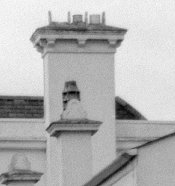
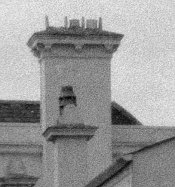
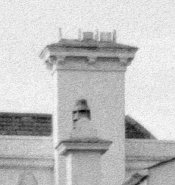
Least grainy result was at sodium carbonate 8g/L (pH~9),EI=80 when developed 18m 68F (Xtol EI=100)
Attachments are 2.5 mm square crops of full frame shown in post#49
Developers I made from CD-4 had more grain and probably less acutance than Xtol.
This is not quite what I expected from reading about old PPD developers -I thought the grain would be very fine with a big loss in film speed and acutance.
CD-4...................................10g
Sodium Sulfite.......................90g
Sodium Carbonate..........see below
Water to...............................1L
I developed 100 T-max in Xtol 1+0 and in the above formula with sodium carbonate additions as follows:
0g/L (pH~7) ; 5g/L (pH~8) ; 8g/L (pH~9) ; 15g/L (ph~10)
Least grainy result was at sodium carbonate 8g/L (pH~9),EI=80 when developed 18m 68F (Xtol EI=100)
Attachments are 2.5 mm square crops of full frame shown in post#49
Developers I made from CD-4 had more grain and probably less acutance than Xtol.
This is not quite what I expected from reading about old PPD developers -I thought the grain would be very fine with a big loss in film speed and acutance.
Attachments



Alan, compare pH 9 and pH 10 in Photoshop @ 300% view, your attached pH 10 example appears finer grained to me, actually they look the same, but the grain itself is lower in contrast, so lower intensity, and to me that is less grainy.
The density and contrast variations are quite considerable from 2 - 5. It is rather hard to evaluate with such a wide difference.
But, I repeat that this is not an ideal formula for a CD.
PE
But, I repeat that this is not an ideal formula for a CD.
PE
- Joined
- Nov 16, 2004
- Messages
- 3,438
I tried this, based on color developer CD-4:
Rayco Ultra-Fine Grain Negative Developer (1998)
Sodium Sulfite anh................100g
Hydroquinone.........................6g
CD-4.......................................8g
Borax......................................4g
Boric acid................................3g
Water to...................................1L
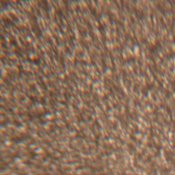
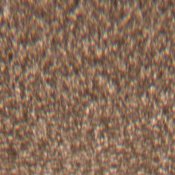
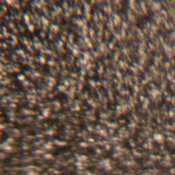
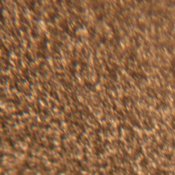
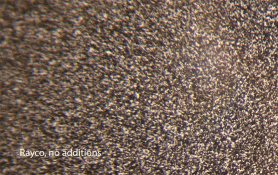
400T-Max was developed in Rayco UFG, Xtol Replenished, Rodinal 1+50 and Pyrocat HD 1+100
Attachments are photomicrographs showing relative grain sizes (color due to tungsten light).
Although all give full film speed (Rayco 7m, Xtol 7m, Rodinal 12m ,Pyrocat 15m) use of the color developer CD4 does not give finer grain than Xtol or Pyrocat.
Maybe Rayco UFG leaves room for improvement but other color devevelopers may give finer grain.
Rayco Ultra-Fine Grain Negative Developer (1998)
Sodium Sulfite anh................100g
Hydroquinone.........................6g
CD-4.......................................8g
Borax......................................4g
Boric acid................................3g
Water to...................................1L
400T-Max was developed in Rayco UFG, Xtol Replenished, Rodinal 1+50 and Pyrocat HD 1+100
Attachments are photomicrographs showing relative grain sizes (color due to tungsten light).
Although all give full film speed (Rayco 7m, Xtol 7m, Rodinal 12m ,Pyrocat 15m) use of the color developer CD4 does not give finer grain than Xtol or Pyrocat.
Maybe Rayco UFG leaves room for improvement but other color devevelopers may give finer grain.
Attachments
Last edited:
I think the sudden awakening of this thread of nearly a decade old is connected with recent private conversation between Alan and myself, so I feel compelled to comment. The experiment above has one flaw in that it is more about a particular film, than it is about a particular property of a developing agent. It would be better to produce pairs of negatives, developed in Sease #1 (simple PPD-sulfite) and Rayco developer for different films. It is true, though, that the derivatives of PPD all produce very flat negatives on BW film, which, in my understanding, was exactly the intention. A seemingly Gargantuan effort to compare PPD/CD-4 on several films could be made simpler by making small volumes of developer and using a film patron as a tank, a technique suggested once in this forum by David Lyga,
On the theoretical side, in my understanding, the derivatives of PPD all differ from unsubstituted PPD in that they are only very weakly complexing metallic silver. Increase in the activity of the CDs is at least in part happening because this property is diminished. Also, sulfite is all but eliminated in a typical color developer, as it is a competitor for the dye production. I noticed that PPD-based developers, when used on currently available films, produce negative of specific appearance, featuring a strong sheen, which, however, is not a silver deposit that has to be wiped off, and not a typical dichroic fog either, both of which are uniform, while sheen is clearly proportional to the density. Substitution of CDs for PPD does not produce any such sheen on the film, or if it is present, it is very inconspicuous.
I do not have sufficient knowledge to further speculate on the mechanism, but I think that none of the CDs is an adequate substitute for PPD in the legacy formulas. The use of PPD in the legacy formulas is clearly based on the balance of a slow development with the main developing agent and the presence of PPD/sulfite, which acts as a grain reducer.
Again, claims that this happens due to the impact of physical development, such as made by Windisch and later, remain just a plausible speculation.
On the theoretical side, in my understanding, the derivatives of PPD all differ from unsubstituted PPD in that they are only very weakly complexing metallic silver. Increase in the activity of the CDs is at least in part happening because this property is diminished. Also, sulfite is all but eliminated in a typical color developer, as it is a competitor for the dye production. I noticed that PPD-based developers, when used on currently available films, produce negative of specific appearance, featuring a strong sheen, which, however, is not a silver deposit that has to be wiped off, and not a typical dichroic fog either, both of which are uniform, while sheen is clearly proportional to the density. Substitution of CDs for PPD does not produce any such sheen on the film, or if it is present, it is very inconspicuous.
I do not have sufficient knowledge to further speculate on the mechanism, but I think that none of the CDs is an adequate substitute for PPD in the legacy formulas. The use of PPD in the legacy formulas is clearly based on the balance of a slow development with the main developing agent and the presence of PPD/sulfite, which acts as a grain reducer.
Again, claims that this happens due to the impact of physical development, such as made by Windisch and later, remain just a plausible speculation.
- Joined
- Nov 16, 2004
- Messages
- 3,438
I agree that the approach I originally tried where CD-4 was used in a legacy type formula Sease no 1 probably failed because it is not a good grain reducer.
There is a good review of the use of PPD and color developing agents CD-1,2,3 &4 in the chapter on super fine grain developing in The Film Developing Cookbook by Anchell & Troop.
Since it appears that lack of solvency in Rayco UFG is the reason it does not provide finer grain I have done some preliminary work on adding a grain solvent.
There is a good review of the use of PPD and color developing agents CD-1,2,3 &4 in the chapter on super fine grain developing in The Film Developing Cookbook by Anchell & Troop.
Since it appears that lack of solvency in Rayco UFG is the reason it does not provide finer grain I have done some preliminary work on adding a grain solvent.
- Joined
- Nov 16, 2004
- Messages
- 3,438
Chlorides are/were used in some developers as solvents but I believe Kodak were working on thiocyanate when the labs closed and Spur have recently been using this substance as a solvent.
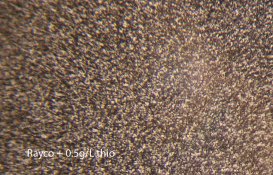
I added 0.5g/L ammonium thiocyanate to the Rayco developer, this produced a reduction in grain (figs 1,2).However there was a speed loss of about 1/3 stop.
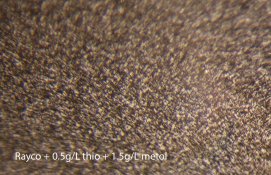
To get round this I tried the method used by Crawley in FX-4, addition of metol . This in addition to the addition of ammonium thiocyanate.
This seems to work, the grain is still finer than Rayco alone (figs 1,3) and the speed seems to be restored .This formula I hope to test further ,call it Rayco-2.
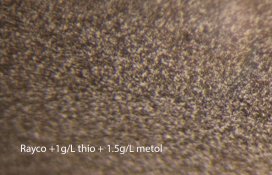
Addition of yet more ammonium thiocyanate is counterproductive (fig 4) no detectable further improvement in grain and a speed loss of 2/3 stop.
I added 0.5g/L ammonium thiocyanate to the Rayco developer, this produced a reduction in grain (figs 1,2).However there was a speed loss of about 1/3 stop.
To get round this I tried the method used by Crawley in FX-4, addition of metol . This in addition to the addition of ammonium thiocyanate.
This seems to work, the grain is still finer than Rayco alone (figs 1,3) and the speed seems to be restored .This formula I hope to test further ,call it Rayco-2.
Addition of yet more ammonium thiocyanate is counterproductive (fig 4) no detectable further improvement in grain and a speed loss of 2/3 stop.
Attachments
- Joined
- Nov 16, 2004
- Messages
- 3,438
https://www.flickr.com/photos/98816417@N08/48995982641/in/dateposted-public/
https://www.flickr.com/photos/98816417@N08/48995438203/in/dateposted-public/
These two pics are 3600 dpi true scans of TMY negatives of the same scene developed in Pyrocat HD and in Rayco II
Hard to see much difference on a computer screen but on 15 in wide prints Pyrocat HD shows greater acutance , and Rayco II shows very slightly finer grain.
Both give about the same EI.
This CD-4 based developer is not really competitive with Pyrocat IMO.
https://www.flickr.com/photos/98816417@N08/48995438203/in/dateposted-public/
These two pics are 3600 dpi true scans of TMY negatives of the same scene developed in Pyrocat HD and in Rayco II
Hard to see much difference on a computer screen but on 15 in wide prints Pyrocat HD shows greater acutance , and Rayco II shows very slightly finer grain.
Both give about the same EI.
This CD-4 based developer is not really competitive with Pyrocat IMO.
albada
Member
Alan, could you post the formula for Rayco-2?
It would be a good starting point for folks wishing to explore CD-4 further.
It would be a good starting point for folks wishing to explore CD-4 further.
- Joined
- Nov 16, 2004
- Messages
- 3,438
Hope to do next week Mark.
I believe the oxide of CD-4 may be strongly adsorbed and tend to reduce contrast.
It may be better to see if there is any interaction with HQ or ascorbate.
I believe the oxide of CD-4 may be strongly adsorbed and tend to reduce contrast.
It may be better to see if there is any interaction with HQ or ascorbate.

In terms of adsorbance to silver halides I would not expect much of a difference between CD-3 and CD-4, or CD-3 based developers would be very different from CD-4 based ones. If this was the case, then Kodak would have chosen one or the other for stills and movies, and they didn't.
BTW Kodak's latest solvent super star was DTOD. KSCN or NaSCN were long before that. For some reason they use neither in their latest color negative processes.
BTW Kodak's latest solvent super star was DTOD. KSCN or NaSCN were long before that. For some reason they use neither in their latest color negative processes.
- Joined
- Nov 16, 2004
- Messages
- 3,438
Alan, could you post the formula for Rayco-2?
It would be a good starting point for folks wishing to explore CD-4 further.
The formula for Rayco-2 was as in post 83 with the addition of ammonium thiocyanate 0.5g/L and metol 1.5g/L (cf Crawley's FX-4).
Develop ~8m 20C, pH ~7.8.
I thought it was the end of the line for this approach but may be wrong.
Rudeofus found that adding a color coupler to CD4 + primary developer made them superadditive, this may be a better way of proceeding.
| Photrio.com contains affiliate links to products. We may receive a commission for purchases made through these links. To read our full affiliate disclosure statement please click Here. |
PHOTRIO PARTNERS EQUALLY FUNDING OUR COMMUNITY:  |