
I would use this squeegee, I have the fancier photo squeegee but the simple window squeegee works great, I recommend this Libman
You can squeegee front or back, just be careful not to scratch the front. After you squeegee lay the print on a towel, print face up to dry, make sure there's no standing drips of water.
Fiber base paper needs to be dried in a blotter book, maybe under a heavy book, don't over dry. I use an old Pako print dryer. I dry mount fiber prints then cut
-
Welcome to Photrio!Registration is fast and free. Join today to unlock search, see fewer ads, and access all forum features.Click here to sign up
You are using an out of date browser. It may not display this or other websites correctly.
You should upgrade or use an alternative browser.
You should upgrade or use an alternative browser.
Removing water from prints
-
A
- Thread starter Photo Knowledge
- Start date

Recent Classifieds
-
Want to Buy WTB: 4x4 Resin 81B Filter
- Started by NortheastPhotographic
-
For Sale LINHOF SUPER TECHNIKA III VERSION 5 with Raptar 135, film holders and FP4
- Started by Simon Benton
-
For Sale LINHOF TECHNIKA III ver 5 LENSBOARDS
- Started by Simon Benton
-
Sold KODAK COLOR THERMOMETER F
- Started by Jon Shiu
-
Want to Buy Sinar P2 8x10 Bellows (Need the frames)
- Started by Jessxi
Forum statistics
I don't have money for a blotter book. I can go to a thrift store and get a book for I don't own a book not one. So when I put the book on the print where do I lay the print? I don't have a rack. I don't have a screen. Can I just use a t shirt and put my print on it? And if so do I lay the print picture down? Thanks!
- Joined
- Feb 16, 2004
- Messages
- 75
Very quickly after I started I realised the value of a drying rack. Just put the prints straight in and forget them Until dry. This also gives you much more time to produce more prints. Look for one on eBay or adapt a kitchen washing up rack

I use this squeegee:
You can save some money by going with the 9" version:
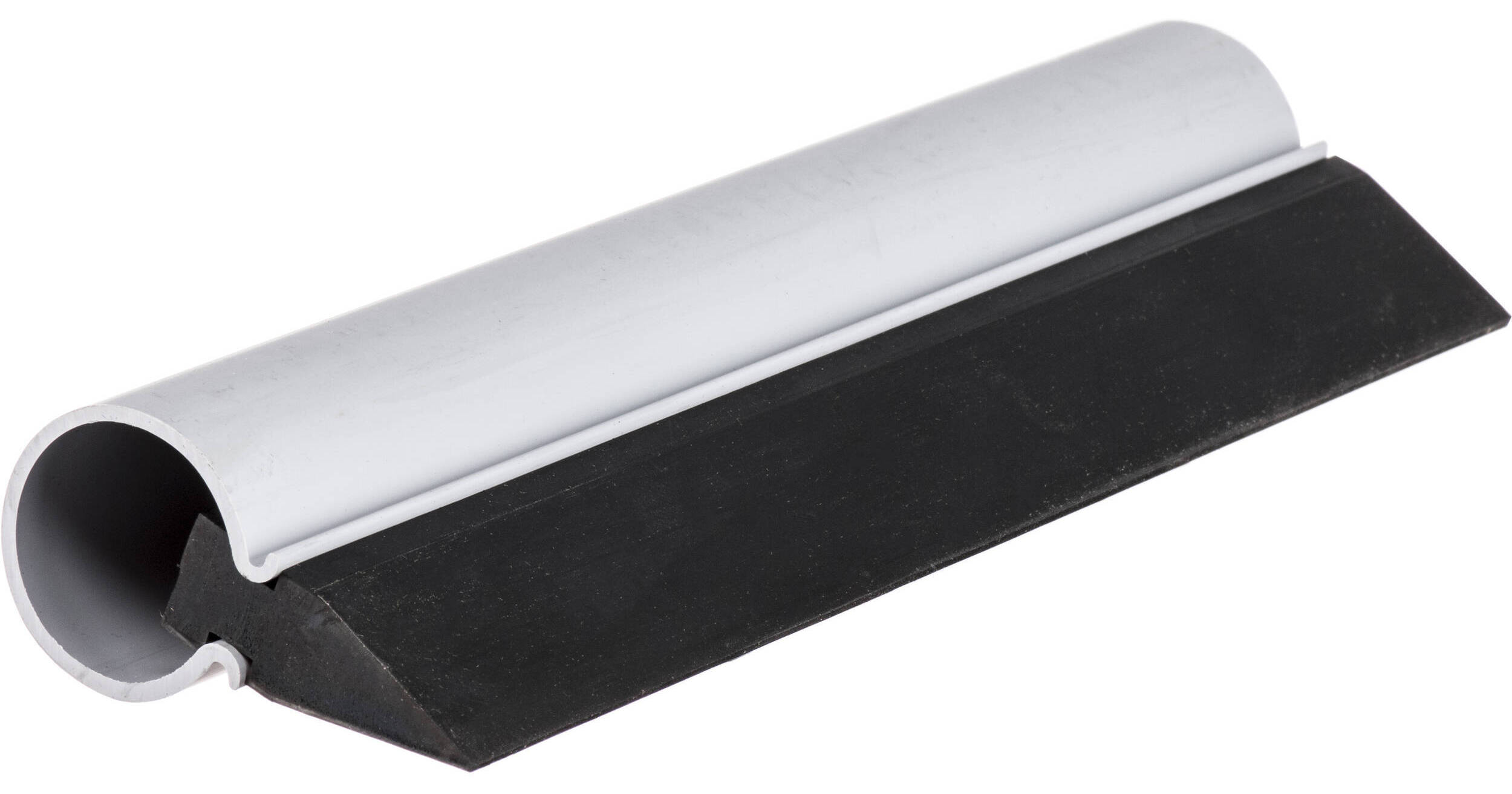
Legacy Pro Tube Squeegee (9")
Buy Legacy Pro Tube Squeegee (9") featuring Remove Excess Water from Darkroom Prints, Tube Design Promotes Even Pressure, Soft Rubber Blade. Review Legacy Pro nullwww.bhphotovideo.com
I wouldn't personally use a towel to dry prints, unless you're sure it's made from something that won't leave lint or other bits of material on the paper surface - even if you only wipe the non-emulsion side.
Well I have no money for racks and I'm limited on money. I'll break it down on what I have. White dry eraser board. Rope and clothes pins for hanging prints. A refrigerator to roll the prints on. What would be a good roller? As for flattening out the prints which would be FB for the first time for me. How long until they flatten? I'm not going to wait years for them to flatten.
It sounds like you are unwilling to hear or entertain the different ways individuals here approach their darkroom chores.
If you want a clear, lain out path, you might just be happier with a Kodak or Ilford style photographic darkroom guide, in which one way to do each job is established and promoted.
Later, when you've experience, including failures as well as successful prints and D.R. methods, you can always start to explore what the many willing photographers here have to say, suggest, and recommend, in depth.
I know what it is to have a small amount of cash for kit is like, but by willing to work around what I did no have, by sidestepping prescribed practices, and adapt any number of items and approaches to getting each job done, including the use of windscreen wipers as recommended in books and magazines I read.
Be open to multiple approaches and the differences of what advice you receive in response to your questions, and, you'll soon get the hang of many aspects of darkroom photography and photography in general, as well.
Godspeed and Good Health to you.
Eli
I would use this squeegee, I have the fancier photo squeegee but the simple window squeegee works great, I recommend this Libman
You can squeegee front or back, just be careful not to scratch the front. After you squeegee lay the print on a towel, print face up to dry, make sure there's no standing drips of water.
Fiber base paper needs to be dried in a blotter book, maybe under a heavy book, don't over dry. I use an old Pako print dryer. I dry mount fiber prints then cut mati
I'm confused on your answer. You said lay the prints on a towel to dry. That's not the confusing part though. You said FB prints need to be dried in a blotter book. Can I not set FB prints on a towel? Why does it seem when I read about RC and FB paper that RC seems really easy to use? My first prints were done with RC paper and all I did was dry them on a towel or hang them to dry. Can't I do the same with FB? I have rope and clothes pins and a fridge. I know what to do to squeegee now I got my answers. Now onto drying after using the squeegee. Now there's no money involved here I have what I have and I need to know if this is what I can use to dry my FB prints. Rope and clothes pins. Fridge to slap my FB prints on. Towel to set my FB prints on. That's what I have I don't have money to go buy racks or a screen or a blotter book. Now out of all that I have listed and since I'm easily getting frustrated here I really just need one straight forward answer. Not what you use but what I have that will be the best to use. Thank you!

Why does it seem when I read about RC and FB paper that RC seems really easy to use?
Because it is easy to use. Stick with that.
The recommendation to dry fibre based paper in a blotter book is to get it to dry flat. It gets all wavy and curly if you hang it to dry. But, like someone already said, you can iron a fibre print after it's dry to flatten it (don't try that with an rc print).
I don't have money to go buy racks or a screen or a blotter book. Now out of all that I have listed and since I'm easily getting frustrated here I really just need one straight forward answer. Not what you use but what I have that will be the best to use.
Frankly, though, you're being a bit of a jerk. You know what you don't have to pay for? All the advice given above. So, one straight answer is: figure it out yourself. It's paper. There's no magic involved.
How do you have money for photo paper yet no money to properly deal with it?
What you will find is that people do things in different ways. Some ways are better than others, and there will be disagreements about which way is best.Now out of all that I have listed and since I'm easily getting frustrated here I really just need one straight forward answer.
Last edited:

I use this squeegee:
You can save some money by going with the 9" version:
Legacy Pro Tube Squeegee (9")
Buy Legacy Pro Tube Squeegee (9") featuring Remove Excess Water from Darkroom Prints, Tube Design Promotes Even Pressure, Soft Rubber Blade. Review Legacy Pro null
I wouldn't personally use a towel to dry prints, unless you're sure it's made from something that won't leave lint or other bits of material on the paper surface - even if you only wipe the non-emulsion side.
I have the 14 inch version, works equally well with FB or RC paper. Blotting prints with a towel? Last thing I want is fibers stuck to the face of something that I spent time making perfect, only to ruin it at the last moment.

I lined the wet side of my darkroom with sheets of stuff that is used as shower liner. It’s essentially Masonite coated with some kind of waterproof paint with a very smooth surface. It’s almost identical to the dry erase white board material. I have spot above my sink where I stick the prints up wet and use a print roller to remove the excess water. RC prints then go face up on drying racks. The racks are old wood framed window screens I had after I replaced all the windows in my house. They are hinged to the wall and fold down when not in use. Fiber prints sometimes go on the racks and other times in a flat platen-type heated dryer after the roller treatment.

I have several size pieces of plexiglass (11x14 and 22x26") I print on fiber paper and squeegee both sides before drying the prints on fiberglass window screens (kept for only that purpose). When dry i flatten my prints in my dry mount press. Unlike RC paper, fiber paper will not dry flat.
Last edited:
pentaxuser
Member
Is it a good squeegee. That's what I'm going to buy if I keep getting different answers on ways to remove water from prints. I'm just nervous about scratching the paper.
I use a Paterson 9 inch squeegee and have done so for 17 years and if my experience is anything to go by then you have no need to worry about scratching. Simply wet your fingers, run them along the blades to both soften them and make sure there is no pieces of grit on them and you will be fine
I need to add that I have only ever used RC paper but I see no reason why if the blades are grit-free there should be any difference if it is FB paper
On any forum you will get a spectrum of responses. Usually this will be methods that have worked for each responder That's fine A squeegee is not the only means but it is quick and efficient enough for air drying to finish the job quickly A rack is ideal but if you can't afford this then hanging from a string line by clothes pegs as if the prints were garments will work
You must do what is right for you but if you are new to the "darkroom game" you may find that sticking to RC paper for a while makes matters easier
pentaxuser
I place my prints face up on a sheet of plexiglass and gently squeegee with something I bought a number of years ago probably at a hardware store. It was long enough that I cut it into two pieces, one for 16x20s and one for 11x14s and 8x10s I dry face up on window screen dedicated for only that purpose. I dry mount or flatten in the dry mount press but you can flatten between two pieces of mat board weighted by a couple of water bottles. You can check on line for squeegees. I saw one as “no scratch” silicone for $1.95. Take care of your equipment and lasts many years. A relatively small investment will save you more than tossing messed up prints as well as the time and chemistry Been doing it for fifty plus years using some of the same things I started with.

Sirius Glass
Subscriber
I put the print on a sheet of glass and use a print roller.

A number of responses to a number of questions:
1) the forum is divided into different subject area sub-forums. That helps keep the information relatively focused, and makes it easier to find answers to questions by reading existing threads. In most cases, the heading of the sub-forum will give you a good idea what subjects best fit in there. Do your best to put a new thread into aa sub-forum where it appears to "fit". As you are new here, don't worry if you choose the wrong sub-forum. We don't mind moving threads when necessary. When you have been here for a while and are more familiar with how things are organized, we might be a tiny bit more impatient;
2) Wet RC prints stick to smooth flat surfaces by suction when you press them on to the surface - thus my use of a refrigerator door. A whiteboard easel would also work. Being RC, they will come off very easily once dry. Fibre paper is more likely to stick and be harder to remove, so I wouldn't do that with FB unless I had clean and polished glass instead of a refrigerator door;
3) I have and use a print roller for rolling on the prints. A clean and slightly wet and undamaged squeegee/wiper blade will also work for the purpose;
4) when you ask a question like yours here, you are likely to receive the benefit of a wide variety of answers about what works for people. Some of the diversity of those responses comes from the fact that people are answering from all around the world, and who have available to them a wide variety of suitable materials. Your question is one that can be correctly and appropriately answered in many different ways - you just need to pick answers that make the most sense for you, given what you have available.
1) the forum is divided into different subject area sub-forums. That helps keep the information relatively focused, and makes it easier to find answers to questions by reading existing threads. In most cases, the heading of the sub-forum will give you a good idea what subjects best fit in there. Do your best to put a new thread into aa sub-forum where it appears to "fit". As you are new here, don't worry if you choose the wrong sub-forum. We don't mind moving threads when necessary. When you have been here for a while and are more familiar with how things are organized, we might be a tiny bit more impatient;
2) Wet RC prints stick to smooth flat surfaces by suction when you press them on to the surface - thus my use of a refrigerator door. A whiteboard easel would also work. Being RC, they will come off very easily once dry. Fibre paper is more likely to stick and be harder to remove, so I wouldn't do that with FB unless I had clean and polished glass instead of a refrigerator door;
3) I have and use a print roller for rolling on the prints. A clean and slightly wet and undamaged squeegee/wiper blade will also work for the purpose;
4) when you ask a question like yours here, you are likely to receive the benefit of a wide variety of answers about what works for people. Some of the diversity of those responses comes from the fact that people are answering from all around the world, and who have available to them a wide variety of suitable materials. Your question is one that can be correctly and appropriately answered in many different ways - you just need to pick answers that make the most sense for you, given what you have available.
Doremus Scudder
Member
I also use a car windshield wiper blade.... widely available.
Me too. Just get one the right size for your largest print size. Use the bottom of a tray to slap the print on, squeegee with the windshield wiper on both sides and dry.
Doremus
Doremus Scudder
Member
Blotter books are bad enough (prone to contamination, etc.). Using a real book with ink and God knows what else on the pages (which would probably stick to the prints - think tar and feathers) is a horrible idea.I don't have money for a blotter book. I can go to a thrift store and get a book for I don't own a book not one. So when I put the book on the print where do I lay the print? I don't have a rack. I don't have a screen. Can I just use a t shirt and put my print on it? And if so do I lay the print picture down? Thanks!
If you make RC prints, just string a clothesline and hang them up with good old wooden clothespins. If you are making fiber-base prints, line drying works too, but weighting the bottom of the print to keep the prints from curling too much is a good idea.
Better is a drying rack. All you need is a regular old window screen in an aluminum frame. You can get kits at your local home-improvement store or scavenge some from Restore or wherever. For years I just had a garbage bag with six screens in it about 2x3 feet. These I separated with wooden blocks with grooves in them to fit the screen frame (grooves not really needed, but they made my life easier). I'd unpack them, set them up on a counter or somewhere when I needed to dry prints and then pack them back up when the prints were dry. Heck, I think I have them somewhere still - free to a good home

When I built my darkroom, I built dedicated drying racks under the countertop.
Best,
Doremus
Blotter books are bad enough (prone to contamination, etc.). Using a real book with ink and God knows what else on the pages (which would probably stick to the prints - think tar and feathers) is a horrible idea.
If you make RC prints, just string a clothesline and hang them up with good old wooden clothespins. If you are making fiber-base prints, line drying works too, but weighting the bottom of the print to keep the prints from curling too much is a good idea.
Better is a drying rack. All you need is a regular old window screen in an aluminum frame. You can get kits at your local home-improvement store or scavenge some from Restore or wherever. For years I just had a garbage bag with six screens in it about 2x3 feet. These I separated with wooden blocks with grooves in them to fit the screen frame (grooves not really needed, but they made my life easier). I'd unpack them, set them up on a counter or somewhere when I needed to dry prints and then pack them back up when the prints were dry. Heck, I think I have them somewhere still - free to a good home
When I built my darkroom, I built dedicated drying racks under the countertop.
Best,
Doremus
I am going to eliminate building anything and buying drying racks. I recently spent all my money on supplies so I've been saying I don't have money because I have no money. My options are lay the FB prints on a towel to dry or hang them to dry. Those are my options. I know they will curl I get that. Thanks for the advice.
Last edited by a moderator:
A number of responses to a number of questions:
1) the forum is divided into different subject area sub-forums. That helps keep the information relatively focused, and makes it easier to find answers to questions by reading existing threads. In most cases, the heading of the sub-forum will give you a good idea what subjects best fit in there. Do your best to put a new thread into aa sub-forum where it appears to "fit". As you are new here, don't worry if you choose the wrong sub-forum. We don't mind moving threads when necessary. When you have been here for a while and are more familiar with how things are organized, we might be a tiny bit more impatient;
2) Wet RC prints stick to smooth flat surfaces by suction when you press them on to the surface - thus my use of a refrigerator door. A whiteboard easel would also work. Being RC, they will come off very easily once dry. Fibre paper is more likely to stick and be harder to remove, so I wouldn't do that with FB unless I had clean and polished glass instead of a refrigerator door;
3) I have and use a print roller for rolling on the prints. A clean and slightly wet and undamaged squeegee/wiper blade will also work for the purpose;
4) when you ask a question like yours here, you are likely to receive the benefit of a wide variety of answers about what works for people. Some of the diversity of those responses comes from the fact that people are answering from all around the world, and who have available to them a wide variety of suitable materials. Your question is one that can be correctly and appropriately answered in many different ways - you just need to pick answers that make the most sense for you, given what you have available.
Ok thank you I will be more patient with answers and take them in kindly instead of frustration. Thank you!
Something else to look out for in a restore, hardware is plastic window screen rolls.
The stretching furniture can be a simple 1"x2" hardwood 'arms', screwed into an ½" thickness or greater, vertical plywood panel, using a inexpensive angle jig used by woodworkers for pulling wood tight, together.
2"x4" pieces of unused lumber from projects, offered for free on sites like Craigslist or Yahoo's Freecycle and you can see if a friend can cut it to size, 1"x2" and 18" dollars long.
Drywall screws can be used to screw them onto a wall or panel, just do not space them further than 18" apart and use staples to tack the screens in place.
Place your squeegeed prints on this, face up and allow them to air dry.
You can also use the same wood and screen and pilot hole angle jig and moderate strenghts stapler to make great frame screens.
Just take, for example, 20" pieces of 1"x2" wood and, use a drill and the pilot hole jig to pre-drill angled holes to the top and bottom rail ends, both on the same side, usually centered on the 2" sides.
You can use white or yellow glue on the joining edges or end grain but it is no strictly required, as you can also use two screws at each joint, evenly spaced to joined the sides.
After making and attaching the screen, use the stapler to place pieces of Home Depot or Lowe's wood yard sticks,about two inches long, two to each side of opposite sides about three inches away from the corner, fir spacers to allow for better air circulation.
Each frame can be populated with wiped prints and set upon a bench, chair, counter or table, with following prints on screens, stacked one over the other.
This is a low cost project and cared for, should give years of service.
These screens can also be used in a purpose built cabinets.
There are several ways to support this collection of screens, so feel free to change things up.
The stretching furniture can be a simple 1"x2" hardwood 'arms', screwed into an ½" thickness or greater, vertical plywood panel, using a inexpensive angle jig used by woodworkers for pulling wood tight, together.
2"x4" pieces of unused lumber from projects, offered for free on sites like Craigslist or Yahoo's Freecycle and you can see if a friend can cut it to size, 1"x2" and 18" dollars long.
Drywall screws can be used to screw them onto a wall or panel, just do not space them further than 18" apart and use staples to tack the screens in place.
Place your squeegeed prints on this, face up and allow them to air dry.
You can also use the same wood and screen and pilot hole angle jig and moderate strenghts stapler to make great frame screens.
Just take, for example, 20" pieces of 1"x2" wood and, use a drill and the pilot hole jig to pre-drill angled holes to the top and bottom rail ends, both on the same side, usually centered on the 2" sides.
You can use white or yellow glue on the joining edges or end grain but it is no strictly required, as you can also use two screws at each joint, evenly spaced to joined the sides.
After making and attaching the screen, use the stapler to place pieces of Home Depot or Lowe's wood yard sticks,about two inches long, two to each side of opposite sides about three inches away from the corner, fir spacers to allow for better air circulation.
Each frame can be populated with wiped prints and set upon a bench, chair, counter or table, with following prints on screens, stacked one over the other.
This is a low cost project and cared for, should give years of service.
These screens can also be used in a purpose built cabinets.
There are several ways to support this collection of screens, so feel free to change things up.
Ok thank you I will be more patient with answers and take them in kindly instead of frustration. Thank you!
Patience will generally be rewarded
.There is lots of information out there. Hopefully we can help you work your way through some of it.
My father helped do that for me, more than 5.5 decades ago. Others have learned from teachers and friends and people in stores where you could ask questions, get advice, and buy what was necessary directly from their shelves. There also used to be a reasonably small number of books that helped, and they referenced currently available materials.
So much of that has been replaced by the internet, but don't despair. If I can get joy and satisfaction from this stuff for more than 50 years, then maybe you can as well.
Patience will generally be rewarded
There is lots of information out there. Hopefully we can help you work your way through some of it.
My father helped do that for me, more than 5.5 decades ago. Others have learned from teachers and friends and people in stores where you could ask questions, get advice, and buy what was necessary directly from their shelves. There also used to be a reasonably small number of books that helped, and they referenced currently available materials.
So much of that has been replaced by the internet, but don't despair. If I can get joy and satisfaction from this stuff for more than 50 years, then maybe you can as well.
Well my first post I got all my knowledge I need. When I'm stuck on a print I will find the right place to post it on here. Thanks again!
Last edited by a moderator:

- Joined
- Jul 31, 2012
- Messages
- 3,453
- Format
- 35mm RF
Those grey darkroom squeegees people use just because they are sold for that, suck. Way too stiff. Don't waste your money. Get a nice soft silicon one. I use an OXO I picked up at Target. I also have some professional type rubber window cleaner squeegees but the OXO is the best for squeegeeing prints. I've tried quite a few.
I just use the counter top for squeegeeing. Or a mirror that is attached to the wall. Put the print face up, squeegee, pick up the print, squeegee the counter, put the print face down, squeegee, pick up the print, squeegee the counter and one last squeegee for the print face up. I rotate which corner I am holding as well. Then hang to dry. Easy peasy. The soft silicon squeegee takes very little pressure to work right and I've never had a mark from it on a print.
If you are concerned about scratching the print, just wet your fingers and run them down the blade before you use it.
I just use the counter top for squeegeeing. Or a mirror that is attached to the wall. Put the print face up, squeegee, pick up the print, squeegee the counter, put the print face down, squeegee, pick up the print, squeegee the counter and one last squeegee for the print face up. I rotate which corner I am holding as well. Then hang to dry. Easy peasy. The soft silicon squeegee takes very little pressure to work right and I've never had a mark from it on a print.
If you are concerned about scratching the print, just wet your fingers and run them down the blade before you use it.
I got a all purpose sponge someone suggested to me. It's big I got it from a farm store. Got it for $2.99 it will work for my prints and I also got a dry erase board to place my prints on to wipe water off. Thanks for the suggestion guys!

I also use a car windshield wiper blade.... widely available.
+1. They last for years in this application.
| Photrio.com contains affiliate links to products. We may receive a commission for purchases made through these links. To read our full affiliate disclosure statement please click Here. |
PHOTRIO PARTNERS EQUALLY FUNDING OUR COMMUNITY:  |