
• Welcome to Photrio!
    Registration is fast and free. Join today to unlock search, see fewer ads, and access all forum features.
    Click here to sign up

Question about Digitaltruth Rodinal Recipe

Cemetery Chapel

H
Cemetery Chapel

  • 1
  • 0
  • 17
2 bath test

A
2 bath test

  • 3
  • 0
  • 42

Recent Classifieds

Forum statistics

Threads
202,769
Messages
2,845,310
Members
101,513
Latest member
adammoore2011
Recent bookmarks
0
Oh, I still plan to try it. Not sure what dilution or time to go with. On the DT page recommended dilutions are from 1+25 to 1+100. I guess I can cut a few bits from the leader when I'm loading my film in the tank and do a couple tests?
 
Last edited by a moderator:
Yep. A leader clip will be good to check the the stuff actually develops film.

I just started at 1:50 (which is what I usually used with "real" Rodinal) and followed whatever time was given by the manufacturer for Rodinal for whatever film I was using. My paRodinal negatives came out fine and I never had to adjust times.
 
There's nowhere near enough Potassium Metabisulphite which is almost a saturated solution in proper Rodinal. It breaks down with the Potassium Hydroxide to form Potassium Sulphite.

Also Rodinal is made from the p-Aminophenol free base not the Hydrochloride. Mme Andresen published a similar formula in an Agfa Handbook in the very early 1900's while not Rodinal it's similar and that's the one in the Darkroom Cookbook.

Use the version in the Darkroom Cookbook it's far superior. Welcome to APUG BTW.

Ian
My Darkroom Cookbook by Anchell 3rd edition and no Troop has a Rodinol type 1880s version that is similar to the Digitaltruth one and uses the hydrochloride and Sodium Hydroxide, although the part B is more concentrated, part A is the same. It probably works out to the same since they use a portion of part B to just offset the sediment. I'm thinking that with some calculations, I could make it with the hydrochloride version with Potassium Sulfite 40% and Potassium Hydroxide to suit what I have on hand.
I take it back. It seems the DigialTruth version is diluted more in the end.
 
Last edited by a moderator:
It's not just more dilute it has a greater excess of Hydroxide and far to low a lvel of sulphite so will be grainier with some films, True Rodinal an excellent fine grain developer.

Ian
 
Okay, so I just have a couple more questions. The batch I have of whatever-it-is currently has quite a bit of white precipitate. Is this undissolved sulfite? The DT recipe recommends just filtering it out. Does it make sense instead to heat it or change pH to try to get more of the precipitate into solution? Thanks again for all the advice so far.
 
Man, I can get a 6 mos. to a year out of a bottle of Freestyle's "Rodinal". I understand the desire to roll your own (and the benefit of accumulating a stock of various raw chemistry). But then again, you've got one shot to get film right, and having repeatable results and standards helps ensure it is right.

If you (the O.P.) is getting started with making film a bigger part of your life, there's a huge amount of techniques and info and ideas to consume what time you have… I'd focus on the things that can't be purchased (technique, etc.) and go easy on yourself when a bottle of dev. costs a few bucks!
 
What you're saying makes sense. I didn't initially intend to go down this particular film chemistry rabbit hole. I just thought I had come across a cheap and easy way to make some general purpose developer with a long shelf-life, (and at the time I was looking to purchase some ready-made rodinal I was not able to find any in stock anywhere.) BUT as with all my other various hobbies, I tend to get very curious about the technical details. When I run across something that I thought I understood that it turns out I didn't actually understand very well, I like to try to fix that situation. I'm a nerd. What can I say...
 
I picked up 2 500ML bottles of Agfa Rodinal offa Ebay. It's the color of strong tea and has a little crystal accumulated at the bottom but I'm sure it'll fine for a long time. There's always NOS Rodinal on the fleabay. Some seem to think it's made of gold.
 
I picked up 2 500ML bottles of Agfa Rodinal offa Ebay. It's the color of strong tea and has a little crystal accumulated at the bottom but I'm sure it'll fine for a long time. There's always NOS Rodinal on the fleabay. Some seem to think it's made of gold.

It must be that "always" does not include "today." Unless you want to pay $25 +plus $6 shipping for a 125 ml bottle. Doesn't look like a good deal to me.
 
There are various brands of Rodinal, R-09, etc. It pays to shop around.
 
Okay, so I just have a couple more questions. The batch I have of whatever-it-is currently has quite a bit of white precipitate. Is this undissolved sulfite? The DT recipe recommends just filtering it out. Does it make sense instead to heat it or change pH to try to get more of the precipitate into solution? Thanks again for all the advice so far.
It seems from the other posts and formulas that a bit of precipitate is good and is not sulfite. If you want to modify the DT formula to match other books, then you want to make A as stated, but make a fairly concentrated part B and slowly add to A until it turns dark and there is still a bit of precipitate left. Then you won't have too much hydroxide. Then dilute it to 200 ml not 1000ml based on the amounts listed.
 
It must be that "always" does not include "today." Unless you want to pay $25 +plus $6 shipping for a 125 ml bottle. Doesn't look like a good deal to me.

Nope it's not. Of course as soon as I post something concerning it there's none to be found. Guess I'm just lucky and don't have to make my own..........at least for a long time.
 
I've made several batches of "Rodinal" using the formula in The Film Developing Cookbook. I mix up 90ml of Solution B starting with 80ml water and adding 40 grams of sodium hydroxide. I suggest doing this in a well vented area or outdoors because the fumes that are created are nasty. The first time I made it I could feel their effects in my eyeballs. Since then I have used a face mask or eye goggles to keep them out of my face. I put it in the refrigerator while I mix up 200ml of solution B.

I use an eyedropper to add solution A to solution B. With the first squirt the solution turns milky due to the formation of a precipitate. Just keep squirting and stirring. After a while you will start to see a little clear area around where you are squirting. Now start adding it in smaller amounts until the milkiness just disappears. You are done.

In the FWIW department. I mentioned that I was developing with Rodinal at a camera club meeting. One of the other members asked where I was getting mine, and when I said I was making it myself he asked if I could give him some. I did and a year or so later he said it worked quite well and could I make some more up for him which I did. He subsequently got out of darkroom work and gave me the odds and ends of his chemistry. Among which was a kit from Formulary. He said that what I mixed up was far better than the developer from the kit. When I compared the Formulary formula with the Cookbook formula I found that the Formulary formula had about 2/3 of the P-aminoHCl and metabisulfite that the Cookbook formula had.

It isn't hard to make but be sure to use eye and hand protection when working with the hydroxides.

Thanks for the tip about the 3rd Edition of the darkroom Cookbook. I'm going to look it up.
 
Hi! New here. I've been an enthusiastic amateur photographer for a while now. I do most of my photography with digital mirrorless camera, but I've been playing around more and more with a couple old film cameras left to me by family members. I've decided that to make this new addition to my hobby affordable I'll have to do all my own film processing. Tried one roll of c41 film with the kit from unicolor and it worked out pretty well. I'm shooting some black and white film now and decided to mix up my own batch of Rodinal with which to develop it. I used the recipe on the Digitaltruth Photo website. I cut all quantities in half to make 500ml of stock.

I'm not positive that what I ended up with is correct. In many of the historic recipes on the same website, there are instructions to add the "caustic" solution to the aminophenol and sulfite solution gradually with stirring and to observe first the appearance of a precipitate and then to continue adding base until the solution clears again.

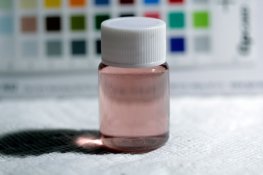
The material that I have ended up with is definitely NOT clear. I have a straw-colored solution with an off-white, fine crystalline precipitate that is slowly settling to the bottom. For anyone who has used this recipe before, is this what I should expect? Or should I continue to add some NaOH until the solution clears? Thanks!
Don't worry about crud in bottom the commercial stuff normally has loads too.
 
Don't worry about crud in bottom the commercial stuff normally has loads too.

A large amount of crud in a fresh bottle or a dark colored developer may be a sign that a poor grade of p-aminophenol was used. Years ago when I made my own rodinal I followed the recipe in the Pocket Darkroom Data Guide, Morgan and Morgan publishers. This recipe starts with the HCl salt as it is more stable than the free base and available in greater purity. The base (which is a light tan) is then precipitated and used from thereon. The final developer was a pale lavender in color.
 
Last edited by a moderator:
The R09 I normally buy is like spring water when you break the seal.
By the time it is down to dregs you have lots of solid at bottom.
I've got lots of the HCL for future scratching but local shop always has stock.
 
While this thread died almost 4 years ago, I was another guy who decided to learn to appreciate Rodinal and stumbled on the formula from Digital Truth. Before you start asking why I have not bought one, none of the half-liter bottles of commercial concentrates in the neighborhood shops inspired confidence in me, and they just refuse to package it in baby bottles. So, I decided to make one myself. As I made a small scale prep, my mistake was obvious, since I first got clear and colorless solution, while it was at 50 C or so, but overnight a truckload of clear needle-like crystals formed on the bottom of the bottle. Since the idea of the true Rodinal is quite clear (production of p-aminophenol phenolate in saturating amount of sulfite), I checked the ratios of the DT formula components and clearly quite some NaOH was missing. When I added it, the crystals dissolved and I got a pale lavender colored solution, which developed FP4 at 1:19 dilution for 40 minutes very well. So, I am wondering how it got there in the first place, while on this forum there is the so-called Wolfen formula. which is likely the original, possibly only missing some minor components..The problem is, at the concentrations used in it, you cannot make it starting with p-aminophenol hydrochloride, and p-aminophenol is a relatively unstable compound, so I suspect that the commercial vendors use freshly prepared p-aminophenol to mix the developer. One needs the original reference how to prepare p-aminophenol base from hydrochloride, then you suspend it in commercial 45% potassium sulfite and then carefully neutralize with 50% KOH until nearly all of the pellet dissolves and there you go. Any ideas/comments?
 
sounds ok, mine looked like that when i made it.

I'd be the last one to put you off experimenting - but if you're making developer out of bits and bobs from the hardware shop (store) and chemist (pharmacy), if your negatives then don't work out the way you expected or wanted, then you might struggle to track down the problem (or even get help)

So it can be a lot easier (and results can be more predictable) just to buy a commercially manufactured developer, at least to begin with. But then I started out with caffenol and my first year of developing was with a homemade developer so who am I to give advice :D
In the case of Rodinal ,I agree that you are probably better of starting with a commercial version of it. I'll get the one sold by Foto Impex
(Adox) before making my own.
 
In the case of Rodinal ,I agree that you are probably better of starting with a commercial version of it. I'll get the one sold by Foto Impex
(Adox) before making my own.

IMHO, the choice between the commercial version and making it yourself from commercial components may be a false dichotomy The developer in the neighborhood shop may be several years old, and buying it you are bringing a large amount of toxic chemical into your home, if you do not like it, you would face a waste disposal problem. On the other hand, the p-aminophenol wherever you may find it (certainly not in the hardware store) could be just as bad. My point is one may need to go out of this false dichotomy and learn to make fresh PAP base on the spot. Otherwise, a great majority of other PAP developers do not need this much effort and are easily prepared from commercial hydrochloride of PAP. What I fail to understand is why a p-aminophenol developer masquerading as Rodinal is offered with an error and nobody cares.
 
A large amount of crud in a fresh bottle or a dark colored developer may be a sign that a poor grade of p-aminophenol was used. Years ago when I made my own rodinal I followed the recipe in the Pocket Darkroom Data Guide, Morgan and Morgan publishers. This recipe starts with the HCl salt as it is more stable than the free base and available in greater purity. The base (which is a light tan) is then precipitated and used from thereon. The final developer was a pale lavender in color.

Confirmed. See the attachment. miniprep_1.jpg
 
Photrio.com contains affiliate links to products. We may receive a commission for purchases made through these links.
To read our full affiliate disclosure statement please click Here.

PHOTRIO PARTNERS EQUALLY FUNDING OUR COMMUNITY:


Ilford ADOX Freestyle Photographic Stearman Press Weldon Color Lab Blue Moon Camera & Machine
Top Bottom