
Unfortunately, I fogged the roll I was developing. Entirely my fault - I was antsy to get it done, so instead of waiting until night I loaded the film in the daylight. Because I lost my changing bag, I normally just load my film under a thick red quilt. Guess which color the film is now? The rebate is the most red, with the spaces between the film being mostly black with maybe a hint of red in it. I'll have to see how it looks when the film is dry and the scans are in.
-
Welcome to Photrio!Registration is fast and free. Join today to unlock search, see fewer ads, and access all forum features.Click here to sign up
- Home
- Forums
- Analog Workflow Forums (100% Analog/Traditional)
- Darkroom
- Color: Film, Paper, and Chemistry
You are using an out of date browser. It may not display this or other websites correctly.
You should upgrade or use an alternative browser.
You should upgrade or use an alternative browser.
Pushing Ektachrome
-
A
- Thread starter loccdor
- Start date

Recent Classifieds
-
Sold SOLD! RW Vacuum Fidelity Elite 4x5 (5 units) & 8x10 (4 units) Film Holders
- Started by B.S.Kumar
-
For Sale Cable Release Adapters for Leica, Nikon, Yashica, Rollei
- Started by Jon Shiu
-
Free Stoesser Pin Registration Punch
- Started by Roger Thoms
-
Want to Buy 4 x 5 Back for Agfa Ansco Universal View Camera
- Started by sharpnikkor
Forum statistics
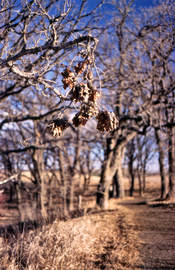
Here's another ISO 400 shot. It's contrasty, but I gave it the absolute worst chance possible. Right before sunset at golden hour, with a warm polarizing filter.
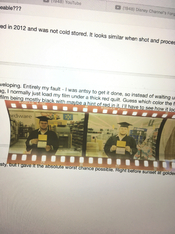
Here's a photo of the still wet film. You can see between the frames that it's mostly black. A lighter black than normal, yes. That's a consequence of pushing film though. The rebate is red because I'm an idiot who fogged his high school grad pics lol. The grain is visible. I can see it with my eyes just holding the film up to the light. I'm going to avoid posting again until I get the scans done and corrected because I am making a lot of posts/comments lol.
One more edit: As I scan these in (scans are actually looking very decent), I realize that the meter batteries on my Nikkormat FTN started to die around half way through the roll. I didn't realize they were dying until today, when it wanted me to shoot wide open at 1/30th of a second in full sunlight with ISO 800 film. So a lot of the later images are quite overexposed. I'll see how well I can recover them.
Here's a photo of the still wet film. You can see between the frames that it's mostly black. A lighter black than normal, yes. That's a consequence of pushing film though. The rebate is red because I'm an idiot who fogged his high school grad pics lol. The grain is visible. I can see it with my eyes just holding the film up to the light. I'm going to avoid posting again until I get the scans done and corrected because I am making a lot of posts/comments lol.
One more edit: As I scan these in (scans are actually looking very decent), I realize that the meter batteries on my Nikkormat FTN started to die around half way through the roll. I didn't realize they were dying until today, when it wanted me to shoot wide open at 1/30th of a second in full sunlight with ISO 800 film. So a lot of the later images are quite overexposed. I'll see how well I can recover them.
Attachments
Last edited:
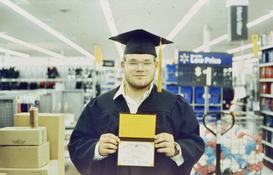
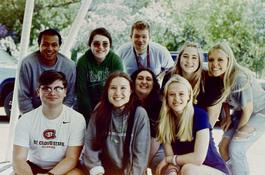
First scans are in! No major color correction was done to these, just brought down the highlights a bit because my Nikkormat only has shutter speeds in full stops, as does my lens, so I was often shooting around half a stop over. Some of these definitely have crushed shadows, and all of them suffered greatly from the fogging. The last shot with all the people in it was taken in the shade on a very bright day. I attached a version with colors corrected and highlights brought down. I will be shooting another roll tonight of wildlife at the local prairie, and I'll push that three stops too. I hate flying through my film like this, but I already do go through a roll at the prairie every day, plus it's for science.
Attachments
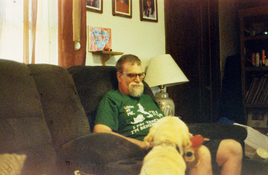

- Joined
- Jul 14, 2011
- Messages
- 15,088
- Format
- 8x10 Format
Well, expired film etc. - what are you trying to demonstrate anyway?
It was the only scan I had on hand of E100 pushed 3 stops. I was trying to demo that E100 pushes to 400 and 800 fairly well. A push to 400 is genuinely impossible to tell apart from E100 shot at 100 to my eyes. 800 is fairly grainy and has a bit more contrast, and colors do shift a bit, but it's usable. It's definitely worth it to be able to shoot slides indoors handheld. The photos I shared in my last reply were unfortunately exposed to a light leak. I just shot another roll of E100 at 800 and am just finishing up the first development now. I don't believe this one experienced a light leak.Well, expired film etc. - what are you trying to demonstrate anyway?
- Joined
- Jul 14, 2011
- Messages
- 15,088
- Format
- 8x10 Format
OK. But if you want objective predictable results of potential benefits to others, you should start out with fresh film that hasn't already crossed over and gone bland, and with a balanced color target which doesn't involve dicey artificial lighting. And you'd need to make a series of bracketed exposures to figure out where in the scale of things it starts falling apart.
Then you need to think of "usable" in relation to a particular end. Is it just for casual web sharing, or perhaps for something more seriously reproduced if you happen to bag a special shot? There's only so much correction you can do digitally before things start looking fake. But have fun with the learning curve.
Then you need to think of "usable" in relation to a particular end. Is it just for casual web sharing, or perhaps for something more seriously reproduced if you happen to bag a special shot? There's only so much correction you can do digitally before things start looking fake. But have fun with the learning curve.
There is a much more professional example of E100 at box, +1, +2, and +3 that I've linked to here, but I'm also scanning in my own slides that I just finished developing on supposedly fresh bulk rolled film (starting to doubt it looking at the film). I wouldn't really suggest anybody push E100 to 800 unless they need to, there are absolutely downsides and they are noticeably but correctable. A push to 400 though is definitely perfectly usable in most situations, and I'm pretty sure Kodak even mentions E100 as being pushable up to 400 somewhere, but I don't remember where. Point is, everybody was talking about how you either can't push E100 or that pushing it one stop was the most you could possibly do, but it can easily go another stop more, and in a pinch even up to 800.OK. But if you want objective predictable results of potential benefits to others, you should start out with fresh film that hasn't already crossed over and gone bland, and with a balanced color target which doesn't involve dicey artificial lighting. And you'd need to make a series of bracketed exposures to figure out where in the scale of things it starts falling apart.
Then you need to think of "usable" in relation to a particular end. Is it just for casual web sharing, or perhaps for something more seriously reproduced if you happen to bag a special shot? There's only so much correction you can do digitally before things start looking fake. But have fun with the learning curve.

I'm pretty sure Kodak even mentions E100 as being pushable up to 400 somewhere, but I don't remember where.
In the 2008 datasheet for the Kodak E6 process, see page 12: https://125px.com/docs/techpubs/kodak/j83-2005_11.pdf
The datasheet for the film itself refers to at least a one stop push on page 3: https://kodakprofessional.com/sites/default/files/wysiwyg/pro/resources/e4000_ektachrome_100.pdf
I knew I saw something somewhere about that. Looking at my slides again, I'm pretty sure the respooled E100D that I've got is junk. The normal E100 I've got (technically a year expired) that sat in a car for a while and was fogged still looks much better after being pushed to 800. It's at least possible to get fairly normal color and contrast (but with a ton of noise and grain) from that stuff. I need to buy a normal roll of E100 and do some tests. Normal E100 pushed to 800 after some color correction vs the best I can get with the "new" respooled stuff.In the 2008 datasheet for the Kodak E6 process, see page 12: https://125px.com/docs/techpubs/kodak/j83-2005_11.pdf
The datasheet for the film itself refers to at least a one stop push on page 3: https://kodakprofessional.com/sites/default/files/wysiwyg/pro/resources/e4000_ektachrome_100.pdf
Attachments
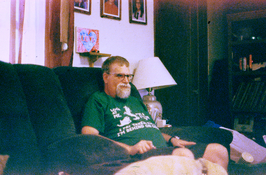
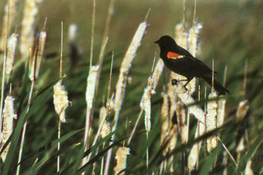

oint is, everybody was talking about how you either can't push E100 or that pushing it one stop was the most you could possibly do, but it can easily go another stop more, and in a pinch even up to 800.
With all due respect, Caleb, but the examples you've posted here are very compromised in terms of image quality and while they may work for you, I doubt most people shooting slide film would find this even remotely acceptable. I'm sorry; they're really bad. Which is to be expected given what you've written about how you treat the film; expired film from unknown provenance, malfunctioning light meters, spooling film underneath a woolen blanket, no temperature control....if you're having fun, that's fine and that's the only thing in the end that counts. But this says nothing about the potential of the film. It just shows that you can get a recognizable picture even under very adverse conditions.

First scans are in! No major color correction was done to these, just brought down the highlights a bit because my Nikkormat only has shutter speeds in full stops, as does my lens, so I was often shooting around half a stop over. Some of these definitely have crushed shadows, and all of them suffered greatly from the fogging. The last shot with all the people in it was taken in the shade on a very bright day. I attached a version with colors corrected and highlights brought down. I will be shooting another roll tonight of wildlife at the local prairie, and I'll push that three stops too. I hate flying through my film like this, but I already do go through a roll at the prairie every day, plus it's for science.
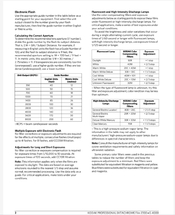
One thing to consider if you want to shoot without flash indoors. Ektachrome is balanced for daylight or electronic flash. You ought to consider putting on filters that balance out the light to restore it to daylight. For example, your first picture indoors with the graduate has fluorescent lighting. You get all sorts of color distortions that will be difficult to correct after scanning. Ditto with incandescent bulbs.
See this link for Ektachrome publication.
Ektachrome Publication
Pg 2 filters:
Attachments
Last edited:
I absolutely agree that they're terrible. The first roll of actual E100 actually looks pretty good in person, but between the fogging and my absolutely awful scanner it didn't stand a chance. The second one? Something is off with that. I've got more E100 coming today; I'll load that up and shoot that at 800 too. I actually have been a lot better with temperature control when pushing film. Both samples were done between 104 and 105 F the entire time. It was the most accurate development I've ever done haha. Still, those were only examples of E100 pushed to 800. It looks great at 400, and I stand by that. I've attached some more images pushed to 400 to this post.With all due respect, Caleb, but the examples you've posted here are very compromised in terms of image quality and while they may work for you, I doubt most people shooting slide film would find this even remotely acceptable. I'm sorry; they're really bad. Which is to be expected given what you've written about how you treat the film; expired film from unknown provenance, malfunctioning light meters, spooling film underneath a woolen blanket, no temperature control....if you're having fun, that's fine and that's the only thing in the end that counts. But this says nothing about the potential of the film. It just shows that you can get a recognizable picture even under very adverse conditions.
Attachments
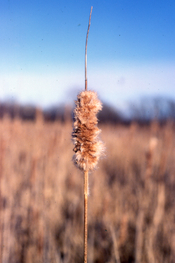
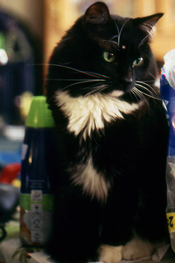
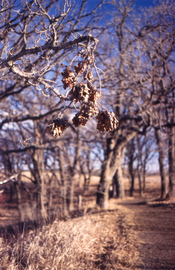
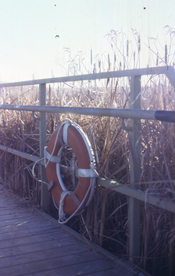
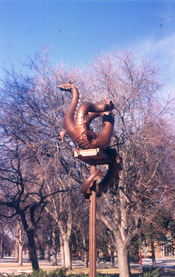
Yeah, E100 can definitely do 400 without really any major problems. It gets a little redder and a little more contrasty, but the redness might just be my scanner (Epson V300). When done indoors without any corrective filters, E100 can look okay at 800. I wish I had scans of the roll I pushed to 800 in October. That roll looked great for what it was. You can kind of see a bit of that in the one image I sent of me in my cap and gown at Walmart. Colors are a little funky from being under artificial light and the grain is chunky, but contrast is totally reasonable. What I should really do is shoot a short roll at 800 and send it off to Dwayne's. They have absolutely wonderful E-6 development, though their scans are disappointingly terrible for such a great lab.The scans certainly are nice especially if this is heavily pushed 100 speed slide film. And the cat makes everything worthwhile given its cute-factor!
- Joined
- Jul 14, 2011
- Messages
- 15,088
- Format
- 8x10 Format
You need to include a neutral gray scale chart, going all the way from black to white, in some of your shots, to see how much color shift is actually involved. Being "scientific" about it means ironing out one variable at a time. Right now, you're trying to juggle too many eggs at once. And judge your results visually atop a high quality light box. Scanning might be necessary to present the images on the web, but that just opens up a whole new can of worms which itself needs to be untangled.

Thank you for the demonstrations @Caleb Hauge . While they do show some degradation versus 100 speed, it's less than pushing C-41. If I was faced with dark conditions and only had E100, it's nice to know I could still make it work. And since it may potentially be the one E-6 film left, it could be the only option if you want slides.
Keep going with your experiments Caleb! I do not think any of us choose to push colour transparency film, but sometimes it's unavoidable.
I do medium format stereo, and you HAVE to shoot at f/16 or f/22 to get everything in focus (in stereo, everything has to be in focus, totally different from normal 2D photos). On a sunny day in summer in Ireland (i.e. not so strong sun, 53deg N), ISO100 translates to around 1/60 at f/16, perhaps 1/80 or even "sunny 16" 1/100 if its really strong sun. So, if you want to do handheld work at 1/60 or faster, you have to wait for the sun to come out! If it's hazy sun, I still shoot ISO100 film at 1/60 @ f/16, and then push it one stop. If it's just a bright day with light clouds, or a darker subject, I might have to push two stops. Of course there is no scanning, you view the stereo slide pair in an optical viewer. Most of the time I shoot in sunny conditions, but just occasionally have to shoot in hazy sun or light cloud ... and the ONLY option is to push the film.
A long post, but I want to explain why it's important to know how far Ektachrome 100 or Provia 100f can be pushed, at least for MF stereo work. I know I can push Provia 100f one stop with little or no obvious degradation of the colour gamut or dynamic range, at least compared to all the other things that matter like good (stereo) composition and an interesting subject.
I do medium format stereo, and you HAVE to shoot at f/16 or f/22 to get everything in focus (in stereo, everything has to be in focus, totally different from normal 2D photos). On a sunny day in summer in Ireland (i.e. not so strong sun, 53deg N), ISO100 translates to around 1/60 at f/16, perhaps 1/80 or even "sunny 16" 1/100 if its really strong sun. So, if you want to do handheld work at 1/60 or faster, you have to wait for the sun to come out! If it's hazy sun, I still shoot ISO100 film at 1/60 @ f/16, and then push it one stop. If it's just a bright day with light clouds, or a darker subject, I might have to push two stops. Of course there is no scanning, you view the stereo slide pair in an optical viewer. Most of the time I shoot in sunny conditions, but just occasionally have to shoot in hazy sun or light cloud ... and the ONLY option is to push the film.
A long post, but I want to explain why it's important to know how far Ektachrome 100 or Provia 100f can be pushed, at least for MF stereo work. I know I can push Provia 100f one stop with little or no obvious degradation of the colour gamut or dynamic range, at least compared to all the other things that matter like good (stereo) composition and an interesting subject.
How long do you develop (first developer)? The question with many opinions if whether Fuji films should be developed longer than Kodak. Kodak manuals say yes, but Fuji TB says no, and suggest standard 6 minutes fot all Fuji films. I give Provia 30 seconds more time with fresh developer.I use Provia 100f, and often push it up to one stop with no significant degradation (in my opinion, no densitometric data). I never bracket either, it's just not economic with 120 film and I feel Provia 100f has reasonable latitude for a transparency film. I'm making stereo 6x6cm slides, so can compensate under/over-exposure to some extent by adjusting the brightness of the backlight in the viewer.
How long do you develop (first developer)? The question with many opinions if whether Fuji films should be developed longer than Kodak. Kodak manuals say yes, but Fuji TB says no, and suggest standard 6 minutes fot all Fuji films. I give Provia 30 seconds more time with fresh developer.
The Bellini instructions say 6/7 mins (at 38deg), and I've interpreted that as 6 mins for continuous agitation as in a Jobo processor and 7 mins for "intermittent agitation". I actually give around 8mins for Provia 100f .... I've processed around 100 Provia in the past 3-4 years, all using the same procedure, and I find Provia needs longer than the specified 7 mins. BTW, I have checked my shutter speeds and I think they are accurate. I also do use exposure meters.
It's possible my actual processing temperature is less than 38deg average over the processing time. My water bath is around 40deg, and I start by warming the tank for 5 mins (dry inside, as recommended), then pour in the 1st Dev at typically around 38.5deg, do 12 inversions and then put the tank into the water bath. Every minute I do the 12 inversions outside the water bath (takes around 15-20sec), so typically the tank is in the water bath only for 40-45sec every minute. I've never monitored the actual temperature of the 1st Dev inside the tank during development! But that would involve removing the lid of the Paterson tank, it's just not practical to do this as re-sealing it is non-trivial.
I'm giving all this detail because details probably matter! The above works for me the way I'm doing the processing, and the key thing from my perspective is that I do the same thing every single time. For example, I set the thermostat temperature on the Novatronic water heater around 3 years ago and have never changed it ... my water bath is always around 40deg +/- 0.5deg! I leave the solution bottles in the water tank for 3-4 hours, and the 1st Dev temperature always starts off around 38.5deg ... always.
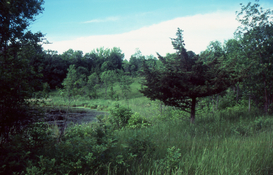
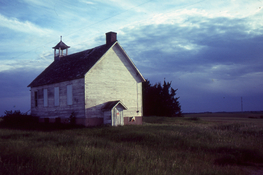
Exactly. And I'm pretty sure part of the poor images is due to my kit going bad somehow. I just developed a roll of Velvia 100, and while it is expired, it only expired in November and was cold stored, so there shouldn't be major color shifts yet. And yet I have the most cyan sky possible on every photo I took, and greenish-yellow highlights. On the other hand, the latitude with this film has left me amazed. Highlights were more recoverable than RVP50, and shadows had more detail than RVP50. In a 36 exposure roll, I only had one totally unrecoverable image, unless you count blown out skies as unrecoverable images. Could be my new camera though, the Elan IIe (that eye control autofocus is amazing by the way).Thank you for the demonstrations @Caleb Hauge . While they do show some degradation versus 100 speed, it's less than pushing C-41. If I was faced with dark conditions and only had E100, it's nice to know I could still make it work. And since it may potentially be the one E-6 film left, it could be the only option if you want slides.
Attachments
Last edited:
| Photrio.com contains affiliate links to products. We may receive a commission for purchases made through these links. To read our full affiliate disclosure statement please click Here. |
PHOTRIO PARTNERS EQUALLY FUNDING OUR COMMUNITY:  |